Introduction: Why Safe and Reliable Servo Drive Systems Are Critical for Modern AGVs
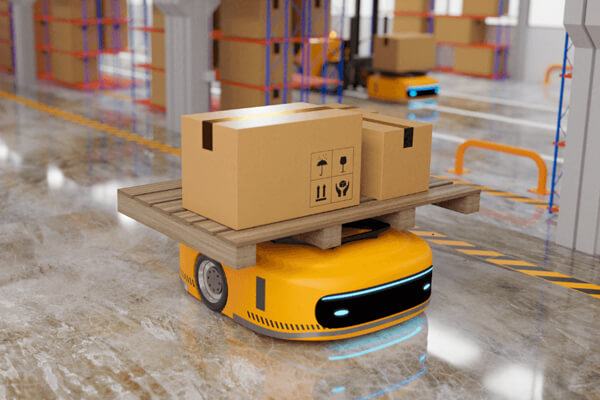
Automated Guided Vehicles (AGVs) and Autonomous Mobile Robots (AMRs) are becoming essential components in smart factories, warehouses, logistics centers, and automated production lines. As AGV systems move from simple transportation platforms toward intelligent mobile robots capable of carrying heavy loads, operating continuously, and collaborating with humans, the requirements for their drive systems have significantly increased.
The motor system is no longer only responsible for movement. Modern AGVs require:
High starting torque for heavy-load acceleration
Precise speed and position control
Stable operation under continuous duty conditions
Compact integration to save installation space
Functional safety features to prevent unexpected movement
Reliable communication with safety controllers and PLC systems
Among different drive solutions, low-voltage DC servo motors with dual-channel STO (Safe Torque Off) have become a preferred choice for advanced AGV manufacturers because they combine motion performance, energy efficiency, and functional safety in one integrated solution.
A typical AGV servo drive system consists of:
Low-voltage DC servo motor
Servo controller/driver
Encoder feedback system
Safety input interface
Mechanical brake (optional)
Communication interface such as CANopen Safety, EtherCAT Safety, or safety PLC connection
This article explains how to select the right low-voltage DC servo motors for AGV applications and how to integrate dual-channel STO safety functions into AGV power systems.
1. How to Select the Right Low-Voltage DC Servo Motor and Driver for AGV Applications?
1.1 Understand AGV Load Requirements Before Selecting the Motor
The first step in selecting an AGV servo motor is determining the actual mechanical requirements of the vehicle.
Therefore, selecting a motor only based on rated power is not enough.
Key parameters include:
Parameter
Importance
Vehicle weight
Determines required traction force
Maximum payload
Influences torque demand
Wheel diameter
Determines output speed and torque relationship
Maximum slope angle
Determines climbing capability
Operating speed
Defines motor RPM requirement
Duty cycle
Determines thermal performance
For example, a heavy-duty AGV carrying 500 kg requires significantly higher starting torque than a lightweight warehouse robot even if both operate at similar speeds.
Modern AGV (Automated Guided Vehicle) and AMR (Autonomous Mobile Robot) systems require more than simple motor rotation. They need a motion solution that combines high torque output, precise control, compact design, and functional safety. Traditional AGV drive architectures using separate motors, servo drives, and external safety components often increase system complexity and reduce reliability.
Integrated AGV DC servo motors with STO (Safe Torque Off) function solve these challenges by combining the motor, servo controller, encoder interface, and safety functions into a compact intelligent drive unit. This design has become increasingly popular among AGV OEM manufacturers, logistics automation companies, and mobile robot developers.
2.1 Simplified AGV System Architecture with Integrated Motor and Driver Design
Traditional AGV drive systems usually require multiple independent components:
DC motor
Servo drive/controller
Encoder module
Safety relay
External wiring harness
Communication modules
This architecture increases:
Cabinet space requirements
Wiring complexity
Installation time
Maintenance difficulty
Potential failure points
An integrated DC servo motor combines these components into a single compact unit.
A typical integrated AGV servo motor includes:
Brushless DC motor (BLDC)
High-resolution encoder
Built-in servo controller
Current loop and speed loop control
Communication interface
Dual-channel STO safety input
This integrated design allows AGV manufacturers to build a more compact and reliable drive system.
Key Benefits:
Reduced Wiring Requirements
Compared with conventional solutions, integrated servo motors eliminate many external cables, especially:
Separate encoder cables
Motor-driver connection cables
Additional control wiring
This is highly beneficial for AGVs where internal installation space is limited.
Faster System Integration
OEM manufacturers can shorten development cycles because the motor system is already optimized for:
Motion control
Speed regulation
Torque management
Safety functions
Instead of designing the entire drive architecture from zero, engineers can directly integrate the motor into the AGV platform.
2.2 Enhanced Functional Safety with Dual-Channel STO Technology
Safety is one of the most important requirements for modern AGVs operating in factories, warehouses, and human-machine collaboration environments.
Unlike traditional emergency stop methods that simply disconnect power, STO directly disables the torque-producing capability of the servo motor.
When STO is activated:
Motor current output is safely interrupted
Torque generation is removed
Unexpected motor movement is prevented
The AGV remains electrically powered while the motor cannot generate driving torque.
Why Dual-Channel STO Is Important for AGV Applications
A dual-channel STO design uses two independent safety input channels.
For example:
STO Channel 1
STO Channel 2
Both channels must operate correctly to maintain normal motor operation.
If one channel experiences:
Short circuit
Wiring failure
Component fault
The safety system can detect the abnormal condition and prevent unsafe operation.
This provides:
Higher fault detection capability
Improved safety integrity
Better compliance with industrial safety standards
For AGV manufacturers targeting international markets, dual-channel STO helps meet safety requirements related to:
Machinery safety
Functional safety
Human-robot collaboration
2.3 Improved Motion Performance and Control Accuracy
AGVs require precise movement control, especially in applications such as:
Warehouse navigation
Automated production lines
Material transportation
Robot docking stations
Integrated DC servo motors provide closed-loop control through encoder feedback.
Compared with open-loop motor systems, servo control provides:
Accurate Speed Regulation
The controller continuously monitors actual motor speed and adjusts output automatically.
Advantages:
Stable low-speed operation
Smooth acceleration and deceleration
Reduced speed fluctuation under changing loads
High Torque Response
AGVs frequently start and stop during operation.
Integrated servo motors provide:
Fast torque response
Strong starting capability
Better climbing performance
This is especially important for AGVs carrying heavy loads or operating on ramps.
Better Positioning Capability
Encoder feedback enables:
Accurate positioning
Precise docking
Improved navigation performance
This helps AGVs achieve higher automation accuracy in smart factories.
2.4 Compact Design and Space-Saving Advantages
AGVs have strict limitations on mechanical space because batteries, sensors, controllers, and drive systems must fit inside a compact chassis.
Integrated servo motors provide a smaller installation footprint compared with separate motor-drive systems.
Benefits include:
Reduced Control Cabinet Size
Traditional servo systems require:
External servo amplifiers
Terminal blocks
Additional cooling systems
Integrated solutions reduce or eliminate these components.
Flexible Mechanical Design
A compact servo motor allows AGV designers to:
Reduce chassis size
Increase battery capacity
Improve payload ratio
Optimize wheel placement
For small AMRs and mobile robots, space saving can directly improve overall system performance.
2.5 Higher Energy Efficiency and Longer Battery Runtime
Battery efficiency is a critical factor for AGVs because operating time directly affects productivity.
Integrated DC servo motors improve energy efficiency through:
Intelligent Current Control
The servo controller adjusts motor current according to actual load requirements.
When the AGV requires less torque:
Motor current decreases
Energy consumption is reduced
Battery runtime increases
Reduced Power Loss
Compared with oversized external drive systems, integrated servo solutions minimize:
Cable losses
Conversion losses
Unnecessary power consumption
This helps AGVs achieve:
Longer operating cycles
Reduced charging frequency
Lower operating costs
2.6 Better Reliability in Continuous 24/7 AGV Operation
Many industrial AGVs operate continuously in:
Distribution centers
Automotive factories
Electronics manufacturing plants
Logistics warehouses
Therefore, drive systems must withstand:
Continuous operation
Vibration
Frequent acceleration
Thermal stress
Integrated servo motors improve reliability by reducing the number of external connections.
Advantages include:
Fewer Failure Points
A simplified system reduces risks caused by:
Loose connectors
Cable damage
Incorrect wiring
Better Environmental Protection
Many integrated AGV servo motors support:
IP65 protection
Dust resistance
Water splash resistance
Industrial temperature operation
This makes them suitable for demanding industrial environments.
2.7 Easier Maintenance and Troubleshooting
For AGV operators, downtime directly affects production efficiency.
Maintenance engineers can quickly identify problems without checking multiple components.
Faster Replacement
Because the motor and controller are integrated:
Fewer components need replacement
Installation time is reduced
System recovery becomes faster
This is especially valuable for large fleets of AGVs.
2.8 Flexible Communication for Intelligent AGV Systems
Modern AGVs require communication between:
Motion controllers
Safety PLCs
Fleet management systems
Navigation systems
Integrated DC servo motors can support communication protocols such as:
CANopen
CANopen Safety
EtherCAT
RS485
Modbus RTU
This enables:
Real-time motor monitoring
Parameter configuration
Remote diagnostics
Intelligent fleet management
For Industry 4.0 applications, communication capability is becoming a key selection factor when choosing AGV motor suppliers.
2.9 Lower Total Cost of Ownership (TCO)
Although integrated servo motors may have a higher initial component cost compared with basic DC motors, they often provide lower overall system costs.
Savings come from:
Reduced Engineering Cost
Less time is required for:
Electrical design
Wiring development
Software integration
Reduced Installation Cost
Simplified connections reduce:
Assembly time
Labor requirements
Debugging workload
Reduced Maintenance Cost
Higher reliability and built-in diagnostics reduce:
Downtime
Spare parts requirements
Service costs
For AGV OEM manufacturers, total lifecycle cost is often more important than initial purchase price.
Conclusion: Why Integrated DC Servo Motors with STO Are Ideal for Modern AGV Systems
Integrated AGV DC servo motors with dual-channel STO provide a complete motion and safety solution for next-generation automated vehicles.
Their main advantages include:
Simplified system architecture
Reduced wiring complexity
High-precision servo control
Enhanced functional safety
Compact mechanical design
Improved energy efficiency
Reliable 24/7 operation
Easier maintenance
Flexible communication capability
For AGV and AMR manufacturers, selecting an integrated servo motor with STO function is not only a motor selection decision but also a strategic choice for improving safety, efficiency, and long-term system reliability.
One-Stop Integrated DC Servo Motor Solution Provider
Shaft
Lead Screw
Module
Linear Motion
Brake
Gearbox
Worm Gearbox
Wires
Protect Level
Protect Level
3. Should AGV Servo Motors Use 24V or 48V Power Supply?
Selecting the correct power supply voltage is one of the most important decisions when designing an AGV (Automated Guided Vehicle) or AMR (Autonomous Mobile Robot) drive system. The choice between 24V DC servo motors and 48V DC servo motors directly affects:
Motor power capability
Battery efficiency
Current consumption
Thermal performance
Wiring requirements
AGV payload capacity
Overall system reliability
There is no universal answer that 24V is always better than 48V or vice versa. The optimal voltage depends on the AGV's load capacity, operating speed, working environment, battery architecture, and safety requirements.
For modern AGV applications, 24V systems are commonly used for compact mobile robots and light-duty logistics vehicles, while 48V servo systems are increasingly preferred for heavy-duty AGVs requiring higher torque and longer operating time.
3.1 Understanding the Relationship Between Voltage, Current, and Motor Power
The basic relationship between electrical power, voltage, and current is:
Power (W) = Voltage (V) × Current (A)
For the same motor power output:
A lower-voltage system requires higher current
A higher-voltage system requires lower current
For example:
A 400W AGV servo motor requires approximately:
24V system:
400W ÷ 24V ≈ 16.7A
48V system:
400W ÷ 48V ≈ 8.3A
The 48V system requires roughly half the current compared with a 24V system.
Lower current provides several advantages:
Reduced cable heating
Smaller wire diameter requirements
Lower electrical losses
Better efficiency during long operation
This is one reason why many medium and heavy-duty AGVs are moving toward 48V architectures.
Regardless of whether the AGV uses 24V or 48V power architecture, safety remains essential.
A high-performance AGV servo system should include:
Dual-channel STO
Encoder feedback
Safety PLC compatibility
Emergency stop integration
The voltage selection affects motor performance, while STO ensures safe operation.
For example:
24V Integrated Servo Motor with STO
Suitable for:
Small AMRs
Collaborative robots
Indoor logistics robots
48V Integrated Servo Motor with STO
Suitable for:
Heavy-duty AGVs
Industrial mobile robots
Automated forklifts
Both systems can achieve high safety levels when properly integrated.
3.8 Future Trend: Why More Industrial AGVs Are Moving Toward 48V Systems
As AGV technology develops, manufacturers are demanding:
Higher payload capacity
Longer operating time
Faster movement
Smaller vehicle size
These trends are driving increased adoption of 48V servo systems.
Future AGV platforms are expected to use:
48V lithium battery systems
Integrated servo motors
Functional safety features
Intelligent communication networks
However, 24V systems will continue to dominate compact AMR applications because of their simplicity, affordability, and safety advantages.
Conclusion: Choosing the Right Voltage for AGV Servo Motors
The choice between 24V and 48V AGV servo motors depends on the specific application requirements.
24V DC servo motors are ideal for:
Compact AGVs
Light-duty mobile robots
Indoor logistics systems
Cost-sensitive applications
48V DC servo motors are better for:
Heavy-duty AGVs
High torque applications
Long operating cycles
Industrial automation systems
For AGV OEM manufacturers, the best solution is not simply selecting a higher voltage motor, but choosing the voltage level that provides the optimal balance between:
Torque performance
Battery efficiency
Safety requirements
System cost
Long-term reliability
A properly selected 24V or 48V integrated DC servo motor with STO function can significantly improve AGV performance, safety, and operational efficiency.
4. How Does a Mechanical Brake Work Together with STO Function?
In modern AGV (Automated Guided Vehicle) and AMR (Autonomous Mobile Robot) systems, safety cannot rely on a single protection method. While STO (Safe Torque Off) provides an essential functional safety layer by preventing the servo motor from generating torque, it does not physically hold the AGV in position.
For applications involving:
Heavy payload transportation
Inclined surfaces
Parking positions
Vertical lifting mechanisms
Long-duration stops
a mechanical brake is often required to work together with STO.
The combination of servo motor + dual-channel STO + electromagnetic brake creates a complete safety solution that provides both:
Safe torque removal
Reliable mechanical holding
Understanding the difference between STO and mechanical braking is critical when designing safe AGV power systems.
4.1 Difference Between STO Function and Mechanical Brake
Although STO and mechanical brakes are both related to stopping motion, they perform completely different functions.
STO Function: Preventing Motor Torque Generation
STO is an electronic safety function integrated into the servo drive.
When STO is activated:
The drive stops supplying energy to the motor torque-producing circuits
The motor cannot create driving torque
Uncontrolled motor acceleration is prevented
However, STO does not actively stop mechanical movement.
For example:
A moving AGV may continue rolling due to inertia
A vehicle on a slope may move backward
A suspended load may drop without additional holding force
STO ensures the motor is safe, but it does not lock the mechanical system.
Mechanical Brake: Physically Holding the Load
A mechanical brake uses physical friction or locking force to prevent movement.
Common AGV brake types include:
Electromagnetic holding brakes
Spring-applied brakes
Disc brakes
Drum brakes
A typical AGV servo motor brake operates as follows:
Motor Powered
Electromagnetic brake receives voltage
Brake releases
Motor rotates normally
Power Removed or Fault Occurs
Brake coil loses power
Spring force engages the brake
Wheel or motor shaft is mechanically locked
This provides reliable holding force even when electrical power is unavailable.
4.2 Why STO Alone Is Not Enough for AGV Safety
Many AGV designers initially assume that STO can completely stop and hold the vehicle. However, STO only disables torque generation.
Several situations require additional mechanical holding.
4.2.1 AGVs Operating on Slopes
When an AGV stops on an inclined surface, gravity creates a pulling force.
Even if STO is active:
Motor torque is removed
Wheels are not locked
The vehicle may roll downhill
A mechanical brake prevents unwanted movement.
Typical applications:
Warehouse ramps
Outdoor AGVs
Factory floors with uneven surfaces
Automated forklifts
4.2.2 Heavy Payload Transportation
The heavier the AGV load, the greater the risk of movement after STO activation.
For example:
A 2-ton AGV carrying industrial components requires a reliable holding mechanism because:
Vehicle inertia is high
External forces can move the platform
Safety requirements are stricter
The mechanical brake provides the necessary holding torque after the motor torque is removed.
4.2.3 Long-Term Parking or Standby Conditions
During long idle periods:
STO prevents motor activation
Brake maintains mechanical position
This reduces:
Motor heating
Battery consumption
Servo holding current
For AGVs operating continuously in factories, this improves energy efficiency.
4.3 Typical Working Sequence Between STO and Mechanical Brake
A properly designed AGV safety system does not activate STO and the brake randomly. The sequence should be coordinated.
A common safe stopping process is:
Normal AGV Operation
Servo drive receives motion commands
Motor generates torque
Mechanical brake remains released
AGV moves normally
Controlled Stop Process
AGV receives stop command
Servo controller performs deceleration
Motor speed decreases to zero
Brake engages
STO is activated
This sequence provides:
Smooth stopping
Reduced mechanical impact
Safe torque removal
Reliable holding
Emergency Stop Process
For emergency situations:
Emergency signal is triggered
Safety PLC sends stop command
STO channels are activated
Motor torque is immediately removed
Mechanical brake engages if required
The exact sequence depends on:
AGV speed
Load condition
Safety category requirements
Risk assessment results
4.4 Integration of Mechanical Brake with Dual-Channel STO System
Modern AGV servo systems typically combine:
Servo drive
Dual-channel STO inputs
Brake control output
Encoder feedback
Safety PLC
A typical architecture:
Safety PLC
     |
     |
Dual-channel STO
     |
Servo Drive
     |
DC Servo Motor
     |
Mechanical Brake
     |
AGV Wheel
The safety PLC controls both:
STO activation
Brake engagement
This creates a layered safety structure.
4.5 Brake Control Methods in AGV Servo Motors
There are several ways to control an electromagnetic brake.
Method 1: Servo Drive Brake Control
The servo drive directly manages brake operation.
Advantages:
Automatic timing control
Coordinated with motor speed
Reduced programming complexity
Typical sequence:
Motor stops
Brake engages
STO activates
Method 2: Safety PLC Controlled Brake
The safety PLC independently controls:
STO signals
Brake relay
Advantages:
Higher safety flexibility
Easier integration into complex systems
Suitable for:
Large AGV fleets
Multi-axis mobile robots
Industrial automation systems
Method 3: Mechanical Brake with Power-Off Protection
Spring-applied electromagnetic brakes are commonly used because:
Brake engages when power fails
Safe state is achieved automatically
This is important for:
Battery failures
Emergency shutdowns
Cable disconnection events
4.6 How to Select the Right Brake for an AGV Servo Motor?
Selecting a brake requires consideration of several mechanical factors.
4.6.1 Holding Torque
The brake holding torque must exceed the maximum external load.
Factors include:
AGV weight
Payload weight
Wheel diameter
Maximum slope angle
A safety margin should always be considered.
4.6.2 Brake Response Time
Fast brake response is important for emergency conditions.
Important parameters:
Brake release time
Brake engagement time
Mechanical delay
For safety-critical AGVs, shorter response times improve protection.
4.6.3 Duty Cycle
AGV brakes may experience:
Frequent stops
Continuous holding
Emergency activation
The brake should match:
Operating frequency
Thermal requirements
Service life expectations
4.7 Mechanical Brake + STO Applications in Different AGV Systems
Warehouse AGVs
Requirements:
Frequent start/stop cycles
Human interaction
Accurate positioning
Recommended:
STO for safety stops
Brake for parking
Heavy-Duty Industrial AGVs
Requirements:
High payload
Long operation
Slope capability
Recommended:
Dual-channel STO
High-torque electromagnetic brake
Automated Forklift AGVs
Requirements:
Vertical load handling
Precise stopping
Recommended:
STO
Mechanical holding brake
Additional safety monitoring
Outdoor Mobile Robots
Requirements:
Weather resistance
Uneven terrain
Emergency holding
Recommended:
IP-rated servo motor
STO
Robust mechanical brake
4.8 Benefits of Combining STO and Mechanical Brake in AGV Systems
Using STO together with a mechanical brake provides several advantages:
Improved Safety
Prevents unexpected motor torque
Prevents vehicle movement
Supports emergency stopping
Better Load Protection
Prevents sliding
Protects transported goods
Reduces mechanical shock
Higher System Reliability
Maintains position during power loss
Reduces dependence on software control
Provides multiple safety layers
Compliance with Industrial Safety Requirements
A combination of:
Dual-channel STO
Mechanical brake
Safety PLC
helps AGV systems achieve higher functional safety levels.
Conclusion: STO and Mechanical Brake Are Complementary Safety Technologies
For AGV and AMR applications, STO and mechanical brakes should not be considered alternatives. They solve different safety challenges.
STO protects against unintended motor torque generation
Mechanical brakes protect against unwanted physical movement
A reliable AGV drive system typically combines:
Low-voltage DC servo motor
Integrated servo driver
Dual-channel STO
Electromagnetic holding brake
Safety PLC communication
This combination provides safer operation, better load control, and higher reliability for modern automated transportation systems. For AGV manufacturers designing advanced mobile robots, integrating both STO and mechanical braking functions is a key approach to achieving safe and efficient motion control.
5. How to Implement Safe Stop 1 (SS1) with STO Function?
5.1 Difference Between STO and SS1
STO:
Immediately removes torque capability
Does not control stopping movement
SS1:
First performs controlled deceleration
Then activates STO
For AGVs carrying heavy loads, SS1 is usually preferred because sudden torque removal may cause:
Load shifting
Mechanical shock
Reduced positioning accuracy
5.2 Typical SS1 Implementation in AGV Systems
A safety PLC or safety relay monitors emergency signals.
The sequence:
Emergency button pressed
Safety controller sends stop command
Servo drive performs controlled braking
After delay/time monitoring:
Dual-channel STO activates
Advantages:
Smoother stopping
Reduced mechanical stress
Better load protection
6. How to Select Servo Drives Supporting FSoE or CANopen Safety?
6.1 Safety Communication Requirements for Modern AGVs
Advanced AGVs often require communication between:
Safety PLC
Servo drives
Motor controllers
Laser scanners
Safety sensors
Common safety protocols include:
FSoE (Functional Safety over EtherCAT)
Suitable for:
High-performance automation systems
Smart factories
Multi-axis AGVs
Advantages:
Fast communication
High synchronization accuracy
Integrated safety network
CANopen Safety
Suitable for:
Mobile robots
AGVs
Distributed control systems
Advantages:
Cost-effective
Simple architecture
Wide industry adoption
6.2 Selection Criteria for Safety Servo Drives
Choose drives with:
Dual-channel STO inputs
SIL2/SIL3 capability
Safe communication support
Encoder feedback compatibility
Diagnostic functions
7. Can STO Alone Prevent AGV Accidental Sliding on Slopes?
For AGV (Automated Guided Vehicle) and AMR (Autonomous Mobile Robot) applications, safety during stopping is a critical design consideration, especially when the vehicle operates on ramps, inclined surfaces, or uneven factory floors.
A common question among AGV engineers is:
Can STO (Safe Torque Off) alone prevent an AGV from accidentally sliding on slopes?
The answer is no. STO alone cannot guarantee that an AGV will remain stationary on a slope.
STO is designed to safely remove motor torque, preventing unintended motor-driven movement. However, it does not provide a physical locking force to hold the vehicle in place.
For slope applications, AGV manufacturers typically combine:
Dual-channel STO function
Electromagnetic mechanical brake
Proper gear reduction
Anti-rollback control strategy
to achieve reliable stopping and holding performance.
7.1 Understanding What STO Actually Does in AGV Systems
STO is a functional safety feature integrated into servo drives that prevents the motor from generating torque.
When STO is activated:
The servo drive disables the power stage
Motor current supply is interrupted
Torque generation stops
The motor cannot actively drive the wheel
This protects against:
Unexpected motor startup
Uncontrolled acceleration
Servo control errors
Safety circuit failures
However, STO does not create braking torque.
The motor shaft and wheels are still mechanically free unless another holding mechanism is applied.
7.2 Why an AGV Can Still Move After STO Activation on a Slope
When an AGV operates on a slope, several physical forces can cause movement even after STO is activated.
7.2.1 Gravity Force on Inclined Surfaces
The most important factor is gravity.
When an AGV is parked on a slope, the vehicle weight creates a downward force.
The force component pulling the AGV downhill depends on:
Vehicle weight
Slope angle
Wheel friction
Load distribution
If the downhill force exceeds the resistance from:
Tire friction
Gearbox resistance
Mechanical structure
the AGV may slowly roll.
7.2.2 Loss of Motor Holding Torque
During normal operation, servo motors can maintain position by actively producing torque.
For example:
AGV stops at a ramp
Servo drive maintains zero-speed holding torque
Motor resists external movement
After STO activation:
Motor torque disappears
Position holding is removed
External forces can move the vehicle
This is why STO should not be considered a replacement for a mechanical brake.
7.2.3 Heavy Payload Increases Sliding Risk
The heavier the AGV load, the greater the potential sliding force.
Heavy-duty AGVs transporting:
Automotive components
Steel materials
Pallets
Industrial equipment
require stronger holding solutions.
For these applications, relying only on STO may create safety risks.
7.3 STO vs Mechanical Brake: Different Safety Functions
A common misunderstanding is that STO and mechanical brakes perform the same function.
They actually solve different problems.
Function
STO
Mechanical Brake
Prevent motor torque
✓
✗
Stop electrical drive output
✓
✗
Physically lock wheels
✗
✓
Hold AGV on slope
✗
✓
Protect against unexpected startup
✓
Partial
Maintain position after power loss
✗
✓
The best AGV safety architecture uses both technologies together.
7.4 Recommended Safety Architecture for AGVs Operating on Slopes
For AGVs that operate on inclined surfaces, a typical safety design includes:
Step 1: Controlled Deceleration
Before STO activation:
Servo controller reduces speed
AGV slows down smoothly
Mechanical impact is minimized
This is often implemented through:
SS1 (Safe Stop 1)
Controlled braking commands
Step 2: Mechanical Brake Engagement
After the AGV reaches a safe speed or zero speed:
Electromagnetic brake engages
Wheel or motor shaft is physically locked
The brake provides:
Holding torque
Anti-rollback protection
Stable parking position
Step 3: STO Activation
After braking:
Dual-channel STO inputs are activated
Motor torque generation is safely disabled
The final state becomes:
Motor torque removed + Mechanical position locked
This provides a higher level of safety.
7.5 Role of Electromagnetic Brakes in AGV Slope Applications
Electromagnetic brakes are commonly integrated into AGV servo motors because they provide reliable holding force.
A typical spring-applied electromagnetic brake works as follows:
During Normal Movement
Brake coil receives power
Brake releases
Motor rotates normally
During Stop or Power Failure
Brake power is removed
Spring force engages brake
Motor shaft is locked
This design provides a fail-safe function because the brake automatically engages when power is lost.
7.6 How to Select the Right Brake for Slope AGVs?
Choosing a brake requires calculating the required holding torque.
Important factors include:
7.6.1 AGV Weight and Payload
Higher vehicle weight requires:
Higher brake torque
Stronger mechanical locking capability
7.6.2 Maximum Slope Angle
A steeper slope creates higher downhill force.
AGVs operating on:
5° ramps
10° factory slopes
Outdoor uneven terrain
may require different brake specifications.
7.6.3 Wheel Diameter and Gear Ratio
The mechanical transmission affects required brake torque.
Larger wheels and lower gear reduction may require stronger braking capability.
7.6.4 Safety Margin
Industrial AGV systems usually include additional safety margin because real environments may include:
Wet floors
Uneven surfaces
Variable payloads
Tire wear
7.7 Can Gearboxes Prevent AGV Sliding Without a Brake?
Some AGV systems use geared motors, especially:
Planetary geared DC servo motors
Worm geared servo motors
to improve holding capability.
However, gearbox resistance alone is usually not considered a complete safety solution.
Worm Gear Advantages
Worm gear systems can provide:
High reduction ratio
Increased self-locking capability
Higher holding resistance
However:
Self-locking performance depends on design
Wear can reduce effectiveness
Safety standards may still require a dedicated brake
For safety-critical AGVs, a mechanical brake remains the preferred solution.
7.8 Applications Where STO Alone May Be Acceptable
Although STO alone is not suitable for slope holding, some AGV applications may not require a mechanical brake.
Examples:
Flat Indoor Warehouse AGVs
Conditions:
Level floor
Low payload
Low external force
STO may be sufficient for preventing unexpected motor operation.
Low-Inertia Mobile Robots
Examples:
Inspection robots
Small delivery robots
Lightweight AMRs
The risk of uncontrolled movement is much lower.
7.9 Applications Requiring STO + Mechanical Brake
A mechanical brake is strongly recommended for:
Heavy-Duty AGVs
Examples:
Automotive production AGVs
Pallet transport vehicles
Factory logistics robots
Ramp Operation
Examples:
Multi-level warehouses
Loading platforms
Outdoor logistics systems
Vertical or Lift Applications
Examples:
AGV lifting platforms
Automated forklifts
Material handling robots
Human-Collaboration Areas
Where operators work close to AGVs, additional holding protection improves safety.
7.10 Best Practices for AGV Safety Design with STO and Brake
For reliable AGV operation, manufacturers should consider:
Use Dual-Channel STO
Benefits:
Redundant safety control
Fault monitoring
Higher safety integrity
Combine STO with Mechanical Holding
Recommended for:
Slopes
Heavy loads
Long parking periods
Perform Risk Assessment
Evaluate:
Maximum load
Maximum slope
Stopping distance
Environmental conditions
Test Real Operating Conditions
Validation should include:
Emergency stops
Battery failure scenarios
Ramp parking tests
Maximum payload operation
Conclusion: STO Alone Cannot Prevent AGV Sliding on Slopes
STO is an essential safety function for AGV servo systems, but it is not designed to physically hold the vehicle in position.
The main role of STO is:
Removing motor torque
Preventing unexpected drive activation
Providing functional safety protection
For AGVs operating on slopes or carrying heavy loads, the recommended solution is:
Low-voltage DC servo motor + Dual-channel STO + Electromagnetic brake + Safety PLC control
This combination provides:
Safe torque removal
Reliable position holding
Protection against accidental sliding
Improved AGV operational safety
For modern AGV and AMR manufacturers, understanding the difference between STO and mechanical braking is essential for designing safe, reliable, and compliant mobile robot power systems.
8. Difference Between Hardware STO and Software-Based STO
Hardware-based STO is a safety function implemented through dedicated electrical safety circuits inside the servo drive.
Instead of relying on software commands, hardware STO directly interrupts the energy path required for the motor to generate torque.
A typical hardware STO architecture includes:
Dual-channel STO inputs
Independent safety circuits
Power stage shutdown mechanism
Safety monitoring components
When STO is triggered:
Safety PLC or emergency circuit sends STO signals
STO input channels are activated
Servo power stage is disabled
Motor torque generation stops
AGV drive becomes unable to produce movement torque
The safety action occurs independently from the main control software.
8.2 Advantages of Hardware STO for AGV Systems
8.2.1 Independent Safety Path
The biggest advantage of hardware STO is that the safety function does not depend on the normal motor control software.
Even if problems occur in:
Motion control firmware
Communication network
Application software
Main controller
the hardware STO circuit can still disable motor torque.
This provides an additional safety layer.
8.2.2 Higher Fault Detection Capability
Modern hardware STO usually uses:
Dual-channel inputs
Redundant circuits
Cross-monitoring functions
If one channel fails because of:
Short circuit
Wiring damage
Component failure
the system can detect the fault.
This improves:
Safety reliability
Diagnostic capability
Machine protection
8.2.3 Faster Safety Response
Because hardware STO directly disables the power stage, the response time is typically very short.
This is important for:
Emergency stops
Collision prevention
Human-machine interaction areas
For AGVs operating near workers, fast torque removal reduces potential risks.
8.2.4 Better Suitability for Safety Certification
Hardware STO is widely used in industrial safety applications because it can support higher safety requirements.
Typical applications include:
Factory AGVs
Automotive production logistics
Heavy-load mobile robots
Collaborative automation systems
It is commonly selected when compliance with functional safety standards is required.
8.3 What Is Software-Based STO?
Software-based STO relies on the motor controller firmware or application software to disable torque generation.
The safety command is processed through software logic.
Typical operation:
Controller receives stop command
Software detects safety condition
Control algorithm disables motor output
Motor torque is removed
Unlike hardware STO, the safety function depends on:
Processor operation
Firmware execution
Software integrity
Communication reliability
8.4 Advantages of Software-Based STO
Although hardware STO is preferred for many safety-critical applications, software-based safety functions also have advantages.
8.4.1 Flexible Control Functions
Software-based solutions can provide advanced motion functions such as:
Controlled stopping
Torque limitation
Speed monitoring
Position supervision
These functions can be adjusted through software parameters.
8.4.2 Easier System Integration
Software-based safety functions can simplify:
Programming
Parameter configuration
System customization
For applications with lower safety risks, software control may provide sufficient functionality.
8.4.3 Lower System Cost
Compared with dedicated hardware safety circuits, software solutions may reduce:
Component quantity
Wiring requirements
Hardware cost
This can be attractive for:
Small AMRs
Educational robots
Low-risk mobile platforms
8.5 Hardware STO vs Software STO Comparison
Feature
Hardware STO
Software-Based STO
Safety Principle
Physical interruption of torque generation path
Software-controlled torque disabling
Safety Independence
Independent from application software
Depends on software execution
Response Speed
Faster
Depends on processing cycle
Fault Detection
High
Depends on software diagnostics
Wiring Requirement
Requires dedicated STO wiring
Usually communication-based
Safety Reliability
Higher
Lower compared with hardware STO
Certification Support
Better for safety standards
More limited
Cost
Higher
Lower
Flexibility
Moderate
High
Typical Use
Industrial AGVs, heavy-duty robots
Low-risk mobile robots
8.6 Why Hardware STO Is Preferred for Industrial AGVs
Industrial AGVs often operate in environments where safety failures can cause:
Equipment damage
Production interruption
Worker injury risks
Material loss
Examples include:
Automotive factories
Battery manufacturing plants
Heavy logistics warehouses
Automated assembly lines
In these applications, manufacturers typically prefer hardware STO because it provides:
Independent Protection
The safety function remains active even if:
Communication fails
Controller software crashes
Network connection is interrupted
Reliable Emergency Response
When an emergency signal occurs:
STO immediately removes motor torque
AGV cannot continue driving
Risk of unexpected movement is minimized
Easier Safety Validation
Hardware STO provides a clearer safety architecture for:
Risk assessment
Safety testing
Machine certification
8.7 How Hardware STO and Software Safety Functions Work Together
Modern AGV systems often combine both approaches instead of choosing only one.
A typical architecture:
Safety Sensor
      |
Safety PLC
      |
      +----------------+
      |                |
 Hardware STO      Software Control
      |                |
Servo Drive     Motion Controller
      |
DC Servo Motor
      |
AGV Wheel
Each layer performs a different function.
Software Functions Handle:
Normal motion control
Speed adjustment
Position control
Navigation commands
Hardware STO Handles:
Emergency torque removal
Safety shutdown
Protection against unexpected movement
This layered approach provides both performance and safety.
8.8 Relationship Between STO and Other Safety Functions
STO is usually part of a larger functional safety system.
Both hardware STO and software-based STO can help improve AGV safety, but they serve different purposes.
Hardware STO provides:
Independent safety protection
Faster torque removal
Higher reliability
Better suitability for industrial AGVs
Software-based STO provides:
Flexible control
Easier configuration
Lower cost
For modern industrial AGVs and AMRs, the recommended approach is usually:
Low-voltage DC servo motor + Dual-channel hardware STO + Safety PLC + Mechanical brake (when required)
This architecture provides the best balance between:
Functional safety
Motion performance
System reliability
Long-term operational efficiency
For AGV manufacturers designing next-generation autonomous vehicles, selecting a servo motor system with certified hardware STO capability is a key step toward achieving safer and more reliable automation solutions.
9. Impact of STO Activation on AGV Battery Life and Power Stability
9.1 STO Reduces Unnecessary Energy Consumption
When STO is activated:
Motor torque generation stops
Current output is disabled
Heat generation decreases
Benefits:
Lower standby consumption
Reduced battery drain
Improved thermal performance
9.2 Battery System Considerations
AGV designers should consider:
Battery voltage stability
Peak current demand
Regenerative braking
Charging cycles
A properly designed servo system improves:
Operating time
Battery lifespan
Overall system efficiency
10. How to Connect Safety PLC with DC Servo Drive STO Inputs?
In modern AGV (Automated Guided Vehicle) and AMR (Autonomous Mobile Robot) systems, connecting the Safety PLC with the DC servo drive STO (Safe Torque Off) inputs is a critical step for achieving reliable functional safety.
The Safety PLC acts as the central safety controller, monitoring devices such as:
Emergency stop buttons
Safety laser scanners
Safety light curtains
Safety doors
Collision detection sensors
When a dangerous condition occurs, the Safety PLC sends a safety signal to the servo drive's STO inputs, immediately preventing the motor from generating torque.
A properly designed STO connection ensures:
Safe stopping of AGV motion
Prevention of unexpected restart
Compliance with functional safety requirements
Reliable operation in human-machine collaboration environments
10.1 Understanding the Role of Safety PLC and STO Inputs
Before connecting the system, it is important to understand the function of each component.
Safety PLC Function
A Safety PLC is responsible for:
Monitoring safety devices
Evaluating safety logic
Sending safety commands
Detecting safety circuit faults
Typical AGV safety inputs include:
Emergency stop button
Safety scanner
Protective sensor
Operator access control
When the Safety PLC detects a safety event, it activates the STO output.
DC Servo Drive STO Function
The STO input on a DC servo drive controls the motor torque generation capability.
When STO inputs are active:
Servo power stage remains disabled
Motor torque generation stops
AGV cannot drive
When STO inputs are released:
Servo drive can operate normally
Motor control resumes after proper enable conditions
          Safety PLC

       STO Output Channel 1
              |
              |
        STO1+ Input
        DC Servo Drive

       STO Output Channel 2
              |
              |
        STO2+ Input
        DC Servo Drive

       24V Safety Power Supply
              |
              |
        STO Reference/GND
The two STO channels operate independently.
This provides:
Redundant safety control
Fault detection
Improved safety integrity
10.3 Typical STO Terminal Connections
A low-voltage DC servo motor with STO function commonly provides terminals such as:
Terminal
Function
STO1+
Safety input channel 1 positive
STO1-
Safety input channel 1 reference
STO2+
Safety input channel 2 positive
STO2-
Safety input channel 2 reference
24V
Control supply
GND
Signal reference
The exact terminal names depend on the servo drive manufacturer.
Before wiring, engineers should always confirm:
Voltage requirements
Input polarity
Safety ratings
Wiring diagrams
10.4 Step-by-Step STO Wiring Procedure
Step 1: Confirm STO Electrical Specifications
Before connection, verify:
STO input voltage range
Current requirements
Dual-channel configuration
Safety category capability
Typical AGV servo systems use:
24V DC safety signals
Dual-channel normally closed safety circuits
Step 2: Connect Safety PLC Outputs to STO Inputs
The Safety PLC provides two independent safety outputs.
Connection example:
Channel 1:
Safety PLC Output 1 → Servo Drive STO1
Channel 2:
Safety PLC Output 2 → Servo Drive STO2
Both channels must be controlled independently.
Do not connect both STO channels together because this removes redundancy.
Step 3: Connect Common Reference Power
The STO circuit requires a stable reference voltage.
Typical connection:
Safety PLC safety output supply → STO input
Common 0V reference → Servo drive STO ground
Incorrect grounding may cause:
False STO activation
Communication errors
Safety faults
Step 4: Configure Servo Drive Parameters
After wiring, configure the servo drive.
Typical settings include:
STO enable
Fault response
Restart behavior
Brake control timing
Alarm output
Some servo drives require manual confirmation after STO release to prevent automatic restart.
Step 5: Perform Safety Testing
After installation, conduct functional tests.
Recommended tests:
Emergency Stop Test
Verify:
Emergency stop activates STO
Motor torque disappears
AGV stops safely
Channel Fault Test
Disconnect one STO channel and confirm:
Fault is detected
Drive remains disabled
Safety alarm appears
Restart Test
After STO release:
Confirm AGV does not restart automatically
Require a reset command if necessary
10.5 How Dual-Channel STO Improves AGV Safety
A single STO channel has a potential weakness:
If the wiring fails, the safety function may not work correctly.
Dual-channel STO solves this by providing redundancy.
Example:
Normal Operation
Both channels active:
STO1 = ON
STO2 = ON

Motor Enabled
Safety Event
Both channels interrupted:
STO1 = OFF
STO2 = OFF

Torque Disabled
Single Channel Fault
Example:
STO1 = OFF
STO2 = ON
The system detects inconsistency and enters a safe state.
This improves:
Fault detection
Safety reliability
System diagnostics
10.6 Integrating STO with Emergency Stop Systems
A typical AGV safety architecture includes:
Emergency Stop Button
          |
          |
 Safety PLC
          |
          |
 Dual STO Output
          |
          |
 DC Servo Drive
          |
          |
 AGV Drive Motor
When an operator presses the emergency stop:
Safety PLC receives emergency signal
Safety logic evaluates the condition
STO outputs are interrupted
Servo drive removes motor torque
Mechanical brake engages if required
This creates a complete emergency stop chain.
10.7 STO Connection with Mechanical Brake Control
For many AGV applications, STO should work together with an electromagnetic brake.
A typical sequence:
Normal Movement
STO inactive
Servo motor enabled
Brake released
Controlled Stop
Servo controller reduces speed
Motor reaches zero speed
Brake engages
STO activates
Emergency Stop
Safety PLC triggers STO
Motor torque is removed
Brake engages if required
This combination is recommended for:
Heavy AGVs
Ramp operation
High payload systems
10.8 Communication-Based Safety vs Hardwired STO
Modern AGVs may use either hardwired STO or safety communication.
Hardwired STO
Connection:
Safety PLC → Physical STO Inputs
Advantages:
Simple
Fast response
Highly reliable
Easy troubleshooting
Common applications:
Standard AGVs
Industrial mobile robots
Safety Communication
Examples:
FSoE (Safety over EtherCAT)
CANopen Safety
Advantages:
Reduced wiring
Advanced diagnostics
Flexible network architecture
Common applications:
Large AGV fleets
Smart factories
Complex automation systems
10.9 Common STO Wiring Mistakes in AGV Applications
Mistake 1: Using Only One STO Channel
Problem:
Reduces safety redundancy
May not meet safety requirements
Solution:
Use both STO channels.
Mistake 2: Connecting STO Through a Normal PLC
Problem:
A standard PLC is not designed for safety functions.
Solution:
Use a certified Safety PLC.
Mistake 3: Incorrect Reference Wiring
Problem:
Can cause:
STO faults
Unexpected shutdowns
Solution:
Follow the manufacturer's wiring diagram.
Mistake 4: Automatic Restart After STO Release
Problem:
Unexpected AGV movement may occur.
Solution:
Require:
Manual reset
Safety confirmation
Restart command
10.10 Best Practices for AGV STO System Design
For reliable AGV safety performance:
Use Certified Safety Components
Recommended components:
Safety PLC
Safety relay
Dual-channel STO servo drive
Emergency stop devices
Separate Safety and Motion Control
Safety functions should not depend only on:
Navigation software
Motion commands
Communication networks
Include Diagnostic Monitoring
Monitor:
STO status
Drive faults
Brake condition
Safety communication status
Validate the Complete Safety Chain
Testing should include:
Emergency stop response
Sensor-triggered stops
Communication failures
Power interruption scenarios
Conclusion: Proper STO Wiring Is Essential for Safe AGV Operation
Connecting a Safety PLC to a DC servo drive STO input is a fundamental step in building a safe AGV power system.
A reliable architecture typically includes:
Safety Sensors → Safety PLC → Dual-Channel STO → DC Servo Drive → AGV Motor → Mechanical Brake
Correct STO integration provides:
Safe torque removal
Prevention of unexpected movement
Improved operator protection
Higher AGV reliability
For modern AGV and AMR manufacturers, selecting integrated DC servo motors with dual-channel STO capability and proper Safety PLC compatibility is essential for developing safe, efficient, and internationally compliant automated transportation systems.
11. Leading AGV DC Servo Motor Brands with STO Function
As AGV (Automated Guided Vehicle) and AMR (Autonomous Mobile Robot) systems become more intelligent and safety-focused, the demand for DC servo motors with integrated STO (Safe Torque Off) function is rapidly increasing.
Modern AGV manufacturers are no longer selecting motors based only on:
Rated torque
Speed range
Voltage
Mechanical dimensions
They also evaluate:
Functional safety capability
Dual-channel STO availability
Encoder feedback accuracy
Communication protocols
Integration flexibility
Long-term reliability
OEM customization capability
A DC servo motor with STO function allows AGV systems to achieve safer operation by combining:
High-performance motion control
Closed-loop feedback
Safety torque interruption
Compact drive architecture
Below are some of the leading AGV DC servo motor brands and suppliers offering solutions suitable for industrial mobile robot applications.
JKONGMOTOR is a specialized manufacturer focusing on integrated servo motors, integrated BLDC motors, and customized motion control solutions for automation equipment and mobile robotics.
For AGV and AMR applications, JKONGMOTOR provides integrated DC servo motor solutions combining:
Brushless DC servo motor
Built-in servo drive
Encoder feedback
Dual-channel STO safety function
Communication interface options
Optional electromagnetic brake
These integrated servo motors are designed for applications requiring:
Compact installation
High torque density
Reliable 24/7 operation
Easy OEM integration
Key Features of JKONGMOTOR AGV Servo Motors
Integrated Motor + Driver Design
Traditional AGV systems often require:
Separate motor
External servo amplifier
Additional encoder wiring
JKONGMOTOR integrated servo motors reduce system complexity by combining the drive electronics inside the motor assembly.
Benefits:
Reduced wiring
Smaller control cabinet
Faster installation
Improved reliability
STO Safety Function for AGV Applications
JKONGMOTOR AGV servo solutions support STO functions designed to:
Disable motor torque safely
Prevent unexpected movement
Integrate with Safety PLC systems
Typical safety architecture:
Safety PLC → STO Input → Integrated Servo Motor → AGV Wheel Drive
Flexible Voltage Options
Common AGV configurations include:
24V DC servo motors
48V DC servo motors
Suitable for:
Small AMRs
Warehouse AGVs
Heavy-duty transportation robots
OEM and ODM Customization Capability
AGV manufacturers often require customized solutions, including:
Special shaft designs
Mounting flange modification
Encoder selection
Gearbox integration
Brake configuration
Communication customization
JKONGMOTOR focuses strongly on OEM/ODM projects for different AGV platforms.
11.2 Maxon Motor – High-Precision Servo Solutions for Mobile Robotics
maxon is a globally recognized manufacturer of high-performance DC motors and motion control systems.
Maxon products are widely used in:
Robotics
Medical equipment
Automation systems
Mobile robots
Their motion solutions are known for:
High precision
Compact design
Excellent dynamic response
Advantages for AGV Applications
Maxon servo systems provide:
High-quality BLDC motors
Advanced controllers
Encoder feedback
Precise speed regulation
They are suitable for:
Research robots
Autonomous platforms
High-precision mobile systems
Limitations for Large-Scale AGV OEM Projects
For cost-sensitive AGV production, considerations may include:
Higher component cost
Less focus on integrated motor-driver solutions
Limited customization compared with specialized AGV motor suppliers
The ideal AGV servo motor supplier depends on the application requirements.
For large industrial automation projects, global brands such as Siemens, Kollmorgen, Beckhoff, and Yaskawa provide mature automation ecosystems.
For AGV OEM manufacturers seeking:
Integrated DC servo motors
Dual-channel STO function
Compact design
OEM/ODM customization
Competitive cost-performance ratio
specialized suppliers such as JKONGMOTOR provide a flexible alternative for developing next-generation AGV and AMR drive systems.
A reliable AGV motion solution should combine:
High-efficiency DC servo motor + Integrated driver + Encoder feedback + Dual-channel STO + Optional mechanical brake
to achieve safe, efficient, and reliable autonomous transportation performance.
Conclusion: Building Safer and More Efficient AGV Power Systems with Low-Voltage DC Servo Motors
Selecting the right low-voltage DC servo motor and integrating dual-channel STO functionality are critical steps in designing reliable AGV systems.
A well-designed AGV drive solution should balance:
Torque performance
Energy efficiency
Safety compliance
Communication capability
Mechanical reliability
For modern AGV and AMR manufacturers, integrated DC servo motors with STO provide a compact, intelligent, and safety-oriented motion solution that supports the future development of smart logistics and industrial automation.
When selecting an AGV motor supplier, manufacturers should prioritize not only motor specifications but also customization capability, safety integration experience, and long-term technical support.
FAQ – AGV DC Servo Motors with STO Function
1. What is STO function in AGV DC servo motors?
Answer:
STO (Safe Torque Off) disables motor torque generation by safely shutting down the servo drive output, preventing unexpected AGV movement.
2. Why do AGV servo motors need STO function?
Answer:
STO improves AGV safety by preventing unintended motor operation during emergency stops, maintenance, or safety events.
3. Can STO alone prevent AGV sliding on slopes?
Answer:
No. STO removes motor torque but cannot physically hold the AGV. A mechanical brake is required for slope holding and heavy-load applications.
4. What is the difference between hardware STO and software STO?
Answer:
Hardware STO uses independent safety circuits to disable motor torque, while software STO relies on control software commands. Hardware STO provides higher safety reliability for industrial AGVs.
5. Should AGVs use 24V or 48V DC servo motors?
Answer:
24V servo motors are suitable for compact AGVs and light loads, while 48V servo motors are preferred for heavy-duty AGVs requiring higher torque and efficiency.
6. How does a mechanical brake work with STO in AGV systems?
Answer:
The mechanical brake physically locks the motor shaft or wheel, while STO removes motor torque. Together they provide safe stopping and reliable position holding.
7. Can STO improve AGV battery life?
Answer:
Yes. STO reduces unnecessary motor current consumption during standby conditions, helping improve battery efficiency and reduce heat generation.
8. How does a Safety PLC connect to AGV servo motor STO inputs?
Answer:
The Safety PLC sends dual-channel safety signals directly to the servo drive STO inputs to disable motor torque during safety events.
9. What AGV applications require STO and mechanical brakes?
Answer:
Heavy-duty AGVs, automated forklifts, slope operation vehicles, and mobile robots carrying high loads typically require both STO and mechanical brakes.
10. Which brands provide AGV DC servo motors with STO function?
Answer:
Leading suppliers include JKONGMOTOR, Kollmorgen, Siemens, Beckhoff, Bosch Rexroth, Yaskawa, Maxon, and other industrial motion control manufacturers.