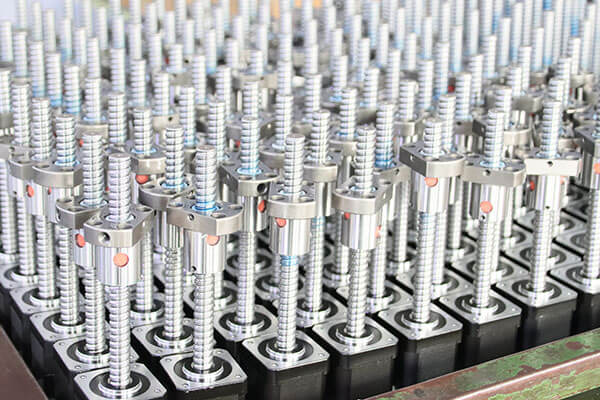
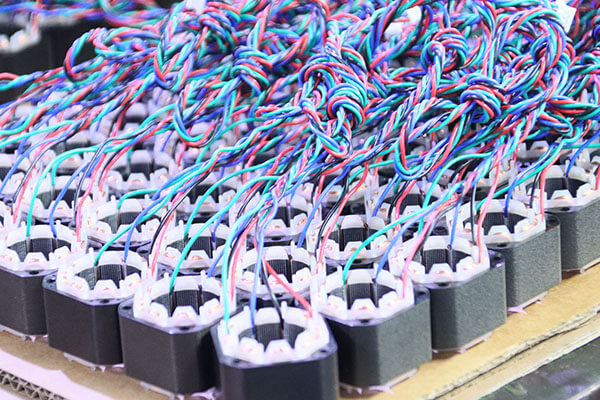
CHANGZHOU JKONGMOTOR CO.,LTD. was founded in 2010,is a professional high-tech manufacturer of stepper motors and brushless motors.Now 100+ employees, workshop area of 7,000 square meters.
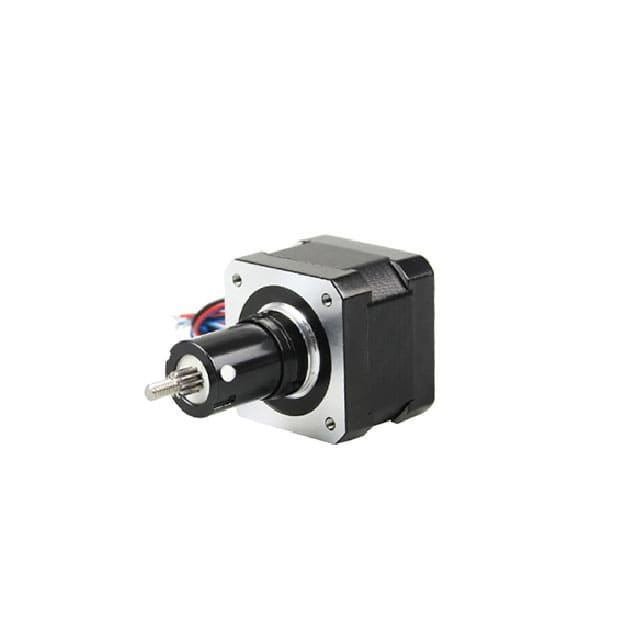
We are a professional manufacturer in Changzhou city, China. Production Capacity exceeds more than 2 million motors per year. Our Company offers many major series of products: Hybrid Stepper motors, Closed Loop Stepper Motor, Linear Stepper Motor, Brushless Dc motor, Dc Brush motor, Motor Driver, Geared Motor, Brake Motor, PM Stepper Motor, Power Supply and so on... We are always continues develop new type models.
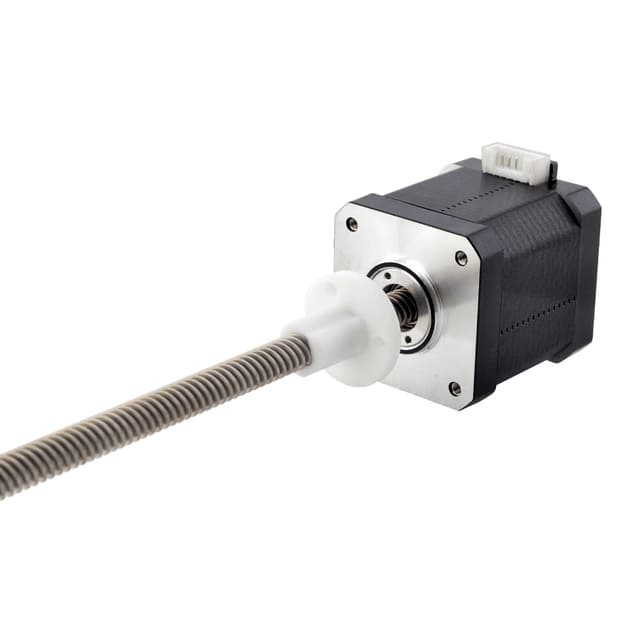
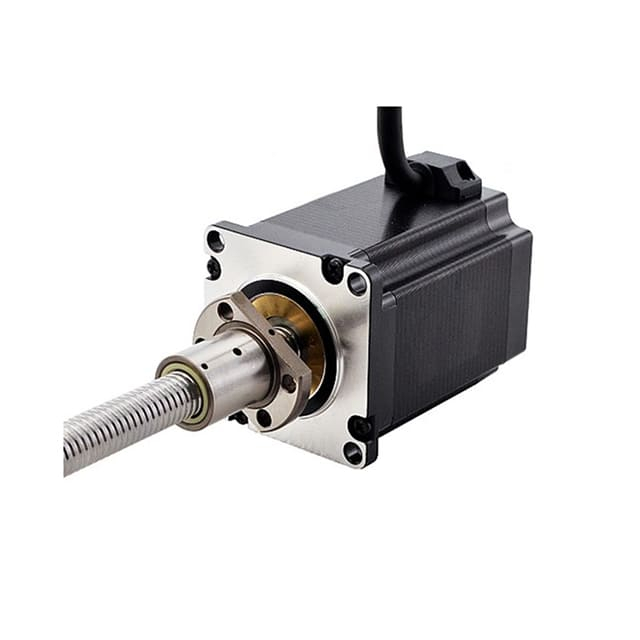
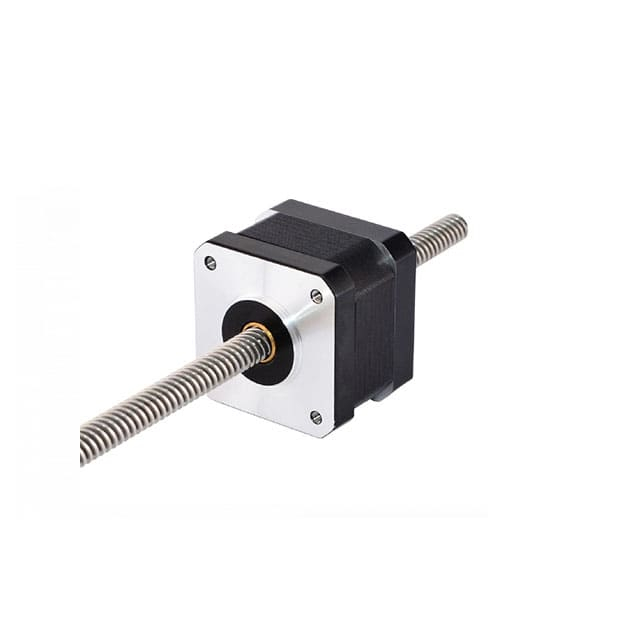
Linear stepper motors support T-type or ball screws for different applications. T-type screws offer cost efficiency, while ball screws provide smoother motion and higher precision. Captive and non-captive designs allow guided motion or extended travel flexibility.
Linear stepper motors can be built as integrated linear motion modules combining the motor and transmission components. These compact plug-and-play solutions simplify installation, reduce mechanical complexity, and improve system integration in automation equipment.
Customization options include electromagnetic brakes, precision encoders, and integrated actuator or control systems. These features enhance load holding capability, positioning accuracy, and motion stability for demanding industrial automation applications.
The position of a linear actuator can be controlled using several methods:
Stops movement at predefined positions.
Uses encoders, potentiometers, or Hall sensors to measure position.
Industrial systems often use PLC or motion controllers to precisely manage actuator movement.
In linear stepper actuators, pulse signals determine the exact movement distance, enabling highly accurate positioning.
These control methods allow linear actuators to achieve precise, repeatable motion in automation systems.
The lifespan of a linear motor depends on factors such as load conditions, operating environment, and maintenance.
In general:
High-quality linear motors can last 20,000 to 50,000 operating hours or more
Systems with fewer mechanical contact parts often last longer
Proper cooling and load management can significantly extend service life
Because many linear motors have minimal mechanical wear, they can provide long operational lifespans in industrial environments.
No, a stepper motor cannot operate properly without a driver.
A stepper motor driver is necessary because it:
Converts control signals into phase currents
Controls current flow to motor windings
Generates step pulses
Protects the motor from overcurrent
Without a driver, the motor cannot properly sequence its coils, and it will not produce controlled motion.
Although linear actuators are widely used, they also have some limitations:
Limited speed compared to rotary motors
Potential mechanical wear in screw-based actuators
Limited stroke length in some designs
Higher cost for precision models
Load capacity limitations depending on design
Choosing the right actuator requires evaluating force, stroke length, precision, and duty cycle requirements.
Linear motors are widely used in applications that require precise linear positioning and high-speed motion control, including:
CNC machines
3D printers
Semiconductor manufacturing equipment
Medical diagnostic devices
Robotics and automation systems
Packaging machinery
Laboratory instruments
Optical alignment systems
Their ability to provide direct drive linear motion with high precision makes them ideal for modern automation technologies.
The three main types of stepper motors are:
Uses a permanent magnet rotor and is commonly used for low-speed and moderate precision applications.
Uses a soft iron rotor and relies on magnetic reluctance. It provides fast response but lower torque.
Combines PM and VR designs, offering high torque, fine step resolution, and excellent accuracy. Hybrid stepper motors are the most widely used type in industrial automation.
High positioning accuracy
Smooth and quiet motion
High speed and acceleration
Reduced mechanical transmission components
Low maintenance requirements
Higher initial cost
Requires advanced control systems
Heat management challenges in high-power systems
Sensitive to environmental conditions such as dust or contamination
A servo motor usually produces rotary motion, while a linear servo motor produces direct linear motion.
| Feature | Servo Motor | Linear Servo |
|---|---|---|
| Motion | Rotary | Linear |
| Mechanism | Shaft rotation | Direct linear movement |
| Feedback | Encoder or resolver | Linear encoder |
| Applications | Robotics, CNC rotation | Precision stages, semiconductor equipment |
Linear servos are typically used in applications requiring extremely high speed and precision in linear positioning.
Linear motors are typically more expensive due to several factors:
High precision manufacturing requirements
Advanced magnetic materials
Integrated mechanical structures
High-performance motion control electronics
Specialized cooling and design requirements
Additionally, many linear motors are used in high-end industries such as semiconductor manufacturing, aerospace, and medical equipment, where precision and reliability justify the higher cost.
The main difference lies in motion type and control precision.
| Feature | Linear Actuator Motor | Stepper Motor |
|---|---|---|
| Motion | Linear motion output | Rotary motion output |
| Control | Often continuous movement | Moves in precise steps |
| Accuracy | Moderate positioning accuracy | Very high positioning precision |
| Feedback | Often requires sensors | Can run open-loop |
| Applications | Lifting, pushing, automation | CNC, robotics, positioning systems |
A linear stepper motor combines the advantages of both, delivering precise step-based control with direct linear movement.
A linear stepper motor works by converting digital electrical pulses into controlled linear displacement.
A driver sends electrical pulses to the motor windings.
The magnetic fields inside the stator energize sequentially.
This causes the rotor or threaded shaft to move in precise steps.
The rotational motion is translated into linear motion through a lead screw or integrated linear mechanism.
Each pulse corresponds to a fixed linear step distance, enabling extremely accurate positioning without the need for complex feedback systems.
A linear stepper motor is an electromechanical device that converts electrical pulse signals into precise linear motion rather than rotational motion. Unlike traditional stepper motors that rotate a shaft, a linear stepper motor directly produces forward and backward linear movement.
This type of motor integrates a stepper motor with a lead screw, threaded shaft, or magnetic linear structure, allowing it to move loads with high precision. Linear stepper motors are widely used in medical devices, automation equipment, robotics, semiconductor machinery, laboratory instruments, and precision positioning systems.
Beyond manufacturing, the factory provides professional engineering support for customized motion control solutions. Application engineers assist customers with motor selection, motion system design, and performance optimization to ensure the final product meets the exact requirements of the application. Whether the project involves robotics, medical equipment, laboratory automation, or semiconductor manufacturing, the company can deliver tailored linear motion solutions that improve equipment efficiency, accuracy, and reliability.
© COPYRIGHT 2025 CHANGZHOU JKONGMOTOR CO.,LTD ALL RIGHTS RESERVED.