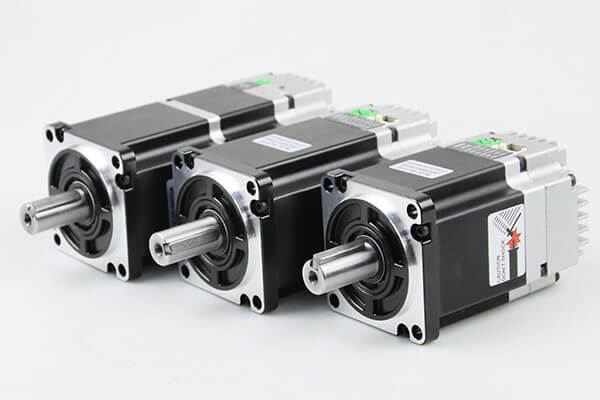
Integrated BLDC servo motors are becoming an increasingly practical motion-control solution for Greek manufacturers, machine builders, robotics companies, logistics operators, medical-equipment manufacturers, and industrial automation integrators. Unlike a conventional motor-and-drive arrangement, an integrated BLDC servo motor combines the brushless DC motor, encoder, servo drive, and control electronics into one compact assembly.
For buyers in Greece, the most important question is not simply which motor has the highest power or lowest price. The better question is which supplier can provide the right combination of torque, speed, feedback accuracy, communication protocol, mechanical configuration, environmental protection, delivery capability, and engineering support.
This guide presents 20 suppliers and manufacturers that Greek OEMs and automation companies can consider when sourcing integrated BLDC servo motors. The first three positions focus on JKONGMOTOR, BESFOC Motor, and LeanMotor, while the remaining suppliers represent alternative manufacturers, technology companies, distributors, and sourcing channels relevant to the Greek market.
Important purchasing note: Not every company below is a Greece-based manufacturer of integrated BLDC servo motors. Some are international manufacturers or suppliers whose products can be sourced by Greek customers. Product availability, local representation, and current distribution arrangements should be confirmed before placing an order.
What Is an Integrated BLDC Servo Motor?
An integrated BLDC servo motor is a closed-loop brushless motor system in which several traditionally separate components are combined into one housing.
A typical system may contain:
BLDC motor
Encoder
Servo drive
Controller electronics
Communication interface
Motor protection circuitry
Optional brake
Optional gearbox
Optional cooling system
This architecture is particularly useful when machine space is limited or when the equipment manufacturer wants to reduce wiring and simplify installation.
Compared with a conventional motor + external servo drive + encoder configuration, an integrated design can reduce the number of external components and shorten the control wiring between the motor and drive.
For example, JKONGMOTOR's integrated BLDC servo range combines the motor, encoder and drive and supports control options including Pulse, RS485 and CANopen, with additional configurations such as gearboxes, brakes and cooling fans.
Main Types of Integrated BLDC Servo Motors
Not all integrated BLDC servo motors are designed for the same application.
One-Stop Integrated DC Servo Motor Solution Provider
Shaft
Lead Screw
Module
Linear Motion
Brake
Gearbox
Worm Gearbox
Wires
Protect Level
Protect Level
Top 20 Integrated BLDC Servo Motor Suppliers in Greece
1. JKONGMOTOR
Company Profile
JKONGMOTOR is a China-based manufacturer specializing in stepper motors, BLDC motors, integrated servo motors, geared motors, and motion-control products. The company states that it was founded in 2010 and has more than 100 employees, a production facility of approximately 7,000 square meters, and annual motor production exceeding two million units.
NEMA 17, NEMA 23 and NEMA 24 integrated servo motors
48V and 72V integrated servo motors
Planetary geared BLDC servo motors
Worm geared BLDC servo motors
Brake-integrated servo motors
Pulse-control models
RS485/Modbus models
CANopen models
The IDC80 platform, for example, reaches 750W to 1000W, with 48V/72V configurations and integrated 17-bit encoder options.
Advantages
JKONGMOTOR's strongest advantage is its OEM/ODM customization capability. Customers can specify shafts, gearboxes, brakes, IP protection, encoder configurations, communication methods, and other mechanical or electrical requirements.
For applications requiring more torque, the company also offers integrated BLDC servo motors with planetary or worm gearboxes.
2. BESFOC Motor
Company Profile
BESFOC Motor is a Changzhou-based integrated motor and motion-control manufacturer established in 2011. The company states that it manufactures integrated motors, linear motion products, BLDC motors, stepper motors, drivers, and related motion-control products, with annual shipments exceeding two million motors and drivers.
Main Products
Integrated BLDC servo motors
Integrated stepper servo motors
Brushless DC motors
Linear stepper motors
Motor drivers
Encoders
Gearboxes
Linear motion products
Its BFIDS60 integrated BLDC servo motor is one example, offering a 60 mm frame, 400W output, 48V supply, 3000 RPM rated speed, 1.27 Nm rated torque, and a 17-bit absolute encoder.
Advantages
BESFOC's strengths include OEM/ODM customization, integrated motion-control development, broad product coverage, and international certification capability.
For Greek buyers, this makes the company worth considering when one supplier needs to provide both integrated servo motors and related motion-control components.
3. LeanMotor
Company Profile
LeanMotor is another China-based stepper and BLDC motor manufacturer with an emphasis on customized motion-control solutions. The company states that it has more than 15 years of manufacturing experience and produces stepper motors, BLDC motors, integrated servo motors, drivers and related components.
Main Products
Integrated BLDC servo motors
Integrated DC servo motors
Brushless DC motors
Geared BLDC motors
Stepper servo motors
Encoders
Gearboxes
Brakes
Integrated drivers
Its integrated BLDC servo portfolio includes IDC60 and IDC80 products, while the company also supports Pulse, RS485, CANopen and EtherCAT configurations.
Advantages
LeanMotor emphasizes OEM/ODM customization, including shaft dimensions, wiring, motor parameters, gearboxes, brakes, encoders, IP protection and customized electronics.
4. Applied Motion Products
Company Profile
Applied Motion Products is a specialist in motion-control systems and integrated servo technology. Its MDX+ range is particularly relevant to buyers searching for integrated low-voltage servo motors.
Main Products
MDX+ integrated servo motors
Integrated stepper motors
Servo drives
Stepper drives
Motion controllers
Advantages
The MDX+ family integrates the servo motor, drive and encoder and supports Pulse/Direction, RS485, EtherCAT, CANopen and EtherNet/IP depending on configuration. Products are available in power levels from 100W to 750W, with brake and STO options.
5. ROBOTIS
Company Profile
ROBOTIS is strongly associated with robotics and intelligent actuators.
Main Products
Dynamixel actuators
BLDC-based servo actuators
Robot joint modules
Controllers
Robotics accessories
Advantages
Its Dynamixel-P series is an especially interesting example of an all-in-one architecture, combining a BLDC motor, encoder, driver, microcontroller, communication network and reduction gearhead into one actuator.
6. maxon
Company Profile
maxon is a precision-motion manufacturer known for compact motor and actuator technology.
Main Products
BLDC motors
Servo motors
Gearheads
Encoders
Controllers
Integrated drive systems
Advantages
maxon's key strength is precision engineering, making it a candidate for medical equipment, robotics, laboratory automation and high-performance miniature motion applications.
7. FAULHABER
Company Profile
FAULHABER specializes in miniature and micro-drive systems.
Main Products
Brushless DC motors
Servo motors
Integrated drive systems
Encoders
Gearheads
Advantages
Its compact motor technology makes it particularly relevant for applications where low weight, small dimensions and precise motion are more important than very high output power.
8. Portescap
Company Profile
Portescap is a motion-control manufacturer offering miniature motors and precision motion solutions.
Main Products
BLDC motors
DC motors
Gearheads
Encoders
Integrated electronics
Advantages
Portescap's MotionCompass selection platform specifically allows users to filter BLDC motors by features such as Hall sensors, sensorless operation and integrated electronics. Greece is also included among the countries supported for Portescap's EStore shipment.
9. Nanotec
Company Profile
Nanotec specializes in compact drive technology and intelligent motors for automation and robotics.
Main Products
BLDC motors
Integrated motors
Servo motors
Controllers
Gearboxes
Encoders
Advantages
Nanotec is attractive for OEM projects requiring a combination of motor hardware, feedback and intelligent control.
10. JVL
Company Profile
JVL is known for integrated motor technology, particularly where reducing external electronics and wiring is important.
Main Products
Integrated servo motors
Integrated stepper motors
BLDC motors
Controllers
Gearboxes
Advantages
The integrated architecture is useful for decentralized automation systems where the electronics can be located directly at the motor.
11. Moons'
Company Profile
MOONS' is a global motion-control manufacturer with a broad portfolio of stepper and servo technologies.
Main Products
Integrated servo motors
BLDC motors
Stepper motors
Servo drives
Motion controllers
Advantages
MOONS' is a suitable alternative for customers looking for a larger industrial motion-control portfolio rather than a single motor product.
12. Leadshine
Company Profile
Leadshine focuses on motion-control systems for industrial automation.
Main Products
Servo motors
Integrated servo systems
Stepper motors
Servo drives
Motion controllers
Advantages
Its product range is relevant to machine builders who need motor and drive solutions from the same motion-control ecosystem.
13. JMC
Company Profile
JMC is an automation and motion-control manufacturer offering servo and stepper-based solutions.
Main Products
Integrated servo motors
AC/DC servo systems
Stepper motors
Servo drives
Motion controllers
Advantages
JMC can be considered for cost-conscious automation projects requiring integrated motion control.
MyActuator is particularly relevant to robot arms, AGVs, AMRs and compact robotic mechanisms, where high torque density is important.
15. Allied Motion
Company Profile
Allied Motion develops motion products for industrial, medical and mobile applications.
Main Products
BLDC motors
Servo motors
Integrated motor systems
Controllers
Gearmotors
Advantages
Its strength is application-oriented motor engineering across industrial automation, robotics and mobile equipment.
16. Nidec
Company Profile
Nidec is a major motor manufacturer with extensive motor and drive technology.
Main Products
BLDC motors
Servo motors
Industrial motors
Drives
Geared motors
Advantages
Greek customers can access Nidec servo technology through local industrial suppliers. For example, Elergon in Greece lists Nidec Control Techniques servo motors, including brushless servo products.
17. Parker Hannifin
Company Profile
Parker Hannifin provides motion-control and automation technologies with international distribution.
Main Products
Servo motors
Servo drives
Brushless motors
Motion controllers
Automation systems
Advantages
Parker has an established presence in Greece, making it an option for companies that prioritize local technical and distribution support. Historical Parker documentation lists Greece-based support contacts in Athens.
18. Elergon
Company Profile
Elergon is a Greek industrial supplier and automation company serving customers in Greece.
Main Products
Servo motors
Servo drives
Industrial automation components
Motion-control systems
Nidec Control Techniques products
Advantages
Its major advantage is local Greek support. Elergon lists its headquarters in Acharnes, Attica, and provides servo motor products from Nidec Control Techniques.
19. Nicolopoulos Automation
Company Profile
Nicolopoulos Automation provides industrial automation engineering, material supply, installation, programming, technical support and repair services in Greece.
Main Products and Services
PLC systems
Servo drives
Servo motors
Controllers
Industrial automation equipment
Repair services
Advantages
For Greek OEMs, the company's advantage is not simply motor sales but local engineering, installation, programming and technical support. It also handles servo motor and drive repair.
20. Mouser Electronics Greece
Company Profile
Mouser is an electronics and industrial-component distribution channel rather than an integrated BLDC motor manufacturer.
Main Products
Its Greek storefront provides access to:
BLDC motors
Servo motors
Integrated servo motors
Encoders
Motor drivers
Motion-control components
Advantages
For prototype development and low-volume procurement, a distributor can be useful because engineers can compare multiple brands and order individual units. Mouser Greece currently lists integrated servo products such as Applied Motion MDX+ and BLDC motor products from multiple manufacturers.
How Does an Integrated Brushless Servo Motor Work?
The controller first sends a command for the required position, speed, or torque. The integrated servo drive processes this command and supplies controlled current to the BLDC motor windings.
As the motor rotates, the encoder continuously measures the rotor's position and speed. The drive compares the actual movement with the commanded movement and adjusts the motor current accordingly.
This is what makes the system closed-loop rather than simply an open-loop motor system.
2. What Happens Inside the Motor?
An integrated brushless servo motor normally contains several important components.
BLDC Motor
The BLDC motor converts electrical energy into mechanical rotation.
Unlike a brushed DC motor, it does not use mechanical brushes and a commutator. Instead, electronic switching controls the stator windings while permanent magnets are mounted on the rotor.
This gives BLDC motors advantages such as:
Long operating life
Low mechanical wear
High efficiency
High power density
Suitable for continuous operation
Encoder
The encoder is the feedback element.
It detects the actual position and speed of the rotor and sends this information to the integrated drive.
For example, some JKONGMOTOR integrated BLDC servo models use a 17-bit absolute encoder.
Integrated Servo Drive
The servo drive receives commands from the machine controller and controls the current supplied to the motor phases.
Its functions can include:
Electronic commutation
Speed control
Position control
Torque/current control
Acceleration and deceleration control
Fault detection
Overcurrent protection
Controller and Communication Interface
Depending on the model, the integrated servo motor may communicate with the machine through Pulse/Direction, RS485/Modbus, CANopen, or other industrial communication methods.
3. How Closed-Loop Control Works
The most important difference between an ordinary BLDC motor and a BLDC servo motor is feedback.
For example, suppose a PLC commands the motor to rotate at 1,500 RPM.
The integrated servo drive does not simply apply a fixed voltage and assume that the motor will reach 1,500 RPM.
Instead:
The controller sends the speed command.
The integrated drive receives the command.
The BLDC motor begins rotating.
The encoder measures actual rotor movement.
The drive calculates the difference between commanded and actual speed.
The drive increases or decreases motor current.
The motor corrects its speed.
This feedback process continues continuously.
The result is much more controlled motion under changing loads.
4. How Position Control Works
For positioning applications, the process is similar.
Suppose an automated machine needs the motor to rotate exactly 90 degrees.
The controller sends a position command.
The encoder reports the actual rotor position to the drive. If the motor has not yet reached the target, the drive continues applying the appropriate current.
As the motor approaches 90°, the controller reduces the command to prevent excessive overshoot.
The motor eventually settles around the target position.
This makes integrated BLDC servo motors suitable for:
Robotics
CNC equipment
Packaging machines
AGVs and AMRs
Automatic doors
Medical equipment
Conveyor systems
Pick-and-place machines
5. How Speed Control Works
Speed control is particularly important for conveyors, AGVs and automated machinery.
Imagine an AGV traveling on a flat surface and then moving onto a ramp.
The mechanical load increases on the ramp. Without feedback, motor speed could drop significantly.
With closed-loop servo control, the encoder detects the speed reduction. The drive responds by increasing the motor current and torque to maintain the commanded speed.
This is one reason integrated servo motors are attractive for mobile robots and automated material-handling equipment.
6. What Happens When the Load Changes?
One of the biggest benefits of servo control is its ability to respond to changing loads.
Consider a conveyor carrying an empty box.
The motor requires relatively little torque.
Then a heavy box enters the conveyor.
The load increases suddenly, causing the motor to slow.
The encoder detects the speed error, and the servo drive increases motor current.
The motor generates additional torque and attempts to return to the commanded speed.
This continuous correction happens automatically.
7. How Communication Controls an Integrated Servo Motor
An integrated servo motor can receive commands in different ways depending on its design.
Pulse Control
With Pulse/Direction control, the number of pulses can correspond to commanded movement while the direction signal determines rotation direction.
This method works well with:
PLCs
Motion controllers
CNC systems
Positioning equipment
RS485 / Modbus
RS485-based communication allows a controller to exchange digital commands and status information with the motor.
This can be useful for multi-axis systems and distributed automation.
CANopen
CANopen is commonly used when multiple motors and other devices need to communicate through a network.
For example, a machine could have several integrated servo motors connected to one CANopen network.
JKONGMOTOR's current integrated BLDC servo products offer Pulse, RS485 Modbus and CANopen options.
8. What Happens When a Fault Occurs?
An integrated servo system can continuously monitor operating conditions.
Depending on the design, protection functions may include:
Overcurrent protection
Overvoltage protection
Undervoltage protection
Overtemperature protection
Encoder fault detection
Communication fault detection
Position error monitoring
If an abnormal condition occurs, the drive can stop or limit motor operation and report a fault to the controller.
This is particularly valuable for unattended equipment such as AGVs, AMRs and automated production machines.
9. Why Integrate the Motor and Drive?
A traditional servo system might look like:
PLC → Servo Drive → Motor + Encoder
An integrated BLDC servo motor changes this architecture to:
PLC → Integrated Servo Motor
The motor itself contains much of the electronics needed for motion control.
The result can include:
Less wiring
Smaller control cabinets
Simpler installation
Reduced external components
Faster machine integration
Compact machine design
JKONGMOTOR describes its integrated BLDC servo architecture as combining the motor, servo drive, feedback sensor and controller into a single unit.
10. Example of an Integrated BLDC Servo Motor
A practical example is the JKIDS57 series.
The JKIDS57 integrated BLDC servo motor family includes models around the NEMA 23 / 57 mm frame size. Depending on configuration, the series covers approximately 91W to 200W, 24V to 48V operation, and rated torque from approximately 0.29 Nm to 0.64 Nm, with a 17-bit integrated encoder.
For higher-power applications, the JKIDS80 series provides configurations from approximately 750W to 1000W, with 48V or 72V options and rated torque up to 3.2 Nm.
These examples show how the same basic closed-loop principle can be scaled from compact automation equipment to higher-power mobile and industrial machinery.
Integrated BLDC Servo Motor vs. Conventional BLDC Motor
Feature
Conventional BLDC Motor
Integrated BLDC Servo Motor
Motor
Yes
Yes
Electronic commutation
External/internal driver
Integrated drive
Encoder
Optional
Typically integrated
Closed-loop control
Usually optional
Standard architecture
Position control
Limited without additional electronics
Yes
Speed control
Possible with suitable controller
Precise closed-loop control
External wiring
More
Less
Installation
More components
More compact
Fault monitoring
Depends on controller
Usually integrated
OEM customization
Depends on supplier
Often available
The key point is that BLDC describes the motor technology, while servo describes the closed-loop control system. A BLDC motor becomes part of a servo system when feedback and appropriate control are used to regulate motion.
Why OEMs Choose Integrated Brushless Servo Motors
For OEM machine builders, the main attraction is not simply the motor itself. It is the complete motion-control architecture.
An integrated BLDC servo motor can help OEMs:
Reduce cabinet space
Simplify wiring
Reduce installation work
Standardize motor assemblies
Improve closed-loop motion performance
Simplify machine design
Add communication networking
Reduce the number of separate components
For applications requiring even higher output torque, the integrated servo motor can also be combined with a planetary or other gearbox. For example, JKONGMOTOR offers integrated BLDC servo configurations with planetary gearboxes, including 200W NEMA 24 and 750W/1000W NEMA 80-class products.
In Simple Terms
An integrated brushless servo motor works like a motor and its control system working as one intelligent unit.
The motor produces rotation, the encoder tells the drive what the motor is actually doing, and the integrated servo drive continuously adjusts the motor current to achieve the commanded motion.
That continuous command → movement → feedback → correction cycle is the fundamental working principle behind an integrated BLDC servo motor.
How to Choose an Integrated BLDC Servo Motor Supplier in Greece
Choosing a supplier should start with the machine requirements rather than the supplier's catalog.
For example, JKONGMOTOR offers integrated BLDC servo configurations using a 17-bit encoder, including its IDC80 series.
5. Consider the Gearbox
A gearbox is often necessary when the motor needs:
lower output speed + higher output torque.
Planetary gearboxes are attractive when efficiency and lower backlash are important.
Worm gearboxes can be useful when compact right-angle transmission or a particular mechanical arrangement is required.
6. Consider IP Protection
For outdoor equipment, mobile robots, food-processing machinery or dusty industrial environments, the protection rating should be discussed early.
Do not simply ask whether a motor is "waterproof."
Ask about:
IP rating
Shaft sealing
Connector protection
Cable outlet sealing
Operating temperature
Condensation
Dust exposure
Wash-down conditions
Integrated BLDC Servo Motor Advantages and Limitations
An integrated BLDC servo motor combines a brushless DC motor, encoder, servo drive, and control electronics into a single compact unit. Compared with a conventional motor-and-drive system, this architecture can simplify machine design, reduce wiring, and provide closed-loop control in a smaller package.
For OEM machine builders, AGV and AMR manufacturers, robotics companies, conveyor integrators, and industrial automation engineers, however, the decision should be based on both the advantages and limitations of integrated BLDC servo technology.
Advantages of Integrated BLDC Servo Motors
1. Compact and Space-Saving Design
One of the biggest advantages is the compact mechanical architecture.
With a conventional servo system, the machine may require:
Motor
Encoder cable
Power cable
Servo drive
Control cabinet
Additional connectors
An integrated BLDC servo motor moves much of the electronics into the motor housing.
This can be particularly useful where installation space is limited, such as:
AGVs
AMRs
Robotic arms
Automated doors
Medical equipment
Packaging machinery
Compact conveyors
For mobile robots, reducing the size of the control cabinet can also create more room for batteries, sensors, and payload.
2. Reduced Wiring
A conventional servo system may require separate wiring between the motor and drive.
An integrated servo motor can significantly reduce this wiring.
For machines with many axes, the difference can become substantial.
For example, a machine with eight servo axes could potentially eliminate a large amount of motor-to-drive wiring by using decentralized integrated servo motors.
3. Easier Installation
Because the motor, encoder and drive are already integrated, machine builders can simplify mechanical and electrical installation.
Instead of separately mounting and connecting a motor and drive, the OEM can install the integrated motor and connect the required power and communication lines.
This can reduce:
Installation time
Wiring labor
Cabinet assembly
Connector count
Commissioning complexity
This is particularly valuable for standardized OEM equipment produced in medium or high volumes.
4. Closed-Loop Motion Control
A major advantage over a basic BLDC motor is closed-loop feedback.
The encoder continuously measures motor position and speed.
The servo drive compares:
Commanded motion vs. actual motion
and adjusts motor current accordingly.
This allows the system to control:
Position
Speed
Acceleration
Deceleration
Torque
Closed-loop control is useful when the load changes during operation.
For example, an AGV may travel on a flat floor and then climb a ramp. As the load increases, the servo system can detect the speed error and increase motor torque to maintain the commanded movement.
5. Better Speed Stability
A conventional open-loop motor can experience noticeable speed changes when the load changes.
An integrated servo motor uses encoder feedback to compensate for these variations.
This makes it suitable for applications requiring relatively stable speed, such as:
Conveyor systems
Printing equipment
Packaging machinery
Automatic doors
Material-handling equipment
Production machinery
The actual performance still depends on motor sizing, servo tuning, controller performance, and mechanical design.
6. Accurate Positioning
Integrated BLDC servo motors can provide accurate positioning because the encoder continuously reports rotor position.
Higher-resolution encoders can provide more detailed feedback.
Actual positioning accuracy depends on much more than encoder resolution, including gearbox backlash, mechanical stiffness, load inertia, tuning, and transmission accuracy.
7. Multiple Communication Options
Modern integrated BLDC servo motors can support different control architectures.
Common options include:
Pulse/Direction
A simple and widely used method for positioning.
RS485 / Modbus
Useful for digital control and multi-axis communication.
CANopen
Suitable for distributed motion-control systems and mobile robots.
EtherCAT
Useful for high-speed synchronized multi-axis applications.
This flexibility makes integrated servo motors easier to adapt to different machine architectures.
8. Smaller Control Cabinets
Because the servo drive is integrated into the motor, the electrical cabinet may become smaller.
This is particularly useful when designing:
Compact packaging machines
AGVs
AMRs
Robots
Automated storage systems
Small CNC machines
Laboratory equipment
In some applications, the motor can be installed directly near the mechanical axis, creating a decentralized motion-control architecture.
9. Lower System-Level Complexity
Although an integrated servo motor may have a higher component price than a standalone BLDC motor, the overall machine architecture can become simpler.
Instead of sourcing:
Motor + encoder + drive + cables + connectors
the OEM can potentially source:
Integrated servo motor + communication cable
This can simplify procurement and reduce the number of suppliers involved in the project.
10. Flexible OEM and ODM Customization
Integrated servo motors can be customized for specific OEM applications.
Typical customization options include:
Shaft diameter
Shaft length
Mounting flange
Encoder
Gearbox
Brake
Cable length
Connector
IP protection
Voltage
Rated power
Communication protocol
Control mode
This is particularly important when a standard catalog motor does not fit the machine's mechanical envelope.
For example, a customized integrated servo motor can be designed with a planetary gearbox and electromagnetic brake for an AGV wheel-drive application.
11. High Efficiency and Long Operating Life
Because BLDC motors use electronic commutation rather than mechanical brushes, there is no brush wear during normal operation.
This can provide:
Long service life
Lower mechanical maintenance
High efficiency
Good power density
Suitability for continuous operation
These characteristics make BLDC servo motors attractive for equipment expected to operate for long periods.
Limitations of Integrated BLDC Servo Motors
Despite these advantages, integrated BLDC servo motors are not the ideal solution for every machine.
1. Heat Dissipation Can Be More Difficult
This is one of the most important technical limitations.
The motor generates heat.
The integrated drive electronics also generate heat.
When both are installed inside or directly attached to the same housing, thermal management becomes more challenging.
The designer must consider:
Ambient temperature
Motor temperature
Drive temperature
Continuous torque
Duty cycle
Housing design
Heat sinking
Airflow
Installation orientation
For high-power applications, a separate servo drive may provide better thermal-management flexibility.
2. Higher Initial Unit Cost
An integrated servo motor usually costs more than a basic BLDC motor.
This is understandable because the product includes additional components such as:
Encoder
Drive electronics
Controller
Communication interface
Protection circuitry
However, comparing only the motor purchase price can be misleading.
In some applications, the integrated solution can have a lower total system cost despite its higher unit price.
3. Electronics Are Exposed to the Motor Environment
Because the electronics are integrated with the motor, the drive electronics are physically closer to:
Heat
Vibration
Shock
Dust
Moisture
Electromagnetic interference
This makes enclosure design and environmental protection particularly important.
For outdoor AGVs or industrial machinery, buyers should check the actual IP rating, temperature range, vibration resistance and connector protection, rather than assuming that every integrated servo motor is suitable for harsh environments.
4. Repair Can Be More Complicated
With a conventional system, the motor and servo drive are separate.
If the drive fails, an engineer can potentially replace only the drive.
With an integrated servo motor, the electronics are part of the motor assembly.
Depending on the manufacturer's service structure, a failure may therefore require:
Repairing the integrated electronics
Replacing the electronic module
Replacing the complete motor assembly
This can increase downtime if spare units are not available.
For production equipment, OEMs should discuss spare-parts availability and repair procedures with the supplier before mass production.
5. Less Flexibility in Drive Selection
With a separate motor and servo drive, an engineer can choose the best drive for the application.
For example:
Motor A + Drive B + Encoder C
With an integrated servo motor, the drive is already selected and designed around the motor.
This is convenient, but it limits the ability to replace the drive with another manufacturer's high-performance controller.
Therefore, integrated systems are generally most attractive when the supplier's complete motor-drive combination already meets the application requirements.
6. Communication Compatibility Must Be Checked Carefully
A motor may support RS485, CANopen or another protocol, but that does not automatically mean it will work seamlessly with every PLC.
Before purchasing, engineers should verify:
Communication protocol
Baud rate
Node configuration
Register mapping
Object dictionary
Control modes
Error codes
Homing functions
Position commands
Speed commands
PLC compatibility
For CANopen systems, for example, the EDS file and supported CiA 402 functions can be important during integration.
7. Limited Power Range in Some Product Families
Integrated servo technology is particularly attractive for compact and medium-power applications.
However, as power increases, thermal management, drive electronics and mechanical integration become increasingly challenging.
For very high-power industrial servo systems, a conventional separate motor and servo drive may still be more practical.
Therefore, buyers should select the architecture based on:
Power + torque + duty cycle + environment + control requirements
rather than choosing an integrated motor simply because it is more compact.
8. Gearbox Backlash Can Affect Positioning
Many integrated BLDC servo motors are available with gearboxes.
While a gearbox can dramatically increase output torque, it can also introduce mechanical backlash.
For precision positioning applications, the buyer should compare:
Gear ratio
Backlash
Efficiency
Rated torque
Peak torque
Radial load
Axial load
Bearing capacity
A high-resolution encoder cannot completely eliminate mechanical errors caused by gearbox backlash or transmission flexibility.
Integrated BLDC Servo Motor: Advantages vs. Limitations
Factor
Advantage
Potential Limitation
Size
Compact
Electronics increase housing complexity
Wiring
Reduced wiring
Communication wiring still required
Installation
Easier
Integration requires protocol compatibility
Feedback
Closed-loop
Encoder adds cost
Speed control
Excellent
Requires proper servo tuning
Positioning
High precision potential
Mechanical backlash still matters
Cabinet
Smaller
Heat may be transferred to motor electronics
Maintenance
Fewer external components
Complete assembly may need replacement
Customization
Gearbox, brake, encoder options
Custom designs may require MOQ
Cost
Lower system complexity
Higher motor unit price
Efficiency
BLDC technology is efficient
Thermal limits must be considered
Applications
Excellent for compact automation
Not ideal for every high-power application
Final Takeaway
The biggest advantage of an integrated BLDC servo motor is that it brings the motor, feedback and drive electronics into a single motion-control package. This can reduce wiring, save space, simplify installation and provide reliable closed-loop speed and position control.
The main limitations are thermal management, higher initial cost, repair considerations, communication compatibility and reduced flexibility compared with completely separate motor-and-drive systems.
For compact automation equipment, AGVs, AMRs, robotics, conveyors, packaging machines and other OEM applications, the benefits can outweigh these limitations. For very high-power or highly specialized servo systems, a conventional motor-and-drive architecture may still provide greater flexibility.
The most effective approach is to evaluate the complete system cost and technical requirements, rather than comparing the purchase price of an integrated motor with the price of a standalone BLDC motor.
Applications of Integrated BLDC Servo Motors in Greece
Integrated BLDC servo motors are increasingly suitable for modern automation systems in Greece because they combine a brushless DC motor, encoder, servo drive, and control electronics into a compact motion-control unit. This architecture can reduce wiring, save installation space, and provide closed-loop control for equipment that requires accurate speed, position, or torque control.
For Greek OEMs and machine builders, the most important applications are not limited to traditional factory automation. AGVs, AMRs, robotics, packaging machinery, conveyors, automatic doors, medical equipment, food-processing machinery, solar tracking systems, and logistics automation can all benefit from integrated BLDC servo technology.
Why Are Integrated BLDC Servo Motors Suitable for Greek Industries?
Greece has a diverse industrial and commercial environment, including manufacturing, food processing, logistics, warehousing, tourism infrastructure, renewable energy, medical technology, and industrial automation.
Many of these applications require motors that are:
Compact
Energy efficient
Reliable for continuous operation
Easy to integrate
Capable of closed-loop control
Available with gearboxes
Compatible with PLCs and industrial networks
Suitable for OEM customization
An integrated BLDC servo motor can combine these requirements into one package.
For example, JKONGMOTOR's integrated BLDC servo motor portfolio includes configurations with Pulse, RS485/Modbus, and CANopen control, as well as encoder, gearbox and brake options.
1. AGVs and AMRs
One of the most important applications for integrated BLDC servo motors is automated guided vehicles (AGVs) and autonomous mobile robots (AMRs).
Greek warehouses, distribution centers, factories, and logistics operations can use AGVs and AMRs for:
Material transportation
Pallet movement
Production-line feeding
Warehouse picking
Cart movement
Automated order fulfillment
Why Integrated BLDC Servo Motors Work Well for AGVs
An AGV requires compact drive systems because space and battery capacity are limited.
An integrated servo motor can combine:
Motor + Encoder + Drive + Communication
into one unit.
This reduces the amount of external electronics and wiring that must be installed inside the vehicle.
A geared integrated servo motor can also provide the high torque and low output speed required for wheel drive.
For mobile robots, common requirements include:
24V or 48V DC supply
High starting torque
Encoder feedback
CANopen or RS485
Compact dimensions
Planetary gearbox
Electromagnetic brake
High IP protection
2. Warehouse and Logistics Automation
The growth of automated warehouses is creating demand for compact motion-control solutions.
Integrated BLDC servo motors can be used in:
Automated storage and retrieval systems
Conveyor systems
Sorting equipment
Transfer carts
Lift mechanisms
Pallet handling systems
Automated guided vehicles
Robotic picking systems
For example, a conveyor may need different speeds depending on product size or production requirements.
A servo motor can receive speed commands from the PLC and continuously adjust its output based on encoder feedback.
This provides better control than a basic open-loop motor.
3. Conveyor Systems
Conveyors are common in manufacturing, warehousing, food processing, packaging, and logistics.
Integrated BLDC servo motors can drive:
Belt conveyors
Roller conveyors
Chain conveyors
Incline conveyors
Vertical conveyors
Transfer conveyors
Sorting conveyors
Why Use a Geared Integrated Servo Motor?
Most conveyors require relatively low output speed but comparatively high torque.
A gearbox allows the motor to operate efficiently at a higher internal speed while producing lower-speed, higher-torque output.
Depending on the application, OEMs may select:
Planetary gearboxes
Spur gearboxes
Worm gearboxes
The choice depends on torque, efficiency, speed, mounting space, backlash, and cost.
4. Packaging Machinery
The packaging industry requires highly repeatable motion.
A closed-loop servo system can provide much better control of this motion profile than a simple fixed-speed motor.
For Greek packaging-machine OEMs, integrated servo motors can also simplify the electrical architecture by reducing the number of separate drive components.
5. Food Processing Equipment
Food processing is another promising application.
Integrated BLDC servo motors can be considered for:
Food conveyors
Dough-processing equipment
Bread-cutting machines
Filling equipment
Portioning machinery
Food packaging
Mixing and dosing systems
However, motor selection must consider the actual environmental conditions.
For equipment exposed to:
Water
Cleaning chemicals
Food particles
Humidity
Temperature fluctuations
the motor's IP rating, surface protection, connector design and sealing must be evaluated carefully.
A standard integrated BLDC servo motor should not automatically be considered suitable for washdown applications.
6. Agricultural Automation
Agriculture remains an important part of the Greek economy, creating opportunities for motorized automation.
Integrated BLDC servo motors can be used in:
Automated irrigation equipment
Agricultural robots
Greenhouse automation
Crop-processing equipment
Sorting machines
Agricultural conveyors
Automated dosing systems
The main advantages are compact size, controllable speed, and the ability to operate from low-voltage DC power in some mobile systems.
For outdoor agricultural equipment, however, engineers should pay particular attention to dust, moisture, temperature, vibration and IP protection.
7. Robotics
Greek robotics companies, research institutions, automation integrators, and machine builders can use integrated BLDC servo motors for robotic motion.
Potential applications include:
Robotic arms
SCARA robots
Collaborative robots
Pick-and-place machines
Mobile robots
Service robots
Inspection robots
Autonomous systems
Robotic applications typically require accurate feedback and rapid response.
The encoder provides information about the actual motor position and speed, while the integrated drive continuously adjusts motor current.
For robotic joints requiring higher output torque, an integrated BLDC servo motor can be paired with a planetary gearbox or other precision reduction system.
8. Automatic Doors and Access Systems
Integrated BLDC servo motors can also be used in automatic doors.
Typical applications include:
Automatic sliding doors
Hospital doors
Commercial building doors
Hotel entrances
Airport doors
Industrial doors
Security gates
The motor needs to provide controlled acceleration and deceleration rather than simply rotating continuously.
Encoder feedback allows the system to determine door movement and position.
A geared servo motor can provide the required output torque while maintaining a compact installation.
9. Medical and Laboratory Equipment
Medical equipment is another application where precise and controlled movement is important.
Integrated BLDC servo motors can be considered for:
Medical beds
Patient-positioning systems
Laboratory automation
Automated sample handling
Diagnostic equipment
Medical pumps
Imaging equipment
Rehabilitation equipment
These applications may place greater emphasis on:
Low noise
Smooth movement
Position accuracy
Reliability
Compact design
Controlled acceleration
For medical equipment, the motor should be evaluated as part of the complete certified system rather than selected solely according to motor specifications.
10. Solar Tracking Systems
Greece has significant solar-energy potential, making solar tracking equipment another interesting application.
Solar trackers need controlled mechanical movement to adjust panel orientation.
Integrated BLDC servo motors can provide:
Position feedback
Controlled rotation
Low-voltage operation
Gear reduction
High output torque
A geared configuration is particularly useful because solar panels generally move slowly but require sufficient torque to overcome mechanical resistance and environmental loads.
For outdoor solar applications, the design must also consider:
UV exposure
Rain
Dust
Wind
Temperature changes
Corrosion
Long-term continuous operation
11. Textile Machinery
Textile manufacturing requires precise and repeatable motion.
Integrated BLDC servo motors can be used for:
Yarn handling
Winding
Feeding
Cutting
Tension control
Textile conveyors
Automated production equipment
Servo feedback can help maintain stable speed and synchronized movement between different machine sections.
12. Printing and Labeling Machines
Printing and labeling equipment often requires precise synchronization.
Applications include:
Label feeders
Rollers
Cutting systems
Printing mechanisms
Product positioning
Packaging-line labeling
A small error in speed or position can cause misalignment or material waste.
An integrated servo motor provides feedback that allows the controller to monitor and correct motor movement.
13. CNC and Light Machine Tools
Integrated BLDC servo motors can also be used in selected CNC and light-duty machine applications.
Potential uses include:
Auxiliary axes
Tool positioning
Material feeding
Automatic adjustment mechanisms
Small machining systems
For demanding CNC applications, however, engineers should carefully compare encoder resolution, servo bandwidth, stiffness, backlash, acceleration capability, and communication performance before selecting an integrated motor.
14. Filling and Dosing Machines
Greek food, beverage, pharmaceutical, and chemical manufacturers use various filling and dosing systems.
Integrated servo motors can control:
Filling pumps
Dosing mechanisms
Screw feeders
Rotary valves
Bottle positioning
Container handling
The ability to accurately control speed and position can improve repeatability and reduce material waste.
For liquid or food-processing applications, the motor's environmental protection must be matched to the cleaning and operating conditions.
15. Automated Material Handling
Material-handling equipment can benefit from compact servo systems.
Applications include:
Transfer carts
Lift platforms
Automated trolleys
Roller systems
Small lifting mechanisms
Sorting equipment
Robotic transport systems
Where vertical loads are involved, an electromagnetic brake may be necessary depending on the mechanical safety architecture.
It is important to understand that a motor brake and a functional safety system are not automatically equivalent.
16. Hotel and Commercial Automation
Greece's large tourism and hospitality sector creates applications for compact automation.
Integrated BLDC servo motors can potentially be used in:
Automatic doors
Automated curtains
Window systems
Small elevators or lifting mechanisms
Automated housekeeping equipment
Service robots
Automated food-service equipment
The key benefits are compact installation, low-voltage options, controllable movement and reduced external wiring.
17. Marine and Port Automation
Ports, marine facilities and coastal industrial environments can require motorized equipment for:
Automated gates
Material handling
Small conveyors
Positioning systems
Inspection equipment
Autonomous vehicles
Marine environments are particularly demanding because of humidity, salt exposure and corrosion.
A motor intended for these applications should therefore be evaluated for corrosion protection and environmental sealing rather than relying only on its electrical specifications.
18. How Greek OEMs Should Select an Integrated BLDC Servo Motor
The application determines the motor specification.
Before requesting a quotation, Greek OEMs should prepare at least the following information:
Parameter
What to Specify
Supply voltage
24V / 36V / 48V / 72V, etc.
Rated power
W
Rated torque
Nm
Peak torque
Nm
Speed
RPM
Encoder
Type and resolution
Control
Pulse / RS485 / CANopen / EtherCAT
Gearbox
Type and ratio
Brake
Required or not
IP rating
Required protection
Duty cycle
Continuous / intermittent
Environment
Indoor / outdoor / washdown
Temperature
Minimum and maximum
Shaft
Diameter and length
Mounting
Flange and hole pattern
Quantity
Prototype / annual volume
This information allows manufacturers to recommend a motor based on the actual machine requirements, rather than simply selecting the closest catalog model.
Why OEM Customization Matters in Greece
For Greek machine builders, an off-the-shelf motor is not always the best solution.
A customized integrated BLDC servo motor may include:
Customized shaft
Modified flange
Customized cable
Specific connector
Different encoder
Planetary gearbox
Worm gearbox
Electromagnetic brake
Higher IP protection
Customized communication
Customized firmware
This can be particularly valuable for OEMs developing their own AGVs, packaging machines, robotics platforms, or automated equipment.
Manufacturers such as JKONGMOTOR provide integrated BLDC servo configurations with options for encoder, gearbox, brake and different control interfaces, making OEM/ODM development a practical route for application-specific projects.
Final Thoughts
The applications of integrated BLDC servo motors in Greeceextend well beyond conventional factory automation. Their combination of brushless motor technology, encoder feedback, integrated drive electronics, compact construction, and network communication makes them suitable for many Greek OEM and automation projects.
The strongest opportunities include AGVs and AMRs, warehouse automation, conveyors, packaging machinery, food-processing equipment, robotics, automatic doors, medical equipment, solar trackers, agricultural automation, and material-handling systems.
For OEM buyers, the most important consideration is not simply motor power. The complete system should be evaluated according to torque, speed, acceleration, encoder resolution, control protocol, gearbox requirements, brake requirements, environmental conditions, duty cycle, mechanical dimensions, and customization capability.
For application-specific projects, working directly with an experienced integrated servo motor manufacturer can also make it easier to customize the motor, encoder, gearbox, brake, shaft, communication interface, and mounting configuration as one complete motion solution.
Final Selection: Which Supplier Should Greek OEMs Consider?
For a Greek company developing a new machine, AGV, AMR, robot, conveyor or automation system, supplier selection should be based on technical fit and total project cost, not simply brand recognition.
For OEM/ODM integrated BLDC servo motor projects, JKONGMOTOR, BESFOC and LeanMotor are particularly relevant because their product portfolios are built around integrated motor solutions and customization.
JKONGMOTOR stands out when a project requires a combination of integrated BLDC servo motor, encoder, gearbox, brake, customized shaft and industrial communication interface. Its current portfolio includes compact NEMA-based products as well as higher-power IDC80 solutions reaching 750W and 1000W.
BESFOC is another strong option for buyers looking for an integrated motor manufacturer with a broad motion-control portfolio and established OEM/ODM capabilities.
LeanMotor is worth comparing when customization flexibility, integrated servo products and related BLDC/stepper motor sourcing are important.
For buyers who prioritize Greek-based engineering or distribution support, companies such as Elergon and Nicolopoulos Automation can also be useful channels, particularly when installation, programming, repair or local technical assistance is required.
The best purchasing approach is to prepare a technical specification before requesting quotations. Include voltage, rated power, rated torque, peak torque, speed, encoder resolution, control method, gearbox ratio, brake requirement, IP rating, operating temperature, shaft dimensions, duty cycle, quantity and target delivery date.
A supplier that can answer those questions clearly—and provide drawings, datasheets, communication documentation, samples and engineering support—is usually a much better long-term partner than a supplier selected only because its motor has the lowest unit price.
FAQs
1. What are integrated BLDC servo motors?
Integrated BLDC servo motors combine a brushless DC motor, encoder, servo drive, and control electronics into one compact unit. This design provides closed-loop speed and position control while reducing external wiring and installation space.
2. What industries in Greece use integrated BLDC servo motors?
Integrated BLDC servo motors can be used in AGVs, AMRs, robotics, packaging machinery, conveyors, food-processing equipment, automatic doors, medical equipment, solar tracking systems, logistics automation, and agricultural machinery.
3. Why are integrated BLDC servo motors suitable for AGVs and AMRs in Greece?
They offer a compact motor-drive architecture, encoder feedback, low-voltage operation, and communication options such as RS485 and CANopen. When combined with a gearbox, they can provide the torque and controlled speed required for AGV and AMR wheel-drive systems.
4. Can integrated BLDC servo motors be used for conveyor systems?
Yes. Integrated BLDC servo motors are suitable for belt conveyors, roller conveyors, chain conveyors, sorting conveyors, and transfer systems. A gearbox can be added when the application requires lower output speed and higher torque.
5. Are integrated BLDC servo motors suitable for packaging machines?
Yes. Their closed-loop control makes them suitable for packaging applications that require accurate positioning, repeatable speed, acceleration, and deceleration, including filling, labeling, sealing, wrapping, and strapping equipment.
6. Can integrated BLDC servo motors be customized for Greek OEM projects?
Yes. Depending on the manufacturer, OEM customization may include shaft dimensions, mounting flange, encoder, gearbox, brake, cable, connector, IP protection, voltage, and communication protocol. Customization is particularly useful when a standard motor does not match the machine's mechanical or electrical requirements.
7. What control methods are available for integrated BLDC servo motors?
Common control methods include Pulse/Direction, RS485/Modbus, CANopen, and EtherCAT. The appropriate option depends on the PLC, motion controller, number of axes, synchronization requirements, and overall machine architecture.
8. Can integrated BLDC servo motors be used outdoors in Greece?
They can be used in suitable outdoor applications, but the motor must be selected according to the actual environment. Buyers should evaluate IP rating, operating temperature, humidity, dust, vibration, corrosion, UV exposure, and connector sealing before selecting a motor for outdoor equipment.
9. How do I choose an integrated BLDC servo motor for a Greek industrial application?
Start with the required voltage, rated torque, peak torque, speed, acceleration, encoder resolution, control method, gearbox ratio, brake requirement, IP rating, duty cycle, operating temperature, shaft dimensions, and annual quantity. These specifications allow the manufacturer to recommend a suitable motor rather than relying only on nominal power.
10. Why should Greek OEMs consider an integrated BLDC servo motor manufacturer?
An experienced manufacturer can provide a complete motion solution including the BLDC motor, encoder, servo drive, gearbox, brake, communication interface, mechanical customization, and technical documentation. This can simplify procurement and integration for AGV, robotics, packaging, logistics, and other OEM projects.