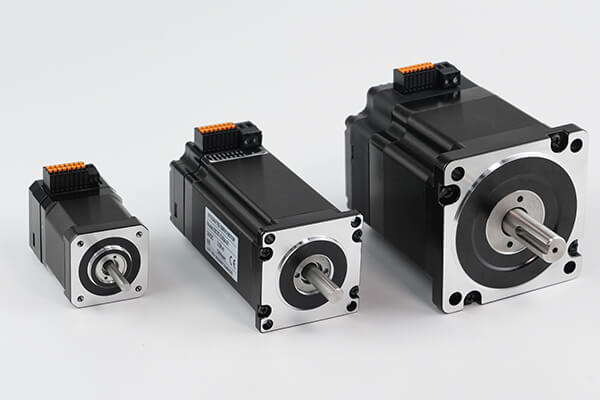
The Russian market for integrated stepper servo motors is becoming increasingly relevant for industrial automation, robotics, CNC equipment, packaging machinery, laboratory equipment, medical devices, AGVs, and other motion-control applications. Unlike a conventional stepper motor that requires a separate driver, an integrated stepper servo motor combines the stepper motor, driver/controller, encoder, and control electronics into a compact package.
For Russian OEMs, machine builders, distributors, and automation engineers, the best supplier is not necessarily the company with the lowest motor price. Torque, encoder resolution, communication protocol, voltage, protection rating, customization capability, delivery reliability, technical support, and long-term supply are often more important.
This guide presents 20 integrated stepper servo motor manufacturers and suppliers relevant to the Russian market, with particular attention to companies offering integrated motors, closed-loop stepper systems, servo drives, or motion-control solutions.
Important market note: The Russian market includes domestic manufacturers, engineering companies, system integrators, and international manufacturers whose products are supplied into the Russian Federation. Therefore, this list should be understood as a practical Russian-market supplier shortlist, rather than a claim that every company is headquartered or manufactures every product in Russia.
A conventional stepper system normally consists of:
Controller → Driver → Stepper Motor → Encoder (optional)
An integrated stepper servo system can reduce this architecture to:
Controller → Integrated Stepper Servo Motor
Depending on the product, the integrated unit may include:
Stepper motor
Microcontroller
Motor driver
Encoder
Current-control circuit
Position-control algorithm
Communication interface
Protection circuitry
Optional brake
Optional gearbox
For example, modern integrated stepper servo motors may support Pulse/Direction, RS485 Modbus RTU, CANopen, or other industrial communication methods.
This architecture can significantly reduce wiring and cabinet space. Some manufacturers also offer integrated motors with linear screws, gearboxes, brakes, or waterproof housings.
Main Types of Integrated Stepper Servo Motors
1. Pulse-Control Integrated Stepper Servo Motors
Pulse-controlled models are commonly used with PLCs, motion controllers, CNC controllers, and other positioning systems.
Typical inputs include:
Pulse
Direction
Enable
They are particularly suitable for machines that already use conventional pulse-based motion control.
2. RS485 Modbus Integrated Stepper Servo Motors
RS485-based models are attractive when multiple motors must communicate through an industrial network.
One-Stop Integrated DC Servo Motor Solution Provider
Shaft
Lead Screw
Module
Linear Motion
Brake
Gearbox
Worm Gearbox
Wires
Protect Level
Protect Level
Advantages of Integrated Stepper Servo Motors
An integrated stepper servo motor combines a stepper motor, encoder, driver electronics, and closed-loop control into a single compact unit. This architecture provides the high holding torque and relatively simple control of stepper technology while adding feedback-based position correction and intelligent current control.
For OEM machine builders, the biggest value is not simply the motor itself. The integrated design can reduce wiring, cabinet space, commissioning work, component count, and system complexity while improving motion reliability.
1. Closed-Loop Position Control
One of the most important advantages is real-time encoder feedback.
A conventional open-loop stepper motor assumes that every commanded step has been completed. If the load becomes too high, acceleration is excessive, or resonance occurs, the motor may lose synchronization without immediately informing the controller.
An integrated stepper servo continuously compares the commanded position with the actual motor position. If an error occurs, the controller can adjust motor current and motion accordingly.
This makes integrated stepper servo motors particularly suitable for:
CNC machines
Robotics
Pick-and-place equipment
Packaging machinery
Inspection equipment
Linear positioning systems
AGV and AMR mechanisms
2. Reduced Risk of Missed Steps
Missed steps are one of the major limitations of traditional open-loop stepper systems.
With encoder feedback, the integrated controller can detect position deviations and compensate for them. This significantly improves synchronization between commanded motion and actual motor movement.
For OEM equipment, this can be especially important when the machine experiences:
Sudden load changes
Rapid acceleration
Variable friction
Mechanical resistance
Frequent start-stop cycles
Changing payloads
The result is more consistent machine operation and greater confidence in repeatable positioning.
3. Simplified Wiring
A conventional motion system may require separate:
Motor + Encoder + Driver + Control Wiring
An integrated stepper servo brings several of these components together in one assembly.
This can substantially simplify the electrical architecture. Manufacturers of integrated closed-loop systems specifically identify reduced wiring and assembly time as important benefits.
Fewer cables also mean fewer potential wiring mistakes, connectors, and failure points.
For machines with multiple axes, the difference can become substantial.
4. Smaller Control Cabinet
Because the driver electronics are mounted directly on or inside the motor assembly, less electrical hardware needs to be installed inside the control cabinet.
This can free valuable cabinet space and provide greater flexibility for compact machines. Integrated stepper solutions have been documented as reducing cabinet requirements and machine complexity.
This is particularly useful for:
Compact automation equipment
Laboratory instruments
Medical equipment
Small CNC machines
Packaging machines
Mobile robots
Multi-axis systems
For equipment manufacturers trying to reduce machine footprint, this is a practical advantage rather than simply a specification-sheet benefit.
5. Faster Installation and Commissioning
An integrated system can reduce the number of individual components that engineers need to install and configure.
Depending on the product, the motor may arrive with:
Motor
Encoder
Driver
Controller
Communication interface
Protection functions
already integrated.
Some closed-loop stepper systems also require little or no traditional servo tuning, making commissioning simpler than a conventional servo architecture in suitable applications.
This can help OEM manufacturers shorten:
Design → Assembly → Commissioning → Production
cycles.
6. Better Energy Efficiency
Traditional open-loop steppers can consume substantial current even when the actual load does not require maximum torque.
Closed-loop control allows the drive to adjust motor current according to actual operating conditions. This can reduce unnecessary power consumption and heat generation.
Lower heat generation can provide several system-level benefits:
Reduced motor temperature
Lower thermal stress
Improved operating efficiency
Potentially longer component life
Less heat transferred into surrounding machine components
For machines operating continuously, even modest efficiency improvements can become meaningful over thousands of operating hours.
7. Lower Motor Temperature
Heat is a common concern in stepper motor applications.
An integrated stepper servo does not necessarily need to operate at maximum current continuously. Intelligent current control can adapt the motor's power demand to the actual load.
This can significantly reduce unnecessary heating compared with conventional open-loop operation.
Lower temperature is particularly beneficial in applications where motors are installed close to:
Sensors
Cameras
Plastic components
Precision mechanisms
Electronics
Medical equipment
Thermal management can therefore become easier at the machine-design level.
8. Higher Usable Acceleration
Closed-loop control can allow a stepper motor to operate closer to its practical performance limits because the system continuously monitors actual position and load behavior.
Manufacturers and motion-control organizations report benefits such as increased torque utilization, higher acceleration, and broader operating ranges compared with conventional open-loop stepper systems.
For production machinery, higher acceleration can translate into:
Shorter cycle time → More cycles per hour → Higher machine productivity
This can be valuable in high-throughput applications such as packaging, dispensing, labeling, and automated assembly.
9. Smoother Motion
Integrated stepper servo motors typically use advanced current control and microstepping or closed-loop commutation to improve motor behavior.
The result can include:
Reduced resonance
Lower vibration
Smoother acceleration
Lower acoustic noise
Better low-speed operation
Nanotec, for example, describes closed-loop stepper technology as providing smoother operation, reduced resonance, precise feedback, and short settling times.
This makes the technology attractive for equipment where vibration can negatively affect product quality or positioning accuracy.
10. Lower Operating Noise
Conventional stepper motors can produce noticeable acoustic noise, particularly around resonance points or when operated with aggressive current profiles.
Closed-loop current control can make motor operation smoother and quieter. This is especially valuable for:
Laboratory automation
Medical equipment
Office automation
Inspection equipment
Semiconductor equipment
Indoor robotics
Reduced noise can also improve the overall user experience of equipment installed in human-occupied environments.
11. High Torque at Low Speed
One of the strengths of stepper motor technology remains high torque at low speed and strong holding torque at standstill.
Integrated stepper servo motors retain this characteristic while adding closed-loop feedback.
This combination is useful for applications requiring controlled positioning at relatively low speeds, such as:
Linear stages
Screw-driven actuators
Indexing systems
Valve positioning
Conveyor positioning
Small robotic mechanisms
Compared with some conventional servo solutions, stepper-based systems can provide strong low-speed torque without necessarily requiring a gearbox.
12. Reduced System Complexity
An integrated motor can replace several separate components with one intelligent motion unit.
This means machine designers may need fewer:
Drivers
Cables
Connectors
Cabinet components
Mounting brackets
Control components
Fewer components can make the overall machine architecture easier to understand, manufacture, service, and scale.
Servotronix specifically identifies reduced machine complexity, fewer components and part numbers, and smaller cabinet requirements as benefits of integrated closed-loop stepper technology.
13. Flexible Communication Options
Modern integrated stepper servo motors are available with different control interfaces depending on the manufacturer and model.
Common options include:
Pulse/Direction
RS485
Modbus RTU
CANopen
EtherCAT
Other industrial Ethernet protocols
This allows OEMs to select a motor that fits their existing PLC or motion-control architecture.
For example, pulse-controlled motors can be a straightforward replacement for conventional stepper systems, while networked versions can simplify multi-axis distributed motion control.
14. Easier Multi-Axis Machine Design
Integrated motors can be especially useful when a machine contains many independently controlled axes.
Instead of installing a large bank of external drives, each motor can have its own integrated drive and communication interface.
This distributed architecture can:
Reduce cabinet size
Simplify cable routing
Reduce wiring between cabinet and motor
Make axis expansion easier
Simplify machine modularization
This is one reason integrated closed-loop stepper motors are increasingly considered for robotics, packaging, material handling, and distributed automation.
15. Servo-Like Performance Without a Full Servo Architecture
Integrated stepper servo motors occupy an interesting position between traditional stepper motors and conventional brushless servo systems.
They can provide:
Stepper advantages
High low-speed torque
Simple mechanical architecture
Strong holding torque
Cost-effective positioning
combined with:
Servo advantages
Encoder feedback
Closed-loop correction
Dynamic current control
Position monitoring
Improved load tolerance
This makes them attractive when a conventional open-loop stepper is not reliable enough, but a full high-performance servo system would be unnecessarily complex or expensive.
16. Lower Total System Cost
The motor's purchase price is only one part of the total system cost.
With an integrated stepper servo, OEMs may reduce costs associated with:
External driver hardware
Cabinet space
Wiring
Connectors
Assembly labor
Commissioning
Maintenance
Additional feedback components
Therefore, an integrated motor may have a higher individual component price than a basic stepper motor while still delivering a lower total cost of ownership or system integration cost.
This is particularly relevant for high-volume OEM equipment.
17. Better Fault Detection and Diagnostics
Many integrated stepper servo products can provide alarm or status information for conditions such as:
Position error
Overcurrent
Overvoltage
Overtemperature
Motor overload
Communication faults
For example, integrated stepper systems can provide in-position and fault outputs to an external motion controller.
This makes troubleshooting easier than relying on a conventional open-loop system where a mechanical failure may not immediately be recognized by the controller.
Why OEMs Prefer Integrated Stepper Servo Motors
For OEM machine builders, the most important advantages can be summarized as follows:
Advantage
OEM Value
Closed-loop feedback
Reduces risk of position errors
Integrated driver
Reduces external components
Encoder feedback
Enables real-time position monitoring
Compact design
Saves cabinet and machine space
Reduced wiring
Simplifies assembly
Lower heat
Improves thermal management
Smooth motion
Reduces vibration and noise
High low-speed torque
Excellent for positioning
Flexible communication
Easier PLC/network integration
Easier commissioning
Reduces engineering time
Fault detection
Simplifies troubleshooting
Customization
Supports application-specific designs
Final Takeaway
The biggest advantage of an integrated stepper servo motor is that it improves the entire motion-control architecture rather than simply improving the motor.
By combining stepper motor torque, encoder feedback, closed-loop control, and integrated drive electronics, the system can deliver more reliable positioning, smoother motion, reduced wiring, lower cabinet requirements, improved energy efficiency, and simpler commissioning.
For OEM applications where precision, compactness, reliability, cost control, and simplified integration are all important, an integrated stepper servo motor can be a highly practical alternative to both conventional open-loop stepper systems and more complex standalone servo systems.
Limitations of Integrated Stepper Servo Motors
Integrated motors are not automatically the best solution for every machine.
The main limitations include:
Electronics are exposed to the motor's operating environment.
Heat management can be more complicated.
Replacement of the integrated drive may be less convenient.
Some high-power applications are better served by separate servo drives.
Communication compatibility must be checked carefully.
The motor must be selected according to both mechanical and electronic requirements.
For demanding OEM applications, engineers should therefore evaluate the complete motion system rather than comparing motor prices alone.
JKONGMOTOR is a China-based manufacturer focused on stepper motors, BLDC motors, DC servo motors, integrated servo motors, and customized motion-control solutions. The company is particularly relevant to OEM customers looking for an integrated motor supplier rather than simply a standard stepper motor.
Main Products
Its product portfolio includes:
Integrated stepper servo motors
Integrated BLDC motors
Integrated DC servo motors
Geared motors
Linear stepper motors
Ball screw motors
Closed-loop stepper motors
Encoders
Brakes
Gearboxes
Advantages
JKONGMOTOR's major advantage for Russian OEM buyers is its OEM/ODM customization capability. Customers can specify motor dimensions, torque, voltage, encoder, communication interface, gearbox, brake, shaft configuration, and other mechanical or electrical requirements.
2. BESFOC Motor
Company Profile
BESFOC Motor is a Chinese manufacturer specializing in integrated motors, stepper motors, BLDC motors, linear motion products, and motion-control components. The company states that it was established in 2011 and supplies products internationally.
Main Products
Its product range includes:
Integrated stepper servo motors
Integrated BLDC servo motors
Stepper motors
Linear stepper motors
BLDC motors
Motor drivers
Gearboxes
Encoders
Brakes
BESFOC's integrated stepper servo range includes NEMA 17 and NEMA 23 products, with options for Pulse, RS485, and CANopen control.
Advantages
The company offers a broad combination of motor and motion-control products, which can be useful for OEMs requiring a complete motor + driver + feedback solution.
3. LeanMotor
Company Profile
LeanMotor is a Chinese manufacturer specializing in stepper motors, BLDC motors, integrated servo systems, and linear motion products. The company states that it was established in 2011 and focuses heavily on OEM/ODM customized solutions.
LeanMotor is particularly suitable for OEM projects requiring customized motor configurations, multiple frame sizes, and integrated motion solutions.
4. Servotechnica
Company Profile
Servotechnica is a Russian motion-control company with domestic engineering and manufacturing capabilities. Its integrated SPSH servo products are specifically relevant to the integrated stepper servo category.
Main Products
The company offers:
Integrated servo drives
Stepper motor control systems
Motion-control products
Industrial automation components
Servo systems
Its SPSH integrated servo is described as a Russian-developed and manufactured product combining a hybrid stepper motor, DSP-based electronics, controller functionality, and position feedback.
Advantages
Its strongest advantage is local Russian engineering, manufacturing, service, and support, which can be important for customers prioritizing domestic supply and serviceability.
5. Leadshine
Company Profile
Leadshine is an established motion-control manufacturer offering integrated stepper motors, closed-loop stepper systems, servo products, and controllers.
Main Products
Its integrated stepper portfolio includes NEMA 17, NEMA 23, and NEMA 24 models. The company also offers integrated closed-loop stepper motors and integrated servo motors.
Advantages
Leadshine has a broad motion-control ecosystem, making it attractive for OEMs that need motors, drives, controllers, fieldbus products, and software from one supplier.
6. Nanotec
Company Profile
Nanotec is a specialist motion-control manufacturer offering stepper motors, BLDC motors, integrated motors, controllers, and positioning systems.
Main Products
Its product portfolio includes integrated stepper motors, including NEMA 23/24 products with integrated controller/drive electronics. Some models support industrial networking and are available with enhanced environmental protection.
Advantages
Nanotec is attractive for engineers who prioritize compact integration, feedback, industrial communication, and precise motion control.
7. Aketon
Company Profile
Aketon is a Russian supplier and system integrator specializing in linear motion and mechatronics. The company has operated in the Russian market since 2006.
Main Products
Its solutions include:
Stepper motors
Servo motors
Gearboxes
Linear motion systems
Control systems
Mechatronic components
Advantages
Aketon's advantage is its engineering and system-integration capability, which can be valuable when an OEM needs more than an individual motor.
8. JMC Motor
Company Profile
JMC Motor products are represented in the Russian market with a focus on stepper motors and integrated motion-control products.
Main Products
Its range includes:
Open-loop stepper motors
Closed-loop stepper motors
Integrated servo drives
Stepper drives
Motor accessories
Advantages
The company provides a relatively broad range of stepper and integrated servo technologies, making it useful for CNC and automation applications.
9. RTA / New Technologies Group
Company Profile
RTA is an Italian motion-control brand represented in the Russian/CIS market through New Technologies Group.
Main Products
Its product range includes:
Stepper motors
Stepper drives
Controllers
Gearboxes
Motion-control accessories
Advantages
RTA is known for combining motors and control electronics into complete stepper motion systems, giving OEM engineers another option when designing compact automation equipment.
10. PHYTRON
Company Profile
PHYTRON is a German specialist known for precision stepper motors and motion-control systems, including applications requiring demanding environmental performance.
Main Products
Its portfolio includes:
Stepper motors
Stepper drives
Motion-control systems
Customized motor solutions
Advantages
PHYTRON is particularly relevant to applications requiring high reliability, specialized engineering, and operation in demanding environments.
11. Oriental Motor
Company Profile
Oriental Motor is a well-known motion-control manufacturer offering stepper motors, geared motors, servo systems, and control components.
Main Products
Stepper motors
Closed-loop stepper systems
Servo motors
Gear motors
Motor drivers
Linear motion products
Advantages
Its major strengths are product consistency, broad motor selection, and established industrial motion-control technology.
12. MOONS'
Company Profile
MOONS' is a global motion-control manufacturer with extensive experience in stepper motors and integrated motion systems.
Main Products
Integrated stepper motors
Closed-loop stepper motors
Stepper drives
Servo motors
Motion controllers
Industrial networking products
Advantages
MOONS' is a good candidate for OEMs requiring multi-axis motion control and integrated motor-drive technology.
13. JVL
Company Profile
JVL is a Danish manufacturer specializing in integrated servo and stepper motor technology.
Main Products
Integrated stepper motors
Integrated servo motors
Intelligent motors
Controllers
Industrial Ethernet solutions
Advantages
The company's strength is its intelligent motor architecture, which can reduce cabinet components and simplify distributed automation systems.
14. Applied Motion Products
Company Profile
Applied Motion Products specializes in stepper and servo motion-control technology for industrial automation.
Main Products
Integrated stepper motors
Servo motors
Stepper drives
Servo drives
Controllers
Networked motion products
Advantages
It is suitable for applications requiring precise positioning, coordinated motion, and integrated control architecture.
15. RTA
Company Profile
RTA develops stepper motors and motion-control systems for industrial automation and has decades of experience in stepper technology.
Main Products
Stepper motors
Stepper drives
Controllers
Gearboxes
Integrated motion solutions
Advantages
RTA is particularly relevant where customers want to purchase a matched motor-and-drive system instead of separately sourced components.
16. SANYO DENKI
Company Profile
SANYO DENKI is a Japanese manufacturer with a broad portfolio covering motors, servo systems, fans, and industrial automation components.
Main Products
Servo motors
Stepper systems
AC/DC servo systems
Controllers
Industrial automation components
Advantages
Its main strengths are engineering quality, reliability, and industrial application experience.
17. Mitsubishi Electric
Company Profile
Mitsubishi Electric is a major industrial automation supplier whose motion-control portfolio extends well beyond individual motors.
Main Products
Servo motors
Servo amplifiers
Motion controllers
PLCs
Industrial automation systems
Advantages
Its advantage is the ability to integrate motion control with a broader PLC, HMI, drive, and factory-automation ecosystem.
18. Schneider Electric
Company Profile
Schneider Electric supplies industrial automation and motion-control products globally and is widely used in machine-building applications.
Main Products
Servo motors
Drives
Controllers
PLCs
Industrial automation systems
Advantages
For OEMs already using Schneider automation hardware, maintaining a single automation ecosystem can simplify system integration and engineering support.
19. Siemens
Company Profile
Siemens provides extensive industrial automation and motion-control technology for machine builders and industrial facilities.
Main Products
Servo systems
Motors
Drives
PLCs
Motion controllers
Industrial communication systems
Advantages
The primary advantage is its broad automation ecosystem and integration with industrial control platforms.
20. Kollmorgen
Company Profile
Kollmorgen is a motion-control specialist serving robotics, automation, packaging, medical, and other precision-motion applications.
Main Products
Servo motors
Servo drives
Motion controllers
Linear motors
Precision motion systems
Advantages
Kollmorgen is particularly suitable for applications where dynamic performance, positioning accuracy, and advanced servo control are more important than minimizing component cost.
How to Choose an Integrated Stepper Servo Motor Supplier in Russia
Choosing the right integrated stepper servo motor supplier in Russia requires more than comparing motor prices. For OEMs, automation companies, robotics manufacturers, CNC builders, and industrial equipment manufacturers, the supplier must be able to provide the right combination of motor performance, encoder feedback, integrated drive technology, communication protocols, customization, documentation, delivery capability, and technical support.
An integrated stepper servo motor combines a stepper motor with a driver, encoder, and control electronics. This can reduce wiring and cabinet space while providing closed-loop positioning. However, performance can vary significantly between suppliers.
The following factors can help Russian buyers identify a reliable supplier and avoid costly problems during machine development and mass production.
1. Check the Supplier's Integrated Motor Product Range
The first step is to determine whether the supplier actually specializes in integrated stepper servo motors rather than simply selling conventional stepper motors and external drivers.
A serious supplier should be able to provide different configurations, such as:
NEMA 17 integrated stepper servo motors
NEMA 23 integrated stepper servo motors
NEMA 24 integrated stepper servo motors
NEMA 34 integrated stepper servo motors
Integrated closed-loop stepper motors
Integrated geared stepper servo motors
Integrated linear stepper servo motors
Integrated ball screw stepper motors
A broad product range gives OEM buyers more flexibility when the same machine requires different torque levels or mechanical dimensions.
2. Evaluate Motor Torque and Speed
Never select an integrated stepper servo motor based only on the motor's frame size.
For example, two NEMA 23 motors can have significantly different torque, winding specifications, rotor inertia, and speed performance.
Ask the supplier for:
Rated torque
Peak torque
Holding torque
Rated speed
Maximum speed
Torque-speed curve
Rated current
Operating voltage
Rotor inertia
The torque-speed curve is particularly important.
A motor may provide excellent torque at low speed but lose substantial torque at higher RPM. If the machine operates at 600–1,500 RPM, for example, low-speed holding torque alone is not sufficient for selecting the motor.
3. Confirm the Encoder Specification
The encoder is one of the most important components in an integrated stepper servo motor.
Ask:
What type of encoder is used?
What is the encoder resolution?
Is it incremental or absolute?
What is the encoder's maximum operating speed?
How does the system respond to position error?
Is encoder replacement possible?
Does the encoder provide alarm information?
For many industrial positioning applications, an incremental encoder is sufficient. More demanding applications may require higher-resolution or absolute feedback.
A reliable supplier should clearly explain how the encoder interacts with the closed-loop control algorithm.
4. Check the Communication Interface
The communication protocol must be compatible with the machine's PLC, motion controller, or robot controller.
Common interfaces include:
Pulse/Direction
Suitable for:
CNC equipment
Packaging machines
General automation
PLC-controlled positioning
RS485 / Modbus RTU
Useful for:
Multi-axis machines
Distributed automation
Parameter configuration
Industrial equipment
CANopen
Commonly considered for:
AGVs
AMRs
Robotics
Distributed motion control
EtherCAT
More suitable for applications requiring:
High-speed communication
Multi-axis synchronization
High-performance motion control
When comparing suppliers, do not simply ask whether a communication interface is available. Ask for the communication manual, wiring diagram, register map, object dictionary, and sample control commands.
5. Look for OEM and ODM Customization Capability
This is especially important when buying integrated stepper servo motors for a new machine.
A standard motor may work for prototypes but become unsuitable during mass production.
A capable OEM supplier should be able to customize:
The ability to customize the same motor platform for different applications can significantly reduce development time.
6. Examine the Supplier's Engineering Support
Technical support can be more important than a small difference in unit price.
Before placing an order, ask whether the supplier can provide:
Motor selection assistance
Torque calculations
CAD drawings
2D dimensional drawings
3D models
Wiring diagrams
Parameter configuration
Communication documentation
Firmware support
Sample testing
Troubleshooting assistance
A professional supplier should be able to review your application requirements and recommend a motor based on the load, speed, acceleration, duty cycle, voltage, and installation conditions.
7. Ask for Application References
A supplier's experience in your specific application can reduce development risk.
For example, if you are manufacturing:
AGVs
AMRs
CNC machines
Packaging equipment
Medical devices
Textile machinery
Conveyor systems
Robotics
Laboratory equipment
ask whether the supplier has supplied integrated motors for similar equipment.
A supplier with application experience is usually better positioned to identify potential problems before mass production.
8. Check Environmental Specifications
Russian industrial environments can involve substantial temperature variation, dust, vibration, and other demanding conditions.
Check:
Operating temperature
Storage temperature
IP rating
Humidity
Shock resistance
Vibration resistance
Insulation class
Connector protection
Cable specifications
For outdoor equipment or mobile robots, an IP65 or higher configuration may be appropriate depending on the actual installation environment.
Do not assume that every integrated motor is suitable for outdoor operation simply because the motor housing appears enclosed.
9. Evaluate Quality-Control Procedures
Ask the manufacturer how every motor is tested before shipment.
A professional integrated stepper servo supplier should have procedures covering:
Winding resistance
Insulation resistance
Encoder operation
Driver operation
Communication
Position accuracy
Torque
Speed
Temperature rise
Alarm functions
For customized OEM motors, ask whether production testing is performed according to an agreed specification.
For large-volume orders, suppliers should also be able to maintain batch-to-batch consistency.
10. Compare Sample Quality Before Mass Production
A sample should not be treated simply as a demonstration product.
It should be tested under actual application conditions.
For example, test:
Maximum required load
Normal operating speed
Maximum acceleration
Continuous operating time
Start-stop frequency
Positioning accuracy
Temperature rise
Communication stability
Fault detection
Mechanical compatibility
If possible, test the motor for several hundred hours under representative operating conditions before approving it for mass production.
11. Consider Delivery and Supply Stability
A good motor is not useful if the supplier cannot maintain production.
Russian OEM buyers should evaluate:
Sample lead time
Mass-production lead time
Monthly production capacity
Minimum order quantity
Standard-product availability
Spare-parts availability
Packaging
Shipping options
Production continuity
For equipment manufacturers, supply stability can be more important than obtaining the lowest initial quotation.
A supplier should ideally be able to support the product throughout the machine's expected production lifecycle.
12. Compare Total Cost Instead of Unit Price
Suppose Supplier A offers a lower-priced stepper motor but requires:
Separate driver
Separate encoder
More wiring
Larger control cabinet
More installation labor
Supplier B may offer a slightly more expensive integrated stepper servo motor but includes:
Motor
Driver
Encoder
Closed-loop control
Communication interface
In this situation, Supplier B may actually provide the lower total system cost.
When comparing quotations, calculate:
Motor + Driver + Encoder + Wiring + Cabinet Space + Assembly + Commissioning + Maintenance
rather than comparing motor prices alone.
13. Check Custom Gearbox Options
Some applications require significantly higher output torque or lower output speed.
In this case, an integrated stepper servo motor with a gearbox may be more suitable.
Common options include:
Planetary gearbox
Spur gearbox
Worm gearbox
A planetary gearbox is often preferred where high torque density, efficiency, and compact size are important.
A supplier capable of providing the motor + encoder + integrated driver + gearbox as one matched system can simplify procurement and mechanical integration.
14. Pay Attention to Certification and Documentation
Before importing motors into Russia or integrating them into industrial equipment, check the documentation required for your specific application and market.
Ask the supplier about available:
Product datasheets
Technical drawings
User manuals
Wiring diagrams
Test reports
Material information
Quality certificates
Applicable conformity documentation
EMC-related documentation
The exact certification requirements depend on the final equipment, voltage, application, and applicable regulations, so they should be verified for the specific project.
15. Assess After-Sales Technical Support
Integrated motors combine mechanical and electronic systems. Troubleshooting may therefore involve both motor and control issues.
Ask whether the supplier can support:
Parameter configuration
Communication problems
Encoder faults
Position errors
Overcurrent alarms
Overtemperature
Driver faults
Firmware updates
Replacement units
A supplier with responsive engineering support can significantly reduce downtime during machine commissioning.
Red Flags When Choosing an Integrated Stepper Servo Motor Supplier
Russian buyers should be cautious if a supplier:
Cannot provide a torque-speed curve
Does not disclose encoder specifications
Cannot provide wiring documentation
Has no communication manual
Refuses to provide samples
Cannot explain the closed-loop algorithm
Offers only generic product photos
Cannot provide dimensional drawings
Has no clear quality-control process
Cannot support customization
Gives inconsistent technical specifications
A professional manufacturer should be comfortable discussing these technical details.
Recommended Supplier Evaluation Checklist
Before selecting an integrated stepper servo motor supplier, compare suppliers using the following criteria:
Evaluation Factor
What to Check
Motor performance
Torque, speed, current, voltage
Encoder
Resolution, type, feedback
Driver
Current capacity and control algorithm
Communication
Pulse, RS485, CANopen, EtherCAT
Customization
Shaft, winding, gearbox, brake, encoder
Protection
IP rating and temperature
Documentation
Datasheets, drawings, manuals
Quality
Testing and production consistency
Samples
Application testing
Production
Capacity and lead time
Engineering
Technical support
Cost
Total system cost
After-sales
Troubleshooting and warranty
OEM capability
Long-term project support
Best Supplier Strategy for Russian OEM Buyers
For most Russian OEM projects, it is better to shortlist three to five suppliers rather than immediately selecting the cheapest quotation.
Send every supplier exactly the same technical requirements:
Motor voltage + required torque + operating speed + acceleration + encoder resolution + control method + installation dimensions + duty cycle + environmental conditions + annual quantity.
Then compare the technical proposals side by side.
For example, a manufacturer developing an AGV might specify:
These two applications should not necessarily use the same motor, even if both manufacturers initially search for an "integrated stepper servo motor."
Final Takeaway
The best integrated stepper servo motor supplier in Russia is not necessarily the company offering the lowest price. The right supplier should provide a combination of reliable motor performance, encoder feedback, integrated drive electronics, suitable communication protocols, OEM customization, technical documentation, quality control, stable production, and responsive engineering support.
For Russian OEMs, the selection process should therefore focus on the complete solution:
Application → Motor calculation → Encoder → Driver → Communication → Mechanical design → Environmental requirements → Sample testing → Mass production.
Suppliers such as JKONGMOTOR, BESFOC Motor, and LeanMotor are worth evaluating when OEM/ODM customization and integrated motor solutions are priorities, while Russian engineering and motion-control companies can be attractive when local technical support and domestic supply are particularly important.
The most reliable approach is to provide suppliers with a detailed technical specification, test samples under real operating conditions, compare total system cost, and confirm long-term production capability before committing to mass production.
Integrated Stepper Servo Motor Applications in Russia
The demand for compact and intelligent motion-control systems is increasing across Russian manufacturing, logistics, robotics, packaging, and machine-building industries. Russia's industrial robotics market grew in 2025, with reported market volume reaching RUB 7.86 billion, up 14% year over year, while robot density increased to 40 robots per 10,000 employees.
This development creates opportunities for integrated stepper servo motors, especially in applications requiring accurate positioning, compact installation, simplified wiring, and closed-loop feedback.
An integrated stepper servo motor combines a stepper motor, driver electronics, encoder, and control functions into one assembly. Depending on the model, it can also incorporate communication interfaces such as RS485, CANopen, or industrial Ethernet.
For Russian OEMs, the technology is particularly attractive when a machine needs reliable positioning without the complexity and cost of a large conventional servo system.
1. Industrial Automation
Industrial automation is one of the most important application areas for integrated stepper servo motors in Russia.
Russian machine builders use motion-control systems for automated positioning, feeding, indexing, inspection, assembly, and material handling.
Integrated stepper servo motors can control:
Linear positioning mechanisms
Rotary indexing tables
Automated feeders
Grippers
Conveyors
Adjustment mechanisms
Pick-and-place axes
Inspection systems
The integrated architecture reduces the number of external components required between the PLC and motor.
For machines with several motion axes, this can simplify wiring and reduce the size of the electrical cabinet.
The broader Russian industrial automation market is being driven by requirements for productivity, cost reduction, and greater automation across manufacturing and other industries.
2. AGV and AMR Mobile Robots
AGV and AMR systems are particularly suitable for integrated motor technology.
Russian warehouses and factories increasingly require automated transportation of materials, components, finished products, and pallets.
Integrated motor-drive systems can be used for:
AGV wheel drives
AMR drive wheels
Steering mechanisms
Lifting mechanisms
Conveyor modules
Automated warehouse vehicles
Pallet transport platforms
Russian automation suppliers already market integrated motor-drive systems specifically for AMRs, AGVs, CTU robots, mobile platforms, and warehouse robots. Some systems combine the motor and drive with interfaces such as RS485 and CANopen.
Why Integrated Motors Work Well for AGVs
Mobile robots have limited internal space. Installing a separate motor, encoder, and drive for every axis increases wiring and packaging complexity.
An integrated motor can place these functions into a single compact assembly.
For a multi-wheel AGV, this can mean:
Battery → Integrated Motor → Wheel
rather than:
Battery → Drive Cabinet → Motor + Encoder
This is particularly valuable for compact AMRs where chassis space is limited.
3. CNC Machines
Integrated stepper servo motors can also be used in CNC routers, engraving machines, laser equipment, and smaller machining systems.
Typical applications include:
X-axis positioning
Y-axis positioning
Z-axis positioning
Tool adjustment
Automatic workpiece positioning
Rotary axes
Closed-loop stepper systems are particularly attractive for CNC applications where the machine requires reliable positioning but does not necessarily need the dynamic performance of a high-end AC servo system.
For CNC equipment, motor selection should focus on:
Cutting load
Acceleration
Screw lead
Required RPM
Positioning accuracy
Backlash
Duty cycle
Torque-speed characteristics
For example, NEMA 23 and NEMA 24 closed-loop stepper motors are commonly used for CNC gantry axes.
4. Packaging Machinery
Packaging is another important application for integrated stepper servo motors.
Russian food, pharmaceutical, chemical, and consumer-product manufacturers are increasingly automating repetitive production and packaging processes. Recent Russian reporting identifies food packaging and palletizing among the areas seeing increasing robotic implementation.
Integrated motors can control:
Film feeding
Cutting
Sealing
Label positioning
Filling
Capping
Conveyor synchronization
Cartoning
Bag forming
Product indexing
Example: Film Feeding
In a packaging machine, the motor must feed film by a precise distance.
An integrated stepper servo can receive the motion command, monitor actual shaft position through its encoder, and correct position errors.
This helps maintain:
Consistent feeding → Accurate cutting → Consistent package dimensions
Packaging applications also benefit from reduced wiring and compact motor-drive integration. Integrated motion-control systems are commonly used for packaging, material handling, labeling, and related automation.
5. Food Processing and Food Packaging Equipment
The Russian food industry represents another potential application area.
Integrated stepper servo motors can be used for:
Filling
Dosing
Bottle positioning
Labeling
Conveyor indexing
Cutting
Sealing
Sorting
Packaging
For food-processing machinery, the motor should be selected according to the environmental conditions.
Important specifications may include:
IP rating
Temperature range
Washdown requirements
Corrosion resistance
Cable protection
Stainless-steel options
The motor's actual installation location should also be considered. A motor located directly inside a washdown area may require a significantly different specification from one mounted inside a protected machine enclosure.
6. Pharmaceutical and Medical Equipment
Precision motion is essential in pharmaceutical and medical equipment.
Integrated stepper servo motors can be used in:
Laboratory automation
Sample handling
Pipetting systems
Medical positioning systems
Diagnostic equipment
Automated dispensing
Imaging mechanisms
Medical robotics
Leadshine identifies integrated stepper motors as suitable for laboratory and medical applications such as sample handling, pipetting, and diagnostic equipment.
For these applications, important selection factors include:
Positioning repeatability
Low vibration
Low noise
Compact dimensions
Smooth motion
Reliability
Long operating life
Where the motor is installed inside sensitive equipment, low vibration and thermal performance can be just as important as torque.
7. Industrial Robotics
The Russian robotics sector is developing rapidly. A 2026 market study reported that there are still significant gaps in the domestic industrial-robot vendor ecosystem, creating opportunities for automation components and system-level solutions.
Integrated stepper servo motors can be used in:
Cartesian robots
SCARA auxiliary axes
Small robotic arms
Pick-and-place systems
Automated grippers
Positioning stages
Inspection robots
For smaller robots, integrated stepper servo motors can offer an attractive balance between torque, positioning capability, compactness, and cost.
However, high-speed robotic joints with high dynamic requirements may be better served by dedicated servo motors.
8. Warehouse Automation and Material Handling
Russia's logistics sector provides another important application for integrated motion-control technology.
Applications include:
Conveyor systems
Sorting equipment
Automated storage systems
Transfer carts
Pallet handling
Lifting mechanisms
Roller conveyors
Automated guided vehicles
Integrated motors can simplify distributed drive architectures.
Instead of installing a centralized drive cabinet, individual motor units can be distributed along the machine.
This approach can be particularly useful for modular conveyor systems where additional drive sections may need to be added later.
Motion-control suppliers already identify logistics, material handling, conveyors, sorting systems, AGVs, and palletizing as major applications for stepper and servo technologies.
9. Textile Machinery
The textile industry requires repetitive and synchronized motion.
Integrated stepper servo motors can control:
Yarn feeding
Fabric feeding
Cutting
Winding
Positioning
Needle mechanisms
Tension-control mechanisms
Textile inspection systems
The ability to maintain accurate positioning over repeated cycles makes closed-loop stepper technology useful for textile machinery.
For example, a fabric-feeding mechanism may need to move a defined distance repeatedly. Encoder feedback can help detect deviations that could otherwise accumulate during long production cycles.
Stepper and servo motion-control systems are already used for textile operations including weaving, cutting, fabric handling, knitting, feeding, and dyeing equipment.
10. Printing and Labeling Machines
Printing equipment requires accurate synchronization between material movement and printing operations.
Integrated stepper servo motors can be used for:
Paper feeding
Label feeding
Roll positioning
Cutting
Printing-head positioning
Rewinding
Unwinding
Registration control
The closed-loop architecture can help maintain consistent positioning when the load changes or when the material tension varies.
This is especially useful for labeling and packaging lines, where small positioning errors can lead to visible product defects.
11. Laser Cutting and Marking Equipment
Integrated stepper servo motors can be used for auxiliary positioning axes in:
Laser cutters
Laser engravers
Laser marking machines
CNC engraving equipment
Material positioning systems
For compact laser equipment, the integrated motor can reduce cabinet requirements while providing accurate movement.
Typical axes include:
X
Y
Z
Rotary
Focus adjustment
For high-speed industrial laser cutting, however, the motor must be selected based on acceleration and dynamic requirements. A conventional integrated stepper servo may not always be suitable for the highest-performance axes.
12. Filling and Dosing Machines
Filling equipment requires repeatable movement to achieve consistent product volume.
Integrated stepper servo motors can drive:
Pump mechanisms
Syringe systems
Filling heads
Valve actuators
Bottle positioning
Conveyor indexing
The encoder provides feedback on motor position, while the integrated controller manages the commanded motion.
This can be useful when the machine needs:
Accurate position + repeatable cycles + compact installation
rather than extremely high-speed servo performance.
13. Automated Inspection Equipment
Machine vision systems often require precise positioning of:
Cameras
Inspection heads
Workpieces
Linear stages
Lighting systems
Measurement mechanisms
Integrated stepper servo motors can provide controlled movement while keeping the mechanical system compact.
For inspection equipment, smooth low-speed movement and repeatability are often more important than maximum RPM.
14. Solar Tracking Equipment
Integrated motor systems can also be considered for solar tracking and positioning systems.
The motor may control:
Panel angle
Tilt mechanisms
Azimuth positioning
Linear actuators
For outdoor solar equipment, environmental protection becomes critical.
The supplier should be asked about:
IP rating
UV exposure
Temperature range
Corrosion resistance
Continuous outdoor operation
Gearbox compatibility
Integrated motor products are also used in solar applications alongside logistics, packaging, medical, and textile equipment.
15. Laboratory Automation
Laboratory equipment often requires compact, quiet, and repeatable motion.
Applications include:
Sample transport
Pipetting
Tube handling
Automated dispensing
Sample positioning
Laboratory robotics
Diagnostic equipment
An integrated stepper servo can be particularly attractive when the equipment has multiple small axes but limited internal space.
16. Linear Motion Systems
Integrated stepper servo motors can be combined with:
Lead screws
Ball screws
Linear actuators
Linear stages
This creates a compact rotary-to-linear positioning system.
Typical applications include:
Z-axis positioning
Dispensing
Medical positioning
Laboratory automation
Pick-and-place systems
Adjustment mechanisms
Small lifting systems
For vertical applications, a brake may be required if the load must remain safely positioned when power is removed.
17. Agricultural and Specialized Machinery
Russia's large agricultural sector creates potential applications for compact motion-control systems in:
Automated feeders
Seed positioning
Sorting equipment
Dosing systems
Agricultural machinery actuators
Greenhouse automation
Inspection equipment
The exact motor specification should account for dust, vibration, temperature, and outdoor exposure.
In these environments, a standard indoor integrated motor may not be sufficient without additional environmental protection.
How to Select an Integrated Stepper Servo Motor for Russian Applications
Different applications require very different motor specifications.
Application
Key Requirements
Typical Considerations
AGV/AMR
Torque, compactness, feedback
24/48 V, encoder, CANopen
CNC
Positioning, acceleration
NEMA 23/24/34, closed loop
Packaging
Repeatability, synchronization
Pulse, RS485, CANopen
Robotics
Compactness, dynamic response
Encoder, network control
Medical
Low noise, precision
Smooth operation, compact size
Textile
Repetitive positioning
Closed-loop feedback
Logistics
Distributed control
RS485/CANopen/EtherCAT
Laser
Precision, acceleration
Torque-speed curve
Food machinery
Protection, reliability
IP rating, corrosion resistance
Laboratory
Precision, low vibration
Encoder, low noise
Solar
Outdoor reliability
IP protection, gearbox
Why Integrated Stepper Servo Motors Are Attractive for the Russian Market
Several characteristics make integrated stepper servo technology particularly practical for Russian machine builders.
Compact Architecture
Combining the motor and electronics saves installation space.
Reduced Wiring
Fewer external components can simplify machine assembly.
Closed-Loop Feedback
Encoder feedback provides better control over actual motor position.
Flexible Control
Depending on the model, Pulse/Direction, RS485, Modbus, CANopen, and other interfaces can be available.
OEM Customization
Motor suppliers can customize:
Voltage
Torque
Encoder
Shaft
Gearbox
Brake
Connector
Communication
IP rating
Suitable for Distributed Automation
Each motor can function as an independent motion-control unit, which is particularly attractive for AGVs, conveyors, robotics, and modular machinery.
Final Takeaway
The most promising integrated stepper servo motor applications in Russia are concentrated around industrial automation, AGV/AMR systems, CNC machinery, packaging, logistics, robotics, medical equipment, textile machinery, laboratory automation, and precision positioning equipment.
The technology is particularly valuable when the machine needs a combination of closed-loop positioning, compact dimensions, simplified wiring, low-to-medium speed torque, and integrated control.
For Russian OEMs, application selection should always begin with the actual load profile. The key parameters are:
An integrated stepper servo motor can be an excellent solution for compact and moderately dynamic motion axes, but high-speed, high-power, or extremely dynamic applications may still require a conventional servo architecture.
As Russian industrial automation and robotics continue to develop, integrated motion systems are likely to become increasingly useful for machine builders seeking to reduce system complexity while maintaining reliable and repeatable motion control.
You have not enough Humanizer words left. Upgrade your Surfer plan.
Integrated Stepper Servo Motor vs. Conventional Stepper Motor
Feature
Conventional Stepper
Integrated Stepper Servo
Motor
Separate
Integrated
Driver
External
Built in
Encoder
Optional/external
Often integrated
Wiring
More
Less
Cabinet Space
Higher
Lower
Closed Loop
Optional
Common
Installation
More components
Simplified
Customization
High
High with OEM supplier
System Cost
Potentially lower initially
Potentially lower at system level
The integrated solution may have a higher unit price than a basic stepper motor, but the total system cost can be lower because fewer external components, cables, connectors, and cabinet components are required.
What Russian OEM Buyers Should Ask Before Ordering
Before placing an order, request a complete technical specification covering:
Motor frame size
Rated torque
Peak torque
Rated speed
Maximum speed
Voltage
Current
Encoder resolution
Control interface
Communication protocol
IP rating
Operating temperature
Shaft dimensions
Mounting dimensions
Brake requirements
Gearbox ratio
Cable and connector configuration
Firmware/software requirements
Certification
Sample and mass-production lead time
For OEM projects, also request 2D drawings, 3D CAD models, torque-speed curves, wiring diagrams, communication manuals, and test reports.
Final Ranking Perspective
For Russian buyers specifically searching for integrated stepper servo motors, there is no single supplier that is ideal for every application.
JKONGMOTOR, BESFOC Motor, and LeanMotor stand out for OEM-oriented integrated motor solutions, broad customization possibilities, and combinations of motors, drivers, encoders, gearboxes, brakes, and linear mechanisms. BESFOC and LeanMotor publicly document integrated stepper products with options such as Pulse, RS485, and CANopen.
For buyers prioritizing Russian manufacturing and local engineering, Servotechnica deserves particular attention because its SPSH integrated servo family is developed and manufactured in Russia and is specifically designed around hybrid stepper motors with integrated control and feedback.
For customers looking for a broader global motion-control ecosystem, Leadshine, Nanotec, JVL, MOONS', Oriental Motor, Applied Motion Products, and other established manufacturers provide additional options.
Ultimately, the right integrated stepper servo motor should be selected according to the required torque, speed, feedback accuracy, communication protocol, mechanical dimensions, environmental conditions, and customization requirements rather than brand recognition alone.
For Russian OEMs developing a new machine, the most practical approach is to compare at least three suppliers using the same technical specification. This makes it much easier to evaluate not only motor performance, but also engineering support, sample quality, customization capability, production consistency, documentation, delivery time, and total system cost.
FAQs: Integrated Stepper Servo Motors in Russia
1. What is an integrated stepper servo motor?
An integrated stepper servo motor combines a stepper motor, driver electronics, encoder, and closed-loop control in one compact unit. Depending on the model, it may also include communication interfaces such as RS485, Modbus RTU, CANopen, or EtherCAT.
2. What are the main applications of integrated stepper servo motors in Russia?
Common applications include AGVs and AMRs, CNC machines, packaging machinery, industrial robots, conveyors, warehouse automation, medical equipment, laboratory equipment, textile machinery, laser equipment, and precision positioning systems.
3. Why are integrated stepper servo motors suitable for AGVs and AMRs?
They combine the motor, encoder, and drive electronics in a compact package, reducing wiring and installation space. Closed-loop feedback also helps monitor actual motor position, which is useful for mobile robots, wheel drives, lifting mechanisms, and steering systems.
4. How do integrated stepper servo motors differ from conventional stepper motors?
A conventional stepper motor generally operates in an open-loop configuration and requires an external driver. An integrated stepper servo motor typically includes encoder feedback and an integrated driver, allowing the system to detect position errors and adjust motor operation.
5. How do I choose an integrated stepper servo motor supplier in Russia?
Evaluate the supplier based on motor torque and speed, encoder specifications, communication protocols, OEM customization, environmental protection, quality control, technical documentation, sample testing, production capacity, lead time, and after-sales engineering support.
6. Which communication interfaces are commonly available for integrated stepper servo motors?
Depending on the manufacturer and model, common interfaces include Pulse/Direction, RS485, Modbus RTU, CANopen, and EtherCAT. The interface should be selected according to the PLC, motion controller, or robot controller used in the machine.
7. Can integrated stepper servo motors be customized for Russian OEM applications?
Yes. OEM suppliers may offer customization of voltage, winding, shaft dimensions, mounting flange, encoder, brake, gearbox, cable, connector, IP rating, communication interface, and firmware. Customization is particularly useful for AGVs, robotics, packaging machines, and specialized industrial equipment.
8. Are integrated stepper servo motors suitable for CNC machines?
Yes. They can be used for X, Y, and Z axes, rotary axes, tool positioning, engraving, and smaller CNC systems. The motor should be selected according to the machine's load, acceleration, required RPM, screw lead, positioning accuracy, and torque-speed curve.
9. What should Russian buyers check before ordering integrated stepper servo motors?
Before ordering, buyers should verify rated and peak torque, operating speed, voltage, current, encoder resolution, communication protocol, mounting dimensions, shaft configuration, IP rating, operating temperature, duty cycle, wiring, documentation, testing procedures, and production lead time.
10. Are integrated stepper servo motors a cost-effective alternative to conventional servo systems?
For many low- and medium-power positioning applications, they can be. By integrating the motor, encoder, and driver, they can reduce external components, wiring, cabinet space, assembly work, and commissioning requirements. However, high-speed or highly dynamic applications may still require a conventional servo system.