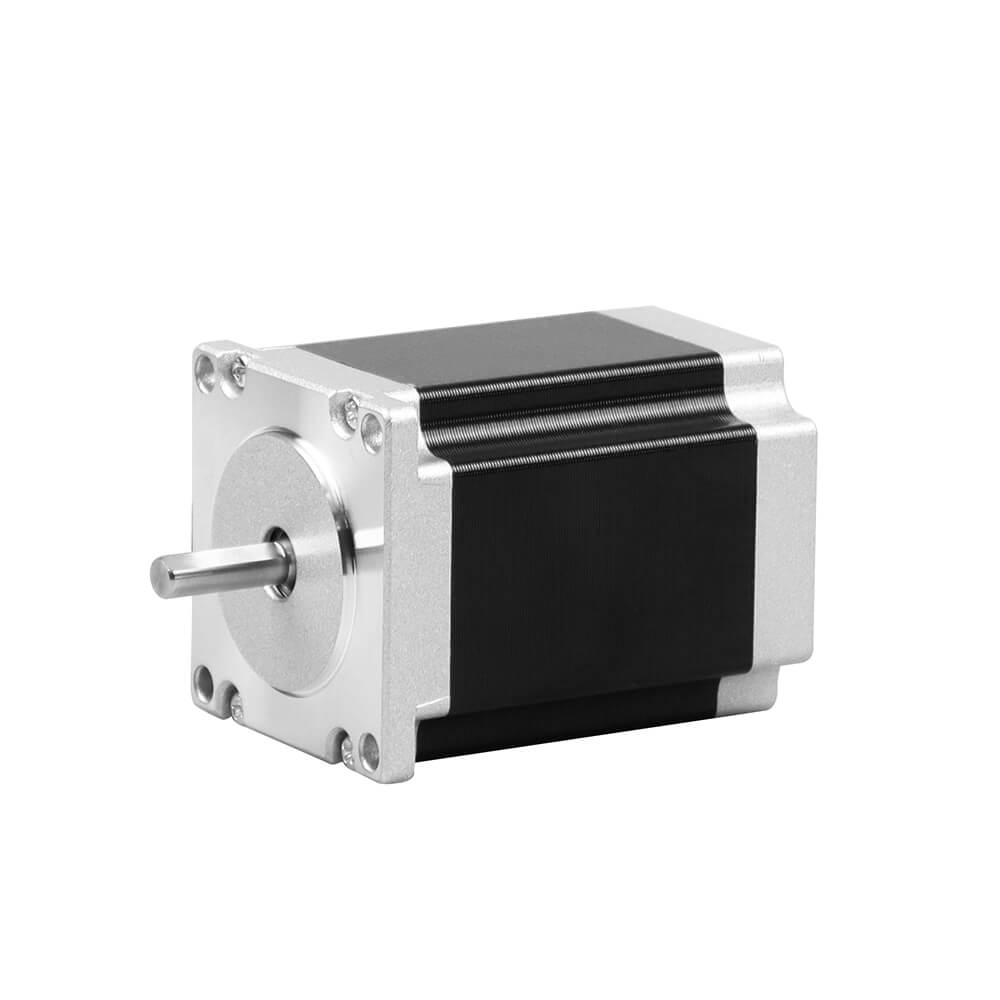
What Is NEMA 23 Stepper Motor
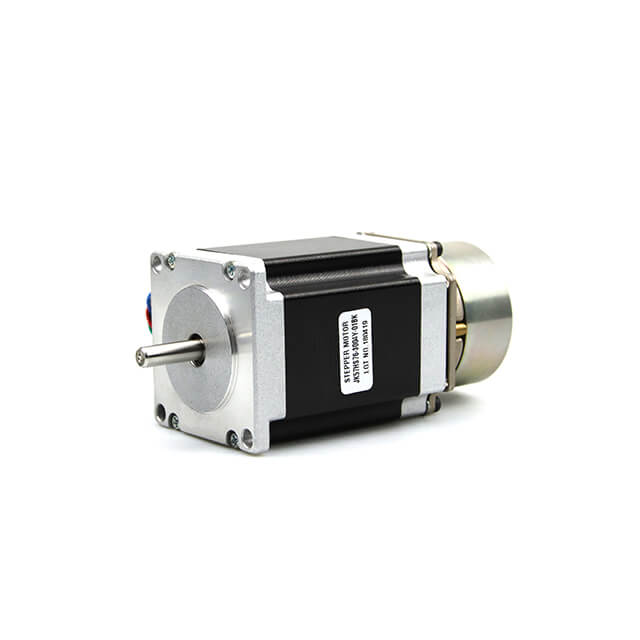
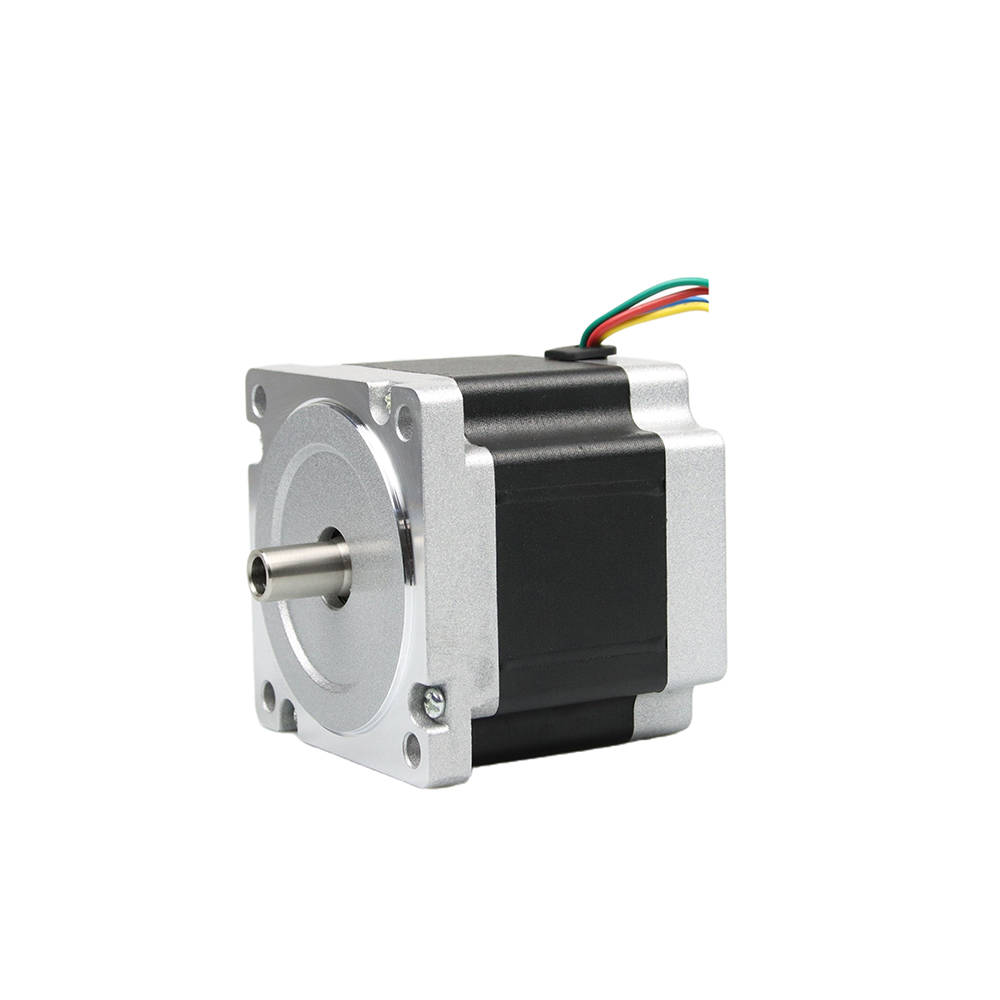
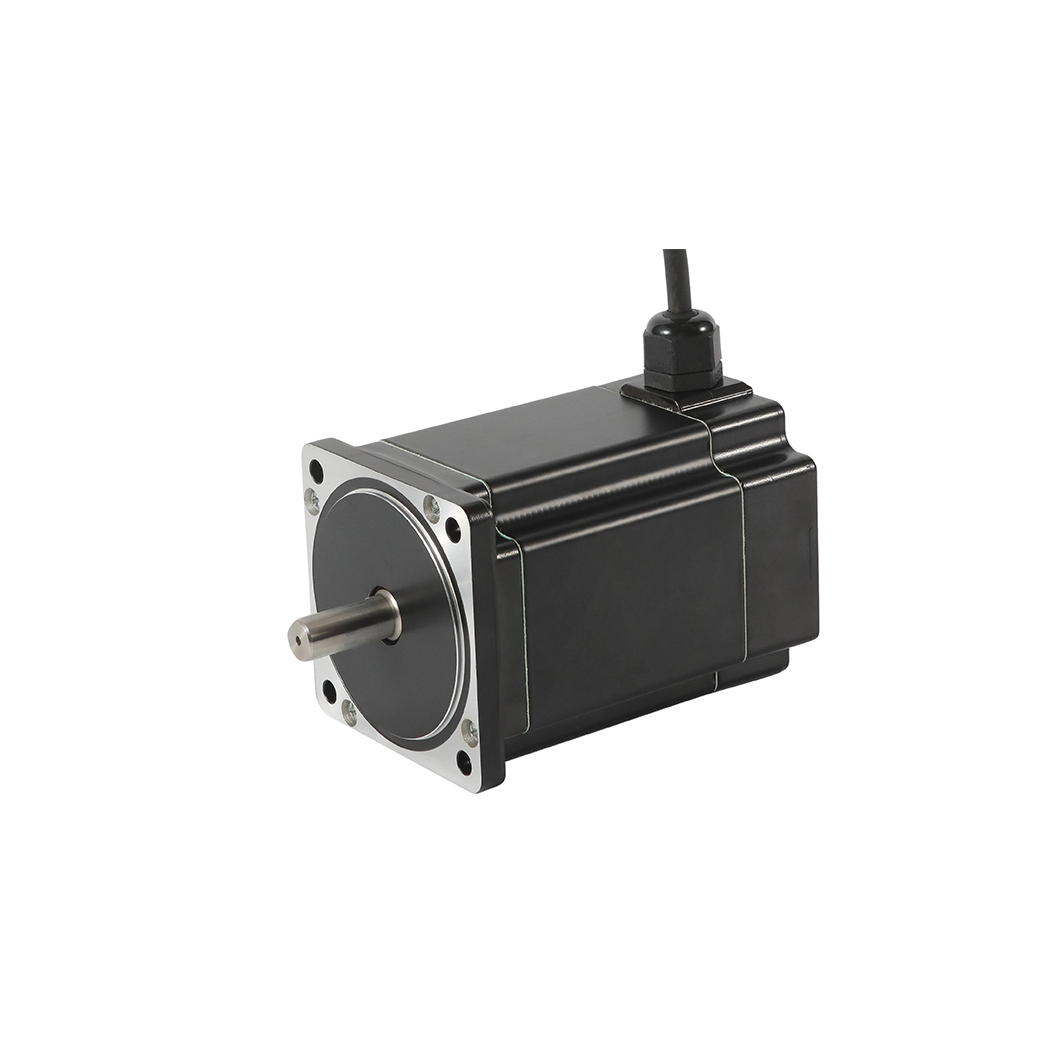
A NEMA 23 Stepper Motor is a precision electromechanical device that converts electrical pulses into discrete mechanical movements. It belongs to the NEMA (National Electrical Manufacturers Association) family of standardized motor frame sizes, with the number “23” referring to a 2.3-inch (57.15 mm) square faceplate.
Because of its excellent balance between torque, precision, and size, the NEMA 23 stepper motor has become one of the most popular choices in CNC machines, 3D printers, robotics, and industrial automation systems.
Understanding the NEMA 23 Design
The “NEMA 23” designation does not define electrical characteristics or torque, but rather specifies the motor's frame dimensions and mounting hole pattern. This allows engineers to interchange motors from different manufacturers without altering the mechanical setup.
Standard NEMA 23 Dimensions
Frame size: 2.3 × 2.3 inches (57.15 × 57.15 mm)
Bolt circle diameter: 47.14 mm
Shaft diameter: typically 6.35 mm (¼ inch)
Length: varies from 50 mm to 120 mm depending on torque rating
The compact frame allows for a wide torque range — from 0.4 Nm up to 3 Nm (56 oz-in to 425 oz-in) — making it ideal for both light and heavy-duty applications.
How a NEMA 23 Stepper Motor Works
A NEMA 23 stepper motor operates on the principle of electromagnetic induction and incremental motion control. It divides a full rotation (360°) into a fixed number of steps — commonly 200 steps per revolution (1.8° per step).
When current is applied to the motor windings in sequence, magnetic fields are generated that cause the rotor to align with the energized stator poles. By switching the current between coils in a precise pattern, the rotor moves incrementally — step by step — allowing exact angular positioning without requiring an encoder.
Key Operating Modes
Full Step: Each pulse moves the rotor by one complete step (e.g., 1.8°).
Half Step: The motor alternates between one and two energized coils, doubling the step resolution.
Microstepping: The current is controlled sinusoidally, allowing hundreds of micro-steps per revolution for ultra-smooth motion.
Core Components of NEMA 23 Stepper Motor
Stator: The stationary part housing the coils that generate magnetic fields.
Rotor: The rotating shaft with permanent magnets or soft iron teeth.
Bearings: Support the rotor for low-friction rotation.
Shaft: Transfers mechanical energy to the load.
Housing: Provides thermal stability and mechanical protection.
Together, these components ensure precise motion, strong holding torque, and excellent repeatability.
Electrical Specifications
The electrical characteristics of NEMA 23 motors can vary based on the design (bipolar, unipolar, or hybrid), but typical specifications include:
| Parameter | Typical Value |
| Step Angle | 1.8° (200 steps/rev) |
| Voltage | 2.8V – 4.2V (low-voltage coils) |
| Current | 2A – 4.2A per phase |
| Resistance | 0.5 – 2.0 Ω |
| Holding Torque | 0.4 – 3.0 Nm |
| Shaft Diameter | 6.35 mm |
| Frame Size | 57 × 57 mm |
These parameters determine the motor's speed, torque, and heat dissipation characteristics.
NEMA 23 Stepper Motor Kinds
The NEMA 23 stepper motor — named after its 2.3-inch (57.15 mm) faceplate size — is one of the most widely used stepper motor standards in modern automation. Known for its high torque, excellent positioning accuracy, and mechanical stability, the NEMA 23 is a versatile choice across industries such as CNC machining, robotics, 3D printing, and packaging systems.
Below we explore the main kinds of NEMA 23 stepper motors, categorized by structure, control type, and application.
1. Permanent Magnet (PM) NEMA 23 Stepper Motors
Permanent Magnet stepper motors use a rotor made of permanent magnets interacting with the stator's electromagnetic field.
Key Features
Low cost and simple design.
Typically used in low-speed, low-torque applications.
Operates smoothly at low RPM with minimal resonance.
Applications
Small automation systems.
Basic positioning and feeder mechanisms.
Educational and DIY robotics kits.
2. Variable Reluctance (VR) NEMA 23 Stepper Motors
Variable Reluctance stepper motors have a soft iron rotor that aligns itself with the magnetic field created by the stator.
Key Features
No permanent magnets — purely magnetic attraction principle.
High stepping rates but lower torque than hybrid motors.
Excellent for applications that require high-speed response.
Applications
Optical scanning and instrumentation.
Low-cost, high-speed indexing devices.
Simple positioning mechanisms.
Hybrid stepper motors combine the best characteristics of permanent magnet and variable reluctance types. This is the most common and advanced kind of NEMA 23 stepper motor.
Key Features
High torque-to-inertia ratio.
Small step angle — usually 1.8° per step (200 steps/rev).
Excellent precision and holding torque.
Compatible with microstepping drivers for smooth motion.
Applications
CNC machines and 3D printers.
Robotics, conveyor belts, and factory automation.
Medical and laboratory equipment requiring precise motion.
Bipolar stepper motors have two coils and require current reversal to change magnetic polarity. This configuration yields higher torque compared to unipolar motors.
Key Features
Four-wire configuration (two coils).
Requires an H-bridge driver or bipolar driver circuit.
Efficient current usage and higher torque output.
Applications
Heavy-load CNC and engraving machines.
High-precision robotic arms.
Industrial automation where power and torque are critical.
Unipolar stepper motors have six wires with center-tapped coils, simplifying driving circuitry. They are easier to control but produce less torque than bipolar types.
Key Features
Easier to drive — simple driver circuit design.
Less efficient torque output compared to bipolar motors.
Ideal for moderate torque applications requiring simplicity.
Applications
Entry-level automation systems.
Low-precision CNC prototypes.
Educational electronics and mechanical projects.
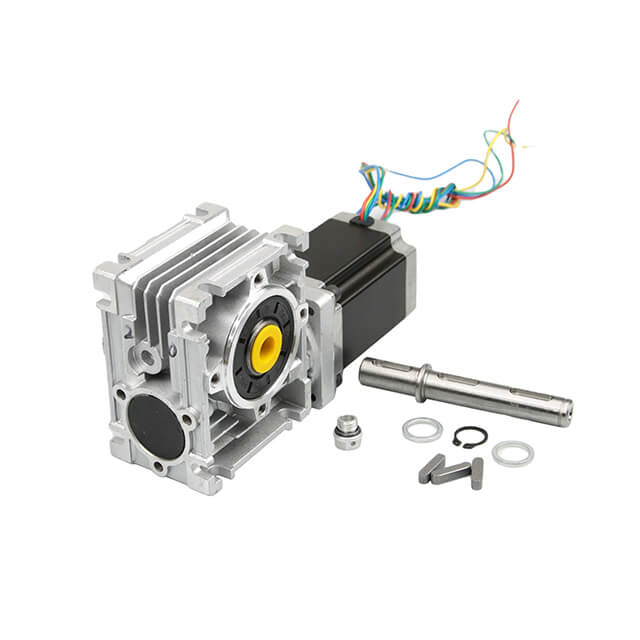
Geared stepper motors integrate a planetary or spur gearbox to increase torque output while reducing speed.
Key Features
High torque at low speed.
Maintains precision even under heavy mechanical load.
Reduces vibration and improves holding torque.
Applications
Robotic joints and articulated arms.
Automated guided vehicles (AGVs).
Conveyor systems and lifting equipment.
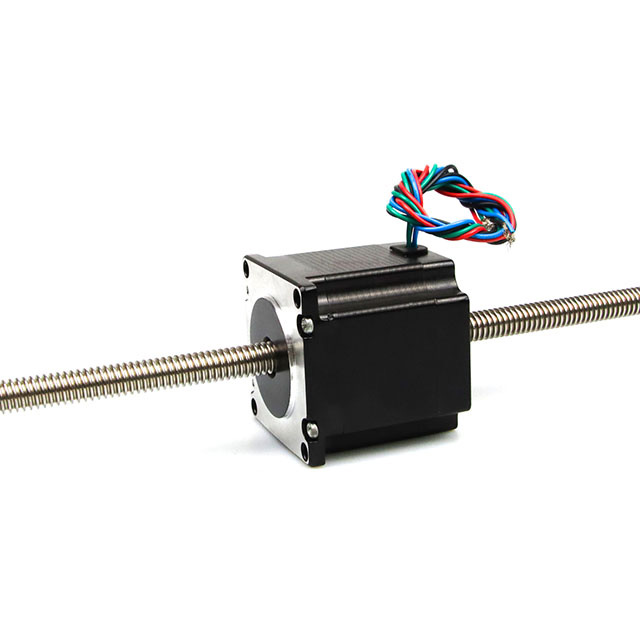
Instead of rotational movement, linear stepper motors convert motion directly into linear displacement through a lead screw or ball screw mechanism.
Key Features
Direct linear actuation without external transmission.
Compact and precise motion.
Compatible with CNC Z-axis and pick-and-place systems.
Applications
3D printer Z-axis drives.
Laboratory automation and dosing pumps.
Electronic inspection and measurement systems.
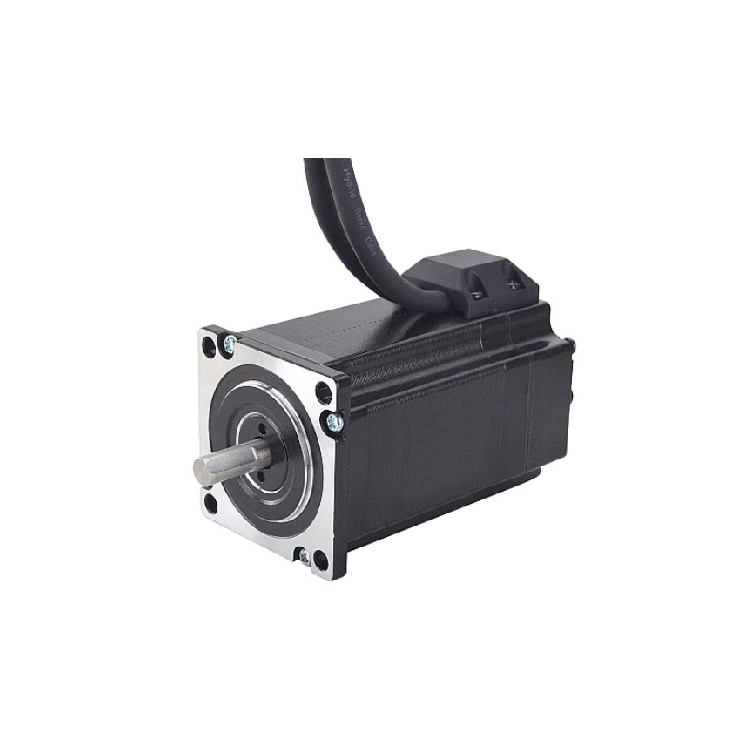
A closed-loop NEMA 23 stepper motor integrates an encoder feedback system, allowing it to operate like a servo motor.
Key Features
Real-time position feedback for error correction.
No step loss during operation.
Improved speed, torque efficiency, and thermal performance.
Applications
Industrial robots requiring accuracy and stability.
CNC milling and precision cutting.
Automated manufacturing and motion control.
Integrated stepper motors combine the motor, driver, and controller into a single compact unit — reducing wiring complexity and footprint.
Key Features
Simplified wiring and installation.
Compact “plug-and-play” design.
Often includes communication interfaces (RS485, CANopen, Modbus).
Applications
Distributed control systems.
Robotics, smart automation, and IoT-enabled machinery.
Compact CNC and pick-and-place systems.
10. High-Torque NEMA 23 Stepper Motors
These motors are designed with optimized winding and magnetic configurations to deliver exceptional holding torque without increasing motor size.
Key Features
Up to 3 Nm torque output.
Suitable for heavy-load mechanical systems.
Efficient heat dissipation for continuous duty operation.
Applications
CNC routers and plasma cutters.
Industrial textile and packaging machines.
AGVs and warehouse automation systems.
Conclusion
The NEMA 23 stepper motor family offers a diverse range of configurations suited for every industrial and robotic need — from basic unipolar designs to smart closed-loop integrated systems. When selecting a NEMA 23 motor, factors such as torque requirement, step precision, feedback needs, and environmental conditions must be considered to ensure optimal performance and longevity.
In today's precision motion-control landscape, the NEMA 23 frame size stepper motor stands as a critical link between moderate-duty applications and industrial automation. In India, a growing number of manufacturers cater to this demand by producing reliable, high-performance NEMA 23 motors (often hybrid stepper motors with 57 mm flanges). Below we present twenty key manufacturers, each with company profile, main products, and advantages — helping you select a suitable partner for sourcing NEMA 23 motors in India.
1. Bholanath Precision Engineering Pvt. Ltd.
Company Profile:
Founded in 1972 and headquartered near Mumbai, India, Bholanath Precision Engineering has a factory area of about 16,700 m² focused on hybrid stepper motors.
Main Products:
Hybrid stepper motors in NEMA sizes including 57 mm (NEMA 23) frame.
Advantages:
Deep experience in precision motors, domestic manufacturing (India-based), ability to provide NEMA 23 standard size motors with customization for OEMs.
2. Bharat Bijlee Ltd.
Company Profile:
A Mumbai-based electrical engineering stepper motor manufacturer founded in 1946, with more than 70 years of experience in motors & drives.
Main Products:
Hybrid stepper motors including NEMA 17, NEMA 23, NEMA 34; servo drives; AC/DC motors.
Advantages:
ISO-certified production lines; strong engineering support; pan-India & global distribution network.
3. Jkongmotor
Company Profile:
Jkongmotor is a rapidly growing hybrid stepper motor manufacturer focusing on custom OEM solutions.
Main Products:
NEMA standard hybrid stepper motors (including NEMA 23), customised torque-rated motors, driver boards.
Advantages:
Strong after-sales support; affordable pricing; fast turnaround for small to medium runs.
4. Nidec India Pvt. Ltd.
Company Profile:
The Indian subsidiary of Japan‐a leading stepper motor manufacturer based Nidec Corporation; advanced motion-control manufacturing in India.
Main Products:
High-torque hybrid stepper motors, miniature steppers, brushless DC motors.
Advantages:
International R&D backing; compact high-efficiency designs; global quality standards.
5. Unitech Automations
Company Profile:
Headquartered in Pune, a leading stepper motor manufacturer focused on motion control and flexible automation components in India.
Main Products:
Hybrid stepper motors with drivers, NEMA frame 17-42 models (including NEMA 23), closed-loop controllers.
Advantages:
Precision control systems; in-house testing labs; tailored to industry-specific applications.
6. J. D. Automation
Company Profile:
Serves niche industries like 3D printing and CNC machines in India; offers high-end motion-control tech.
Main Products:
High-resolution hybrid stepper motors (including NEMA 23), integrated motor-driver units, motion controllers.
Advantages:
Compact footprints; low-noise operation; OEM-grade quality for precision automation.
7. Sakthi Automation
Company Profile:
Tamil-Nadu-based stepper motor manufacturer specializing in hybrid stepper motors for textile, packaging and assembly-line automation.
Main Products:
NEMA 23, NEMA 34, NEMA 42 stepper motors; high-torque motors; hybrid stepper kits.
Advantages:
High operational speeds; low heat and vibration; reliable performance in heavy-duty continuous applications.
8. Khushbu Industries
Company Profile:
Emerging hybrid stepper motor manufacturer focusing on solar, textile and engraving sectors in India.
Main Products:
Gear-integrated stepper motors, high-precision hybrid motors, dual-shaft configurations (size including NEMA 23).
Advantages:
Advanced R&D facility; excellent torque-to-size ratio; active export network beyond India.
9. Electromach Engineers
Company Profile:
A leading stepper motor manufacturer based in Pune, serves OEMs in electronic assembly and automation sectors with hybrid stepper motors.
Main Products:
High-torque hybrid steppers (including NEMA 23 frame), linear & rotary steppers, modular drivers.
Advantages:
High inertia resistance; excellent dynamic response; long duty-cycle capability.
10. Spark Motors Pvt. Ltd.
Company Profile:
A leading stepper motor manufacturer located in Mumbai/Navi Mumbai region, producing hybrid stepper motors and closed-loop systems in India.
Main Products:
A.C. synchronous motors, D.C. geared motors, hybrid stepper motors, linear steppers, stepper motor drives.
Advantages:
Broad product range; strong manufacturing base in Maharashtra; recognised in directories of hybrid stepper motor manufacturers.
11. Motion Drivetronics Pvt. Ltd.
Company Profile:
Bangalore-based stepper motor manufacturer offering precision motion solutions for clean-room and pharma-grade applications.
Main Products:
Precision stepper motors (including NEMA 23 frame options), heat-resistant hybrid motors, micro-step controllers.
Advantages:
Anti-resonance circuitry; compact and powerful designs; clean-room compliant manufacturing.
12. Servo Star India Pvt. Ltd.
Company Profile:
Provides motors for industrial labs, R&D and automation projects in India, including hybrid stepper systems.
Main Products:
Low-noise hybrid stepper motors (frame sizes including NEMA 23), precision motion controllers, linear actuated motors.
Advantages:
Low heat emission; high positional accuracy; seamless integration with measurement/control equipment.
13. Pooja Electromech
Company Profile:
A leading stepper motor manufacturer focused on gear-assisted stepper motors for robotics and AGV (automated guided vehicle) applications, India.
Main Products:
Integrated gearbox stepper motors, open-loop and closed-loop steppers (including NEMA 23), encoded feedback motors.
Advantages:
Enhanced mechanical strength; accurate positional feedback; long operational life in dynamic applications.
14. Aashu Telecom Pvt. Ltd.
Company Profile:
Specialises in motion control components integrated with telecom equipment and industrial automation in India.
Main Products:
High-speed hybrid steppers, digital controllers, stepper motor kits (including NEMA 23 compatible).
Advantages:
Telecom-ready designs; high compatibility; rapid prototyping capability.
15. Saini Electronics
Company Profile:
Founded in 1990, a leading stepper motor manufacturer focused on motion-control motors for medical/instrumentation sectors in India.
Main Products:
Custom-wound hybrid stepper motors, NEMA standard models (including NEMA 23), integrated shaft modifications.
Advantages:
Export-focused manufacturing; flexible MOQs; application-specific builds for instrumentation.
16. Lakshmi Electrical Drives
Company Profile:
Legacy brand in textile automation, with innovations in high-torque motion control, India.
Main Products:
Hybrid motors for weaving machines, CNC-compatible stepper motors (including NEMA 23), dust-proof industrial models.
Advantages:
Heavy-duty applications; strong torque output; proven reliability in textile industry.
17. ADLEE Powertronic Co. (India)
Company Profile:
Taiwanese hybrid stepper motor manufacturer with strong presence in India; local manufacturing/distribution.
Main Products:
Closed-loop stepper motors, digital encoder steppers, hybrid BLDC-stepper combo motors (NEMA 23 and others).
Advantages:
Global tech integration; real-time monitoring; minimal step error in precision applications.
18. Excella Electronics
Company Profile:
A leading stepper motor manufacturer based in Mumbai, provides motion-control devices, industrial electronics, elevator automation; manufactures hybrid steppers in India.
Main Products:
Hybrid stepper motors (including NEMA 23 size), stepper motor drives, controllers.
Advantages:
Established reputation; domestic manufacturing; caters to motion-control and automation segments.
19. Motiontech Automation Services
Company Profile:
Based in Vadodara, Gujarat, India, supplies NEMA 23 frame stepper motors and serves as a domestic supplier/producer.
Main Products:
NEMA 23 stepper motors (57 mm flange) 1.8° step angle, ~1.9 Nm torque, unipolar types for industrial use.
Advantages:
Regional availability; ability to quote/customize; strong for local procurement.
20. Invento Sales
Company Profile:
Delhi-based Indian stepper motor manufacturer, exporter and supplier of NEMA 23 stepper motors.
Main Products:
NEMA 23 stepper motor (57.3 × 57.3 × 82 mm size) rated 25 kg-cm torque, 1.8° step angle, 8 mm shaft diameter.
Advantages:
Smaller-volume manufacturing; export capability; India-origin production.
The NEMA 23 Stepper Motor is one of the most widely used motors in modern automation due to its excellent torque, precision, and versatility. With a 57.15 mm (2.3 inch) square frame, it provides the perfect balance between power and compactness, making it ideal for CNC machines, 3D printers, robotics, and automated manufacturing systems.
Below are the key advantages of NEMA 23 stepper motors that make them the preferred choice for both industrial and commercial motion control applications.
1. High Precision and Positioning Accuracy
The most defining advantage of the NEMA 23 stepper motor is its exceptional precision. It moves in fixed angular steps, typically 1.8° per step (200 steps per revolution). This means each input pulse results in an exact mechanical movement — eliminating the need for complex feedback systems.
Why It Matters
Allows accurate positioning without encoders.
Ideal for CNC machining, 3D printing, and robotic movement.
Ensures repeatability — the motor always returns to the exact same position.
2. Excellent Holding Torque
Holding torque is the ability of a stepper motor to maintain its position when power is applied but no movement is commanded. NEMA 23 motors deliver strong holding torque (up to 3 Nm or 425 oz-in), making them perfect for applications requiring high load retention.
Benefits
Prevents mechanical drift in vertical or suspended loads.
Provides stable operation in precision alignment systems.
Enables sturdy mechanical holding without external locking mechanisms.
3. Open-Loop Control (No Feedback Required)
Unlike servo motors that depend on encoders and feedback loops, the NEMA 23 stepper motor can operate in an open-loop configuration. This simplifies system design and reduces cost.
Advantages
No feedback sensors needed.
Simple wiring and control setup.
Reliable operation even in environments with vibration or electrical noise.
4. High Torque at Low Speeds
One of the standout characteristics of NEMA 23 motors is their strong low-speed torque output. Unlike DC motors that lose torque as speed decreases, stepper motors maintain power at low RPM.
Why It's Useful
Ideal for slow, controlled motion applications.
Excellent for positioning, cutting, and inspection systems.
Ensures smooth acceleration and deceleration.
5. Smooth and Stable Motion (with Microstepping)
When paired with a microstepping driver, NEMA 23 stepper motors can divide each full step into hundreds of smaller microsteps. This results in ultra-smooth movement, minimal vibration, and quiet operation.
Practical Benefits
Enhanced motion resolution and smoothness.
Reduced mechanical resonance and wear.
Improved surface finish in CNC and 3D printing applications.
6. Reliable and Durable Operation
NEMA 23 stepper motors are brushless devices, meaning there is no mechanical contact between rotor and stator (except for the bearings). This results in an exceptionally long operational lifespan and low maintenance requirements.
Advantages
High reliability under continuous use.
Minimal maintenance — no brush replacement.
Consistent performance even in high-duty environments.
7. Cost-Effective Motion Control Solution
Compared to servo systems, NEMA 23 stepper motors provide similar positioning performance at a much lower cost. Their simple design and lack of feedback sensors significantly reduce the initial investment and maintenance expenses.
Benefits
Economical for small to medium-scale automation.
Lower system complexity and maintenance cost.
Ideal for budget-sensitive engineering projects.
8. Compatibility with a Wide Range of Drivers
NEMA 23 stepper motors are compatible with a broad range of stepper motor drivers — from simple open-loop controllers to advanced closed-loop systems with encoders.
Key Advantages
Supports unipolar, bipolar, and hybrid configurations.
Easy integration with microcontrollers (Arduino, PLCs, Raspberry Pi).
Available with digital communication interfaces (CANopen, RS-485, Modbus).
9. Strong Customization and Modularity
Many NEMA 23 models are available with customized shafts, integrated gearboxes, encoders, or controllers. Manufacturers often provide tailored torque ratings, step angles, and lengths to meet specific requirements.
Customization Examples
High-torque NEMA 23: For CNC routers and heavy machines.
Geared NEMA 23: For robotic arms and AGVs.
Integrated NEMA 23: Combines motor + driver + controller in one compact unit.
10. Wide Range of Industrial and Commercial Applications
Thanks to their flexibility and performance, NEMA 23 stepper motors serve in almost every automation field.
Common Applications
CNC machines – precise X/Y/Z axis control.
3D printers – accurate extruder and motion system.
Robotics – smooth movement and joint positioning.
Medical devices – pumps, analyzers, and diagnostic systems.
Packaging and textile machinery – synchronized material handling.
AGVs (Automated Guided Vehicles) – controlled drive motion.
11. Excellent Repeatability and Reliability
The NEMA 23's ability to repeat exact motion cycles ensures consistent performance in high-precision tasks. It performs millions of identical steps without degradation in accuracy, which is essential in automation, testing, and metrology systems.
Why It's Important
Guarantees uniform product quality in mass production.
Reduces calibration frequency.
Ensures predictable and repeatable results.
12. Easy Integration and Mounting Standardization
The NEMA 23 frame size is an international standard (57 × 57 mm), allowing effortless interchangeability between brands and easy integration into existing systems.
Advantages
Common mounting hole pattern (47.14 mm bolt circle).
Compatible with universal brackets, couplers, and flanges.
Simplifies upgrades or replacements.
Conclusion
The NEMA 23 Stepper Motor combines precision, durability, affordability, and versatility — making it a true workhorse of motion control. Its strong torque at low speed, excellent repeatability, and easy control architecture allow it to power countless applications across industrial automation, robotics, and manufacturing.
For engineers and designers seeking a dependable motion solution, the NEMA 23 stepper motor offers unmatched performance-to-cost value, ensuring precise, reliable, and repeatable motion in every operation.
The NEMA 23 Stepper Motor has become a cornerstone in modern automation and motion control systems. Known for its precision, reliability, and versatility, this motor type is widely utilized across industrial, commercial, and scientific sectors. With its 57.15 mm (2.3 inches) square frame and high torque-to-size ratio, it provides an ideal solution for mid-range motion applications where accuracy and stability are essential.
1. CNC Machines and Milling Equipment
One of the most common uses of NEMA 23 stepper motors is in CNC (Computer Numerical Control) machinery. These motors deliver precise linear and rotational motion, which is essential for cutting, engraving, and milling operations.
Key Roles
Controls X, Y, and Z axes in CNC routers, plasma cutters, and laser engravers.
Provides high positioning accuracy during tool movement.
Ensures repeatable cutting paths for consistent machining results.
Why NEMA 23 is ideal:
Its strong holding torque and precise step control allow smooth and controlled movement even at low speeds, ensuring clean and accurate cuts on wood, metal, or plastic materials.
2. 3D Printers
The 3D printing industry heavily relies on NEMA 23 stepper motors for movement control and extrusion precision.
Applications
Drives print head and bed motion in the X, Y, and Z axes.
Controls the filament feed through the extruder.
Provides stable layer-by-layer printing for superior print quality.
Advantages in 3D Printing:
NEMA 23 offers smooth microstepping, quiet operation, and excellent repeatability, resulting in high-resolution prints and precise mechanical movements.
3. Robotics and Automation Systems
In robotics, NEMA 23 stepping motors are used to control robot arms, actuators, and autonomous guided vehicles (AGVs). Their high torque and positional accuracy make them suitable for both small and mid-sized robots.
Common Robotic Uses
Joint actuation in robotic arms.
Wheel drive systems for mobile robots and AGVs.
Gripper control for picking and placing tasks.
Why it works:
Stepper motors offer detent torque and stable holding when stopped, preventing drift or back movement—critical for precise robotic tasks like assembly and packaging.
4. Medical and Laboratory Equipment
Precision and reliability are vital in medical and diagnostic equipment, and the NEMA 23 motor meets both needs effectively.
Examples
Automated syringes and pumps for controlled fluid movement.
Centrifuges and analyzers requiring accurate rotational speed.
X-ray tables and imaging systems that need exact positioning.
Benefits:
The brushless, maintenance-free design ensures long service life, quiet operation, and zero contamination risk—ideal for sensitive laboratory and clinical environments.
5. Packaging and Labeling Machinery
In packaging automation, NEMA 23 stepper motors ensure precise material feeding, cutting, and labeling.
Typical Uses
Conveyor synchronization and film feeding control.
Label dispensing in bottling or packaging lines.
Cutting and sealing mechanisms requiring repetitive motion.
Advantages:
Stepper motors guarantee synchronous movement with excellent speed control, essential for maintaining accuracy and consistency in high-speed packaging lines.
6. Textile and Garment Machines
Textile equipment depends on controlled motion for weaving, embroidery, and stitching processes. The NEMA 23's smooth operation and accuracy help achieve high-quality textile production.
Applications
Embroidery heads for thread control.
Yarn winding machines for consistent tension.
Pattern sewing machines for programmable designs.
Why NEMA 23?
It offers repeatable, programmable motion with minimal vibration, crucial for delicate fabric handling and precise stitching.
7. Conveyor and Material Handling Systems
In automated logistics and factory automation, NEMA 23 stepper motors drive belt conveyors, indexing tables, and feeders.
Practical Uses
Moves materials precisely from one station to another.
Controls the indexing movement for assembly or inspection processes.
Operates sorting and packaging lines efficiently.
Benefits:
Its consistent torque output and speed control make it reliable for continuous industrial operation with minimal downtime.
8. Surveillance and Camera Positioning Systems
In CCTV, security, and photography systems, NEMA 23 motors are used to control pan-tilt mechanisms for cameras and sensors.
Examples
Security cameras that require precise motion tracking.
Studio cameras for automatic focus or rotation.
Scientific instruments for optical alignment and calibration.
Advantages:
Their smooth motion and microstep precision ensure jitter-free positioning, ideal for high-resolution imaging and accurate sensor orientation.
9. Printing and Scanning Equipment
High-end printers, scanners, and engraving machines utilize NEMA 23 stepper motors for precise paper feeding and head movement.
Applications
Large-format plotters and label printers.
Laser engraving machines requiring detailed motion control.
Document scanners ensuring accurate scanning alignment.
Why It's Effective:
NEMA 23 ensures consistent linear motion, maintaining sharpness and accuracy even at high operational speeds.
10. Educational and Research Projects
Because of its affordability and ease of control, the NEMA 23 is widely used in engineering education and prototyping projects.
Common Uses
DIY CNC and robotics kits.
Motion control experiments in university labs.
Automation prototypes using Arduino or Raspberry Pi.
Benefits:
The open-loop operation and compatibility with standard controllers make it perfect for students, researchers, and hobbyists exploring motion control systems.
11. Food and Beverage Machinery
Automation in food production demands reliable, hygienic, and precise motion—all provided by the NEMA 23 motor.
Applications
Filling and dispensing systems.
Cutting, portioning, and mixing machines.
Label applicators and bottle cappers.
Why It Excels:
It provides consistent torque control and reliable positioning for repetitive operations, ensuring food safety and process efficiency.
12. Renewable Energy and Tracking Systems
In solar tracking and renewable energy systems, NEMA 23 motors are used to adjust panel orientation for optimal sunlight exposure.
Use Cases
Solar panel tilting systems.
Wind turbine blade adjustments.
Light-following prototypes for energy research.
Advantages:
They offer precise angular control, low energy consumption, and high reliability, which are essential for 24/7 outdoor applications.
Conclusion
The NEMA 23 stepper motor is one of the most adaptable motion control devices on the market today. Its combination of torque, accuracy, affordability, and compatibility makes it indispensable across industries — from CNC machining and robotics to medical and packaging automation.
Whether in industrial automation, precision laboratory systems, or advanced research applications, the NEMA 23 stepper motor delivers consistent, repeatable, and efficient performance that engineers and manufacturers trust worldwide.
Summary & Key Insights for Selection
The NEMA 23 frame size (approx. 57 mm flange) remains a widely supported standard in Indian manufacturing.
Many of the listed companies support customization, such as modified shaft length, dual-shaft, gear-integrated motors, or closed-loop versions.
For OEM sourcing, look for ISO certification, domestic manufacturing capability, pan-India network, and export experience.
If you require high torque or special duty cycles, companies with textile, packaging or heavy-duty machine focus (e.g., Lakshmi, Sakthi, Electromach) offer stronger solutions.
For precision motion (e.g., robotics, 3D printing), firms with clean-room / low vibration / closed-loop support (e.g., Motion Drivetronics, Pooja Electromech) stand out.
Local suppliers such as Motiontech or Invento are beneficial for quicker turnaround, lower MOQ and regional support.
By deep-diving into each company's profile, main products, and advantages, you can align your specification — torque, step angle, shaft type, duty cycle, feedback or open-loop — with the manufacturer that best meets your mechanical and procurement requirements.
A NEMA 23 stepper motor is a powerful, versatile, and precise motion-control component that bridges the gap between compact hobby motors and industrial servo systems. Its standardized frame, strong torque, and precise step control make it the industry standard for medium-torque precision motion applications.
Whether you are building a CNC machine, 3D printer, or industrial robot, the NEMA 23 stepper motor provides the reliability, accuracy, and control needed to achieve flawless motion and repeatable performance.