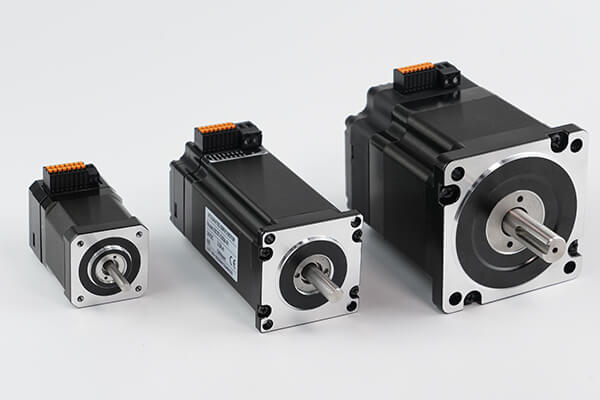
Integrated closed-loop stepper motors have become increasingly important in modern industrial automation, where manufacturers need precise positioning, reliable torque, compact machine design, and reduced maintenance. By combining a stepper motor, encoder, and motor control system into a coordinated solution, these motors help simplify motion control while improving positioning accuracy and reducing the risk of lost steps.
In Italy, demand for integrated closed-loop stepper motors is closely connected to the country's strong manufacturing sectors, including packaging machinery, CNC equipment, industrial automation, robotics, pharmaceutical machinery, food processing, textile equipment, and precision assembly systems. Italian machine builders often require motion solutions that combine flexibility, dependable performance, compact installation, and the ability to integrate into existing control architectures.
For buyers looking for an integrated closed-loop stepper motor manufacturer in Italy, the decision involves more than comparing motor dimensions or rated torque. Encoder resolution, control algorithms, communication protocols, operating speed, thermal performance, mechanical compatibility, customization capabilities, and long-term technical support all play important roles.
This guide introduces 20 integrated closed-loop stepper motor manufacturers and motion control suppliers relevant to the Italian market, explains the technology behind integrated closed-loop stepper motors, and outlines how machine builders can select the right supplier for their applications.
What Is an Integrated Closed-Loop Stepper Motor?
An integrated closed-loop stepper motor combines a stepper motor, encoder feedback system, and motor driver into one compact unit. Unlike a traditional open-loop stepper motor, which executes movement commands without continuously confirming its actual position, a closed-loop stepper motor monitors rotor movement through an encoder and adjusts motor operation according to feedback.
This feedback mechanism allows the motor controller to identify whether the motor is following the commanded position and speed. When the system detects a deviation caused by excessive load, acceleration, mechanical resistance, or an external disturbance, it can adjust current and motor operation to maintain motion performance within its control limits.
The integrated architecture reduces the number of separate electrical components required in a machine. Instead of installing a motor, external driver, encoder wiring, and multiple mounting accessories independently, machine designers can use a compact motor assembly with built-in control electronics.
For Italian equipment manufacturers, this design is particularly useful when developing smaller machines, modular production lines, automated inspection equipment, and high-precision positioning systems.
One-Stop Integrated DC Servo Motor Solution Provider
Shaft
Lead Screw
Module
Linear Motion
Brake
Gearbox
Worm Gearbox
Wires
Protect Level
Protect Level
Key Features of Integrated Closed-Loop Stepper Motors
Integrated closed-loop stepper motors combine a stepper motor, encoder, and motor driver into a compact motion control unit. Unlike traditional open-loop stepper motors, which rely on input pulse commands without continuously verifying actual movement, integrated closed-loop stepper motors use encoder feedback to monitor motor position and adjust operation when deviations occur.
This combination provides more reliable positioning, improved torque utilization, reduced wiring complexity, and easier system integration. For machine manufacturers developing automated equipment, integrated closed-loop stepper motors offer a practical balance between the simplicity of stepper motors and the feedback capabilities of servo systems.
1. Integrated Motor, Driver, and Encoder Design
One of the most important features of an integrated closed-loop stepper motor is its all-in-one structure. The stepper motor, encoder, and driver are assembled into a single compact unit, eliminating the need to install and connect multiple independent components.
This design reduces the number of cables between the motor and control cabinet, simplifies electrical installation, and helps machine designers optimize equipment layouts. It is especially useful for compact machinery, modular automation systems, multi-axis equipment, and applications where installation space is limited.
By reducing external wiring and component connections, integrated motor systems can also help simplify assembly, commissioning, and maintenance.
2. Real-Time Encoder Feedback
An integrated encoder continuously monitors the motor's actual rotation and provides position feedback to the controller. This allows the system to compare the commanded movement with the actual motor response.
When the motor encounters unexpected resistance, load changes, acceleration demands, or mechanical disturbances, the feedback system can identify deviations and adjust motor operation accordingly.
Depending on the motor design and control algorithm, encoder feedback may also support position monitoring, speed feedback, error detection, and fault protection.
This feature is particularly valuable for applications where positioning consistency is important, such as automated dispensing, precision feeding, pick-and-place equipment, and indexing mechanisms.
3. Reduced Risk of Lost Steps
Traditional open-loop stepper motors may lose synchronization when the applied load exceeds the available torque, when acceleration is too aggressive, or when mechanical resistance suddenly increases. Because the controller does not directly verify actual rotor position, missed steps may remain undetected.
Integrated closed-loop stepper motors use encoder feedback to monitor motor movement and respond to positioning deviations. This helps reduce the risk of lost steps and improves operational reliability under changing load conditions.
For machine manufacturers, this means fewer unexpected positioning errors, more consistent production processes, and reduced risk of product defects caused by inaccurate motor movement.
However, closed-loop control does not eliminate every motion error. Mechanical backlash, encoder limitations, excessive loads, structural deformation, and unsuitable motor sizing can still affect system accuracy.
4. Improved Torque Utilization and Energy Efficiency
Integrated closed-loop stepper motors can adjust motor current according to operating conditions and control requirements. Instead of continuously supplying unnecessarily high current, some systems dynamically regulate current to maintain the required motion performance.
This can reduce heat generation and energy consumption under certain operating conditions while allowing the motor to respond to changing loads.
Compared with conventional open-loop stepper systems that often operate with fixed current settings, closed-loop control can provide more efficient motor operation when properly configured.
The actual energy savings depend on motor sizing, operating speed, load profile, control strategy, duty cycle, and mechanical efficiency.
5. High Positioning Accuracy and Repeatability
Encoder feedback helps the controller monitor the motor's actual position and correct deviations within the system's control capability. This makes integrated closed-loop stepper motors suitable for applications requiring consistent positioning and repeatable motion.
Typical applications include:
Precision dispensing systems
Automated assembly equipment
CNC positioning axes
Electronic component handling
Laboratory instruments
Packaging and labeling machines
Optical inspection equipment
It is important to distinguish encoder resolution from actual positioning accuracy. A higher encoder resolution does not automatically guarantee better mechanical positioning. The final performance also depends on control algorithms, motor characteristics, load inertia, mechanical transmission, backlash, mounting rigidity, and calibration.
6. Compact Structure and Space-Saving Installation
Integrating the motor and driver into one housing helps reduce the overall footprint of the motion control system. This is particularly beneficial for machines with multiple axes, distributed motion components, or limited electrical cabinet space.
Machine designers can install integrated closed-loop stepper motors closer to the driven mechanism, reducing cable lengths and simplifying wiring layouts.
This compact structure is useful for robotic modules, automated inspection systems, compact packaging equipment, linear positioning devices, and modular machinery.
7. Flexible Communication and Control Interfaces
Modern integrated closed-loop stepper motors may support several control methods, allowing machine manufacturers to choose an interface compatible with their automation architecture.
Common control interfaces include:
Pulse and Direction: A simple control method widely used in PLC-based positioning systems.
RS485: Suitable for communication over longer distances and multi-device networks, depending on system configuration.
Modbus RTU: Frequently used for parameter configuration, status monitoring, and control through RS485.
CANopen: Supports distributed control and communication between multiple motion devices.
EtherCAT: Used in applications requiring high-speed industrial communication and synchronized motion control, when supported by the motor.
The availability of these interfaces allows integrated closed-loop stepper motors to be used in a wide range of automation systems, from simple single-axis machines to more sophisticated multi-axis equipment.
8. Multiple Motor Sizes and Mechanical Configurations
Integrated closed-loop stepper motors are available in different frame sizes, torque ranges, shaft designs, and mounting configurations to accommodate various machine structures.
Common frame sizes include NEMA 11, NEMA 17, NEMA 23, NEMA 24, and NEMA 34, although availability varies by manufacturer.
Depending on the application, motors can also be configured with:
Planetary gearboxes for increased output torque and reduced speed
Brakes for holding loads when power is removed
Lead screws for direct linear motion
Hollow shafts for specialized mechanical integration
Customized mounting flanges
Different connectors, cable lengths, and wiring configurations
These options help equipment manufacturers adapt the motor to their specific mechanical and operating requirements without redesigning the entire motion system.
9. Built-In Protection and Fault Monitoring
Many integrated closed-loop stepper motors include protective functions designed to improve operational safety and system reliability.
Depending on the product model, protection features may include:
Overcurrent protection
Overvoltage and undervoltage protection
Motor overheating protection
Position deviation monitoring
Stall detection
Communication fault detection
Abnormal operating condition alarms
These functions help identify problems before they lead to serious equipment damage or prolonged downtime. For automated production equipment, fault monitoring can also make troubleshooting easier by providing useful diagnostic information to the machine controller or operator.
The exact protection functions should always be confirmed in the manufacturer's datasheet.
10. Easier Installation, Commissioning, and Maintenance
The integrated architecture reduces the number of separately installed electrical components and can simplify the motor wiring process. This helps machine builders shorten assembly time and reduce the potential for wiring errors.
When communication-based models are used, engineers may also be able to configure motor parameters, monitor operating conditions, and diagnose faults through the control interface.
For OEM manufacturers producing equipment in batches, these advantages can improve production efficiency, standardize machine assembly, and simplify maintenance procedures across different machine models.
11. Suitable for a Wide Range of Industrial Applications
Integrated closed-loop stepper motors are designed for applications that require controlled motion, reliable positioning, compact construction, and moderate-to-high torque at relatively low and medium speeds.
Common application industries include:
Packaging machinery: Film feeding, sealing, cutting, labeling, and product indexing.
Medical equipment: Liquid handling, laboratory automation, sample positioning, and dosing mechanisms.
CNC and precision manufacturing: Tool positioning, engraving, adjustment axes, and automated processing.
Robotics: Compact robotic joints, pick-and-place mechanisms, and automated assembly.
Agricultural equipment: Precision seed metering, adjustment mechanisms, and automated material handling.
Textile machinery: Feeding, tension-related positioning, and fabric processing.
Warehouse automation: Sorting, conveying, positioning, and compact material handling mechanisms.
By combining feedback control, integrated electronics, flexible communication, and mechanical customization, integrated closed-loop stepper motors can help machine manufacturers develop more compact, reliable, and efficient automation equipment.
Types of Integrated Closed-Loop Stepper Motors
Integrated closed-loop stepper motors are available in various designs to meet different motion control requirements, mechanical structures, torque demands, and installation environments. By combining a stepper motor, encoder, and driver into a single unit, these motors simplify system integration while providing position feedback, improved motion reliability, and more flexible control.
For machine manufacturers, choosing the right type of integrated closed-loop stepper motor is not simply about selecting a motor with higher torque or a smaller frame size. The decision should be based on the actual application, including load characteristics, operating speed, acceleration, positioning requirements, installation space, transmission structure, and communication method.
Different integrated closed-loop stepper motor configurations are designed to solve different engineering challenges. The following are the most common types used in industrial automation, precision machinery, robotics, packaging equipment, and OEM machine development.
Standard integrated closed-loop stepper motors combine a stepper motor, encoder, and driver into a compact housing. They are designed for applications requiring controlled rotary motion, reliable positioning, and simplified electrical installation.
Compared with traditional open-loop stepper motors, standard integrated closed-loop models use encoder feedback to monitor actual motor movement. When the motor experiences load fluctuations, excessive resistance, or unexpected motion deviations, the controller can adjust motor operation according to its feedback and control capabilities.
The integrated design eliminates the need for a separate external driver, helping reduce wiring complexity, control cabinet space, and installation effort. Depending on the product model, these motors can support pulse-and-direction control or communication-based control.
Integrated closed-loop stepper motors with planetary gearboxes are designed for applications requiring higher output torque, reduced rotational speed, or improved mechanical load matching.
The planetary gearbox provides speed reduction and torque multiplication, allowing the motor to drive heavier loads or operate at a more suitable speed. Its compact transmission structure makes it attractive for equipment where installation space is limited but torque requirements are relatively high.
Compared with a direct-drive stepper motor, a geared integrated closed-loop stepper motor can provide greater output torque at lower speeds. However, gearbox efficiency, backlash, transmission noise, and mechanical wear should also be considered during motor selection.
Integrated closed-loop stepper motors with lead screws convert rotary motor movement into linear displacement. By integrating the motor, driver, encoder, and screw mechanism, manufacturers can create a compact linear actuator without requiring a separate motor, coupling, and transmission assembly.
Depending on the mechanical structure, these motors may use captive lead screws, non-captive lead screws, external nuts, or integrated slider mechanisms. The design can be customized according to stroke length, thrust force, linear speed, mounting arrangement, and positioning requirements.
This configuration is especially useful when equipment needs accurate linear movement but has limited space for a conventional linear actuator.
Key features:
Rotary-to-linear motion conversion
Direct linear positioning
Compact actuator structure
Multiple screw leads and stroke options
Encoder feedback for motion monitoring
Optional linear guides or slider structures
Typical applications: Laboratory automation, liquid dispensing, medical equipment, optical adjustment, automated inspection systems, precision assembly, semiconductor-related equipment, and small linear positioning platforms.
When selecting a lead screw integrated stepper motor, buyers should consider screw lead, stroke, thrust, linear speed, load direction, positioning repeatability, screw efficiency, and mechanical support.
4. Integrated Closed-Loop Stepper Motors with Electromagnetic Brake
Integrated closed-loop stepper motors with electromagnetic brakes are designed for applications where the motor must maintain a position after movement stops or when power is removed.
The brake is generally a spring-applied, electrically released holding brake. When the brake is energized, it releases the motor shaft for movement. When brake power is removed, the brake engages and holds the shaft in position.
This configuration is particularly useful for vertical axes, lifting mechanisms, inclined motion systems, and equipment where gravity may cause a load to move when the motor is not actively operating.
Key features:
Integrated motor, encoder, and driver
Optional electromagnetic holding brake
Reduced risk of unwanted movement when power is removed
Suitable for vertical and inclined load applications
Compact structure for space-limited installations
Typical applications: Vertical positioning systems, small lifting equipment, automated doors, adjustable platforms, medical positioning mechanisms, industrial assembly equipment, and machinery with gravity-loaded axes.
The holding brake must be selected according to the required holding torque, load, mounting orientation, braking response, and power-failure conditions. A holding brake is not automatically designed for emergency stopping or continuous dynamic braking.
Hollow-shaft integrated closed-loop stepper motors feature a central bore through the motor shaft or rotating structure. This design allows cables, tubing, optical components, shafts, or other mechanical elements to pass through the center of the motor.
Compared with conventional solid-shaft motors, hollow-shaft designs can simplify mechanical layouts where central routing is required. They may also help reduce the number of external components needed for rotary mechanisms.
Before choosing a hollow-shaft motor, buyers should confirm bore diameter, shaft strength, allowable radial and axial loads, bearing arrangement, torque capacity, and mounting requirements.
6. Integrated Closed-Loop Stepper Motors with Right-Angle Gearbox
Right-angle integrated closed-loop stepper motors are designed for installations where the motor shaft and driven shaft need to be positioned at different angles, commonly 90 degrees apart.
These motors typically use a right-angle transmission such as a worm gearbox or another angular gear mechanism to change the direction of power transmission. The gearbox may also provide speed reduction and increased output torque.
This configuration helps machine designers arrange motion components more flexibly, particularly when the machine structure does not allow a conventional straight motor installation.
Gearbox efficiency, backlash, operating noise, lubrication, output shaft load, and thermal performance should be considered when evaluating this motor type.
High-speed integrated closed-loop stepper motors are designed for applications requiring faster rotation, rapid positioning, shorter cycle times, or frequent acceleration and deceleration.
High-speed operation places greater demands on motor inductance, power supply voltage, current regulation, encoder feedback, load inertia, and mechanical balance. Therefore, motor selection should be based on the torque available at the required operating speed rather than holding torque alone.
Closed-loop feedback helps monitor motor movement and detect deviations during operation, supporting more reliable motion under changing conditions.
For high-speed applications, buyers should evaluate acceleration and deceleration profiles, load inertia, continuous operating speed, motor temperature, mechanical resonance, and cycle time.
RS485 integrated closed-loop stepper motors use serial communication to exchange commands, parameters, and operating information with a PLC, industrial computer, or automation controller.
When equipped with Modbus RTU, the motor can support communication-based control, parameter adjustment, status monitoring, and fault diagnosis. Depending on the model, multiple motors may be connected to a shared RS485 network, reducing the amount of individual control wiring required.
This configuration is suitable for machines that need flexible control, distributed motor installation, and convenient communication with supervisory systems.
Key features:
RS485 communication interface
Modbus RTU support on compatible models
Parameter configuration and operating status monitoring
Reduced point-to-point control wiring
Convenient integration with PLC-based systems
Typical applications: Packaging equipment, distributed positioning systems, multi-motor production lines, automated inspection equipment, material handling machinery, and smart manufacturing systems.
Before purchasing, buyers should confirm baud rate, device addressing, communication distance, supported commands, register definitions, network topology, and PLC compatibility.
CANopen integrated closed-loop stepper motors are designed for distributed automation systems where multiple motors communicate through a CAN-based industrial network.
CANopen provides a standardized communication structure for device configuration, motion commands, status monitoring, and data exchange. It can help simplify system wiring and improve communication organization in machines containing several motor axes.
For OEM manufacturers, CANopen is especially useful when developing modular machines or distributed motion control systems in which motors are installed at different positions throughout the equipment.
Key features:
CANopen industrial communication
Distributed motion control architecture
Device configuration and status monitoring
Reduced individual control wiring
Support for multi-axis system integration
Typical applications: AGVs, AMRs, packaging systems, automated material handling, industrial robotics, multi-axis machinery, and intelligent production equipment.
Buyers should check the supported CANopen profile, object dictionary, baud rate, node addressing, operating modes, synchronization functions, and compatibility with the CANopen master.
EtherCAT integrated closed-loop stepper motors are designed for automation applications requiring fast communication, synchronized control, and coordinated motion between multiple axes.
EtherCAT is an industrial Ethernet communication technology that enables efficient real-time data exchange between control systems and connected motion devices. When supported by compatible motor drives and controllers, it can provide synchronized motion, accurate command timing, and coordinated multi-axis operation.
Compared with simpler pulse-based control systems, EtherCAT can offer more advanced communication and synchronization capabilities for complex machine architectures.
Key features:
Industrial Ethernet communication
Fast real-time data exchange
Support for synchronized motion when properly configured
Distributed motion control architecture
Integration with EtherCAT master controllers
Typical applications: High-speed packaging machinery, automated assembly lines, precision positioning systems, multi-axis robotics, electronics manufacturing equipment, and synchronized production machinery.
Before selecting an EtherCAT motor, confirm communication cycle requirements, supported motion modes, synchronization capabilities, controller compatibility, and the performance of the complete motion system.
How to Choose the Right Type of Integrated Closed-Loop Stepper Motor
Different integrated closed-loop stepper motor configurations are designed for different mechanical and control requirements. Choosing the right type helps improve motion performance, reduce unnecessary costs, and simplify machine development.
Application Requirement
Recommended Motor Type
General rotary positioning
Standard integrated closed-loop stepper motor
High torque at reduced speed
Planetary geared integrated stepper motor
Direct linear movement
Lead screw integrated stepper motor
Vertical load holding
Integrated stepper motor with brake
Central cable or shaft routing
Hollow-shaft integrated stepper motor
Restricted mounting direction
Right-angle geared integrated stepper motor
Rapid repetitive movement
High-speed integrated closed-loop stepper motor
PLC communication and parameter monitoring
RS485/Modbus integrated stepper motor
Distributed multi-motor control
CANopen integrated closed-loop stepper motor
Synchronized multi-axis motion
EtherCAT integrated closed-loop stepper motor
When selecting a motor, we recommend evaluating the required torque, operating speed, acceleration, load inertia, positioning repeatability, encoder performance, mechanical dimensions, communication interface, environmental conditions, and installation method together.
For OEM equipment manufacturers, the right integrated closed-loop stepper motor is not necessarily the most powerful or expensive model. It is the configuration that meets the machine's motion requirements while maintaining reliable operation, manageable integration costs, and long-term maintainability.
A properly selected integrated closed-loop stepper motor can help simplify machine architecture, reduce wiring, improve positioning reliability, and shorten equipment development time. For customized machinery, working with a manufacturer that offers motor sizing, gearbox selection, encoder options, communication configuration, and mechanical customization can make the entire development process more efficient.
Advantages and Disadvantages of Integrated Closed-Loop Stepper Motors
Understanding both the benefits and limitations of integrated closed-loop stepper motors helps buyers determine whether they are the right motion control solution.
Advantages
1. Reduced Positioning Errors
Encoder feedback helps the system identify deviations between commanded movement and actual motor position. This is particularly useful when machine loads change during operation.
2. Better Torque Management
Closed-loop control can adjust current according to motor operating conditions, helping the system respond more effectively to load fluctuations without continuously operating at unnecessarily high current.
3. Simplified Wiring and Installation
Integrating the motor, encoder, and driver reduces the number of external components and electrical connections. This can simplify machine assembly and troubleshooting.
4. More Compact Machine Design
The integrated structure is useful for manufacturers developing smaller automation equipment, modular production systems, and machines with limited installation space.
5. Improved Reliability in Repetitive Motion
Feedback control helps identify abnormal motion conditions, reducing the likelihood that unnoticed position errors will accumulate during repetitive production cycles.
6. Easier System Integration
Depending on the selected interface, integrated motors can communicate with PLCs, motion controllers, industrial PCs, and other automation devices.
Disadvantages and Limitations
1. Higher Initial Cost Than Basic Open-Loop Stepper Motors
The encoder and integrated controller increase the overall motor cost. However, buyers should compare total system costs rather than motor prices alone, including external drivers, wiring, installation, commissioning, and maintenance.
2. More Complex Configuration
Closed-loop systems may require parameter configuration, encoder settings, communication setup, and tuning of acceleration, speed, and current parameters.
3. Limited Flexibility in Some Integrated Designs
Although integration simplifies installation, it may reduce the ability to independently replace or reposition the motor driver. Buyers should evaluate serviceability and component replacement requirements.
4. Thermal and Environmental Considerations
The driver electronics are installed close to the motor, so heat dissipation, enclosure conditions, ambient temperature, airflow, vibration, and dust exposure must be considered.
5. Not a Replacement for Every Servo System
Integrated closed-loop stepper motors are suitable for many positioning applications, but high-dynamic motion, demanding synchronization, high-speed continuous operation, or advanced trajectory control may require a dedicated servo motor system.
Main Applications of Integrated Closed-Loop Stepper Motors in Italy
Italy is one of Europe's leading countries in specialized machinery manufacturing, industrial automation, packaging technology, food processing, pharmaceutical equipment, robotics, and precision engineering. Italian machine builders are known for developing equipment that combines high productivity, mechanical precision, flexible production, and compact machine design.
As manufacturers move toward smarter automation and more flexible production lines, the demand for reliable motion control components continues to grow. Integrated closed-loop stepper motors are increasingly attractive to OEMs because they combine the motor, encoder, and driver into a compact unit, helping simplify machine wiring, reduce installation space, and improve motion reliability.
Unlike conventional open-loop stepper motors, integrated closed-loop stepper motors use encoder feedback to monitor actual motor movement. When the load changes or the motor encounters unexpected resistance, the control system can detect movement deviations and adjust its operation accordingly. This makes them particularly useful for equipment that requires repetitive positioning, stable operation, and consistent motion performance.
In Italy, integrated closed-loop stepper motors can be applied across a wide range of industrial sectors. Their suitability depends on the required torque, speed, positioning accuracy, load characteristics, operating cycle, environmental conditions, and control architecture.
1. Packaging Machinery and Automatic Filling Systems
Italy has a strong packaging machinery industry serving food, beverage, cosmetics, pharmaceutical, and consumer goods manufacturers. Packaging equipment often contains multiple motion axes responsible for feeding materials, positioning products, controlling filling operations, sealing packages, cutting films, labeling containers, and transferring finished products.
These machines frequently operate at high cycle rates, where positioning consistency and motion reliability directly influence production efficiency, packaging quality, and machine downtime.
Integrated closed-loop stepper motors can provide controlled movement for packaging mechanisms that require repeatable positioning and flexible speed adjustment. Encoder feedback helps monitor actual motor movement when mechanical resistance changes during material feeding, indexing, or product handling.
Packaging machine manufacturers often need to develop compact equipment with faster installation, flexible product changeovers, and reliable repetitive motion. Integrating the motor, driver, and encoder can reduce external wiring and simplify the electrical architecture.
Closed-loop feedback is particularly useful when the load changes during operation or when positioning errors may affect package alignment, filling accuracy, cutting positions, or product transfer.
For OEMs developing modular packaging machines, integrated closed-loop stepper motors can also make it easier to standardize motion units across different machine models, reducing engineering effort and simplifying maintenance.
2. CNC Machines and Precision Manufacturing Equipment
Italy has a well-established machine tool and precision manufacturing industry, covering machining centers, cutting equipment, engraving machines, metal processing systems, and specialized production machinery.
CNC machines and precision manufacturing equipment require controlled movement across different axes to achieve consistent machining, positioning, and adjustment. Depending on the machine structure and performance requirements, integrated closed-loop stepper motors can be used for auxiliary axes, tool adjustment, workpiece positioning, feeding mechanisms, and compact positioning systems.
For these applications, motor selection must consider more than holding torque. Running torque at the required speed, acceleration, mechanical stiffness, backlash, vibration, and load inertia all affect the final positioning performance.
Encoder feedback helps monitor actual motor movement and reduces the risk of position deviations caused by unexpected loads or excessive acceleration. The integrated driver also simplifies machine wiring and can reduce the space required for external drive components.
For compact CNC and auxiliary positioning equipment, integrated closed-loop stepper motors can provide a practical balance between positioning performance, installation simplicity, and system cost.
However, applications involving heavy cutting forces, demanding dynamic response, high-speed continuous operation, or advanced multi-axis interpolation may require dedicated servo motor systems instead.
3. Pharmaceutical and Medical Equipment
Pharmaceutical machinery and medical equipment require controlled movement, repeatable positioning, stable operation, and reliable performance over extended production cycles. Typical equipment includes laboratory instruments, drug packaging machinery, liquid handling systems, sample preparation equipment, and automated testing platforms.
Many of these applications involve small mechanical movements that must be repeated accurately. Motor performance can influence dispensing consistency, sample positioning, testing repeatability, and production quality.
Integrated closed-loop stepper motors can provide controlled rotary or linear movement while simplifying the electrical structure of compact medical and laboratory equipment.
Typical applications
Liquid dispensing and dosing equipment
Syringe pump mechanisms
Laboratory sample handling systems
Automated testing equipment
Pharmaceutical packaging machinery
Medical positioning devices
Reagent preparation systems
Analytical instrument mechanisms
Why medical equipment manufacturers choose integrated closed-loop stepper motors
Encoder feedback helps monitor motor movement during repetitive positioning operations, while integrated electronics reduce the number of external components that need to be installed.
For equipment requiring linear movement, integrated lead screw stepper motors can provide a compact solution for dispensing, sampling, adjustment, and positioning mechanisms.
Medical and pharmaceutical OEMs should also evaluate noise, vibration, thermal stability, cleanliness requirements, materials, operating life, and applicable equipment safety standards. The motor's suitability depends on the complete equipment design and not simply on its positioning capability.
4. Textile Machinery and Printing Equipment
Italy has a long manufacturing tradition in textile machinery, fabric processing, industrial printing, fashion production, and finishing equipment. These machines often require coordinated movement for material feeding, cutting, positioning, roller adjustment, printing, and repetitive mechanical operations.
Fabric thickness, material tension, friction, and production speed may vary during operation. Maintaining consistent movement is important for avoiding material waste, misalignment, and production interruptions.
Integrated closed-loop stepper motors can support textile and printing equipment where repeatable movement, adjustable positioning, and compact motion control are required.
Closed-loop feedback helps monitor actual motor movement when mechanical resistance or material conditions change. It can improve motion consistency in feeding, positioning, and adjustment mechanisms.
The integrated design can also simplify wiring and reduce the space required for external drivers, making it suitable for modular textile machinery and compact printing systems.
For textile applications, motor selection should consider operating speed, material tension, acceleration, mechanical transmission, vibration, duty cycle, and required positioning repeatability.
5. Robotics and Automated Assembly Equipment
Robotics and automated assembly are important parts of Italy's manufacturing ecosystem, particularly in automotive production, electronics manufacturing, industrial machinery, and flexible production systems.
Robotic mechanisms and automated assembly equipment require controlled movement across rotary and linear axes. Depending on payload, speed, motion profile, and positioning requirements, integrated closed-loop stepper motors can be used in compact robotic modules, auxiliary axes, automated fixtures, and positioning mechanisms.
The integrated motor architecture can simplify wiring and reduce the number of separate components installed throughout a machine. Encoder feedback helps monitor movement when the load varies during picking, placing, or assembly operations.
For modular automation equipment, communication-based integrated motors can also support distributed control architectures and simplify the connection between multiple motion units.
Motor selection should be based on payload, arm length, inertia, acceleration, duty cycle, mechanical stiffness, and required cycle time. High-dynamic robotic applications or axes requiring advanced coordinated motion may be better suited to dedicated servo systems.
6. Food Processing and Food Packaging Equipment
Food processing machinery requires reliable movement for product feeding, sorting, portioning, cutting, packaging, and material transfer. Equipment may operate in environments involving moisture, temperature variations, food particles, cleaning procedures, and frequent production changes.
Integrated closed-loop stepper motors can provide controlled movement for auxiliary axes and repetitive positioning mechanisms in food processing and packaging equipment.
Food processing equipment manufacturers often need compact motors that can be easily incorporated into different machine modules. Integrated drivers simplify electrical installation, while encoder feedback helps maintain motion consistency under changing product loads.
For OEMs, these motors can be useful in modular feeding, sorting, cutting, and packaging mechanisms where repetitive movement needs to remain consistent throughout production.
Environmental protection is especially important in food machinery. Buyers should evaluate IP ratings, corrosion resistance, cable protection, connector sealing, cleaning exposure, temperature limits, and the potential need for protective motor housings. A standard integrated motor should not be assumed to be suitable for direct washdown or food-contact environments without confirmation from the manufacturer.
7. Automated Material Handling and Warehouse Equipment
Modern manufacturing plants and logistics facilities increasingly use automated material handling systems to improve production flow, reduce manual handling, and support flexible warehouse operations.
Integrated closed-loop stepper motors can be used in compact mechanisms that require controlled movement, repeatable positioning, and distributed motor installation. They are particularly useful for auxiliary positioning axes and smaller automation modules where integrated electronics can reduce system complexity.
Typical applications
Conveyor positioning mechanisms
Automatic sorting equipment
Small transfer platforms
Material feeding systems
Automated storage auxiliaries
Packaging line transfer mechanisms
Compact warehouse automation modules
Adjustable conveyor systems
Why material handling equipment manufacturers choose integrated closed-loop stepper motors
Integrated motor and driver designs can reduce wiring and control cabinet space in distributed motion systems. Communication-based models may simplify the control of multiple axes, depending on the machine architecture.
When handling variable loads, encoder feedback helps monitor actual motor movement and reduces the likelihood of positioning errors caused by unexpected resistance.
For material handling applications, engineers should consider load weight, rolling resistance, acceleration, conveyor speed, gear ratio, operating cycles, transmission efficiency, and mechanical structure.
8. Agricultural Machinery and Precision Farming Equipment
Agricultural machinery is increasingly incorporating electronic control and precision motion systems into planting, fertilizing, spraying, harvesting, and material distribution equipment.
Integrated closed-loop stepper motors can support mechanisms requiring controlled adjustment, repeatable movement, and compact installation, particularly in precision agricultural equipment where consistent mechanical operation is important.
Agricultural equipment often operates under variable loads, vibration, dust, moisture, and changing environmental conditions. Encoder feedback helps monitor motor movement, while the integrated architecture can simplify electrical installation in distributed machine structures.
In precision seed metering and variable-rate systems, consistent motor movement can influence seed spacing, application quantity, and overall machine performance.
For agricultural applications, motor selection should consider environmental protection, temperature, vibration, torque requirements, response speed, power supply conditions, and the mechanical structure of the equipment. For outdoor machinery, suitable sealing, connector protection, and environmental testing are particularly important.
9. Automatic Doors and Industrial Access Systems
Automatic doors and industrial access systems require controlled movement, smooth acceleration, repeatable opening and closing positions, and reliable operation over frequent cycles.
Integrated closed-loop stepper motors can be used in compact door mechanisms and positioning systems where the motor needs to respond to changing loads while maintaining controlled movement.
Typical applications
Automatic sliding doors
Industrial access doors
Automated cabinet doors
Compact lifting doors
Door positioning mechanisms
Adjustable access systems
Why door system manufacturers choose integrated closed-loop stepper motors
The integrated structure can simplify electrical design and reduce the number of components required in the motor control system. Encoder feedback can help monitor movement and identify deviations during opening and closing cycles.
Depending on the door design, a gearbox or brake may be required to meet torque and holding requirements. Communication interfaces may also allow the motor to connect with the door controller or other automation devices.
For automatic doors, motor selection must be coordinated with door weight, friction, opening speed, acceleration, safety sensors, mechanical stops, braking requirements, and applicable safety standards. Closed-loop motor feedback does not replace dedicated door safety systems.
10. Optical Inspection and Electronic Manufacturing Equipment
Electronic manufacturing and inspection equipment often requires precise movement of cameras, sensors, workpieces, adjustment platforms, and automated testing components.
Integrated closed-loop stepper motors are suitable for compact positioning mechanisms where controlled motion and repeatability are important, particularly in applications that do not require extremely high continuous speeds.
Encoder feedback helps monitor motor movement, while integrated electronics simplify wiring and reduce installation complexity.
Lead screw integrated stepper motors are particularly useful for linear positioning, while standard rotary or geared configurations may be used for adjustment axes and rotary platforms.
For inspection equipment, final positioning performance depends on the entire mechanical and control system, including the motor, transmission, guide rails, frame rigidity, vibration, sensor accuracy, and calibration.
11. Vending Machines and Commercial Automated Equipment
Commercial automated equipment requires accurate product positioning, controlled dispensing, repeatable movement, and reliable operation with limited maintenance. Vending machines, automated retail systems, ticketing equipment, and self-service devices often use compact motor-driven mechanisms to move products or operate mechanical components.
Integrated closed-loop stepper motors can help improve movement consistency in mechanisms where the motor needs to perform repetitive actions under different load conditions.
Vending and commercial equipment manufacturers often prioritize compact design, low maintenance, easy installation, and reliable operation over long operating periods.
Integrated closed-loop stepper motors can reduce external wiring and simplify the motion control architecture. Feedback can also help detect abnormal movement or mechanical resistance, which is useful in dispensing mechanisms where products may become stuck or loads may vary.
Depending on the machine, manufacturers may select standard rotary motors, geared motors, or lead screw configurations to match the required mechanical movement.
12. Automotive Component Manufacturing and Industrial Production Lines
Italy's automotive supply chain includes manufacturers of mechanical components, electrical systems, specialized parts, production tooling, and automated assembly equipment. Many production processes require controlled movement, positioning, feeding, testing, and repetitive assembly operations.
Integrated closed-loop stepper motors can support auxiliary axes and compact motion mechanisms in automotive component manufacturing equipment.
Automotive production equipment often operates with repetitive cycles and defined positioning requirements. Encoder feedback helps monitor actual motor movement, while integrated electronics can simplify the design of individual machine modules.
For OEMs developing specialized assembly or testing equipment, integrated motors may provide a flexible solution for auxiliary axes, adjustment mechanisms, and compact automation modules.
Motor sizing should account for cycle time, load inertia, acceleration, positioning requirements, mechanical rigidity, and expected service life.
13. Automated Dispensing, Gluing, and Coating Equipment
Dispensing machinery is used in industrial manufacturing to apply adhesives, lubricants, sealants, coatings, liquids, and other materials in controlled quantities and locations.
These machines may require precise movement of dispensing heads, workpieces, valves, feeding mechanisms, and positioning axes. Movement consistency is important for maintaining application quality and reducing material waste.
Integrated closed-loop stepper motors can support both rotary and linear motion mechanisms used in dispensing equipment.
Closed-loop feedback helps monitor motor movement and reduce the risk of motion deviations caused by load changes or mechanical resistance.
Integrated motors can simplify wiring and reduce the space required for external drivers, especially in compact dispensing machines with multiple motion axes.
For dispensing applications, engineers should evaluate positioning repeatability, linear speed, fluid pressure, nozzle movement, material viscosity, mechanical transmission, and the relationship between motor movement and actual fluid output.
14. Automated Sorting, Inspection, and Quality Control Equipment
Automated sorting and quality inspection systems are increasingly used to improve product consistency and reduce manual inspection requirements. These machines may use cameras, sensors, actuators, positioning platforms, and material transfer mechanisms to identify, classify, and handle products.
Integrated closed-loop stepper motors can provide controlled movement for inspection and sorting axes that require repeatable positioning and reliable operation.
These machines often require compact positioning mechanisms and consistent movement between inspection points. Encoder feedback helps monitor actual motor position, while integrated drivers simplify electrical installation.
Communication-based motors can also support distributed control in machines with multiple inspection and handling axes.
The motor should be selected according to positioning repeatability, acceleration, payload, vibration, cycle time, and the required relationship between motor movement and sensor measurement accuracy.
15. Furniture Manufacturing and Automated Woodworking Machinery
Italy has a strong furniture, interior design, woodworking, and specialized manufacturing industry. Automated woodworking equipment requires controlled movement for cutting, drilling, positioning, feeding, and adjustment.
Integrated closed-loop stepper motors can support compact motion axes in woodworking machinery where positioning consistency and mechanical control are important.
Woodworking machinery often handles materials of different sizes, thicknesses, and mechanical characteristics. Closed-loop feedback can help detect motor movement deviations when resistance changes during feeding or positioning.
The integrated structure can also simplify wiring and reduce the installation footprint of motor control components.
For woodworking applications, engineers should consider dust protection, torque requirements, operating speed, mechanical rigidity, acceleration, transmission design, and the machine's duty cycle.
Why Integrated Closed-Loop Stepper Motors Are Suitable for Italian OEM Manufacturers
Across Italy's machinery manufacturing industries, OEMs share several common requirements: reliable positioning, compact equipment design, simplified wiring, flexible production, manageable engineering costs, and dependable long-term operation.
Integrated closed-loop stepper motors address these requirements by combining feedback control, motor drive electronics, and mechanical flexibility in one assembly.
Reduced Wiring and Installation Complexity
Integrating the driver and encoder into the motor reduces the number of external electrical components and connections. This can simplify machine assembly, shorten installation time, and reduce wiring errors.
For modular machinery, the integrated structure can make it easier to standardize motion units across different equipment models.
Improved Positioning Reliability
Encoder feedback allows the motor controller to monitor actual movement rather than relying exclusively on commanded pulses.
This helps reduce the risk of unnoticed step loss and positioning deviations caused by load changes, mechanical resistance, or demanding motion profiles.
Compact Machine Design
Integrated motors require less space for separate drivers and associated wiring. This is useful for equipment manufacturers developing compact packaging machines, laboratory instruments, robotic modules, and multi-axis automation systems.
Flexible Communication and Automation Integration
Depending on the motor model, communication interfaces such as RS485, Modbus RTU, CANopen, or EtherCAT may be available.
These interfaces allow OEMs to select a motor that fits their PLC, motion controller, or distributed automation architecture.
OEM and ODM Customization
Many Italian machine manufacturers develop specialized equipment rather than mass-producing standardized machines. Motor dimensions, mounting interfaces, cable configurations, gear ratios, brakes, lead screws, and communication settings may therefore need to be customized.
Working with a manufacturer that supports OEM and ODM projects can help engineers adapt the motor to the mechanical structure and control requirements of their equipment.
How to Select the Right Integrated Closed-Loop Stepper Motor for Your Application
Before purchasing an integrated closed-loop stepper motor, we recommend evaluating the following factors to ensure that the motor matches the actual operating requirements.
Selection Factor
What Needs to Be Evaluated
Torque
Required running torque, holding torque, peak load, and safety margin
Speed
Continuous speed, maximum speed, and operating speed range
Acceleration
Required acceleration, deceleration, and cycle time
Load inertia
Inertia matching between the motor and driven mechanism
Positioning
Accuracy, repeatability, encoder resolution, and mechanical backlash
Motor size
Frame size, mounting dimensions, shaft diameter, and installation space
Communication
Pulse control, RS485, Modbus, CANopen, EtherCAT, or other supported interfaces
Mechanical structure
Gearbox, lead screw, brake, hollow shaft, coupling, or linear guide
Environment
Dust, humidity, temperature, vibration, cleaning exposure, and protection rating
Duty cycle
Operating frequency, continuous operation, and thermal conditions
Customization
Cable, connector, firmware, mounting flange, and mechanical modifications
Supplier capability
Motor testing, quality control, engineering support, and production consistency
Selecting a motor based on actual operating conditions rather than a single specification can help prevent insufficient torque, overheating, excessive vibration, unnecessary energy consumption, and premature mechanical wear.
Conclusion
Italy's packaging, pharmaceutical, food processing, textile, robotics, CNC, agricultural machinery, automotive manufacturing, and industrial automation sectors provide a wide range of applications for integrated closed-loop stepper motors.
These motors are particularly suitable for equipment requiring repeatable positioning, controlled movement, compact installation, reduced wiring complexity, and reliable operation under changing loads. By integrating the motor, driver, and encoder, they help OEM manufacturers simplify machine architecture while maintaining practical motion control performance.
For Italian machine builders, choosing the right integrated closed-loop stepper motor means considering the complete application rather than simply comparing motor power or holding torque. Load characteristics, operating speed, acceleration, mechanical transmission, communication interface, environmental conditions, and customization requirements all influence the final selection.
With proper motor sizing and system integration, integrated closed-loop stepper motors can help equipment manufacturers improve machine reliability, simplify assembly, reduce development effort, and build more competitive automation equipment for the European and global markets.
Selecting a supplier requires a careful evaluation of engineering capabilities, product performance, manufacturing consistency, customization options, and after-sales support.
1. Evaluate Torque and Speed Requirements
Do not select a motor based solely on its holding torque. A stepper motor's available torque changes with speed, and actual application requirements depend on load inertia, acceleration, friction, transmission efficiency, and operating cycle.
Buyers should provide the supplier with the required speed range, load, acceleration, duty cycle, and mechanical configuration.
2. Check Encoder Resolution and Feedback Performance
Encoder resolution is an important specification, but higher resolution does not automatically guarantee higher system accuracy.
Mechanical backlash, structural rigidity, control algorithms, load characteristics, transmission components, and positioning methodology all influence final performance.
3. Confirm Communication Compatibility
The motor must work with the machine's control architecture.
Common interfaces include:
Pulse and direction
RS485
Modbus RTU
CANopen
EtherCAT
Not every motor supports every interface. Confirm the actual protocol, electrical interface, command structure, and compatibility with the PLC or motion controller before placing an order.
4. Consider Mechanical Customization
Motor frame size, shaft diameter, mounting flange, cable direction, connector type, gearbox ratio, brake, lead screw, and housing design may need customization.
For OEM machine builders, mechanical compatibility can be as important as electrical performance.
5. Review Testing and Quality Control
A reliable supplier should be able to explain its production and inspection process, including motor performance testing, encoder verification, driver testing, temperature evaluation, vibration inspection, and quality consistency.
6. Evaluate OEM and ODM Capabilities
For equipment manufacturers developing their own products, OEM and ODM services can reduce development time and simplify supply chain management.
Customization may include motor sizing, firmware configuration, communication interfaces, mechanical design, cable assemblies, connectors, gearboxes, and integrated linear modules.
The following list combines integrated motion control manufacturers, stepper motor specialists, automation suppliers, and relevant European companies serving Italian machine builders. The companies differ in product focus, integration level, engineering capabilities, and commercial positioning.
The ranking is a buyer-oriented shortlist rather than a verified market-share ranking. Not every company listed manufactures a complete integrated closed-loop stepper motor in Italy; some are international suppliers or motion-control companies with products and technical services relevant to Italian OEMs. Buyers should confirm current product availability, manufacturing location, and specific integrated closed-loop configurations directly with each supplier.
1. JKONGMOTOR
Company Profile
JKONGMOTOR is a motion control manufacturer specializing in integrated stepper servo motors, integrated BLDC motors, integrated DC servo motors, and customized motion solutions for industrial automation. The company focuses on combining motors, drivers, encoders, and optional mechanical components into compact systems designed to simplify machine development and improve motion control performance.
For Italian OEMs and automation equipment manufacturers, integrated closed-loop stepper motors from JKONGMOTOR can provide an alternative to conventional motor-and-driver architectures, especially when machine designers need compact installation, flexible communication options, and customized mechanical configurations.
The company supports OEM and ODM projects, including motor selection, prototype development, communication configuration, mechanical customization, and volume production.
Main Products
Integrated closed-loop stepper servo motors
Integrated stepper motors with encoder
Integrated stepper motors with planetary gearbox
Integrated linear stepper motor modules
Integrated BLDC motors
Integrated DC servo motors
Motor-drive solutions with RS485, CANopen, and other control interfaces
Advantages
JKONGMOTOR's main advantages include motor and driver integration, OEM/ODM customization, flexible product configurations, and application-oriented engineering support. Machine builders can select different motor sizes, encoder configurations, communication protocols, gearboxes, brakes, and linear motion structures according to the mechanical and electrical requirements of their equipment.
The integrated design can help reduce wiring complexity, shorten assembly time, and simplify motion control system development for packaging machines, laboratory equipment, robotics, automated production systems, and industrial positioning applications.
2. BESFOC Motor
Company Profile
BESFOC Motor is a motion control supplier offering stepper motors, closed-loop stepper systems, servo motors, motor drivers, and integrated motor solutions. Its product portfolio serves automation applications where precise positioning, compact installation, and flexible motor configuration are important.
For equipment manufacturers looking for integrated closed-loop stepper motors, BESFOC is a supplier worth evaluating for different frame sizes, motor torque requirements, and control configurations.
Main Products
Integrated closed-loop stepper motors
Closed-loop stepper motor kits
Integrated stepper servo motors
Hybrid stepper motors
Stepper motor drivers
Brushless DC motors
Linear stepper motors
Planetary geared stepper motors
Advantages
BESFOC's product range allows customers to compare conventional stepper motors, closed-loop systems, and integrated motion solutions within one product portfolio. Its flexibility in motor configurations can be useful for OEMs developing automation equipment with different load requirements, mechanical dimensions, and control strategies.
For buyers, the key evaluation points include torque-speed characteristics, encoder specifications, driver integration, communication compatibility, and customization options.
3. LeanMotor
Company Profile
LeanMotor focuses on motion control products, including stepper motors, servo motors, closed-loop stepper systems, integrated motors, and linear motion components. Its solutions are relevant to industrial equipment manufacturers that require compact motion systems with predictable positioning behavior.
LeanMotor is particularly relevant when a project requires a combination of motor technology, mechanical transmission, and electronic control rather than a standalone motor component.
Main Products
Integrated closed-loop stepper motors
Integrated stepper servo systems
Closed-loop stepper motors
Stepper motor drivers
Brushless motors
Linear motion modules
Geared stepper motors
Advantages
LeanMotor provides a broad motion control product selection that can help equipment manufacturers evaluate different motor technologies for positioning, feeding, indexing, and automated movement.
Its product portfolio can be considered for applications where compact construction, reduced wiring, encoder feedback, and practical integration into machine structures are important.
4. RTA – Industrial Motion Control
Company Profile
RTA is an Italian motion control company with a long history in stepper motor drives and industrial automation. Established in 1976, the company develops motion control electronics and serves machinery manufacturers across multiple sectors.
RTA is particularly recognized for its stepper motor drive technology, engineering expertise, and industrial communication solutions. Although it is not exclusively an integrated closed-loop stepper motor manufacturer, its products are relevant to buyers looking for closed-loop stepper systems and integrated motion architectures.
Main Products
Stepper motor drives
Closed-loop stepper motor drive systems
Programmable stepper drives
Industrial communication drives
Integrated motion control products
Stepper motor solutions
Advantages
RTA's major strengths include motion control engineering, Italian manufacturing, drive development, industrial communication integration, and application support. Its solutions are relevant to packaging, printing, medical machinery, robotics, and precision manufacturing.
For buyers who prioritize local technical assistance and motion control expertise, RTA is a valuable supplier to consider.
5. Ever Motion Solutions
Company Profile
Ever Motion Solutions is an Italian motion control manufacturer that develops and produces stepper motors, brushless motors, drives, controllers, and integrated motion solutions. The company serves industrial equipment manufacturers requiring coordinated motion control components and customized engineering.
Its product range is suitable for applications where motors, drives, controllers, and machine-level automation requirements need to be considered together.
Main Products
Hybrid stepper motors
Integrated stepper motors
Stepper motor drives
Brushless motors
Brushless drives
Motion controllers
PLC and HMI solutions
Advantages
Ever Motion Solutions offers a broad motion control portfolio and Italian engineering support. Its ability to supply motors, drives, controllers, and integrated electronics can help OEMs reduce the complexity of sourcing components from multiple vendors.
Its products are relevant to packaging, textile machinery, medical equipment, printing systems, vending equipment, and intralogistics.
6. Servotecnica
Company Profile
Servotecnica is an Italian motion control supplier specializing in motors, servo systems, rotary components, linear motion technologies, and customized electromechanical solutions.
Its product portfolio includes stepper motors with integrated electronics and closed-loop configurations, making it particularly relevant to machine builders searching for compact integrated motion control solutions.
Main Products
Integrated closed-loop stepper motors
Integrated stepper motors with electronics
Servo motors
Brushless DC motors
Rotary actuators
Linear motion systems
Gearboxes and motion components
Advantages
Servotecnica offers a wide range of motion control technologies for OEM applications. Its integrated stepper motor solutions can support compact machine layouts, communication-based control, and reduced wiring complexity.
The availability of different interfaces and motor configurations makes it relevant to applications involving packaging machinery, medical devices, industrial automation, and precision positioning.
7. AEC – Drives & Motors
Company Profile
AEC is an Italian motion control company with experience in stepper motor control, drive electronics, mechatronic systems, and integrated automation solutions. Its product portfolio includes stepper motors, electronic drives, and customized motion systems for industrial applications.
AEC is particularly relevant for manufacturers looking for integrated solutions that combine motion control electronics with mechanical actuation.
Main Products
Stepper motors
Stepper motor drives
Closed-loop motion control systems
Rotary actuators
Linear axes
Electric cylinders
Gearmotors
Customized OEM motion solutions
Advantages
AEC combines motor application expertise with electronic control and mechanical integration. Its engineering capabilities can help machine manufacturers develop customized motion systems rather than relying only on standard motor components.
This approach is useful for OEMs with specific installation dimensions, load characteristics, communication requirements, and mechanical constraints.
8. LAM Technologies
Company Profile
LAM Technologies is an Italian company specializing in stepper motor drives, controllers, and industrial motion control electronics. Its products are designed for automation applications where reliable motor control, flexible programming, and communication with machine control systems are required.
Although its primary focus is electronics and motion control rather than complete integrated motor manufacturing, it is a relevant supplier for closed-loop stepper motor system development.
Main Products
Stepper motor drives
Programmable motor controllers
Closed-loop motor control solutions
Motion control electronics
Industrial communication interfaces
Multi-axis control systems
Advantages
LAM Technologies provides engineering-oriented motion control products for machine builders that need flexible drive configuration and control functionality.
Its products can be suitable for customized automation systems, precision machinery, and applications requiring advanced control logic or communication integration.
9. CMZ Sistemi Elettronici
Company Profile
CMZ Sistemi Elettronici is an Italian motion control company that develops electronic systems for industrial automation and machine control. Its portfolio covers motion controllers, drives, stepper and servo motor technologies, and customized electronic solutions.
The company serves machine builders and system integrators that need coordinated motion control and application-specific configurations.
Main Products
Stepper servo motors
Brushless servo motors
Motion controllers
Servo drives
Multi-axis control systems
Industrial I/O modules
HMI and automation electronics
Advantages
CMZ's strength lies in its system-level engineering approach. It supports motion control projects involving multiple axes, customized machine sequences, electronic integration, and industrial automation software.
For OEMs developing complex machinery, this capability can help reduce integration work between motors, controllers, drives, and machine-level control systems.
10. MAE
Company Profile
MAE is an Italian motor manufacturer with experience in stepper motors, brushless motors, gearmotors, and industrial motion products. Its solutions are relevant to machine manufacturers requiring motors with different frame sizes, torque characteristics, and mechanical configurations.
MAE's motor engineering capabilities make it a supplier worth evaluating for customized industrial motion applications.
Main Products
Stepper motors
Hybrid stepper motors
Brushless DC motors
Gearmotors
Integrated motor solutions
Customized motor assemblies
Advantages
MAE offers experience in motor design and product customization. Its product portfolio supports applications where motor dimensions, shaft configurations, torque requirements, electrical specifications, and mechanical integration need to be adjusted to suit the machine.
For OEM buyers, this flexibility can help reduce redesign requirements when standard motors do not meet application needs.
11. Oriental Motor Italia
Company Profile
Oriental Motor is a global motion control manufacturer with a presence in the Italian market. The company supplies stepper motors, brushless motors, geared motors, actuators, and motion control components for industrial automation.
Its products are commonly considered by equipment manufacturers seeking established motor platforms and matched control systems.
Main Products
Stepper motors
Closed-loop stepper systems
Stepper motor drivers
Brushless DC motors
Geared motors
Linear actuators
Motion control systems
Advantages
Oriental Motor offers standardized motor families and matched drive technologies, helping machine builders select components based on torque, speed, precision, and mechanical requirements.
Its broad product portfolio is useful for manufacturers developing equipment that needs repeatable positioning, stable operation, and a variety of motor sizes.
12. SANYO DENKI
Company Profile
SANYO DENKI is a Japanese motion control manufacturer serving the Italian market through distribution and technical sales channels. Its products include stepper motors, servo systems, brushless motors, fans, and motion control components.
The company is relevant to Italian buyers looking for established industrial motor technologies and integrated control solutions.
Main Products
Stepper motors
Closed-loop stepper motor systems
Servo motors
Brushless motors
Motor drives
Cooling fans
Motion control components
Advantages
SANYO DENKI offers a broad industrial product portfolio and established engineering experience. Buyers can evaluate its motor and drive technologies for applications requiring consistent performance, reliability, and industrial-grade operation.
Its products are relevant to automation machinery, precision manufacturing, electronics equipment, and industrial production systems.
13. Motor Power Company
Company Profile
Motor Power Company is an Italian manufacturer specializing in electric motors and motion solutions for industrial automation. Its product portfolio covers servo motors, brushless motors, gearmotors, and customized motor technologies.
The company is relevant to machine builders developing high-performance automation systems where motion control, motor sizing, mechanical configuration, and system reliability are important.
Main Products
Servo motors
Brushless motors
Gearmotors
Motion control systems
Customized motor assemblies
Industrial automation motors
Advantages
Motor Power Company's engineering capabilities and product diversity make it a useful supplier for OEMs requiring customized motor configurations or specialized performance characteristics.
Its solutions can support industrial machinery, robotics, automated production lines, and material handling systems.
14. Phase Motion Control
Company Profile
Phase Motion Control is an Italian motion control manufacturer focused on servo drives, motors, and advanced industrial automation technologies. Its products are designed for applications requiring dynamic motion, precision control, and coordinated motor operation.
While its primary portfolio is more closely associated with servo technology than integrated stepper motors, it is relevant to buyers comparing motion control architectures.
Main Products
Servo drives
Servo motors
Brushless motors
Motion control systems
Industrial automation components
High-performance drive solutions
Advantages
Phase Motion Control offers advanced control technologies for industrial applications with demanding motion requirements.
Its engineering expertise is useful when machine builders need to evaluate alternatives to stepper-based motion systems, especially for applications involving high speed, dynamic response, and coordinated axes.
15. Bonfiglioli
Company Profile
Bonfiglioli is an established Italian manufacturer of power transmission and drive solutions. The company specializes in gearboxes, geared motors, electric motors, and drive systems used across industrial and mobile machinery.
Although it is not a dedicated integrated closed-loop stepper motor supplier, it is an important motion and transmission company for buyers comparing motor, gearbox, and drive solutions.
Main Products
Gearboxes
Geared motors
Electric motors
Industrial drive systems
Power transmission solutions
Customized mechanical drive assemblies
Advantages
Bonfiglioli's major strengths include mechanical transmission engineering, product variety, industrial application experience, and support for complex drive systems.
For machine builders, its products may be particularly relevant when torque transmission, speed reduction, mechanical durability, and drivetrain integration are primary design considerations.
16. Lafert
Company Profile
Lafert is an Italian electric motor manufacturer with experience in industrial motors, servo motors, and customized motor solutions. Its products serve automation systems and industrial machinery where motor performance, reliability, and mechanical integration are essential.
The company is more closely associated with industrial electric motors and servo technologies than with integrated closed-loop stepper motors.
Main Products
Industrial electric motors
Servo motors
Brushless motors
Customized motor solutions
Automation motors
Special-purpose motor assemblies
Advantages
Lafert provides motor engineering and industrial manufacturing experience. Its solutions can be evaluated for applications requiring customized electrical and mechanical specifications, reliable operation, and integration into industrial equipment.
OEMs comparing stepper, brushless, and servo technologies may consider Lafert when their application requires different torque-speed characteristics or motor architectures.
17. Elmo Motion Control
Company Profile
Elmo Motion Control is an international motion control technology supplier serving industrial automation markets, including Italy. Its products focus on servo drives, control electronics, and advanced motion technologies for compact and high-performance applications.
Elmo is a relevant supplier for machine builders who need advanced control systems and are evaluating different motion control architectures.
Main Products
Servo drives
Compact motion controllers
Brushless motor control solutions
Multi-axis motion systems
Industrial communication interfaces
Motion control software
Advantages
Elmo's strengths include compact control electronics, advanced motion algorithms, and system integration capabilities.
For manufacturers developing robotics, precision machinery, automated assembly systems, and high-performance motion applications, its products can provide a reference point when comparing integrated stepper motor solutions with servo-based architectures.
18. Gefran
Company Profile
Gefran is an Italian industrial automation company known for automation components, sensors, controllers, and drive technologies. Its solutions are relevant to machinery manufacturers looking for industrial control systems and motion-related components.
Although its portfolio is broader than integrated stepper motors, it can be considered in automation projects involving drive control, machine monitoring, and industrial system integration.
Main Products
Industrial automation controllers
Sensors
Temperature controllers
Drive technologies
Automation systems
Industrial control components
Advantages
Gefran offers industrial automation expertise and a broad range of control and monitoring technologies.
Its products can be relevant to applications requiring coordinated control of motor systems, machine processes, temperature, pressure, position, and other operating parameters.
19. OSAI Automation
Company Profile
OSAI Automation is an Italian automation technology supplier specializing in machine control systems and CNC solutions. Its products support machine builders developing complex industrial equipment and multi-axis motion applications.
The company is relevant to buyers who need motion control at the machine-system level rather than only individual motor components.
Main Products
CNC control systems
Motion controllers
Industrial automation electronics
Multi-axis control solutions
Machine control software
Industrial system integration technologies
Advantages
OSAI Automation offers expertise in machine control, multi-axis coordination, and industrial automation system development.
Its technologies can be useful for OEMs developing CNC machinery, precision processing equipment, automated production systems, and complex motion-controlled machines.
20. Elettronica Santerno
Company Profile
Elettronica Santerno is an Italian industrial electronics and power conversion company with experience in drive systems, power electronics, and industrial automation technologies.
Its products are primarily associated with drive and power conversion applications rather than integrated closed-loop stepper motors, but it is relevant to the broader industrial motion control supply chain.
Main Products
Industrial drives
Power converters
Motor control technologies
Automation electronics
Energy conversion systems
Industrial control solutions
Advantages
Elettronica Santerno offers expertise in power electronics and industrial drive technologies.
For buyers developing industrial machinery, its products can be relevant when evaluating motor control, power management, drive architectures, and industrial electrical system requirements.
Italian motion control manufacturers have strong advantages in local engineering, industrial automation knowledge, mechanical customization, and technical support. However, not every Italian motor supplier specializes in a fully integrated closed-loop stepper motor.
Some companies primarily manufacture motors, while others focus on drives, controllers, servo systems, or system integration. For buyers, it is important to distinguish between a complete integrated motor and a conventional motor paired with an external driver.
An integrated closed-loop stepper motor typically combines:
Stepper motor
Encoder feedback
Integrated driver
Closed-loop current and position control
Optional communication interface
Optional gearbox, brake, or linear actuator
Companies such as Servotecnica, RTA, AEC, and Ever Motion Solutions are relevant to Italy's motion control ecosystem because they offer stepper motor, drive, integrated electronics, or related motion solutions.
For OEMs, the best supplier is not necessarily the one with the largest catalog. It is the manufacturer that can deliver a motor matching the actual machine requirements, including mechanical structure, torque-speed curve, control interface, installation environment, and production quantity.
What Should OEM Buyers Ask Before Purchasing Integrated Closed-Loop Stepper Motors?
Before requesting a quotation, we recommend preparing the following information to help suppliers recommend a suitable motor configuration.
Selection Factor
What Buyers Should Confirm
Motor size
NEMA 11, NEMA 17, NEMA 23, NEMA 24, NEMA 34, or customized frame
Required torque
Running torque, peak torque, holding torque, and load torque
Operating speed
Continuous speed, maximum speed, and acceleration requirements
Encoder
Incremental or absolute encoder, resolution, and feedback compatibility
Control method
Pulse and direction, RS485, CANopen, EtherCAT, or other protocols
Power supply
24V, 36V, 48V, or other voltage requirements
Mechanical structure
Shaft, flange, mounting dimensions, gearbox, lead screw, or linear module
Environmental conditions
Temperature, dust, humidity, vibration, and protection rating
Application
Packaging, robotics, CNC, dispensing, assembly, or material handling
Customization
Cable, connector, firmware, housing, brake, and mechanical design
Production requirements
Prototype quantity, annual demand, lead time, and batch consistency
Technical support
Motor sizing, sample testing, troubleshooting, and long-term supply
Providing these details at the beginning of the purchasing process can reduce unnecessary communication and help engineering teams select a suitable motor more quickly.
When comparing suppliers, buyers should focus on the complete motion control solution rather than a single specification.
Motor Performance
Compare torque at the required speed, acceleration capability, rotor inertia, operating temperature, and continuous-duty performance. A motor with a higher holding torque rating does not necessarily perform better in a high-speed application.
Integration Level
Confirm whether the motor, encoder, driver, and control electronics are integrated into one housing. Some suppliers describe a motor-and-driver combination as an integrated solution even when the electronics are mounted separately.
Communication and Control
Check whether the motor supports the required control interface and whether the communication protocol is compatible with the machine PLC or motion controller.
Customization Capability
For OEM projects, customization may be required for motor shafts, connectors, cable lengths, mounting dimensions, gear ratios, braking systems, firmware, or communication parameters.
Quality and Production Consistency
Buyers should evaluate manufacturing quality, testing procedures, component traceability, reliability, and the supplier's ability to maintain consistent performance across production batches.
Total Cost of Ownership
The actual cost of a motor system includes more than the purchase price. Wiring, installation, control cabinet space, commissioning, maintenance, replacement, and downtime can all affect the total cost of ownership.
A compact integrated closed-loop stepper motor may provide better overall value if it reduces wiring, simplifies installation, and improves machine reliability.
Conclusion
Italy has a strong motion control industry supported by motor manufacturers, electronic drive developers, automation companies, and engineering-oriented suppliers. For machine builders looking for integrated closed-loop stepper motor manufacturers in Italy, the market offers different approaches to motor integration, feedback control, communication, and customized motion solutions.
JKONGMOTOR, BESFOC Motor, and LeanMotor are worth evaluating when the project requires integrated motor-and-driver configurations, closed-loop feedback, flexible mechanical options, or OEM customization. Italian suppliers such as RTA, Ever Motion Solutions, Servotecnica, AEC, and other motion control companies provide additional options for buyers prioritizing local engineering, industrial automation experience, and motion control integration.
The most effective purchasing decision starts with the machine's actual motion requirements. By evaluating torque, speed, feedback, communication, mechanical dimensions, environmental conditions, and customization capabilities together, OEMs can select an integrated closed-loop stepper motor that delivers reliable positioning, simplified installation, and long-term operating value.
For manufacturers developing packaging machines, CNC equipment, robotics, medical devices, automated assembly systems, and precision industrial machinery, choosing the right motor supplier is an important step toward building a more reliable, efficient, and competitive machine.
Manufacturer names in this article represent a supplier shortlist for motion control technologies relevant to Italian buyers, not a verified ranking of Italian integrated closed-loop stepper motor manufacturers by market share. Product availability, manufacturing origin, and integrated closed-loop configurations should be confirmed directly with each supplier.
Frequently Asked Questions
FAQ 1: What is an integrated closed-loop stepper motor?
An integrated closed-loop stepper motor combines a stepper motor, driver, and encoder into a single unit. The encoder monitors the motor's actual position and feeds information back to the control system, allowing the motor to correct positioning errors and reduce the risk of missed steps. This design simplifies wiring, saves installation space, and improves motion control reliability.
FAQ 2: What are the advantages of integrated closed-loop stepper motors over open-loop stepper motors?
Integrated closed-loop stepper motors offer position feedback, improved motion reliability, better torque utilization, and reduced risk of step loss compared with conventional open-loop stepper systems. They can also help reduce external wiring, simplify installation, and improve machine performance in applications involving frequent acceleration, deceleration, variable loads, or precise positioning.
When selecting an integrated closed-loop stepper motor, consider the required torque, speed, acceleration, positioning accuracy, load inertia, operating duty cycle, installation space, power supply, communication interface, and environmental conditions. For OEM applications, it is also important to evaluate motor configuration, encoder resolution, gearbox options, cable requirements, and the manufacturer's customization capabilities.
FAQ 4: Are integrated closed-loop stepper motors suitable for CNC machines?
Yes. Integrated closed-loop stepper motors are suitable for many CNC auxiliary axes, engraving machines, small CNC routers, tool positioning systems, automatic feeders, and precision adjustment mechanisms. They provide reliable positioning feedback and compact installation, making them useful for CNC equipment that requires stable motion control without the cost or complexity of a larger servo system.
FAQ 5: Can integrated closed-loop stepper motors be used in packaging and automation machinery?
Yes. They are widely applicable to packaging equipment, labeling machines, filling systems, sorting machines, indexing tables, automated assembly lines, and dispensing equipment. Their integrated structure, positioning feedback, and flexible control options help machinery manufacturers improve synchronization, repeatability, and installation efficiency.
FAQ 6: What communication protocols are available for integrated closed-loop stepper motors?
Depending on the model and manufacturer, integrated closed-loop stepper motors may support pulse and direction control, RS485, Modbus RTU, CANopen, or EtherCAT. The appropriate communication interface depends on the PLC, motion controller, machine architecture, synchronization requirements, and the number of axes in the system.
FAQ 7: Are integrated closed-loop stepper motors available with gearboxes or lead screws?
Yes. Many manufacturers offer integrated closed-loop stepper motors with planetary gearboxes, worm gear reducers, lead screws, ball screws, brakes, or other mechanical configurations. These options allow OEMs to match motor output torque, speed, linear travel, holding requirements, and installation structure to their machine design.
FAQ 8: What industries in Italy use integrated closed-loop stepper motors?
Integrated closed-loop stepper motors are suitable for Italian industrial sectors such as packaging machinery, CNC manufacturing, pharmaceutical equipment, textile machinery, food processing, robotics, warehouse automation, agricultural machinery, printing, automated inspection, and precision assembly. They are particularly useful in equipment requiring compact structures, repeatable positioning, and reliable automated movement.
Buyers should evaluate the manufacturer's technical expertise, product range, encoder and driver integration, communication options, customization capabilities, engineering support, sample availability, quality control, delivery lead times, and after-sales service. For OEM projects, the ability to provide customized motor dimensions, connectors, cables, gearboxes, firmware, and control interfaces can be equally important.
FAQ 10: Can integrated closed-loop stepper motor manufacturers provide OEM and ODM customization?
Yes. Many motion control manufacturers and suppliers offer OEM and ODM services for integrated closed-loop stepper motors. Customization may include motor size, rated torque, speed, encoder specifications, gearbox ratios, lead screw assemblies, communication protocols, cable connections, mounting structures, and control parameters. OEM/ODM support is especially valuable for machine builders developing specialized equipment or planning long-term production.