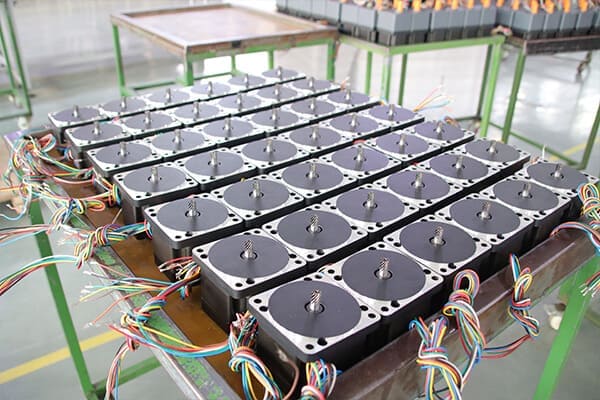
The Czech Republic has a strong industrial automation, automotive, medical equipment, robotics, and engineering ecosystem, making brushless DC motors (BLDC motors) an increasingly important motion-control technology. For OEMs and machine builders, choosing the right BLDC motor supplier is not simply about comparing rated power or RPM. Buyers also need to consider torque, efficiency, control method, encoder feedback, gearbox compatibility, operating life, customization, protection rating, delivery capability, and engineering support.
This guide presents 20 brushless DC motor manufacturers and suppliers relevant to the Czech market, with particular attention to companies that manufacture BLDC motors, develop customized motor solutions, or have established distribution and engineering capabilities for Czech and European customers.
Important market note: The first three companies are presented according to the requested commercial ranking. The remaining companies include Czech manufacturers as well as established suppliers, representatives, and companies with manufacturing or engineering presence relevant to the Czech Republic. They should not all be interpreted as Czech-owned BLDC motor manufacturers.
What Is a Brushless DC Motor?
A Brushless DC motor, commonly called a BLDC motor, is a permanent-magnet motor that uses electronic commutation instead of mechanical brushes and a commutator.
A typical BLDC motor consists of:
Permanent-magnet rotor
Stator windings
Electronic commutation system
Motor controller or driver
Hall sensors, encoder, or sensorless feedback
Optional gearbox
Optional brake
Optional integrated controller
Unlike a conventional brushed DC motor, a BLDC motor does not require carbon brushes to transfer current to the rotating part. This eliminates one of the major sources of mechanical wear.
The result is typically higher efficiency, longer service life, lower maintenance, lower electrical and mechanical wear, and better speed control.
For industrial applications, BLDC motors can be configured as standard motors, geared motors, servo motors, integrated motors, waterproof motors, or customized OEM drive systems.
Main Types of Brushless DC Motors
Before comparing suppliers, OEM buyers should understand the main BLDC motor categories available in the market.
Standard BLDC Motors
Standard BLDC motors are designed primarily for continuous rotation and speed control.
They are commonly used in:
Fans
Pumps
Conveyors
Automation equipment
Packaging machinery
Textile machines
Medical equipment
Laboratory equipment
They are often available in 12V, 24V, 36V, 48V and higher-voltage versions.
Geared BLDC Motors
A gearbox is added to reduce output speed and increase output torque.
Common gearbox configurations include:
Planetary gearbox
Spur gearbox
Worm gearbox
A planetary geared BLDC motor is particularly attractive when an application requires relatively high torque in a compact package.
BLDC Servo Motors
When an encoder is added to a BLDC motor, the system can provide closed-loop speed, torque, or position feedback.
This makes BLDC servo motors suitable for:
Robotics
AGVs and AMRs
CNC equipment
Pick-and-place machines
Automated production lines
Medical equipment
Integrated BLDC Motors
An integrated BLDC motor combines the motor with electronics such as the driver, controller, encoder interface, or communication interface.
This can significantly reduce wiring and installation space.
For compact automation systems, an integrated BLDC motor with driver and encoder can be much easier to install than a separate motor, driver, and controller architecture.
As a professional brushless dc motor manufacturer with 13 years in china, Jkongmotor offer various bldc motors with customized requirements, including 33 42 57 60 80 86 110 130mm, additionally, gearboxes, brakes, encoders, brushless motor drivers and integrated drivers are optional.
Wires
Cover
Fan
Shaft
Integrated Driver
Brake
Gearbox
Out Rotor
Coreless Dc
Driver
Top 20 Brushless DC Motor Manufacturers and Suppliers in Czech Republic
1. JKONGMOTOR
Company Profile
JKONGMOTOR is a China-based manufacturer specializing in stepper motors, brushless DC motors, integrated motors, servo motors, geared motors, and motion-control solutions. The company positions itself strongly around OEM/ODM customized motor solutions, which makes it particularly relevant for machine builders that require modifications rather than off-the-shelf motors.
JKONGMOTOR reports more than 100 employees, a production facility of approximately 7,000 square meters, and annual production exceeding 2 million motors. Its product portfolio covers both standard motors and integrated motion-control products.
Main Products
Standard BLDC motors
Integrated BLDC motors
Geared BLDC motors
BLDC servo motors
BLDC motors with encoders
BLDC motors with brakes
Integrated drivers
Stepper motors
Integrated servo motors
DC servo motors
Its BLDC range covers approximately 5W to 3000W, with motor sizes from approximately 28 mm to 110 mm, depending on the series.
Advantages
The strongest advantage for OEM buyers is customization.
JKONGMOTOR can combine motors with:
Gearboxes
Encoders
Brakes
Drivers
Customized shafts
Customized wiring
Integrated control electronics
For example, its 42BL series includes 24V/36V BLDC servo configurations with encoder feedback, while larger BLDC series are available for higher-power industrial applications.
For Czech OEMs looking for a cost-effective supplier capable of handling customized specifications, JKONGMOTOR is a strong option.
2. BESFOC Motor
Company Profile
BESFOC Motor is a Chinese manufacturer focused on integrated motors, stepper motors, brushless DC motors, linear motion products, and related motion-control components.
The company was established in 2011 and reports an annual output of more than 2 million motors and drivers. It also states that its products are exported to more than 30 countries and regions.
Main Products
Brushless DC motors
Integrated BLDC motors
Geared BLDC motors
BLDC servo motors
Stepper motors
Integrated stepper motors
Linear stepper motors
Gearboxes
Encoders
Brakes
Motor drivers
Its BLDC range includes compact NEMA 17 motors and larger industrial BLDC solutions.
Advantages
BESFOC's main strength is its combination of motor manufacturing and customized motion-control integration.
For example, its 80 mm BLDC motor range includes 48V, 220W configurations and options for gearboxes, encoders, brakes, and integrated drivers.
This makes BESFOC particularly suitable for:
Industrial automation
Robotics
AGVs
Medical equipment
Packaging machines
Conveyor systems
OEM machinery
3. LeanMotor
Company Profile
LeanMotor specializes in stepper motors and brushless DC motors, with a particular emphasis on OEM/ODM customization.
The company's BLDC portfolio includes standard, geared, servo, brake-equipped, waterproof, and integrated-driver configurations. Its listed motor sizes range from approximately 33 mm to 130 mm.
Main Products
Standard BLDC motors
Geared BLDC motors
BLDC servo motors
Waterproof BLDC motors
BLDC motors with brakes
Integrated BLDC motors
Stepper motors
Linear motors
Advantages
LeanMotor is particularly interesting for buyers who need a customized motor rather than a catalog-only product.
Customization can include:
Motor parameters
Shaft dimensions
Wiring
Gearbox
Encoder
Brake
Protection configuration
This makes the company suitable for OEM automation equipment, robotics, medical equipment, and other applications requiring motor adaptation.
4. Kayser Motor
Company Profile
Kayser Motor s.r.o. is based in Aš, Czech Republic, and is one of the more relevant local manufacturers for engineers looking for customized BLDC technology in the Czech and European markets.
Main Products
Kayser offers:
BR-series BLDC motors
BQ-series BLDC motors
KB-series BLDC motors
KBS slotless BLDC motors
Gearboxes
Encoders
Brakes
Sensors
Controllers
The company lists BLDC solutions from miniature sizes to larger industrial configurations, with technologies reaching up to 15 kW and speeds up to 50,000 RPM.
Advantages
Its major advantage is European engineering and customization.
The company serves robotics, automation, medical technology, automotive applications, HVAC, power tools, and other industries.
5. ATAS elektromotory Náchod
Company Profile
ATAS elektromotory Náchod is a long-established Czech motor manufacturer founded in 1928.
Main Products
BLDC motors
DC motors
EC motors
Gear motors
Axial fans
Radial fans
Resolvers
Customized motors
The company develops electric motors up to approximately 2 kW and has a significant portfolio of specialized motors.
Advantages
Its long industrial history, Czech manufacturing base, and custom motor-development capabilities make it attractive for customers prioritizing European production and engineering support.
6. MGM COMPRO
Company Profile
Based in Zlín, Czech Republic, MGM COMPRO is especially well known for high-performance electric propulsion and motor-control technology.
Main Products
High-power BLDC motors
Outrunner motors
Motor controllers
ESCs
Electric propulsion systems
Battery-management solutions
Advantages
MGM COMPRO is particularly strong in high-power BLDC applications.
Its product portfolio includes motors reaching tens of kilowatts. One listed BLDC motor, for example, has a peak power of 34 kW and continuous power of 25 kW.
This makes MGM COMPRO more relevant to electric propulsion, aerospace, marine, UAV, UGV, and specialized mobility applications than conventional low-power automation.
7. OPIS Engineering / Mechtex
Company Profile
OPIS Engineering, based in Brno, provides motor and motion technologies under the Mechtex portfolio.
Its listed BLDC products include compact 12V and 24V motors with power ratings from several watts upward.
Advantages
The company is particularly suitable for compact instrumentation and low-power applications where small dimensions and controlled speed are important.
8. MBM Technik
Company Profile
MBM Technik is a Brno-based Czech supplier of electric motors and motion-control components.
Main Products
BLDC motors
Integrated BLDC motors
DC motors
AC motors
Stepper motors
Planetary gearboxes
Worm gearboxes
Spur gearboxes
Linear actuators
The company specifically offers BLDC motors with integrated controllers and IP65 versions.
Advantages
Its strength is the ability to provide complete motor and gearbox combinations, reducing the engineering work required to integrate multiple suppliers.
9. Southern Engineering
Company Profile
Southern Engineering s.r.o. is based in Písek, Czech Republic, and focuses on engineering and control electronics.
Main Products
BLDC motor controllers
Sensorless motor-control systems
Customized motor electronics
BLDC motor solutions
Advantages
Its strongest area is motor-control electronics customization. The company states that it works with BLDC motor manufacturers to provide customized motor solutions with control electronics.
This can be valuable when the motor itself is standard but the machine requires a customized controller.
10. RAVEO
Company Profile
RAVEO is a Czech motion-control supplier offering electric motors, drives, gearboxes, and automation components.
Main Products
BLDC motors
DC motors
Gear motors
Motion-control components
Linear-motion systems
Controllers
Advantages
RAVEO is useful for buyers who prefer a local Czech engineering and supply channel rather than managing overseas sourcing directly.
Its BLDC-related portfolio covers industrial automation and motion-control applications.
11. JOMITA / MEGA MOTOR
Company Profile
JOMITA s.r.o., operating under the MEGA MOTOR name, is based in Brno and manufactures electric motors and drive systems.
Main Products
Brushless motors
BLDC motors
DC motors
Gear motors
Special motors
Advantages
MEGA MOTOR is particularly interesting for customers looking for special-purpose BLDC motors, including applications beyond conventional factory automation.
12. DCMotory
Company Profile
DCMotory provides compact DC and BLDC motor products for European customers.
This makes the supplier relevant to compact automation and low-speed/high-torque applications.
13. Oriental Motor Czech Representation
Company Profile
Oriental Motor is a major Japanese motion-control manufacturer with representation in the Czech Republic through OPIS Engineering in Brno.
Main Products
BLDC motors
AC motors
Stepper motors
Servo motors
Actuators
Fans
Motor controllers
Advantages
The company offers mature industrial motion-control technology and a broad range of motor and drive solutions. Its Czech representation provides local access to the product portfolio.
14. Bühler Motor
Company Profile
Bühler Motor is a globally established motion-technology manufacturer with production activities that include the Czech Republic.
Main Products
DC motors
BLDC motors
Gear motors
Automotive drive systems
Medical motor systems
Industrial motors
Advantages
Bühler Motor is particularly strong in automotive, aerospace, medical, agriculture, and industrial applications. Its production network includes the Czech Republic, and the company reports large-scale annual production.
15. AMETEK MAE
Company Profile
AMETEK MAE is an international motor manufacturer with manufacturing activities in Náchod, Czech Republic.
Main Products
DC motors
Stepper motors
BLDC motors
Blowers
Motor assemblies
Advantages
Its major advantage is its large-scale international engineering and manufacturing network.
The company's product portfolio covers brushless DC technology as well as other motor types.
16. Nanotec
Company Profile
Nanotec is a European motion-control manufacturer known for compact motors, integrated drives, controllers, and positioning technology.
Main Products
BLDC motors
Integrated BLDC motors
BLDC motors with controllers
Encoders
Gearboxes
Motor controllers
Advantages
Nanotec's integrated BLDC motors can combine motor, encoder, and controller technology in one unit. Its listed products include NEMA 17 and NEMA 23 configurations with power ratings from approximately 52.5W to 940W.
This makes the brand highly relevant to robotics, laboratory automation, medical equipment, and compact machine design.
17. SPG
Company Profile
SPG is a Korean motor manufacturer whose products are available through European motion-control supply channels, including the Czech market.
Main Products
BLDC motors
Brushless AC motors
DC motors
Gear motors
Planetary gearboxes
Worm gearboxes
Advantages
SPG is particularly suitable for OEMs that need motor and gearbox combinations for industrial automation.
Its European availability through Czech suppliers makes it a practical option for machine builders seeking established Asian motor technology with local sourcing support.
18. DKM Motor
Company Profile
DKM Motor is an established manufacturer of compact electric motors and gear motors, represented in the Czech market through motion-control suppliers.
Main Products
DC motors
BLDC motors
AC motors
Gear motors
Compact drive systems
Advantages
DKM focuses heavily on compact motor and gearmotor solutions, making its products useful for conveyors, fans, machinery, and other applications where installation space is limited.
19. Dunkermotoren
Company Profile
Dunkermotoren is a major European drive manufacturer with decades of experience in motor and drive technology.
Main Products
BLDC motors
Gearboxes
Brakes
Encoders
Linear drives
Integrated electronics
Advantages
Dunkermotoren's strength is the ability to supply complete drive systems rather than isolated motors.
Its portfolio includes brushless DC motors combined with planetary and worm gearboxes, brakes, encoders, and communication electronics.
20. Fulling Motor
Company Profile
Fulling Motor is an international motor supplier offering BLDC and other electric motor technologies to OEM and industrial customers.
Main Products
BLDC motors
Geared BLDC motors
DC motors
Stepper motors
Servo motors
Motor drivers
Advantages
Fullingmotor’s BLDC portfolio emphasizes efficiency, low maintenance, long operating life, and speed/torque control, making the products suitable for automation and robotics applications.
Choosing the right BLDC motor manufacturer in the Czech Republic is more complicated than comparing motor prices or selecting the supplier with the largest product catalog. For OEMs, automation companies, robotics developers, and machine builders, the motor must match the actual application in terms of torque, speed, voltage, efficiency, control method, mechanical dimensions, thermal performance, service life, and customization requirements.
A reliable supplier should also be able to support the project from prototype development through validation and mass production.
In the Czech market, buyers can consider both local European manufacturers and international OEM suppliers that provide customized BLDC motors for Czech and European machinery manufacturers. For example, Czech manufacturers such as Kayser Motor and ATAS provide customized BLDC solutions, while international suppliers such as JKONGMOTOR, BESFOC, and LeanMotor can be considered when customization, integrated motor solutions, and competitive OEM pricing are priorities.
1. Start With the Actual Application Requirements
Before contacting a BLDC motor manufacturer, define the motor's working conditions.
A good RFQ should include at least:
Rated voltage
Continuous power
Rated speed
Required output torque
Peak torque
Duty cycle
Motor dimensions
Shaft dimensions
Mounting requirements
Encoder requirements
Hall sensor requirements
Gearbox requirements
Brake requirements
Operating temperature
IP protection rating
Noise requirements
Expected service life
Annual quantity
This prevents suppliers from quoting completely different motor configurations.
For example, asking for a 24V BLDC motor is not enough. A 24V motor running at 3,000 RPM and a 24V geared BLDC motor delivering 2 Nm at 100 RPM are completely different solutions.
2. Evaluate BLDC Motor Torque and Speed Together
One of the most common mistakes when selecting a BLDC motor manufacturer is focusing on rated power or RPM without calculating the actual load torque.
For a rotating application, the relationship between power, torque, and speed can be expressed as:
P = T × ω
where:
P = mechanical power
T = torque
ω = angular velocity
In practical motor selection, the supplier should provide a complete torque-speed curve rather than only a nominal wattage.
Why the Torque-Speed Curve Matters
A motor may be advertised as a 200W BLDC motor, but that does not mean it can continuously produce the required torque at every speed.
Ask the manufacturer for:
Rated torque
Continuous torque
Peak torque
Rated speed
Maximum speed
Torque-speed curve
Efficiency curve
Thermal limits
For AGVs, conveyors, robotics, and other variable-load machinery, this information is much more useful than the motor's headline power rating.
3. Choose the Correct BLDC Motor Voltage
The most common low-voltage BLDC motor configurations for industrial and mobile equipment include 12V, 24V, 36V, and 48V.
24V BLDC Motors
24V BLDC motors are particularly common in:
AGVs
AMRs
Small automation equipment
Medical devices
Battery-powered machines
Small conveyors
Pumps
48V BLDC Motors
48V systems can be advantageous for higher-power applications because increasing voltage can reduce current for a given power output.
They are increasingly relevant to:
Mobile robots
AGVs
Electric mobility
Industrial automation
Battery-powered equipment
The correct voltage should ultimately be determined by the application's power architecture, battery system, controller, and safety requirements.
4. Decide Whether You Need a Geared BLDC Motor
Not every application should use a direct-drive BLDC motor.
If your machine requires low speed and high output torque, a geared BLDC motor may be the better option.
Common gearbox types include:
Planetary gearbox
Spur gearbox
Worm gearbox
Harmonic gearbox
Planetary Geared BLDC Motors
A planetary gearbox is often suitable when the machine requires:
Worm gearboxes can be attractive where high reduction ratios and specific mechanical characteristics are required.
However, efficiency and thermal performance should be carefully evaluated.
The best BLDC manufacturer should be able to recommend the motor and gearbox as a complete drive system, rather than forcing the customer to source the two components separately.
5. Check Whether Encoder Feedback Is Required
A basic BLDC motor can operate using Hall sensors or sensorless control, but precision applications often require encoder feedback.
An encoder is particularly useful for:
Robotics
AGVs and AMRs
CNC machines
Automated positioning systems
Medical equipment
Servo applications
Conveyor synchronization
Ask the manufacturer what feedback options are available.
These may include:
Hall sensors
Incremental encoder
Magnetic encoder
Optical encoder
Absolute encoder
For applications involving accurate position control, simply selecting a BLDC motor with Hall sensors may not provide sufficient feedback resolution.
6. Compare Sensorless and Sensored BLDC Motors
A good Czech BLDC motor supplier should be able to explain whether sensored or sensorless commutation is more suitable for your application.
Sensored BLDC Motors
Hall sensors provide rotor-position information.
They are useful for:
Low-speed operation
Frequent starting and stopping
High starting torque
Controlled acceleration
Mobile robots
Automation equipment
Sensorless BLDC Motors
Sensorless systems estimate rotor position using electrical signals.
They can reduce component count and cost, but low-speed starting and control can be more challenging depending on the application.
For a conveyor fan or pump, sensorless operation may be perfectly adequate.
For an AGV wheel drive or precision machine, feedback-based control may be much more appropriate.
7. Look for Customization Capability
For OEM projects, customization capability is one of the most important supplier-selection criteria.
A standard catalog motor may have the correct electrical specifications but still fail to fit the machine mechanically.
A capable BLDC motor manufacturer should be able to modify:
Shaft diameter
Shaft length
Shaft key
Mounting flange
Mounting holes
Cable length
Connector
Cable direction
Motor winding
Voltage
Speed
Encoder
Brake
Gearbox
Housing
Protection level
Controller
This is particularly important when the motor will be installed in a machine that is already designed around a specific mechanical interface.
8. Evaluate Integrated BLDC Motor Options
For modern automation equipment, an integrated BLDC motor can sometimes be a better solution than a separate motor and driver.
An integrated system may combine:
Motor + Driver + Encoder + Controller
in a compact assembly.
This can reduce:
Wiring
Control cabinet space
Installation time
Connector count
Engineering complexity
Integrated BLDC motors are especially attractive for:
Motor overheating is one of the most common reasons an apparently suitable BLDC motor fails in the field.
Do not evaluate a motor only at room temperature.
Ask about:
Continuous operating temperature
Ambient temperature
Winding temperature
Thermal resistance
Maximum winding temperature
Cooling method
Continuous-duty capability
Thermal protection
If the machine operates continuously for 16 or 24 hours per day, the motor's continuous thermal performance is much more important than its short-term peak power.
A supplier that provides thermal data and realistic continuous-duty specifications is generally preferable for industrial applications.
10. Check IP Protection Requirements
If the BLDC motor will operate in a dusty, wet, outdoor, or washdown environment, protection rating should be specified from the beginning.
Typical requirements may include:
IP54
IP55
IP65
IP66
IP67
The required rating depends on the actual environment.
For example:
IP65/IP67 BLDC motors may be considered for equipment exposed to dust, water, or outdoor conditions.
However, buyers should verify exactly what the supplier's stated IP rating covers, including connectors, cable exits, shaft seals, and gearbox assemblies.
11. Examine Manufacturing and Quality Control
Price should not be the first criterion when comparing BLDC motor manufacturers.
For OEM procurement, evaluate:
Manufacturing Capability
Ask about:
Production capacity
Winding equipment
Rotor balancing
Assembly processes
Automated testing
Aging tests
Load testing
Final inspection
Quality Systems
Ask whether the manufacturer has relevant quality-management certifications and documented inspection procedures.
For larger OEM projects, request:
Inspection reports
Test reports
Sample approval procedures
Reliability data
Traceability information
A supplier should be able to demonstrate how it maintains consistent motor performance from prototype to mass production.
12. Consider European and Czech Market Support
For Czech buyers, local technical support can be valuable.
A Czech or European supplier can potentially offer advantages in:
Communication
Site support
Shorter logistics routes
Local inventory
Faster technical discussions
European documentation
For example, Kayser Motor is based in Aš, Czech Republic, and offers customized BLDC motors across several product families. Its BLDC portfolio includes BR, BQ, KB, and KBS series, with options such as gearboxes, encoders, sensors, brakes, and controllers.
ATAS elektromotory Náchod is another Czech manufacturer that develops customized motors and offers BLDC versions with either sensors or sensorless configurations and integrated or external electronics.
However, local manufacturing is not automatically the best choice for every OEM.
For many projects, the better supplier may be the company offering the strongest combination of engineering capability, customization, quality, price, production capacity, and long-term support.
13. Compare OEM and ODM Capabilities
If you are developing a new machine, ask the manufacturer whether it supports OEM and ODM projects.
A strong OEM/ODM BLDC motor supplier should be able to help with:
Specification analysis
Motor selection
Electromagnetic design
Mechanical customization
Gearbox matching
Encoder selection
Driver selection
Prototype production
Sample testing
Design modification
Pilot production
Mass production
This is particularly important when the required motor does not exactly match an existing catalog model.
14. Ask About Minimum Order Quantity and Lead Time
A supplier may provide an excellent technical solution but still be unsuitable if the MOQ or production lead time does not match your project.
Ask for:
Sample lead time
Prototype MOQ
Mass-production MOQ
Standard production lead time
Customized production lead time
Monthly production capacity
Spare-parts availability
For startups and small OEMs, a manufacturer that supports small-batch samples and gradual volume increases can be more practical than a supplier that only accepts large production orders.
15. Compare Total Cost, Not Just Motor Price
The cheapest BLDC motor is not necessarily the lowest-cost solution.
Consider the total cost of ownership (TCO).
This includes:
Motor + Driver + Gearbox + Encoder + Wiring + Installation + Maintenance + Failure Risk + Energy Consumption
For example, a slightly more expensive BLDC motor with better efficiency and longer service life may reduce operating costs over several years.
Similarly, an integrated BLDC motor may have a higher unit price but reduce wiring and assembly costs.
16. Test Samples Before Mass Production
Never move directly from a supplier quotation to mass production for a critical motor application.
A better process is:
Step 1 — Submit Requirements
Provide the manufacturer with your actual:
Voltage
Torque
Speed
Duty cycle
Dimensions
Environment
Control requirements
Step 2 — Review the Proposed Motor
Check the supplier's:
Datasheet
Torque-speed curve
CAD drawing
Wiring diagram
Encoder specification
Gearbox specification
Step 3 — Test Samples
Test the motor under realistic machine conditions.
Measure:
Speed
Torque
Current
Temperature
Noise
Vibration
Acceleration
Deceleration
Efficiency
Step 4 — Modify the Design
If necessary, adjust the:
Winding
Gear ratio
Shaft
Encoder
Driver
Cooling
Mounting structure
Step 5 — Approve the Final Version
Only after validation should the customized motor move into regular production.
17. Questions to Ask a BLDC Motor Manufacturer
Before choosing a supplier in the Czech Republic, ask these questions:
Technical Questions
What is the continuous rated torque?
What is the peak torque?
What is the operating speed range?
What voltage options are available?
Is the motor sensorless or sensored?
Which encoders are available?
Can a brake be added?
Can a gearbox be integrated?
What is the IP rating?
What is the operating temperature range?
Manufacturing Questions
Do you manufacture the motor in-house?
What is the annual production capacity?
What is the MOQ?
What is the sample lead time?
What is the mass-production lead time?
How is each motor tested?
OEM Questions
Can the shaft be customized?
Can the mounting flange be changed?
Can the winding be customized?
Can the cable and connector be changed?
Can the driver be integrated?
Can you provide CAD drawings?
Can you develop a custom motor from specifications?
18. Which Type of BLDC Manufacturer Is Best for Your Project?
The ideal supplier depends on the project.
Project Requirement
Recommended Supplier Type
Small standard BLDC motor
Catalog supplier
Low-cost OEM production
OEM manufacturer
Customized shaft/flange
Custom motor manufacturer
AGV/AMR
BLDC + encoder + gearbox supplier
Robotics
BLDC servo manufacturer
High torque/low speed
Geared BLDC manufacturer
Compact automation
Integrated BLDC supplier
Medical equipment
High-reliability motor manufacturer
Outdoor equipment
IP-rated BLDC manufacturer
Large production volume
High-capacity OEM manufacturer
For many Czech machine builders, the ideal supplier is not simply a BLDC motor manufacturer in Czech Republic, but a manufacturer capable of delivering the complete motor solution required by the machine.
Final Checklist for Choosing a BLDC Motor Manufacturer in Czech Republic
Before signing an OEM supply agreement, evaluate the manufacturer against these ten points:
Motor performance — Does the torque-speed curve match your application?
Efficiency — Is the motor efficient under actual operating conditions?
Customization — Can the supplier modify the mechanical and electrical design?
Feedback — Are Hall sensors or encoders available?
Gearbox integration — Can the supplier provide the required reduction ratio?
Controller compatibility — Does the motor work with your control architecture?
Thermal performance — Can it operate continuously without overheating?
Quality — Does the supplier have reliable testing and production controls?
Supply capability — Can it support your expected annual volume?
Technical support — Can the supplier support you from prototype to mass production?
Conclusion
Choosing the right BLDC motor manufacturer in the Czech Republic should begin with the machine's actual requirements rather than the motor's advertised price.
For standard industrial applications, a catalog motor may be sufficient. For AGVs, AMRs, robotics, medical devices, packaging machines, conveyors, and other OEM equipment, a customized BLDC motor can provide a much better fit.
Local Czech manufacturers such as Kayser Motor and ATAS offer customized BLDC solutions and European engineering support. Kayser, for example, lists BLDC technologies covering applications from robotics and automation to medical devices, with optional gears, encoders, sensors, brakes, and controllers. ATAS likewise offers sensored and sensorless BLDC configurations with integrated or external electronics.
At the same time, international OEM manufacturers can be attractive when the priority is customization, integrated motor solutions, competitive pricing, high-volume production, and flexible product development.
The strongest procurement strategy is therefore to compare several suppliers using the same technical specification and evaluate not only motor price, but also engineering capability, customization, reliability, lead time, integration, quality control, and total cost of ownership.
BLDC Motor Applications in Czech Industry
The Czech Republic has a strong industrial manufacturing base, so BLDC motors can be found across many sectors.
Automotive Manufacturing
BLDC motors are used in:
Assembly equipment
Material handling
Automated tooling
Pumps
Fans
Robotic systems
Robotics
Robotic systems need compact, efficient, controllable motors.
BLDC servo motors with encoders are particularly useful for robotic joints and auxiliary mechanisms.
AGV and AMR Systems
AGVs and AMRs typically require compact motors with:
High torque
Low weight
Encoder feedback
Efficient battery operation
Precise speed control
A 24V or 48V geared BLDC motor can be a practical solution for mobile robots.
Medical Equipment
Medical devices often require quiet, reliable, compact motion systems.
BLDC motors are suitable for:
Medical pumps
Laboratory automation
Imaging equipment
Hospital beds
Surgical equipment
Diagnostic instruments
Packaging Machinery
Packaging machines frequently require fast acceleration, repeatable movement, and long continuous operating periods.
BLDC motors can drive:
Feed rollers
Conveyors
Cutting mechanisms
Labeling systems
Sorting mechanisms
Textile Machinery
High-speed, continuous-duty operation is a major requirement in textile manufacturing.
The long service life and controllability of BLDC motors make them suitable for many textile machine subsystems.
BLDC Motor vs Brushed DC Motor
Feature
BLDC Motor
Brushed DC Motor
Brushes
No
Yes
Maintenance
Low
Higher
Service life
Long
Shorter
Efficiency
Generally higher
Generally lower
Speed control
Excellent
Good
High-speed operation
Excellent
More limited
Controller
Required
Simpler
Initial cost
Higher
Lower
Precision applications
Excellent
Moderate
Continuous operation
Excellent
Application dependent
For a low-cost, simple mechanism, a brushed DC motor may still make sense.
For a machine that needs long service life, high efficiency, continuous operation, and sophisticated control, BLDC technology is usually more attractive.
Why Customized BLDC Motors Are Becoming More Important
Many machine builders initially search for a standard 24V BLDC motor or 48V brushless DC motor.
However, once the motor is integrated into a real machine, several mechanical and electrical constraints usually appear.
The shaft may need to be changed.
The mounting holes may be different.
The cable outlet may need to move.
The motor may need an encoder.
The gearbox ratio may need adjustment.
The driver may need CANopen, RS485, PWM, or another control interface.
The machine may require IP65 or IP67 protection.
This is why OEM/ODM BLDC motor customization has become an important selection factor.
For companies building hundreds or thousands of machines, a customized motor can often produce a better overall system than repeatedly modifying a standard motor during assembly.
Final Selection: Which BLDC Motor Supplier Should You Choose?
There is no single best BLDC motor manufacturer for every Czech application.
For OEM/ODM customization and cost-effective industrial motor solutions, JKONGMOTOR, BESFOC, and LeanMotor deserve particular attention.
For Czech-based manufacturing and European engineering support, Kayser Motor and ATAS are important options.
For high-power electric propulsion, MGM COMPRO is particularly relevant.
For compact industrial motion systems, OPIS Engineering, MBM Technik, RAVEO, DCMotory, and similar local suppliers can be considered.
For large international motion-control projects, companies such as Bühler Motor, AMETEK MAE, Nanotec, and Dunkermotoren provide broader European or global engineering capabilities.
Ultimately, the best supplier is the one that can match the motor, driver, gearbox, encoder, mechanical interface, thermal requirements, control architecture, and production volume to the actual machine.
For Czech OEMs, automation companies, robotics developers, and machine manufacturers comparing brushless DC motor suppliers, the most effective approach is to request a complete technical proposal rather than simply asking for a motor price. A well-designed BLDC motor solution should be evaluated as a complete drive system, not merely as a standalone electrical component.
Choose a manufacturer based on motor performance, customization capability, quality control, production capacity, technical support, lead time, and total cost of ownership. For OEM projects, also verify whether the supplier can provide gearboxes, encoders, brakes, drivers, and customized mechanical interfaces.
2. What should I consider when selecting a BLDC motor for an OEM application?
Key factors include rated torque, peak torque, speed, voltage, duty cycle, efficiency, operating temperature, IP rating, dimensions, feedback system, gearbox ratio, and expected service life. Providing these requirements to the manufacturer helps ensure an accurate motor selection.
3. Should I choose a 24V or 48V BLDC motor?
A 24V BLDC motor is commonly used in AGVs, AMRs, medical equipment, and compact battery-powered machinery. A 48V BLDC motor can be advantageous for higher-power applications because it can reduce current at the same power level. The final choice should match the machine's power architecture.
4. Do I need an encoder for a BLDC motor?
An encoder is recommended when the application requires accurate speed control, position feedback, synchronization, or closed-loop operation. Robotics, AGVs, AMRs, CNC equipment, and precision automation commonly benefit from encoder-equipped BLDC motors.
5. When should I choose a geared BLDC motor?
Choose a geared BLDC motor when the application requires lower output speed and higher torque. Planetary, spur, and worm gearboxes can provide different combinations of torque, efficiency, reduction ratio, and mechanical characteristics.
6. Can BLDC motors be customized for OEM machinery?
Yes. An experienced OEM BLDC motor manufacturer may customize the shaft, mounting flange, winding, voltage, speed, cable, connector, encoder, brake, gearbox, housing, and driver according to the machine's requirements.
7. What IP rating should I choose for a BLDC motor?
The required IP rating depends on the operating environment. IP65 or IP67 BLDC motors may be suitable for equipment exposed to dust, water, or demanding outdoor conditions. The complete motor assembly, including connectors and cable outlets, should be evaluated.
8. What is the difference between sensored and sensorless BLDC motors?
Sensored BLDC motors use Hall sensors or other feedback devices to determine rotor position and are generally better suited to controlled starting and low-speed operation. Sensorless BLDC motors estimate rotor position electronically and can reduce component count, making them suitable for applications such as fans and pumps.
9. How should I evaluate a BLDC motor manufacturer's quality?
Ask about production processes, motor testing, rotor balancing, winding quality, load testing, thermal testing, reliability testing, quality certifications, traceability, and sample validation. For OEM projects, testing representative samples under actual operating conditions is strongly recommended.
10. Is the lowest-price BLDC motor manufacturer the best choice?
Not necessarily. OEM buyers should compare total cost of ownership, including motor price, driver, gearbox, energy consumption, installation, maintenance, reliability, engineering support, and replacement costs. A slightly higher-priced motor can provide better long-term value if it offers higher efficiency, reliability, and better integration.