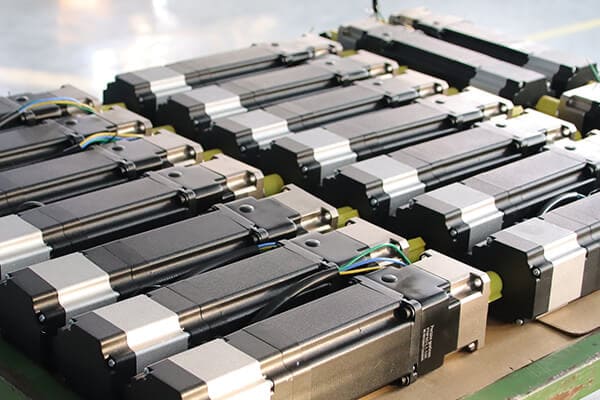
Finding the right brushless BLDC motor manufacturer in Belgium is not simply about comparing motor prices. For OEMs, automation companies, robotics manufacturers, medical equipment developers, AGV builders, and industrial machinery companies, the real decision usually comes down to efficiency, torque, speed control, motor life, customization, delivery capability, technical support, and whether the supplier can provide a complete motion solution.
Belgium has a strong industrial automation and engineering market, particularly around robotics, logistics automation, packaging, manufacturing equipment, automotive systems, medical technology, and specialized machinery. As a result, Belgian buyers can choose from local motor manufacturers, European engineering companies, and international BLDC motor manufacturers with OEM and ODM capabilities.
Important: The ranking is an editorial comparison based on product range, customization capability, industrial applications, manufacturing experience, and relevance to OEM procurement. It is not an official Belgian industry ranking.
What Is a Brushless BLDC Motor?
A brushless DC motor (BLDC motor) is a permanent-magnet electric motor that uses electronic commutation instead of mechanical brushes and a commutator.
This design eliminates the physical brush-contact system found in traditional brushed DC motors. Instead, a motor controller switches the stator windings electronically according to rotor-position information.
The result is a motor that can provide:
High efficiency
Long operating life
Low maintenance
Low mechanical wear
High-speed operation
Good speed regulation
High power density
Low electrical noise
Excellent suitability for automation
Easy integration with encoders and controllers
Depending on the application, BLDC motors can be supplied as standard motors, geared motors, servo motors, integrated motors, waterproof motors, brake motors, or customized OEM motors.
Types of BLDC Motors Available to Belgian OEM Buyers
As a professional brushless dc motor manufacturer with 13 years in china, Jkongmotor offer various bldc motors with customized requirements, including 33 42 57 60 80 86 110 130mm, additionally, gearboxes, brakes, encoders, brushless motor drivers and integrated drivers are optional.
Wires
Cover
Fan
Shaft
Integrated Driver
Brake
Gearbox
Out Rotor
Coreless Dc
Driver
For Belgian OEM manufacturers, choosing a BLDC motor is rarely just a matter of selecting the correct voltage and wattage. The motor has to fit the machine mechanically, match the controller electrically, deliver sufficient torque throughout the operating range, and remain reliable under the actual duty cycle and environmental conditions.
That is why Belgian automation companies, robotics manufacturers, AGV developers, medical equipment manufacturers, packaging-machine builders, and other industrial OEMs often look beyond a basic brushless DC motor. Depending on the application, the better solution may be a standard BLDC motor, integrated BLDC motor, geared BLDC motor, BLDC servo motor, brake BLDC motor, outer-rotor BLDC motor, flat BLDC motor, or AGV hub motor.
JKONGMOTOR's current BLDC portfolio covers these different configurations and supports OEM/ODM customization, including options such as gearboxes, encoders, brakes, and integrated drivers. Its standard BLDC range covers motor sizes from approximately 33 mm to 110 mm and beyond, while the broader product portfolio extends across multiple NEMA frame sizes and power requirements.
The important point for an OEM buyer is simple: the right BLDC motor is the one that matches the machine's complete motion requirement, not simply the motor with the highest power rating.
1. Standard BLDC Motors
A standard brushless DC motor is the most straightforward option when the machine already has an external motor controller or when the OEM wants to select the drive electronics separately.
JKONGMOTOR's standard three-phase BLDC motors are designed for applications requiring efficient operation, stable torque, reduced maintenance, and long service life. The current range includes compact motors as well as larger industrial models.
For example, its smaller 33BL series is available in 24 V and 48 V configurations, with listed power options from approximately 7 W to 40 W and rated speeds reaching several thousand RPM. Larger 110BLS models extend into substantially higher power levels, with listed 310 V versions ranging from hundreds of watts into the 2 kW class.
Typical Belgian OEM applications include:
Industrial pumps
Fans and blowers
Valves
Conveyors
Automation equipment
Small machinery
Cooling systems
General-purpose rotating equipment
A standard BLDC motor makes the most sense when the engineering team already has a suitable controller and wants maximum flexibility over the drive system.
2. Integrated BLDC Motors
An integrated BLDC motor combines the motor with drive electronics or control electronics into a more compact assembly.
This configuration is especially useful when cabinet space is limited or when an OEM wants to reduce the amount of wiring between the motor and controller.
JKONGMOTOR describes its integrated BLDC/servo configuration as combining the drive and motor into a compact unit, reducing wiring and installation requirements compared with separate motor and drive components. Available frame sizes include NEMA 17, 23, 24, and 34 configurations.
For Belgian machine builders, this can be particularly attractive in:
Robotics
AGVs and AMRs
Packaging equipment
Compact automation systems
Laboratory equipment
Medical machinery
Distributed motion-control systems
The advantage becomes even clearer when several motors are installed on the same machine. Instead of running long motor cables from a centralized cabinet to every axis, an integrated motor can place the electronics closer to the point of motion.
When an application needs high output torque at a relatively low speed, adding a gearbox to the BLDC motor is often more practical than selecting a much larger direct-drive motor.
JKONGMOTOR provides several geared BLDC configurations, including planetary, worm, spur, and eccentric gearbox solutions. Gearboxes can also be combined with customized motor parameters, encoders, brakes, or built-in drivers.
Planetary Geared BLDC Motors
Planetary gearboxes are a strong choice when the machine needs:
High torque density
Compact dimensions
Good efficiency
Low backlash
Stable mechanical transmission
They are particularly relevant to robotics, AGVs, automated machinery, and precision equipment.
Worm Geared BLDC Motors
Worm gearboxes are useful when a high reduction ratio is required and the mechanical design benefits from the characteristics of worm transmission.
They can be considered for:
Conveyors
Door systems
Material-handling equipment
Lifting mechanisms
Industrial actuators
Spur Geared BLDC Motors
Spur gearboxes provide a relatively simple and economical method of reducing speed and increasing output torque.
They can be suitable for general automation and equipment where extreme precision is not the primary requirement.
For Belgian OEM buyers, the key is to specify the required output speed and output torque first, then select the motor and reduction ratio accordingly.
4. BLDC Servo Motors
A BLDC servo motor adds feedback to the basic brushless motor concept.
Instead of relying only on an open-loop command, the controller receives feedback from an encoder or another sensing device and can continuously adjust motor operation.
This makes BLDC servo motors suitable when the machine requires better control of:
Position
Speed
Acceleration
Deceleration
Torque
Synchronization
JKONGMOTOR explains that its BLDC servo configuration combines the basic BLDC motor principle with a feedback system, allowing the controller to monitor and adjust motor operation through an encoder or feedback device.
This type of motor is particularly relevant to Belgian manufacturers building:
Robotic systems
AGVs
AMRs
CNC equipment
Packaging machines
Pick-and-place systems
Automated assembly equipment
Precision machinery
For a simple fan, servo feedback may be unnecessary.
For a robot axis that must repeatedly reach a defined position, however, the additional feedback can be extremely valuable.
5. Brake BLDC Motors
A brake BLDC motor combines brushless motor operation with an electromagnetic braking mechanism.
The brake is used to hold the motor shaft when the motor is stopped or power is removed, depending on the system design.
JKONGMOTOR's product range includes brake BLDC motors and describes the brake as a mechanism designed to prevent unwanted shaft movement when the motor is powered down or placed in standby.
Brake motors can be useful in applications such as:
Vertical lifting equipment
AGVs
Automated doors
Material-handling machines
Medical equipment
Industrial actuators
Machinery where position must be maintained after shutdown
However, a brake should not automatically be treated as a complete machine safety function. The brake's holding torque, engagement behavior, response time, duty cycle, and relationship with the machine's safety architecture should all be evaluated during system design.
6. Outer-Rotor BLDC Motors
An outer-rotor BLDC motor, also called an external-rotor BLDC motor, reverses the traditional motor arrangement.
Instead of the rotor being positioned inside the stator, the rotor surrounds the stator and rotates around it.
This architecture can provide a compact axial structure and relatively high rotor inertia.
JKONGMOTOR describes its outer-rotor BLDC motors as short in axial length and suitable for applications where compact construction and cost efficiency are important.
Typical applications can include:
Fans
Blowers
Cooling systems
Compact drive mechanisms
Robotics
Automated equipment
For OEM designers working with strict dimensional limitations, an outer-rotor configuration can sometimes provide a better mechanical layout than a conventional internal-rotor motor.
7. Flat BLDC Motors
A flat BLDC motor is designed with a short axial length and a relatively compact profile.
This makes it particularly interesting when the machine cannot accommodate a long cylindrical motor.
JKONGMOTOR describes its flat BLDC motors as low-profile products designed for high power density, efficient operation, and fast response, with applications including robotics, AGVs, and automation equipment.
Flat BLDC motors can be considered when:
Installation depth is restricted
The motor must fit into a compact mechanism
Weight distribution matters
A low-profile actuator is required
The machine has limited internal space
For mobile robots and compact robotic mechanisms, the physical shape of the motor can be just as important as its electrical specifications.
8. AGV Hub Motors
For AGV and AMR manufacturers, a conventional motor-and-gearbox arrangement is not always the most space-efficient solution.
An AGV hub motor integrates the drive function around the wheel or wheel-drive structure, allowing the motor system to occupy less internal machine space.
JKONGMOTOR lists AGV hub motors as a dedicated BLDC solution for automated guided vehicles, emphasizing compact construction, torque output, efficient operation, and motion control.
AGV hub motors are particularly suitable for:
Indoor AGVs
AMRs
Warehouse robots
Autonomous transport carts
Mobile logistics platforms
Service robots
When selecting an AGV hub motor, the important specifications extend beyond motor wattage. Engineers should calculate:
Vehicle mass
Maximum payload
Wheel diameter
Required travel speed
Acceleration
Floor conditions
Slope
Duty cycle
Continuous torque
Peak torque
Battery voltage
For example, a motor that appears adequate based on nominal power may still be unsuitable if the vehicle needs high starting torque or frequent acceleration under heavy payload.
Advantages and Limitations of BLDC Motors
Advantages
The most important advantages of brushless DC motors include:
Higher efficiency: Electronic commutation reduces mechanical losses associated with brushes.
Long service life: There are no brushes to wear out, making BLDC motors suitable for continuous-duty applications.
Low maintenance: Routine brush replacement is eliminated.
High speed: BLDC motors can operate efficiently at relatively high rotational speeds.
Good controllability: With an appropriate controller, speed, torque, acceleration, braking, and direction can be controlled accurately.
Compact design: High power density makes BLDC technology suitable where installation space is limited.
Low noise: Mechanical brush noise is eliminated.
Limitations
BLDC motors also have several considerations.
The motor requires electronic control hardware, increasing system complexity compared with a basic brushed DC motor.
The overall system cost can also be higher because the motor, controller, encoder, and gearbox may all need to be considered.
For OEM applications, the best approach is therefore to evaluate the complete motor system, rather than comparing motor unit prices alone.
JKONGMOTOR is a China-based manufacturer specializing in stepper motors, brushless DC motors, integrated servo motors, linear motion products, motor drivers, and customized motion-control solutions.
The company states that it was founded in 2010 and operates a manufacturing facility in Changzhou, China, with more than 100 employees and annual production exceeding two million motors. Its portfolio covers both conventional motors and integrated motion-control products.
Main Products
Brushless DC motors
Geared BLDC motors
Brake BLDC motors
Integrated DC servo motors
Integrated BLDC solutions
Outer-rotor BLDC motors
Coreless DC motors
BLDC motor drivers
Stepper motors
Linear stepper motors
Geared stepper motors
Advantages
For OEM buyers, one of JKONGMOTOR's strongest advantages is its broad customization capability.
Motor parameters, shafts, gearboxes, encoders, brakes, wiring, drivers, and integrated electronics can be considered as part of a complete motion-control solution.
This makes the company particularly relevant to AGV, AMR, robotics, packaging, logistics automation, medical equipment, and industrial machinery manufacturers.
2. BESFOC Motor
Company Profile
BESFOC Motor, officially Changzhou BesFoc Motor Co., Ltd., is a China-based manufacturer specializing in integrated motors, BLDC motors, stepper motors, linear motion systems, drivers, and motion-control products.
BESFOC states that it was established in 2011 and has annual shipments exceeding two million motors and drivers. Its products are exported internationally, including to European markets.
Main Products
Standard BLDC motors
Geared BLDC motors
Integrated BLDC motors
Brushless motor drivers
Integrated stepper motors
Linear stepper motors
Gearboxes
Encoders
Brakes
Its BLDC portfolio is aimed at automation, robotics, medical equipment, intelligent manufacturing, and other applications requiring efficient electronic commutation.
Advantages
BESFOC is particularly attractive to buyers looking for a combination of motor, driver, and motion-control technology from one supplier.
Its BLDC drivers support different control approaches and speed-control configurations, while its product portfolio also includes gearboxes, encoders, and integrated motors.
3. LeanMotor
Company Profile
LeanMotor is a China-based stepper and BLDC motor manufacturer with more than 15 years of manufacturing experience.
The company offers OEM and ODM motor solutions and reports more than 100 employees, a 6,703-square-meter workshop, more than 110 patents, and annual production exceeding two million units.
Main Products
Standard BLDC motors
Geared BLDC motors
BLDC servo motors
BLDC motors with brakes
Waterproof BLDC motors
Integrated BLDC motors
Linear BLDC motors
BLDC motor drivers
Planetary geared BLDC motors
Its BLDC range includes motor sizes from approximately 33 mm through 130 mm, covering a broad range of industrial applications.
Advantages
LeanMotor is especially relevant to OEM customers that need custom motor parameters, customized shafts, gearboxes, encoders, brakes, protection ratings, or communication interfaces.
The company also offers integrated BLDC servo products for applications such as AGVs and industrial automation.
4. Elnor Motors
Company Profile
Elnor Motors is a Belgian motor company with expertise in customized electric motors, including brushed and brushless DC motors.
Main Products
Custom DC motors
Brushless DC motors
Explosion-proof motors
ATEX motors
IECEx motors
Specialized industrial motors
Advantages
Elnor is particularly interesting for Belgian and European industrial customers requiring customized motor engineering and hazardous-area solutions.
Its published BLDC specifications include 12–48 VDC input, power up to 750 W, and adjustable speed operation.
5. Traxial
Company Profile
Traxial is a Belgium-based electric motor technology company focused on high-performance axial-flux motor technology.
Main Products
Axial-flux electric motors
High-power-density motor technology
Electric powertrain solutions
Advantages
Traxial is particularly relevant to customers investigating high power density, electrification, and advanced mobility applications. The company develops and manufactures its technology in Belgium.
6. Schneider Electric
Company Profile
Schneider Electric is a major industrial automation and energy-management company with a substantial Belgian market presence.
Main Products
Its Lexium portfolio includes integrated drives using DC brushless motors, as well as servo and stepper technologies.
Advantages
Its biggest advantage is integration with broader PLC, industrial automation, motion-control, and machine-building ecosystems.
7. maxon
Company Profile
maxon is a well-established precision motor manufacturer serving demanding motion-control applications.
Main Products
Brushless DC motors
DC motors
Gearheads
Encoders
Controllers
Precision drive systems
Advantages
maxon is particularly strong where precision, compact dimensions, dynamic response, and engineering support are more important than lowest purchase price.
8. FAULHABER
Company Profile
FAULHABER is a European precision-drive manufacturer with extensive experience in miniature motors and motion systems.
Main Products
Brushless DC motors
Miniature motors
Gearheads
Encoders
Motion controllers
Advantages
Its strength is miniature and precision motion for medical, laboratory, optical, robotics, and specialized industrial equipment.
9. Portescap
Company Profile
Portescap is a specialist motion-control manufacturer known for compact motor technologies.
Main Products
Brushless DC motors
Slotless BLDC motors
Miniature motors
Gearheads
Encoders
Advantages
Portescap is a strong option for compact, high-performance motion applications.
10. Allied Motion
Company Profile
Allied Motion develops motion-control technologies for industrial and mobile applications.
Main Products
Brushless motors
Servo motors
Gear motors
Motor controllers
Integrated motion systems
Advantages
The company offers a broad range of motion technologies suitable for industrial automation, robotics, and mobile equipment.
11. Kollmorgen
Company Profile
Kollmorgen is an established motion-control company serving industrial automation and advanced machinery markets.
Moog develops high-performance motion-control systems for industrial, aerospace, medical, and specialized applications.
Main Products
Brushless motors
Servo motors
Actuators
Motion-control systems
Advantages
Moog is suitable for applications requiring advanced engineering, reliability, and high-performance motion control.
13. Nidec
Company Profile
Nidec is one of the world's major motor manufacturers, with a very broad range of motor technologies.
Main Products
BLDC motors
AC motors
DC motors
Servo motors
Automotive motors
Appliance motors
Advantages
Its scale and global manufacturing network make it attractive for high-volume OEM programs.
14. Dunkermotoren
Company Profile
Dunkermotoren specializes in compact drive systems and motorized automation solutions.
Main Products
BLDC motors
Gear motors
Integrated drives
Encoders
Controllers
Advantages
The company is particularly relevant for automation, conveyor systems, logistics equipment, and decentralized drives.
15. ebm-papst
Company Profile
ebm-papst is widely recognized for fan and motor technology, particularly electronically commutated motor systems.
Main Products
EC motors
BLDC motor technologies
Fans
Motorized ventilation systems
Advantages
Its expertise is particularly relevant to air movement, HVAC, cooling, ventilation, and thermal-management applications.
16. AMETEK Haydon Kerk Pittman
Company Profile
AMETEK's Haydon Kerk Pittman business provides motion solutions for industrial and medical applications.
Main Products
Brushless motors
Stepper motors
Linear actuators
Motion systems
Advantages
The combination of motor and linear-motion technologies makes the company useful for specialized automation and equipment manufacturers.
17. Servo-Tecnica
Company Profile
Servo-Tecnica specializes in precision motion components and motor technologies for industrial applications.
Main Products
Brushless motors
Servo motors
Gearboxes
Encoders
Motion-control components
Advantages
The company is particularly suitable for OEMs requiring customized miniature and precision motion solutions.
18. Product Engineering Services
Company Profile
Product Engineering Services (PES) is a Belgian engineering and distribution company providing motion-control and micromotor solutions.
PES has stated that it serves the French and Belgian markets with micromotor technologies including brushed and brushless solutions, encoders, Hall sensors, and gearboxes.
Main Products
Brushless micromotors
Coreless motors
Gearboxes
Encoders
Hall sensors
Customized motor solutions
Advantages
Its local Belgian presence and engineering orientation can be valuable for customers looking for technical assistance and application-specific motor selection.
19. Premotec
Company Profile
Premotec specializes in compact motor technologies, including brushless DC motors with integrated electronics.
Main Products
Brushless DC motors
Integrated BLDC motors
Compact motor systems
Advantages
Premotec products can be attractive for applications requiring a compact motor with integrated electronics. For example, its BLDC48-12 series is listed with 24 V operation, integrated electronics, and continuous output power up to 12 W.
20. Alcom
Company Profile
Alcom is a Belgium-based electronics supplier relevant to BLDC motor control through its semiconductor and electronic component portfolio.
Main Products
BLDC motor driver components
Three-phase motor pre-drivers
Automotive-qualified motor-control ICs
Electronic control components
Advantages
Alcom can be relevant when the project involves designing a customized BLDC controller or electronic motor-control system rather than purchasing a complete motor assembly. Its published BLDC driver technology supports Hall inputs, PWM, direction, braking, and protection functions.
How to Choose the Best BLDC Motor Manufacturer in Belgium
The best supplier is not necessarily the company with the lowest quoted price. For OEM procurement, several technical and commercial factors should be evaluated.
1. Define Voltage and Power
Common BLDC motor voltages include:
12 V
24 V
36 V
48 V
60 V
Higher industrial DC voltages
For mobile robots and AGVs, 24 V and 48 V BLDC systems are particularly common.
Power requirements can range from a few watts for miniature equipment to hundreds or thousands of watts for industrial machinery.
2. Compare Torque and Speed
Do not select a motor based only on rated power.
The supplier should provide:
Rated torque
Peak torque
Rated speed
Maximum speed
Continuous-duty capability
Torque-speed curves
Current requirements
For geared applications, calculate the required output torque after gearbox reduction rather than comparing the motor's unloaded speed.
3. Choose the Correct Feedback Method
BLDC motors may use:
Hall sensors
Encoders
Sensorless control
Incremental encoders
Absolute encoders
For basic fans and pumps, sensorless control may be sufficient.
For robotics, AGVs, positioning systems, and precision automation, encoder feedback is generally more appropriate.
4. Consider the Gearbox
If the application requires high torque at low speed, a geared BLDC motor can be more practical than using a very large direct-drive motor.
Common options include:
Planetary gearbox: High torque density and good precision.
Spur gearbox: Cost-effective and suitable for many general applications.
Worm gearbox: Useful where high reduction ratios and self-locking characteristics are required.
5. Check Environmental Requirements
Industrial customers should specify:
IP rating
Operating temperature
Humidity
Shock
Vibration
Dust
Water exposure
Corrosive environment
For outdoor mobile robots or AGVs, an IP65 or IP67 motor configuration may be preferable.
6. Evaluate OEM and ODM Capability
For high-volume OEM projects, customization can be more important than standard catalog selection.
Ask whether the supplier can customize:
Shaft dimensions
Mounting flange
Cable length
Connector
Voltage
Torque
Speed
Encoder
Brake
Gearbox
Driver
Communication interface
Housing
IP rating
A supplier capable of handling these requirements internally can simplify the entire development process.
BLDC Motor Applications in Belgium
The main attraction of a brushless DC motor is its electronically commutated design. Instead of mechanical brushes making physical contact with the rotating commutator, the motor uses electronic switching to control the stator windings.
That difference has practical consequences for machine builders.
A BLDC motor can provide high efficiency, reduced mechanical wear, relatively low maintenance, and good speed control. These characteristics are especially useful when equipment operates for long hours or when access for maintenance is difficult.
For Belgian OEMs, several characteristics are particularly relevant:
Long operating life for production equipment
Low maintenance for automated machinery
Compact size for space-constrained machines
Good efficiency for battery-powered equipment
Wide speed range for variable-speed applications
Encoder compatibility for closed-loop motion
Gearbox compatibility for high-torque applications
Integrated driver options for decentralized automation
Customization potential for OEM equipment
JKONGMOTOR, for example, offers standard BLDC motors as well as geared, integrated, servo, brake, outer-rotor, flat, and AGV-oriented configurations, allowing the motor architecture to be matched to the application rather than forcing every machine into the same motor format.
1. BLDC Motors for Industrial Automation in Belgium
Industrial automation is one of the most natural applications for BLDC technology.
Belgian machine builders frequently require motors for conveyors, actuators, feeding mechanisms, inspection equipment, automated assembly systems, and production machinery.
A standard BLDC motor can be used when the machine already has a suitable external controller. Where the application requires more torque at a lower speed, a geared BLDC motor can be used instead.
For more demanding positioning applications, an encoder-equipped BLDC servo motor can provide closed-loop feedback.
Typical automation applications include:
Automated assembly machines
Conveyor systems
Material feeders
Inspection machines
Pick-and-place equipment
Industrial actuators
Automated production lines
Machine mechanisms
The key advantage is that the motor can be selected according to the actual motion profile rather than simply the machine's nominal power requirement.
2. BLDC Motors for AGVs and AMRs
Belgium's logistics and manufacturing sectors provide an important application environment for automated guided vehicles (AGVs) and autonomous mobile robots (AMRs).
These vehicles require compact and efficient drive systems because the motor directly affects:
Travel speed
Acceleration
Payload capacity
Battery consumption
Climbing ability
Wheel traction
Operating time
For mobile robots, 24 V and 48 V BLDC systems are common choices because they fit naturally into low-voltage battery architectures.
Depending on the vehicle design, manufacturers may choose a geared BLDC motor, integrated servo motor, or AGV hub motor.
A hub motor can be particularly attractive when the wheel-drive assembly needs to occupy minimal internal space.
What should Belgian AGV manufacturers calculate?
Before selecting the motor, engineers should determine:
Total vehicle weight
Maximum payload
Wheel diameter
Desired travel speed
Acceleration time
Maximum slope
Floor conditions
Operating hours per day
Battery voltage
Required continuous and peak torque
A motor that looks adequate from its wattage alone may not provide enough starting torque for a fully loaded AGV.
3. BLDC Motors for Warehouse and Logistics Automation
Belgium's central European location makes logistics and distribution an important industrial sector.
Automated warehouses rely on many small and medium-sized motorized mechanisms, including conveyors, rollers, sorters, lifting units, transfer systems, and autonomous vehicles.
BLDC motors are useful in these systems because equipment often needs to run repeatedly throughout the working day.
Common applications include:
Roller conveyors
Belt conveyors
Sorting systems
Automated storage equipment
Transfer mechanisms
Parcel handling systems
Warehouse robots
Vertical lifting mechanisms
For conveyor applications, a geared BLDC motor is often more practical than a high-speed motor operating directly at the required output speed.
A gearbox reduces rotational speed while increasing usable output torque.
4. BLDC Motors for Robotics
Robotics requires a combination of compact size, dynamic response, torque density, and controllability.
A conventional standard BLDC motor may be sufficient for a simple rotary mechanism, while robotic joints generally benefit from feedback and mechanical reduction.
A typical robotic drive may therefore combine:
BLDC motor + gearbox + encoder + controller
For more advanced OEM designs, these elements can be supplied as an integrated motion assembly.
Belgian robotics applications can include:
Collaborative robots
Industrial robotic arms
Mobile robots
Service robots
Pick-and-place robots
Inspection robots
Automated handling systems
Specialized robotic mechanisms
For robotic joints, the important specifications are usually continuous torque, peak torque, speed, encoder resolution, gearbox backlash, mechanical dimensions, and thermal performance.
Power rating alone does not provide enough information to evaluate a robotic motor.
5. BLDC Motors for Packaging Machinery
Packaging machines often require rapid acceleration, frequent stopping, precise synchronization, and long operating cycles.
BLDC motors can be used in:
Filling machines
Labeling machines
Sealing machines
Wrapping machines
Cartoning equipment
Cutting systems
Feeding mechanisms
Capping equipment
For a simple rotating feeder, a standard BLDC motor may be sufficient.
For a mechanism that must repeatedly move to a defined position, a BLDC servo motor with encoder feedback may be more appropriate.
The advantage for an OEM is the ability to select the motor architecture according to the machine's motion profile instead of using the same motor for every axis.
Food-processing machinery places additional demands on motor selection.
Depending on the equipment, motors may be exposed to:
Moisture
Cleaning processes
Temperature changes
Food particles
Frequent operation
Chemical cleaning agents
In these applications, environmental protection becomes just as important as electrical performance.
A manufacturer may therefore specify a suitable IP-rated BLDC motor, customized cable arrangement, sealed construction, or other environmental adaptations.
Potential applications include:
Food conveyors
Cutting machines
Mixing equipment
Portioning systems
Filling equipment
Packaging systems
Food-processing automation
The correct protection level should always be determined from the actual cleaning and operating conditions rather than selected solely because a higher IP rating sounds better.
7. BLDC Motors for Medical Equipment
Medical and laboratory equipment often requires compact, quiet, controllable motion.
BLDC motors can be considered for:
Medical pumps
Laboratory automation
Diagnostic equipment
Medical positioning mechanisms
Sample-handling equipment
Ventilation and cooling systems
Automated medical devices
For these applications, buyers may place more emphasis on low vibration, repeatability, noise, reliability, compact dimensions, and precise speed control than on maximum motor output.
A customized BLDC motor can also be useful when the available installation space does not accommodate a standard motor body.
8. BLDC Motors for Textile Machinery
Textile machinery can operate continuously and at relatively high speeds, making motor efficiency and reliability important.
BLDC motors can be used in:
Yarn handling equipment
Textile feeding mechanisms
Spinning equipment
Winding machines
Cutting mechanisms
Automated textile machinery
For variable-speed applications, electronic speed control allows the machine manufacturer to adjust motor performance according to production conditions.
For applications requiring higher torque at lower output speeds, a geared configuration may be more appropriate.
9. BLDC Motors for Pumps and Fans
Not every BLDC application requires a servo system.
For fans, blowers, pumps, and similar equipment, a standard BLDC motor may be the most economical solution.
The main benefits in these applications are typically:
Efficient operation
Long service life
Low maintenance
Adjustable speed
Compact construction
Variable-speed operation can also help equipment manufacturers avoid running a motor continuously at maximum speed when the actual process does not require it.
This makes BLDC technology particularly relevant to applications where energy consumption is an important design consideration.
10. BLDC Motors for Automated Doors and Access Systems
BLDC motors can be combined with gearboxes and position feedback for:
Automatic sliding doors
Industrial doors
Access-control systems
Automatic gates
Door-opening mechanisms
A geared motor is particularly useful because door systems generally require relatively low output speed and sufficient torque rather than high shaft RPM.
For safety-critical door systems, the complete control and safety architecture must be evaluated rather than relying on the motor alone.
Solar tracking equipment needs to move panels or assemblies through a controlled angular range while operating outdoors.
This creates several motor-selection considerations:
Outdoor exposure
Temperature variation
Dust and moisture
Long operating life
Low maintenance
Low-speed torque
Holding requirements
A geared BLDC motor can be suitable where high reduction and controlled output movement are required.
However, the motor, gearbox, brake, controller, and mechanical structure should be evaluated as one system.
12. BLDC Motors for Material Handling Equipment
Material handling systems often require compact motors capable of repeated starts and stops.
BLDC motors can be used in:
Small lifting mechanisms
Automated carts
Conveyor modules
Transfer units
Sorting equipment
Automated handling machines
When the load varies significantly, engineers should examine the motor's continuous torque and peak torque, not simply its rated power.
This is especially important for machines that accelerate heavy loads repeatedly.
13. BLDC Motors for Printing and Paper Machinery
Printing and paper-handling equipment can require stable speed, rapid response, and synchronization between multiple rotating mechanisms.
BLDC servo systems can be considered for:
Paper feeding
Rollers
Cutting mechanisms
Label handling
Printing auxiliaries
Paper positioning systems
Encoder feedback can help maintain consistent speed and synchronization where the process demands tighter motion control.
14. BLDC Motors for Laboratory and Precision Equipment
Compact laboratory equipment often has limited internal space.
A small BLDC motor can provide controlled rotation without the maintenance requirements associated with mechanical brushes.
Applications may include:
Laboratory pumps
Sample handling
Automated instruments
Centrifugal mechanisms
Optical equipment
Small positioning systems
For these machines, motor dimensions, vibration, noise, and repeatability can be more important than raw power.
15. BLDC Motors for Electric Mobility
BLDC technology is also relevant to compact electric mobility systems.
Possible applications include:
Small electric vehicles
Mobile robots
Autonomous carts
Electric actuators
Battery-powered equipment
The key advantage is efficiency combined with electronic control.
For battery-powered systems, motor efficiency directly influences how much useful work can be obtained from a given battery capacity.
This makes motor efficiency, operating point, gearbox selection, and controller efficiency important parts of the overall system design.
How to Select a BLDC Motor for a Belgian OEM Project
Application selection should begin with engineering requirements.
Step 1: Define the Load
Calculate the required continuous and peak torque.
Step 2: Define Speed
Specify both normal operating RPM and maximum required RPM.
Step 3: Define the Power Supply
Common low-voltage choices include 12 V, 24 V, and 48 V systems, while industrial applications may use other voltage levels.
Step 4: Decide Whether Feedback Is Required
Use sensorless control for relatively simple applications where appropriate.
Consider Hall sensors or encoders when the machine requires more predictable starting, speed control, or closed-loop positioning.
Step 5: Determine Whether a Gearbox Is Necessary
If the application requires low speed and high torque, evaluate a geared BLDC motor.
Step 6: Consider the Environment
Check:
IP rating
Temperature
Humidity
Vibration
Shock
Dust
Cleaning conditions
Outdoor exposure
Step 7: Confirm Mechanical Compatibility
Provide the manufacturer with:
Motor diameter
Overall length
Shaft size
Shaft length
Mounting hole pattern
Flange dimensions
Cable position
Step 8: Consider Customization
For OEM production, customization may include the shaft, winding, connector, cable, encoder, brake, gearbox, driver, housing, mounting structure, and communication interface.
This is where working directly with a motor manufacturer can become particularly valuable.
Standard BLDC Motor or Customized BLDC Motor?
For a prototype or low-volume machine, an existing motor may be the fastest option.
For a production OEM project, customization can make more sense when the catalog motor requires compromises.
For example, a Belgian AGV manufacturer may require:
A standard motor may satisfy only some of these requirements.
A customized motor can be developed around the complete mechanical and electrical specification.
JKONGMOTOR provides OEM/ODM customization for BLDC and integrated motion products, including options involving gearboxes, encoders, brakes, drivers, and different motor configurations. This makes it relevant to OEM projects where the motor is considered part of the machine rather than an isolated component.
Why BLDC Motor Applications in Belgium Are Becoming More Diverse
The role of the BLDC motor is expanding beyond traditional fans and pumps.
That combination makes BLDC technology suitable for both conventional industrial equipment and newer automation platforms.
The same underlying motor technology can be adapted for a conveyor, robotic joint, AGV wheel, medical mechanism, packaging axis, or compact pump simply by changing the motor configuration, gearbox, feedback system, controller, and mechanical design.
For Belgian OEMs, this flexibility is often more important than selecting a motor based on a single specification.
Conclusion
BLDC motors have a broad range of applications in Belgium, from industrial automation and logistics to robotics, AGVs, packaging, medical equipment, food machinery, pumps, fans, textile equipment, and electric mobility.
The most appropriate motor configuration depends on the actual machine requirement:
Standard BLDC motor for general rotating applications
Geared BLDC motor for lower-speed, higher-torque applications
Integrated BLDC motor for compact decentralized systems
BLDC servo motor for closed-loop motion
Brake BLDC motor where shaft holding is required
Flat or outer-rotor BLDC motor where installation space is restricted
AGV hub motor for compact mobile-robot wheel drives
For Belgian OEM buyers, the best procurement approach is to provide the motor manufacturer with the complete application data—including voltage, torque, speed, duty cycle, dimensions, feedback, environmental conditions, gearbox requirements, and control interface.
This allows the supplier to recommend a BLDC solution that fits the actual equipment instead of simply offering the closest standard motor from a catalog.
BLDC Motor Manufacturer vs. BLDC Motor Distributor
This distinction is important when purchasing motors in Belgium.
A manufacturer normally controls at least part of the motor design and production process.
A distributor primarily provides access to products manufactured by another company.
Neither model is automatically better.
A distributor can offer:
Local stock
Faster delivery
Local technical support
Multiple brands
A manufacturer can offer:
OEM customization
Engineering support
Direct factory pricing
Custom tooling
Motor optimization
Volume production
For a small replacement order, a distributor may be the easiest choice.
For a new OEM project requiring thousands of motors per year, direct cooperation with a BLDC motor manufacturer is often more appropriate.
Conclusion
The Belgian BLDC motor market offers buyers access to local engineering companies, European precision-motor specialists, global automation brands, and international OEM manufacturers.
For highly customized applications, companies such as JKONGMOTOR, BESFOC, and LeanMotor are worth evaluating because their product portfolios extend beyond standard BLDC motors into geared BLDC motors, integrated servo motors, motor drivers, encoders, brakes, and customized motion-control systems. JKONGMOTOR, for example, describes its business as an OEM/ODM customized motion-control manufacturer with a broad portfolio of BLDC and integrated motor products. BESFOC similarly combines BLDC motors with drivers and other motion-control products, while LeanMotor offers standard, geared, brake, waterproof, and integrated BLDC configurations.
For buyers specifically requiring Belgian manufacturing or local engineering, Elnor, Traxial, and Product Engineering Services deserve particular attention. Elnor offers customized brushless DC motors, including specialized explosion-proof configurations, while Traxial develops high-performance axial-flux motor technology in Belgium.
Ultimately, the right BLDC motor manufacturer should be selected according to torque, speed, voltage, duty cycle, feedback, gearbox requirements, environmental conditions, integration requirements, customization capability, production volume, and total system cost rather than company name alone.
Frequently Asked Questions
1. What are BLDC motors commonly used for in Belgium?
BLDC motors are commonly used in Belgian industrial automation, robotics, AGVs and AMRs, logistics equipment, packaging machinery, medical devices, pumps, fans, textile machinery, and material-handling systems. Their high efficiency, low maintenance, long service life, and controllable speed make them suitable for both continuous-duty equipment and automated motion systems.
2. Why are BLDC motors suitable for industrial automation?
BLDC motors provide efficient electronic commutation, good speed control, and long operating life without mechanical brushes. Depending on the machine, OEMs can also add encoders, gearboxes, brakes, or integrated drivers to create a more complete motion-control solution.
3. Which BLDC motor is suitable for AGVs and AMRs?
The appropriate motor depends on vehicle weight, payload, wheel diameter, travel speed, acceleration, slope, battery voltage, and duty cycle. Geared BLDC motors, integrated BLDC servo motors, and AGV hub motors are commonly considered for AGV and AMR drive systems because they can provide compact installation and high usable output torque.
4. Are BLDC motors suitable for Belgian packaging machines?
Yes. BLDC motors can be used in filling, labeling, sealing, feeding, cutting, wrapping, and other packaging equipment. A standard BLDC motor can handle relatively simple continuous rotation, while an encoder-equipped BLDC servo motor is more suitable when the machine requires accurate speed synchronization, positioning, or repeated acceleration and deceleration.
5. Should I choose a standard or geared BLDC motor?
Choose a standard BLDC motor when the required operating speed and torque can be achieved directly and an external controller is available. A geared BLDC motor is generally more appropriate when the application requires lower output speed and higher torque. Planetary, spur, and worm gearboxes can be selected according to torque, reduction ratio, efficiency, precision, and mechanical requirements.
6. Can BLDC motors be customized for Belgian OEM equipment?
Yes. OEM BLDC motors can be customized to match specific electrical, mechanical, and control requirements. Depending on the manufacturer, customization can include voltage, winding, speed, torque, shaft dimensions, mounting configuration, cable and connector, gearbox, encoder, brake, IP protection, and integrated driver. JKONGMOTOR provides OEM/ODM customization for BLDC motor applications.
7. Are BLDC motors suitable for medical equipment?
BLDC motors can be suitable for medical and laboratory equipment where compact dimensions, controlled speed, low maintenance, reliable operation, and long service life are important. The specific motor should be selected according to the equipment's noise, vibration, temperature, cleanliness, control, and regulatory requirements.
8. What voltage is commonly used for BLDC motors in mobile equipment?
Low-voltage BLDC systems such as 12 V, 24 V, and 48 V are commonly considered for battery-powered equipment, mobile robots, AGVs, and AMRs. The correct voltage depends on the battery architecture, motor power, controller specifications, current limits, cable requirements, and overall system design.
9. What information should a Belgian OEM provide when requesting a BLDC motor quotation?
An OEM should provide the required voltage, rated and peak torque, operating speed, power, duty cycle, motor dimensions, shaft requirements, mounting pattern, feedback requirements, gearbox ratio, brake requirements, environmental conditions, control interface, and expected annual quantity. Providing these details allows the manufacturer to recommend or customize a motor more accurately.
10. How do I choose a BLDC motor manufacturer for a Belgian OEM project?
Compare suppliers based on motor performance, customization capability, engineering support, production capacity, quality control, sample development, delivery capability, communication, and after-sales service, rather than comparing unit price alone. For customized applications, a manufacturer that can supply the motor together with gearboxes, encoders, brakes, drivers, and integrated motion solutions can simplify procurement and system integration.