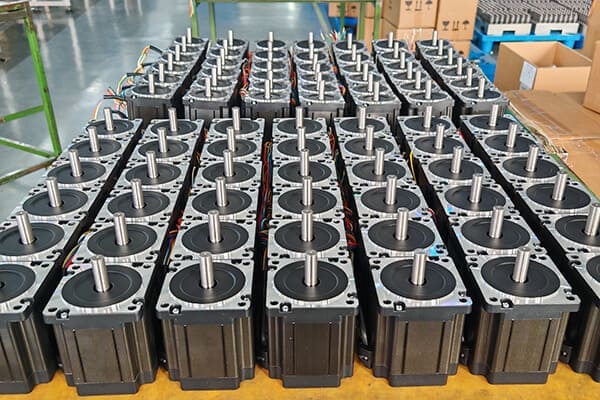
When Finnish OEMs, automation companies, robotics developers, and machine builders look for a brushless BLDC motor manufacturer, they usually care about much more than motor price. Rated torque, operating speed, efficiency, encoder feedback, gearbox compatibility, IP protection, controller integration, customization, delivery reliability, and long-term technical support can all affect the final choice.
This guide reviews 20 brushless BLDC motor manufacturers, suppliers, and motion-control companies relevant to the Finnish market, with particular attention to companies that offer BLDC motors, integrated BLDC servo motors, geared BLDC motors, motor controllers, or customized motion solutions.
Important market note: Finland has a relatively small number of companies that manufacture BLDC motors domestically. Therefore, this list combines Finnish BLDC manufacturers, Finnish motion-control suppliers, and international BLDC manufacturers with established products or distribution channels relevant to Finnish buyers. It is intended as a practical sourcing guide rather than a claim that every company listed manufactures motors inside Finland.
What Is a Brushless BLDC Motor?
A brushless DC motor (BLDC motor) is an electronically commutated electric motor that replaces the mechanical brushes and commutator found in conventional brushed DC motors with electronic switching.
The basic BLDC motor consists of a stator, permanent-magnet rotor, windings, bearings, and an electronic commutation system. Depending on the design, the motor can use Hall sensors, an encoder, or sensorless control to determine rotor position.
For industrial equipment, BLDC motors are particularly attractive because they can provide:
High efficiency
Long operating life
Low mechanical wear
Low maintenance requirements
High power-to-weight ratio
Good speed stability
High-speed operation
Low noise and vibration
Precise speed control
Compatibility with gearboxes and encoders
Easy integration with digital control systems
The exact performance depends heavily on motor design, controller quality, operating point, cooling, load profile, and feedback method.
Types of BLDC Motors Buyers Commonly Need
Standard BLDC Motors
A standard BLDC motor is normally used with an external controller or driver. This configuration provides flexibility because the motor and controller can be selected separately.
Typical applications include:
Pumps
Fans
Conveyors
Automation machinery
Medical equipment
Industrial equipment
Small electric vehicles
Geared BLDC Motors
A geared BLDC motor combines a brushless motor with a gearbox.
The gearbox reduces output speed while increasing available output torque. Common gearbox configurations include:
Planetary gearbox
Spur gearbox
Worm gearbox
Right-angle gearbox
Geared BLDC motors are especially useful when the application requires high torque at relatively low output speed.
Integrated BLDC Motors
An integrated BLDC motor combines the motor with electronics such as a driver, controller, and sometimes an encoder.
This can significantly reduce:
Control cabinet space
Wiring
Installation time
Number of separate components
Potential wiring errors
Integrated BLDC servo motors are particularly relevant to robotics, AGVs, AMRs, packaging machinery, medical equipment, and compact automation systems.
BLDC Motors With Encoder
When accurate speed, position, or closed-loop control is required, an encoder can provide feedback to the controller.
Encoder-based BLDC solutions are commonly used in:
As a professional brushless dc motor manufacturer with 13 years in china, Jkongmotor offer various bldc motors with customized requirements, including 33 42 57 60 80 86 110 130mm, additionally, gearboxes, brakes, encoders, brushless motor drivers and integrated drivers are optional.
Wires
Cover
Fan
Shaft
Integrated Driver
Brake
Gearbox
Out Rotor
Coreless Dc
Driver
Advantages and Disadvantages of BLDC Motors
Brushless DC motors (BLDC motors) have become a common choice for modern motion-control systems. They are used in everything from cooling fans and pumps to AGVs, AMRs, robots, medical equipment, packaging machines, drones, and industrial automation.
The reason is fairly simple: a BLDC motor removes the brushes and mechanical commutator found in a traditional brushed DC motor and uses electronic commutation instead. This reduces mechanical wear and gives engineers much more control over speed, torque, and acceleration.
That does not mean a BLDC motor is automatically the right answer for every machine. The motor, driver, feedback device, gearbox, and cooling system all need to work together. For OEM buyers, understanding both the advantages and disadvantages of BLDC motors is therefore more useful than looking at efficiency or power ratings alone.
What Are the Main Advantages of BLDC Motors?
1. Longer Service Life
The most obvious difference between a BLDC motor and a brushed DC motor is the absence of mechanical brushes.
In a brushed motor, brushes gradually wear as they rub against the commutator. Eventually, they need to be replaced. A BLDC motor uses electronic switching instead, so there is no brush-to-commutator contact.
This can significantly reduce mechanical wear and extend operating life.
For equipment that runs for many hours every day, this matters. A motor inside an AGV, conveyor, robot, pump, or automated production machine may be difficult to access. Reducing routine motor maintenance can make the entire machine easier to operate.
Of course, removing brushes does not make a BLDC motor wear-free. Bearings, seals, magnets, windings, and the driver can still age or fail. Proper motor sizing and thermal management remain important.
2. High Efficiency
BLDC motors are generally known for good efficiency because they eliminate brush friction and use permanent magnets to create the rotor magnetic field.
In practical terms, higher efficiency means less electrical energy is lost as heat for a given mechanical output.
This is particularly useful for:
Battery-powered AGVs and AMRs
Drones and UAVs
Portable equipment
Cooling systems
Pumps
Continuous-duty machinery
For a battery-powered mobile robot, even a modest improvement in overall drive efficiency can have a noticeable effect on operating time.
However, it is worth comparing the complete motor system efficiency, not just the motor datasheet. The controller, gearbox, operating speed, load, and power supply can all affect the actual efficiency of the system.
3. Low Maintenance
A BLDC motor does not require regular brush replacement.
That sounds like a small benefit, but it becomes much more important when dozens or hundreds of motors are installed across a production line.
Consider an automated warehouse with many mobile robots. If the motors require frequent mechanical servicing, maintenance quickly becomes a real operating cost. A brushless design can reduce one of those recurring maintenance tasks.
This is one reason BLDC motors are widely considered for 24/7 automation and continuous-duty applications.
4. Good Speed Control
BLDC motors work with electronic controllers, which gives engineers considerably more control over motor operation.
Depending on the controller architecture, a BLDC motor can be controlled for:
Speed
Torque
Direction
Acceleration
Deceleration
Position
A simple motor may only require basic speed control, while a more advanced application can use an encoder and closed-loop controller for much tighter regulation.
For example, a conveyor may need stable speed, while a robotic actuator may need accurate positioning. The same basic BLDC technology can be configured very differently depending on the application.
5. High Power-to-Size Ratio
BLDC motors can deliver considerable output from a relatively compact package.
This is especially useful when installation space is limited.
Typical examples include:
Robotic joints → compact motor + gearbox + encoder
AGV wheels → motor + gearbox + encoder
Drones → lightweight high-speed BLDC motor
Medical equipment → compact motor with low maintenance requirements
For OEM designers, a smaller motor can also make it easier to reduce the overall size and weight of the finished machine.
6. Fast Response
A well-designed BLDC motor can respond quickly to changes in the control command.
This is useful in machines that repeatedly accelerate, stop, reverse, or change speed.
Packaging equipment is a good example. A motor may need to move a product, stop, wait for a sensor signal, and start again within a short cycle.
Robots and AGVs can have even more demanding motion profiles.
For these applications, engineers often look at rotor inertia, peak torque, acceleration capability, encoder resolution, and controller performance rather than considering rated torque alone.
7. Good High-Speed Performance
BLDC motors are well suited to many high-speed applications.
Without mechanical brushes and commutator segments, there is no brush-related mechanical limitation at high rotational speeds.
They are therefore frequently used in:
Fans
Blowers
Pumps
Spindles
Compressors
High-speed tools
UAV propulsion
The actual maximum speed still depends on the specific motor construction. Bearing limits, rotor balance, magnet retention, winding temperature, and controller characteristics all have to be considered.
8. Lower Mechanical Wear and Noise
The absence of brush contact removes one source of mechanical noise and wear.
This can make BLDC motors attractive in applications where acoustic performance matters, such as:
Medical equipment
Laboratory instruments
Office equipment
HVAC equipment
Service robots
Household appliances
Still, "brushless" does not automatically mean "silent."
Gearboxes, bearings, PWM switching, electromagnetic forces, and mechanical resonance can all contribute to the final noise level. If low noise is a key requirement, the entire drive system should be evaluated.
What Are the Disadvantages of BLDC Motors?
BLDC technology has clear advantages, but there are also trade-offs. These become particularly important when an OEM is comparing a BLDC motor with a brushed DC motor or another motor technology.
1. Higher System Cost
A basic brushed DC motor can be extremely simple: connect the motor to an appropriate DC supply and control its voltage.
A BLDC system is different.
It normally requires an electronic driver or controller to perform commutation.
The complete system may therefore include:
BLDC motor
Motor driver
Controller
Hall sensors or encoder
Power supply
Communication interface
This additional hardware increases the initial cost.
The good news is that the higher upfront cost can be offset by longer service life, lower maintenance, better efficiency, and better controllability.
For low-cost products with very simple operating requirements, however, a brushed motor may still be more economical.
2. More Complicated Control
A BLDC motor cannot normally be operated simply by applying DC voltage directly to its terminals.
The controller has to energize the motor phases in the correct sequence.
That means engineers need to consider factors such as:
Commutation method
Current limits
Motor parameters
Rotor position
Acceleration profile
Speed feedback
Protection functions
This is not necessarily a problem for an experienced automation team, but it does add development work compared with a basic brushed motor.
There are several ways to determine rotor position.
One common approach is to use Hall sensors. Another is an encoder. A third option is sensorless control.
Sensorless BLDC systems estimate rotor position from electrical signals such as back EMF.
The challenge is that back EMF becomes very small when the motor is stationary or running at very low speed.
As a result, some sensorless systems may have difficulty with:
Starting under heavy load
Very low-speed operation
Precise low-speed control
Holding torque at zero speed
If reliable low-speed performance is important, a Hall-sensored or encoder-based BLDC motor may be a better choice.
4. Torque Ripple Can Affect Motion Quality
Traditional six-step BLDC commutation can produce torque ripple.
In many applications, this is perfectly acceptable. But in precision motion systems, torque ripple can result in:
Small speed fluctuations
Vibration
Audible noise
Less smooth movement
For applications such as precision robotics or medical equipment, engineers may consider more advanced control methods such as field-oriented control (FOC).
The motor's electromagnetic design also matters. A good controller cannot completely compensate for a poorly matched motor.
5. Electronic Components Can Fail
One misconception is that removing brushes makes the whole system almost maintenance-free.
In reality, the electronic driver becomes an important part of the reliability equation.
A BLDC controller can be affected by:
Excessive current
Voltage surges
High temperature
Poor cooling
Moisture
Incorrect wiring
Electromagnetic interference
For industrial equipment, it is therefore important to check the driver's protection functions and environmental specifications as carefully as the motor's mechanical specifications.
6. EMC and EMI Need Attention
Electronic commutation involves rapid switching of current.
That switching can generate electromagnetic noise if the system is not designed correctly.
Depending on the application, engineers may need to consider:
Cable shielding
Grounding
Cable length
PWM frequency
Filtering
Connector design
PCB layout
Motor-driver placement
This becomes particularly important when the BLDC motor is installed close to sensors, communication equipment, or other sensitive electronics.
7. Heat Still Matters
BLDC motors are efficient, but no motor is 100% efficient.
Some electrical energy is still converted into heat through winding losses, magnetic losses, bearing losses, and electronic losses.
A motor that works perfectly for a few minutes may overheat if it is operated continuously at high torque.
When selecting a BLDC motor, OEM engineers should therefore examine:
Continuous torque
Peak torque
Rated current
Operating speed
Duty cycle
Ambient temperature
Cooling method
Installation conditions
This is especially important for 24/7 conveyor systems, AGVs, pumps, and industrial automation equipment.
BLDC Motor Advantages and Disadvantages Compared
Advantages
Disadvantages
Long service life
Higher initial system cost
High efficiency
Requires electronic control
Low maintenance
More complicated integration
Good speed regulation
Sensorless control can struggle at low speed
High power density
Torque ripple may occur
Fast dynamic response
Driver electronics can fail
Good high-speed performance
EMC/EMI requires attention
Low brush-related noise
Thermal management is still necessary
Suitable for digital control
Feedback can increase system cost
Are BLDC Motors Better Than Brushed DC Motors?
There is no universal winner.
A BLDC motor is usually the better option when the machine needs long operating life, high efficiency, low maintenance, frequent speed changes, or electronic control.
A brushed DC motor can still be the better choice when the priority is low initial cost and very simple control.
The difference becomes clearer when looking at the application.
Application Requirement
Better Fit
Very low initial cost
Brushed DC
Simple on/off operation
Brushed DC
Long continuous operation
BLDC
High efficiency
BLDC
Frequent starts and stops
BLDC
High-speed operation
BLDC
Low maintenance
BLDC
Battery-powered equipment
BLDC
Precision speed control
BLDC
Advanced motion control
BLDC
When Should You Use a BLDC Motor?
A BLDC motor is worth considering when several of the following requirements apply:
The motor operates for long hours.
Maintenance access is difficult.
Energy efficiency is important.
The equipment runs from a battery.
Speed needs to be controlled electronically.
The machine frequently accelerates and decelerates.
The motor needs to operate at relatively high speed.
Compact size is important.
An encoder or Hall feedback system is required.
The motor needs to work with a gearbox.
Digital communication is required.
The equipment needs a long expected service life.
This explains why BLDC motors have become increasingly common in AGV and AMR drive systems, robotic equipment, automated conveyors, packaging machinery, medical devices, pumps, fans, and UAVs.
How Should OEM Buyers Evaluate a BLDC Motor?
Looking at motor wattage alone is rarely enough.
For an OEM project, it is better to evaluate the motor as part of the complete drive system.
Start with these questions:
Electrical Requirements
Is the system 12 V, 24 V, 36 V, or 48 V?
What is the continuous current?
What is the peak current?
What power is required?
Mechanical Requirements
What torque is required?
What speed is required?
Is a gearbox needed?
What shaft size is required?
What mounting dimensions are available?
Feedback Requirements
Sensorless?
Hall sensor?
Incremental encoder?
Absolute encoder?
Environmental Requirements
Is IP65 enough?
Is IP67 required?
What is the operating temperature?
Is the motor exposed to vibration, dust, moisture, or chemicals?
Control Requirements
PWM?
Analog control?
Pulse/Direction?
RS485?
Modbus?
CANopen?
EtherCAT?
These details make it much easier for a motor manufacturer to recommend the correct configuration.
Should You Choose an Integrated BLDC Motor?
For many modern OEM machines, an integrated BLDC motor can be worth considering.
Instead of installing a separate motor and driver, the electronics can be incorporated into the motor assembly.
Depending on the product, an integrated BLDC solution may combine:
Motor + Driver + Encoder + Controller + Communication Interface
This can reduce external wiring and save space inside the control cabinet.
It can also simplify installation, particularly in applications such as:
AGVs
AMRs
Robotic arms
Conveyor modules
Medical equipment
Compact automation systems
For a high-volume OEM product, integrated motor architecture can also make the overall machine design cleaner and easier to reproduce.
Final Takeaway
The biggest strength of a BLDC motor is not simply its brushless construction. Its real value comes from the combination of high efficiency, long service life, low maintenance, compact design, fast response, and electronic controllability.
The trade-off is greater system complexity. A BLDC motor needs an appropriate driver, and demanding applications may also require Hall sensors or an encoder, advanced control software, thermal management, and EMC design.
For that reason, the best BLDC motor is not necessarily the motor with the highest RPM or largest wattage. The right choice is the one whose torque, speed, voltage, feedback, gearbox, protection rating, thermal characteristics, controller, and communication interface match the actual machine.
For OEM and industrial applications, this complete-system approach usually produces a more reliable result than selecting a motor from a catalog based on power rating alone.
JKONGMOTOR is a motion-control manufacturer focused on brushless DC motors, integrated BLDC motors, integrated servo motors, stepper motors, geared motors, and customized motor solutions.
Its product portfolio is particularly relevant to international OEM buyers looking for a combination of standard motors and customized configurations. The company describes its offering as an OEM/ODM customized intelligent BLDC and stepper motion-control solution.
Main Products
Standard BLDC motors
Integrated BLDC servo motors
Geared BLDC motors
Planetary geared BLDC motors
Worm geared BLDC motors
BLDC motors with brakes
Encoder-equipped BLDC motors
Integrated DC servo motors
BLDC motor drivers
Its published BLDC range covers approximately 5 W to 3000 W, with motor sizes ranging from approximately 28 mm to 110 mm, depending on product family.
Advantages
The major advantage for OEM buyers is customization. JKONGMOTOR supports options such as gearboxes, brakes, encoders, customized shafts, protection ratings, wiring, and integrated drivers.
Its integrated BLDC servo portfolio also supports Pulse, RS485, and CANopen, while selected products offer high-resolution encoder feedback.
For Finnish machine builders looking for a custom BLDC motor manufacturer rather than only a catalog motor, this flexibility can be particularly valuable.
2. BESFOC Motor — Integrated BLDC and Motion Control
Company Profile
BESFOC Motor is a China-based manufacturer established in 2011 and focused on integrated motors and motion-control products. Its portfolio includes BLDC motors, integrated BLDC motors, stepper motors, linear motors, drivers, gearboxes, encoders, and brakes.
Main Products
Brushless DC motors
Integrated BLDC servo motors
Integrated stepper motors
BLDC motor drivers
Geared motors
Linear motion products
Encoders
Gearboxes
Brakes
Advantages
BESFOC emphasizes OEM, ODM, R&D, certification, and customized motor production. Its published information states that it supplies more than two million motors annually and exports to more than 30 countries and regions.
Its integrated BLDC servo products can support communication methods including Pulse/Direction, RS485, Modbus, CANopen, and EtherCAT, depending on model.
3. LeanMotor — BLDC and Integrated Servo Solutions
Company Profile
LeanMotor is a China-based motor manufacturer established in the early 2010s, specializing in stepper motors, BLDC motors, integrated servo motors, linear motors, drivers, gearboxes, brakes, and encoders.
Main Products
Standard BLDC motors
Geared BLDC motors
Integrated BLDC servo motors
BLDC motors with brakes
Stepper motors
Closed-loop stepper motors
Integrated stepper servo motors
Motor drivers
Gearboxes
Advantages
LeanMotor positions itself strongly around OEM/ODM customization, with production facilities, technical personnel, automated production lines, and engineering capabilities. Its products are aimed at industries such as robotics, logistics, AGVs, medical machinery, CNC, textiles, and automation.
For OEM customers that need multiple motor technologies from one supplier, the broad product range can be useful.
4. Rantek — Finnish Custom BLDC Motor Manufacturer
Company Profile
Rantek is one of the more relevant domestic Finnish companies in this comparison. It operates as an electrical equipment manufacturer with expertise in winding, machining, assembly, and customized solutions.
Main Products
Customized BLDC motors
Motor components
Wound motor components
Machined components
Motor assemblies
Customized electrical equipment
Advantages
Rantek states that its customized BLDC motors range from hundreds of watts to tens of kilowatts. It also describes optimization around customer-defined RPM, torque, and power requirements, including FEM analysis.
This makes Rantek particularly interesting for customers with large, application-specific BLDC requirements rather than simple off-the-shelf motors.
5. MidGuard Systems — Finnish BLDC Motors for UAVs
Company Profile
MidGuard Systems is based in Vaasa, Finland, and develops high-performance BLDC motors for UAVs and autonomous platforms.
Main Products
High-performance BLDC motors
UAV propulsion motors
Autonomous-platform propulsion solutions
Drone motor systems
Advantages
Its focus is specialized rather than general-purpose industrial motors. The company emphasizes locally manufactured propulsion technology, European supply-chain independence, and high-performance UAV applications.
For drone, UAV, and autonomous-platform developers, this specialization can be more important than having a very broad motor catalog.
6. Electromen — Finnish BLDC Motor Controller Specialist
Company Profile
Electromen Oy is a Finnish electronics manufacturer with experience dating back to 1988. Rather than being primarily a motor manufacturer, it specializes in DC and BLDC motor controllers, custom electronics, and OEM electronics production.
Main Products
BLDC motor controllers
DC motor controllers
Motor starters
Speed regulators
Custom electronics
OEM electronics
Advantages
Electromen is particularly valuable when the project requires custom electronics and motor control engineering rather than simply purchasing a motor.
Its Finnish manufacturing and engineering base can also be useful for Nordic customers that prioritize local technical communication and customized electronics.
7. Powermotion Oy — Small Motor and BLDC Solution Provider
Company Profile
Powermotion Oy is based in Naantali, Finland, and specializes in small electric motors, including DC motors, brushless DC motors, stepper motors, linear stepper motors, and servomotors.
Main Products
BLDC motors
DC motors
Stepper motors
Linear stepper motors
Servomotors
Gearmotors
Planetary gear systems
Worm gear systems
Advantages
Powermotion works with several international motor manufacturers and provides motor selection support throughout the equipment lifecycle. This can be attractive to Finnish OEMs that prefer local engineering support and European supply-chain coordination.
8. KLINGER Finland — Industrial Motion Control Supplier
Company Profile
KLINGER Finland supplies industrial automation and motion-control products, including Ever Motion brushless DC motors and drives.
Main Products
BLDC motors
BLDC motor drives
Stepper motors
Servo motors
Motor controllers
Automation components
Advantages
KLINGER highlights BLDC benefits such as long service life, high efficiency, low maintenance, and speed/torque control. Its local Finnish technical sales organization can simplify product selection for industrial users.
9. OEM Finland — Broad Industrial BLDC Supplier
Company Profile
OEM Finland is a Finnish industrial component supplier with a broad motor portfolio. Its BLDC offering includes products from brands such as igus, KAG, Crouzet Motors, and Fulling.
Main Products
BLDC motors
DC motors
Geared motors
Encoders
Brakes
Motor accessories
Automation components
Advantages
OEM Finland is useful for buyers who want to compare multiple motor technologies and manufacturers through one supplier.
Its BLDC range includes products with different power ratings, gearboxes, encoders, brakes, and protection options.
10. Movetec — Finnish Drive Technology Supplier
Company Profile
Movetec Oy is a Finnish supplier of drive and motion-control technology. Its product portfolio includes BLDC motors and geared BLDC systems from international manufacturers.
Main Products
BLDC motors
BLDC gearmotors
DC motors
Gearboxes
Encoders
Brakes
Motor control electronics
Advantages
Movetec provides access to different motor technologies and helps customers combine motors with gearboxes, encoders, and control electronics.
11. DJS Automation — Automation and Motor Component Supplier
Company Profile
DJS Automation is a Finnish automation and electrical-mechanical component supplier based in Espoo. Its portfolio includes motors and motion-control components from international manufacturers.
Main Products
BLDC motors
Stepper motors
DC motors
Encoders
Motion-control components
Custom electrical solutions
Advantages
DJS Automation represents brands including Fulling Motor and Portescap. Its advantage is therefore multi-brand technical sourcing, allowing customers to compare different motor technologies according to application requirements.
12. igus Finland — BLDC Motors for Automation and Linear Motion
Company Profile
igus offers its drylin E electric motor range in Finland, including EC/BLDC motors designed for automation and linear-motion systems.
Main Products
EC/BLDC motors
DC motors
Stepper motors
Gearboxes
Motor controls
Linear axes
Complete drive systems
Advantages
The igus BLDC range includes common NEMA17, NEMA23, NEMA24, and NEMA34 sizes, while its automation ecosystem allows motors to be combined with linear axes, gearboxes, encoders, brakes, and motor controllers.
This makes igus particularly relevant to machine builders developing complete linear-motion systems.
13. Oriental Motor — Precision Brushless Motion Systems
Company Profile
Oriental Motor is a major motion-control manufacturer offering brushless motors, stepper motors, servo systems, actuators, and controllers.
Main Products
BLDC motors
BLDC motor-driver systems
Geared BLDC motors
Servo motors
Stepper motors
Actuators
Controllers
Advantages
Oriental Motor's brushless range emphasizes speed stability, wide speed-control ranges, compact design, and integrated control options. Its BLV family, for example, supports DC input and communication functions and is positioned for applications including AGVs.
14. Crouzet Motors via OEM Finland — Compact Industrial BLDC Solutions
Company Profile
Crouzet Motors is represented in Finland through industrial component channels such as OEM Finland.
Main Products
Brushless DC motors
Geared BLDC motors
Motor control systems
Encoders
Brakes
Advantages
Crouzet's SQ75 BLDC range is positioned for speed, torque, and positioning control, with options including CANopen, brakes, planetary gears, and worm gears. OEM Finland also lists IP67/IP69 protection options for relevant products.
This makes the range interesting for industrial machinery requiring robust environmental protection.
15. Fulling Motor — Broad BLDC Motor Portfolio
Company Profile
Fulling Motor is a China-based manufacturer established in 1994 and focused on servo motors, BLDC motors, stepper motors, motor drivers, and related motion products.
Main Products
Standard BLDC motors
High-performance BLDC motors
Outer-rotor BLDC motors
Slotless BLDC motors
BLDC motors with integrated drivers
Geared BLDC motors
Servo motors
Advantages
Fulling offers an unusually broad BLDC portfolio. Its published range includes waterproof BLDC motors, slotless motors, outer-rotor motors, integrated-driver motors, and geared BLDC motors.
This broad selection is useful when a single standard BLDC architecture does not meet the mechanical requirements of the project.
16. ebm-papst ZEITLAUF via Movetec — Compact BLDC Drive Technology
Company Profile
ebm-papst ZEITLAUF is an established German drive-technology brand represented in Finland through suppliers such as Movetec.
Main Products
BLDC motors
DC motors
Planetary gearmotors
Right-angle gearmotors
Spur gearmotors
Encoders
Brakes
Control electronics
Advantages
Movetec lists ZEITLAUF BLDC motors in 24 V and 48 V configurations with power ratings from 30 W to 750 W, along with multiple gearbox and control options.
This makes the brand relevant to compact automation, medical equipment, and industrial OEM applications.
17. KAG via OEM Finland — Customized BLDC and Geared Motor Options
Company Profile
KAG products are available to Finnish industrial buyers through OEM Finland.
Main Products
BLDC motors
24 V DC motors
Geared BLDC motors
Planetary gearmotors
Right-angle gearmotors
Encoders
Brakes
Advantages
KAG products are positioned around compact, quiet, and efficient motor solutions, with customization and gearbox options available through the Finnish supply channel. OEM Finland specifically lists KAG brushless motors as part of its BLDC portfolio.
18. DINGS' via Powermotion — Compact BLDC and Motion Products
Company Profile
DINGS' specializes in brushless DC motors, stepper motors, linear stepper motors, and related motion-control products. Its products are available in Finland through Powermotion.
Main Products
BLDC motors
Stepper motors
Linear stepper motors
Integrated linear-motion solutions
Motor drivers
Advantages
DINGS' is particularly suitable for compact equipment where installation space is limited. Powermotion highlights its suitability for medical instruments and measurement systems.
19. Ever Motion via KLINGER Finland — BLDC Motors and Drives
Company Profile
Ever Motion products are offered in Finland through KLINGER Finland, including brushless DC motors and drives.
Main Products
BLDC motors
BLDC drives
Integrated-drive motors
Stepper motors
Servo motors
Motion-control software
Advantages
Ever Motion systems are designed around digital control and industrial motion applications. KLINGER describes the BLDC range as offering long service life, efficiency, low maintenance, precise speed and torque control, and integration with industrial interfaces.
20. Nidec Motors & Actuators via Movetec — High-Volume Compact Motor Technology
Company Profile
Nidec Motors & Actuators products are available through Finnish motion-control suppliers such as Movetec.
Main Products
DC motors
Geared DC motors
Compact motor systems
Encoders
Gearboxes
Advantages
Nidec is particularly well known for high-volume motor manufacturing and compact drive technology. Movetec highlights applications including medical devices, home automation, industrial automation, and logistics.
Finding a BLDC motor manufacturer in Finland is not simply a matter of comparing prices or choosing the company with the largest product catalog. For OEMs and machine builders, the more important question is whether the manufacturer can provide a motor that actually fits the application's torque, speed, voltage, feedback, installation, thermal, and control requirements.
This is particularly important in Finland, where BLDC motors are used in industrial automation, robotics, logistics equipment, mobile robots, medical technology, pumps, renewable-energy equipment, and other applications where reliability and predictable operation matter.
For buyers comparing local suppliers with international manufacturers, JKONGMOTOR is worth considering when the project requires more than a standard catalog motor. Its BLDC portfolio covers standard, geared, integrated, servo, brake, outer-rotor, flat, and AGV hub motor configurations, with OEM/ODM customization available for application-specific requirements.
What Should You Look for in a BLDC Motor Manufacturer?
A good BLDC motor supplier should be able to answer practical engineering questions before discussing the final price.
For example:
What torque is required continuously?
What is the peak torque during acceleration?
What speed range does the machine need?
Is the motor running continuously or intermittently?
Does the application need Hall sensors or an encoder?
Is a gearbox necessary?
What IP rating is required?
What communication interface does the controller use?
Does the motor need a brake?
Is the shaft or mounting structure non-standard?
What quantity will be required annually?
A manufacturer that asks these questions is generally more useful to an OEM than a supplier that simply recommends a motor based on wattage.
1. Start With the Motor's Actual Torque Requirement
Torque is usually a better starting point than power when selecting a BLDC motor.
A motor may have the correct nominal wattage but still perform poorly if its torque curve does not match the machine.
For example, an AGV may require high torque during:
Startup
Acceleration
Incline climbing
Turning
Carrying maximum payload
The motor therefore needs to be evaluated using both continuous torque and peak torque.
For rotating machinery, the basic relationship between power, torque, and speed is:
P = T × ω
where:
P = mechanical power
T = torque
ω = angular velocity
A good manufacturer should be able to provide the motor's torque-speed curve rather than only quoting a single rated torque figure.
2. Check the Required BLDC Motor Speed
Speed selection is another common source of mistakes.
A BLDC motor may operate efficiently at several thousand RPM, while the machine itself may require only a few hundred RPM.
That is where a geared BLDC motor can become useful.
JKONGMOTOR offers several geared BLDC configurations, including planetary, worm, and eccentric gearbox solutions. The company also states that gearbox, brake, encoder, and integrated-driver configurations can be customized according to application requirements.
For OEM applications, the important numbers are:
Motor rated speed
Maximum speed
Required output speed
Gear ratio
Continuous output torque
Peak output torque
Do not select a gearbox simply because it provides the largest reduction ratio. Efficiency, backlash, noise, thermal performance, and service life also need to be considered.
3. Decide Whether You Need a Standard or Customized BLDC Motor
A standard BLDC motor is often the fastest option for prototypes and low-volume equipment.
But once the motor becomes part of a commercial machine, a standard product may create compromises.
You may discover that:
The shaft is too long.
The mounting holes do not match.
The connector is in the wrong location.
The cable is too short.
The motor is slightly too large.
The rated speed does not match the application.
The gearbox ratio is unsuitable.
The encoder resolution is insufficient.
This is where OEM/ODM BLDC motor customization becomes valuable.
JKONGMOTOR describes its customization capability across motor parameters, shafts, gears, pulleys, wiring, mounting structures, gearboxes, encoders, brakes, integrated drivers, and electronics.
For a Finnish OEM, this can be more practical than redesigning the machine around an off-the-shelf motor.
4. Evaluate the BLDC Motor Manufacturer's Product Range
A manufacturer with several BLDC configurations can make future product development easier.
JKONGMOTOR's published BLDC range includes:
Standard BLDC motors
Integrated BLDC motors
Geared BLDC motors
BLDC servo motors
Brake BLDC motors
Outer-rotor BLDC motors
Flat BLDC motors
AGV hub motors
Its published motor sizes include approximately 33 mm, 42 mm, 57 mm, 60 mm, 80 mm, 86 mm, 90 mm, 110 mm, and 130 mm frame options.
This kind of range matters because the motor required for a small actuator may be completely different from the motor needed for an AGV drive wheel.
Instead of changing suppliers whenever the application changes, an OEM can potentially develop several machine variants around the same supplier relationship.
5. Check the Feedback Options
Not every BLDC application needs an encoder.
For a simple fan or pump, sensorless control may be sufficient.
For an AGV, robot, or precision machine, however, feedback can become essential.
Common options include:
Hall Sensors
Hall sensors provide rotor-position information and are relatively simple and economical.
They are commonly used in:
Fans
Pumps
Conveyors
Mobile robots
General automation
Incremental Encoder
An encoder provides more detailed feedback and can support closed-loop speed and position control.
This is useful for:
Robotics
AGVs
AMRs
CNC equipment
Automated machinery
High-Resolution Feedback
Precision applications may require higher-resolution encoder feedback for smoother motion and more accurate positioning.
The right feedback device should be selected according to the control requirement rather than simply choosing the highest available resolution.
6. Consider an Integrated BLDC Motor
For compact equipment, an integrated BLDC motor can be a very practical option.
Instead of placing the motor and driver in separate locations, the electronics can be integrated into the motor assembly.
This can reduce:
External wiring
Control cabinet space
Installation work
Number of individual components
JKONGMOTOR's published product range includes integrated BLDC/servo configurations and options for built-in drivers and communication interfaces such as RS485 and CANopen.
For equipment such as AGVs, AMRs, compact conveyors, and robotic systems, this architecture can simplify machine design.
7. Don't Ignore the Gearbox
If your application needs low speed and high output torque, the gearbox deserves as much attention as the motor.
Common BLDC gearbox options include:
Planetary gearboxes
Worm gearboxes
Spur gearboxes
Eccentric gearboxes
A planetary geared BLDC motor is often attractive when the application requires high torque density and relatively compact dimensions.
A worm geared BLDC motor may be preferable where a large reduction ratio or particular mechanical arrangement is required.
A spur geared BLDC motor can provide a relatively simple and economical solution for less demanding applications.
The best gearbox depends on the complete load profile rather than the gearbox type alone.
8. Check Protection and Environmental Requirements
Finland's industrial environment can include significant temperature variation, humidity, dust, vibration, and outdoor exposure.
Before selecting a BLDC motor, check:
IP rating
Operating temperature
Storage temperature
Humidity resistance
Vibration resistance
Shock resistance
Connector protection
Cable specifications
Do not assume that a motor is suitable for outdoor equipment simply because it has a metal housing.
If the motor is installed on an outdoor mobile robot, agricultural machine, or other exposed equipment, the complete motor assembly—including connectors and cables—should be evaluated.
JKONGMOTOR states that its customized BLDC service can include customized IP ratings for different operating environments.
9. Ask About Continuous-Duty Performance
One of the easiest mistakes is selecting a motor according to its peak capability rather than its continuous operating point.
A machine that operates for 30 seconds is very different from one that runs 24 hours a day, seven days a week.
For continuous-duty applications, ask the manufacturer for:
Continuous torque
Rated current
Thermal limits
Temperature rise
Duty-cycle information
Cooling requirements
Recommended operating point
Expected service life
This is particularly important for conveyors, pumps, AGVs, industrial fans, and production equipment.
10. Look at the Complete BLDC Motor System
A BLDC motor should not be evaluated in isolation.
A practical system can look like this:
BLDC Motor → Gearbox → Encoder → Driver → PLC/Controller
The second configuration can reduce wiring and simplify integration.
For OEM equipment, this can be a significant advantage because the motor supplier can take responsibility for more of the motion-control system instead of forcing the machine builder to coordinate multiple vendors.
11. Check the Manufacturer's OEM/ODM Capability
This is one of the most important points for equipment manufacturers.
A supplier may sell excellent standard motors but still be unsuitable for an OEM project if it cannot modify the product.
A serious OEM/ODM BLDC motor supplier should be able to discuss:
Mechanical Customization
Shaft diameter
Shaft length
Keyway
Mounting holes
Housing dimensions
Connector position
Gearbox
Electrical Customization
Voltage
Current
Winding
Speed
Torque
Hall sensors
Encoder
Brake
Control Customization
Integrated driver
RS485
CANopen
Other communication interfaces
Customized control parameters
JKONGMOTOR states that its OEM/ODM process covers requirement analysis, R&D design, prototyping, testing, and mass production.
That type of development workflow is particularly relevant when a Finnish company is developing a new machine rather than replacing an existing motor.
12. Compare Quality and Production Capability
Price matters, but motor quality is difficult to judge from a quotation alone.
When comparing manufacturers, look at:
Manufacturing experience
R&D capability
Production capacity
Quality-control process
Product testing
Certifications
Prototype support
Mass-production consistency
After-sales support
JKONGMOTOR states that it was established in 2011, has a professional R&D and design team, operates a production facility in Changzhou, China, and has annual production capacity exceeding 2 million motors.
For an OEM buyer, production capacity is relevant because a motor that works during prototype development is only useful if the supplier can maintain consistent production when the project moves into volume manufacturing.
Why Finnish OEMs May Consider JKONGMOTOR
For a Finnish company, choosing a BLDC motor supplier outside Finland can make sense when the project needs custom engineering, integrated motion control, or a broader range of motor configurations.
JKONGMOTOR's main strengths are centered around customized motor development rather than simply supplying standard BLDC motors.
Its product portfolio covers standard and specialized BLDC configurations, while its OEM/ODM service can combine the motor with gearboxes, encoders, brakes, integrated drivers, customized shafts, wiring, and other mechanical or electronic modifications.
The company also positions itself as a motion-control manufacturer rather than only a motor vendor, with products spanning BLDC motors, stepper motors, integrated servo motors, motor drivers, gearboxes, encoders, and brakes.
For a machine builder, that broader capability can be useful when several motion-control components need to work together.
BLDC Motor Applications in Finland
BLDC motors are well suited to many Finnish industries because of the country's strong industrial automation, machinery, logistics, energy, and technology sectors.
Industrial Automation
BLDC motors can drive:
Conveyors
Actuators
Pumps
Fans
Automated machinery
Assembly equipment
Robotics
Robotic systems often require motors with:
High power density
Fast response
Low maintenance
Encoder feedback
Compact dimensions
Integrated BLDC servo motors can be particularly attractive because the motor, driver, and feedback electronics can be combined into a compact package.
AGV and AMR Systems
Battery-powered mobile robots place special emphasis on:
Energy efficiency
24 V or 48 V operation
Compact dimensions
High torque
Speed control
Regenerative braking management
Encoder feedback
CANopen or other digital communications
For example, Oriental Motor's BLV family specifically supports battery-driven applications and AGVs.
Medical Equipment
Medical equipment often requires:
Low noise
High reliability
Precise motion
Compact motors
Long service life
BLDC motors can be combined with gearboxes and encoders to create compact motion systems.
Packaging Machinery
Packaging equipment frequently requires rapid acceleration and deceleration, repeatable speed, and continuous operation.
BLDC motors are suitable for:
Feeding systems
Conveyor drives
Labeling equipment
Filling equipment
Sorting systems
Cutting systems
Drones and UAVs
The power-to-weight ratio of BLDC motors makes them fundamental to modern UAV propulsion.
Finland-based MidGuard Systems, for example, focuses specifically on high-performance BLDC motors for UAVs and autonomous platforms.
BLDC Motor Manufacturer vs. Distributor: Which Is Better?
There is no universal answer.
A manufacturer can be preferable when you need:
Custom winding
Custom shaft
Custom gearbox
OEM/ODM development
Large production quantities
Integrated motor-driver design
Long-term product customization
A local Finnish distributor or engineering supplier may be preferable when you need:
Local technical support
Fast communication
Small quantities
Local stock
Multiple brands
Easy replacement purchasing
Engineering assistance
For a new OEM project, one practical approach is to compare both.
For example, a Finnish engineering company might source a standard motor locally through a distributor while simultaneously requesting a customized quotation from a direct BLDC manufacturer.
Conclusion
The Finnish BLDC motor market is broader than a simple list of domestic manufacturers. Finnish buyers can choose between local custom motor manufacturers, Finnish automation suppliers, international motor brands, and direct OEM/ODM manufacturers.
For standard industrial applications, local suppliers such as OEM Finland, Movetec, Powermotion, KLINGER Finland, and DJS Automation can simplify sourcing and technical support.
For highly customized OEM projects, manufacturers such as JKONGMOTOR, BESFOC, and LeanMotor offer broader customization options covering motor design, gearbox, encoder, brake, driver, communication interface, shaft configuration, and integrated motion-control architecture.
For Finnish companies developing AGVs, AMRs, robots, medical devices, packaging machines, logistics equipment, automation systems, UAVs, or energy-efficient machinery, the best BLDC motor is ultimately the one that matches the complete application—not simply the motor with the highest wattage or lowest purchase price.
The most useful selection process is to compare torque, speed, voltage, efficiency, feedback, gearbox requirements, protection rating, duty cycle, thermal performance, control interface, customization capability, MOQ, lead time, and technical support before placing a production order.
For OEM buyers, a supplier capable of providing the motor, driver, encoder, gearbox, brake, and mechanical customization as one coordinated solution can significantly simplify development and reduce integration risk.
FAQs
1. How do I choose the best BLDC motor manufacturer in Finland?
Choose a BLDC motor manufacturer based on motor performance, customization capability, quality control, engineering support, production capacity, and long-term supply, rather than price alone. For OEM applications, check whether the manufacturer can customize voltage, torque, speed, shaft dimensions, gearbox, encoder, brake, driver, and communication interface to match the machine.
2. What should I consider when selecting a BLDC motor supplier for an OEM project?
Start with the application's load, continuous and peak torque, operating speed, voltage, duty cycle, installation space, feedback requirements, environmental conditions, and control interface. A capable OEM supplier should be able to evaluate these requirements and recommend or develop a suitable motor rather than simply offering a standard catalog model.
3. Can JKONGMOTOR provide customized BLDC motors for Finnish OEM applications?
Yes. JKONGMOTOR provides OEM/ODM customized BLDC motor development, including customized motor parameters, shafts, mounting structures, wiring, gearboxes, encoders, brakes, integrated drivers, and electronics. Its published OEM/ODM process covers requirement analysis, technical evaluation, prototype development, testing, mass production, and long-term supply.
4. What types of BLDC motors can JKONGMOTOR supply?
JKONGMOTOR offers several BLDC configurations, including standard BLDC motors, integrated BLDC/servo motors, geared BLDC motors, and customized motor solutions. Geared options include planetary, worm, and eccentric/other geared configurations, while additional options can include encoders, electromagnetic brakes, and integrated drivers.
5. Can I get a BLDC motor with an encoder and integrated driver?
Yes. Depending on the application, JKONGMOTOR can provide BLDC solutions incorporating encoders, integrated drivers, brakes, and communication interfaces. Its published product information also identifies RS485 and CANopen options for integrated motion-control solutions.
6. Which BLDC motor is suitable for AGVs and AMRs in Finland?
AGV and AMR applications generally require a combination of high torque density, efficient operation, compact dimensions, reliable speed control, feedback, and suitable gearing. Depending on the vehicle architecture, an integrated BLDC servo motor, geared BLDC motor, or hub motor may be appropriate. The final selection should be based on payload, wheel diameter, maximum speed, acceleration, gradient, duty cycle, and battery voltage.
7. Are geared BLDC motors available for high-torque applications?
Yes. JKONGMOTOR provides geared BLDC motor solutions with configurations such as planetary, worm, and eccentric gearboxes. A gearbox can reduce motor speed while increasing available output torque, making geared BLDC motors useful for robotics, AGVs, automation equipment, and other applications where compact high-torque motion is required.
8. What IP rating and environmental specifications should I request for a BLDC motor?
The required IP rating depends on where the motor will operate. Indoor factory equipment may require less protection, while outdoor automation, agricultural equipment, and mobile robots may require a higher level of protection against dust and water. You should also specify operating temperature, humidity, vibration, shock, cable/connector requirements, and duty cycle when requesting a customized BLDC motor.
9. Can JKONGMOTOR support BLDC motor prototype development and mass production?
Yes. JKONGMOTOR describes an OEM/ODM workflow covering technical evaluation, prototype and sample development, testing, mass-production planning, batch testing, aging testing, final inspection, and documentation support. This makes the process suitable for OEMs that need to move from an initial motor concept to volume production.
10. Why should Finnish OEMs consider JKONGMOTOR as a BLDC motor supplier?
JKONGMOTOR combines BLDC motor manufacturing, OEM/ODM customization, motion-control development, and production support. The company states that it was established in 2011 and provides customized R&D, design, and production services. Its BLDC portfolio covers multiple frame sizes and configurations, while its broader motion-control range includes geared motors, integrated servo motors, drivers, and related products.