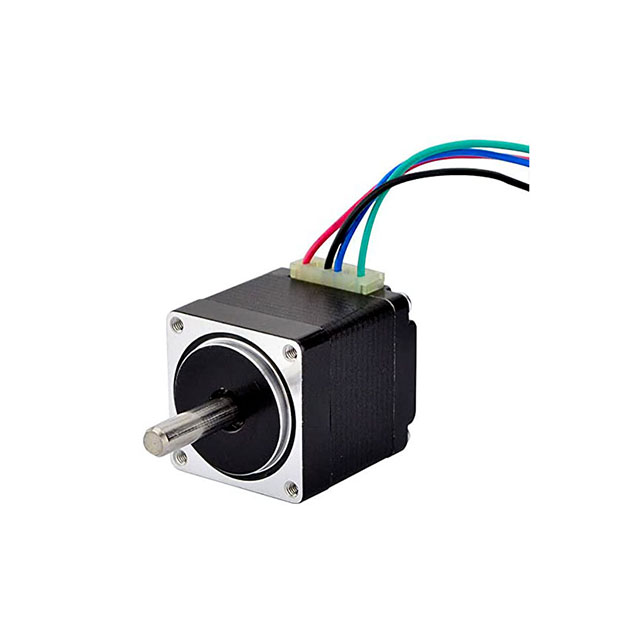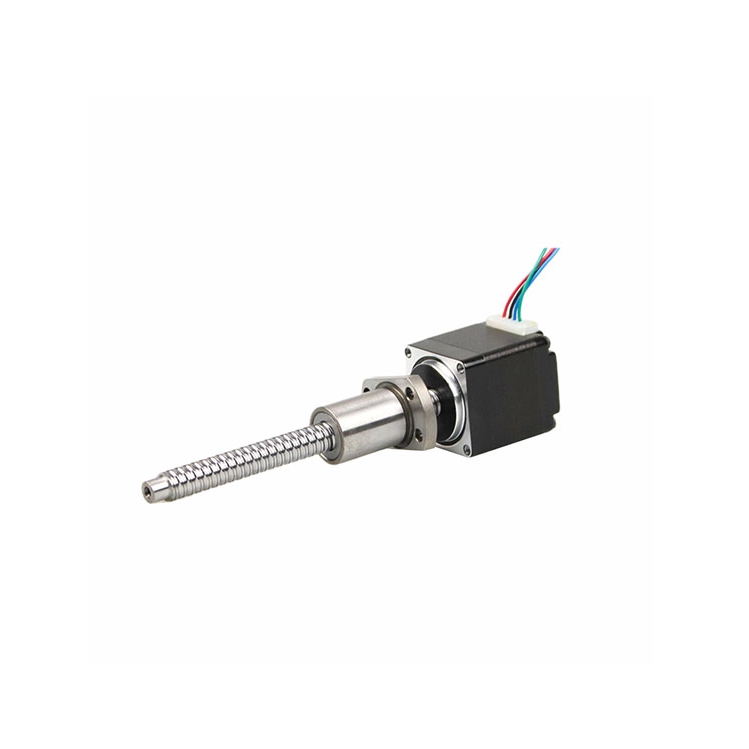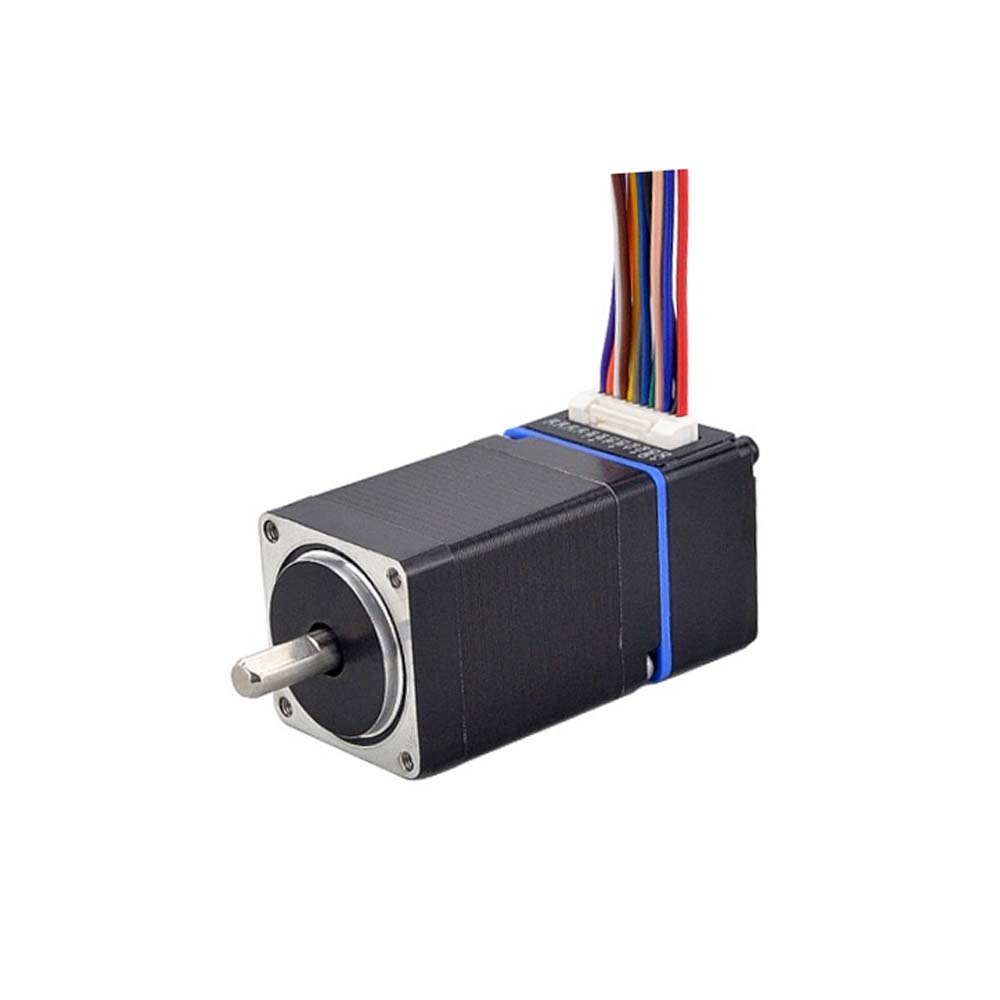
When it comes to compact precision motion systems, the NEMA 11 stepper motor stands out as a top choice for engineers, automation designers, and robotics enthusiasts. Designed to deliver high torque, smooth motion, and precise positioning in a small package, NEMA 11 stepper motors play a crucial role in modern technology where space and accuracy are both essential.
In this guide, we’ll dive deep into what makes the NEMA 11 stepper motor exceptional, explore its features, advantages, applications, and provide expert insights on how to choose the best model for your project.
What is a NEMA 11 Stepper Motor?
The term NEMA 11 refers to a stepper motor frame size standardized by the National Electrical Manufacturers Association (NEMA). The “11” indicates that the motor has a 1.1-inch (28 mm) square faceplate. This compact size makes it ideal for space-constrained applications where precision control and repeatability are crucial.
A stepper motor operates by dividing a full rotation into a number of equal steps, allowing for accurate angular movement without the need for feedback systems like encoders. In the case of the NEMA 11, despite its small dimensions, it provides excellent torque density and high-resolution stepping, often in the range of 1.8° per step (200 steps per revolution).
Different Types of NEMA 11 Stepper Motors
NEMA 11 stepper motors are known for their compact design, precision control, and versatility across a wide range of industrial and consumer applications. Although they share the same standard mounting dimensions (1.1-inch or 28 mm frame size), they come in several types and configurations to meet different performance needs.
Understanding the different types of NEMA 11 stepper motors is essential when selecting the right model for your specific application. Each type varies in internal structure, electrical configuration, torque output, and control features, allowing for optimized performance in diverse environments.
1. Permanent Magnet (PM) NEMA 11 Stepper Motors
Permanent Magnet (PM) stepper motors are among the simplest types of NEMA 11 designs. They use a permanent magnet rotor that interacts with the magnetic field generated by the stator windings.
Key Characteristics
The rotor is made of a magnetized material with alternating north and south poles.
Each coil activation causes the rotor to align with the magnetic field, resulting in a stepwise rotation.
Step angles are typically 7.5° or 15°, which are larger compared to hybrid types.
Advantages
Low cost and simple design
Suitable for low-speed, low-torque applications
Easy to control without complex drivers
Applications
2. Variable Reluctance (VR) NEMA 11 Stepper Motors
Variable Reluctance stepper motors use a soft iron rotor without permanent magnets. Instead, they rely on the principle of magnetic reluctance — the rotor moves to minimize the magnetic resistance between stator poles.
Key Characteristics
The rotor has teeth that align with the stator when magnetic fields are activated.
Step angles are typically 7.5° or smaller.
Operate quietly and can achieve high stepping speeds.
Advantages
Applications
The hybrid stepper motor is the most common and advanced type of NEMA 11 stepper motor. It combines the best features of both Permanent Magnet (PM) and Variable Reluctance (VR) designs, resulting in superior torque density, accuracy, and smooth operation.
Key Characteristics
The rotor contains teeth and permanent magnets to enhance magnetic interaction.
Typical step angles are 1.8° (200 steps/rev) or 0.9° (400 steps/rev).
Provides high torque output and excellent positional accuracy in a compact frame.
Advantages
High torque-to-size ratio
Smooth motion with microstepping
High positional repeatability
Available in both bipolar and unipolar wiring configurations
Applications
Widely used in 3D printers, medical devices, miniature CNC systems, robotics, and camera mechanisms.
4. Bipolar vs. Unipolar NEMA 11 Stepper Motors
Beyond their mechanical structure, NEMA 11 stepper motors are also categorized based on their electrical winding configuration. The two main types are bipolar and unipolar motors.
Bipolar motors have two coils (phases), and the current must reverse direction in each coil to change polarity. This requires a bipolar driver (H-bridge configuration).
Features
Provide higher torque because the entire winding is always used.
Require more sophisticated drivers to handle current reversal.
Deliver smoother motion and better efficiency.
Advantages
Applications
Unipolar motors have center-tapped windings, allowing current to flow in one direction only. Each phase has two coils that can be activated alternately without reversing the current.
Features
Easier to drive with simpler electronics.
Slightly lower torque output due to inactive coil sections during operation.
Fewer components are needed for control.
Advantages
Applications
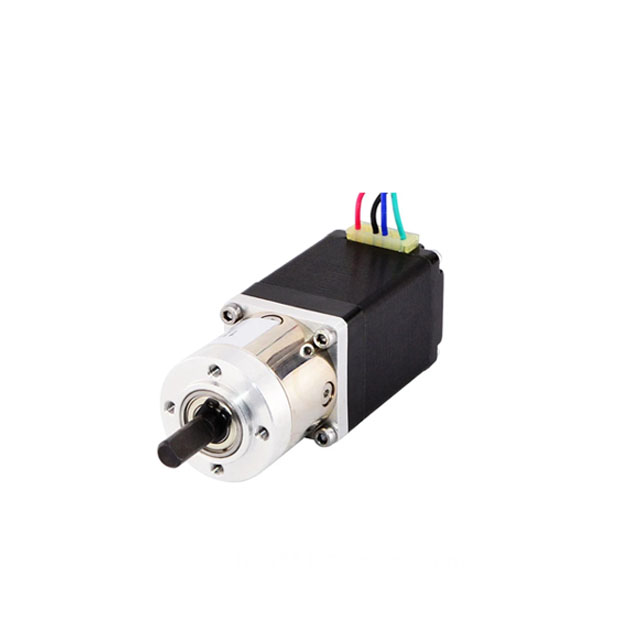
In certain applications where torque amplification or finer positioning is required, geared NEMA 11 stepper motors are used. These motors have a precision gearbox attached to the output shaft.
Features
Gear ratios typically range from 5:1 to 100:1, depending on torque and speed requirements.
The gearbox increases output torque and resolution.
Can handle heavier mechanical loads despite the small frame size.
Advantages
Applications
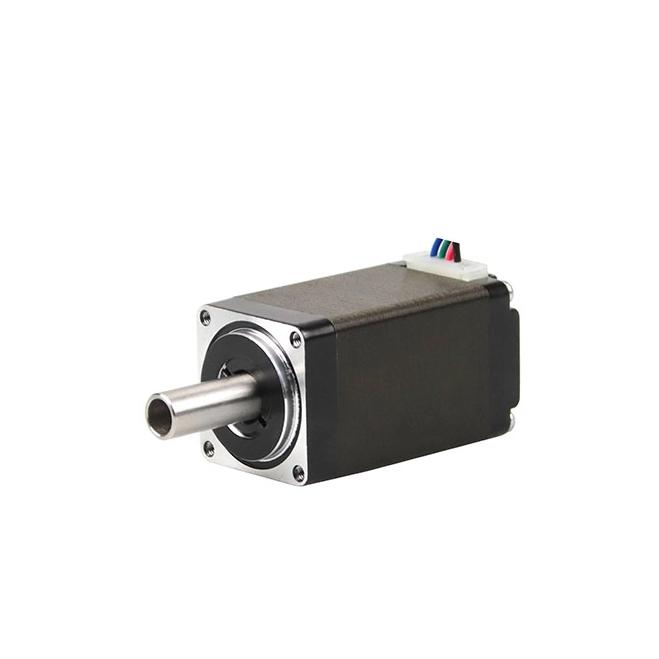
For linear motion applications, NEMA 11 motors are often combined with integrated lead screws to form linear actuators. This eliminates the need for external couplings or linkages.
Features
The motor shaft is replaced by a precision lead screw.
Converts rotary motion directly into linear displacement.
Available with various lead pitch options for customized linear speed and accuracy.
Advantages
Compact and space-saving design
Eliminates backlash from mechanical couplings
High linear accuracy and repeatability
Applications
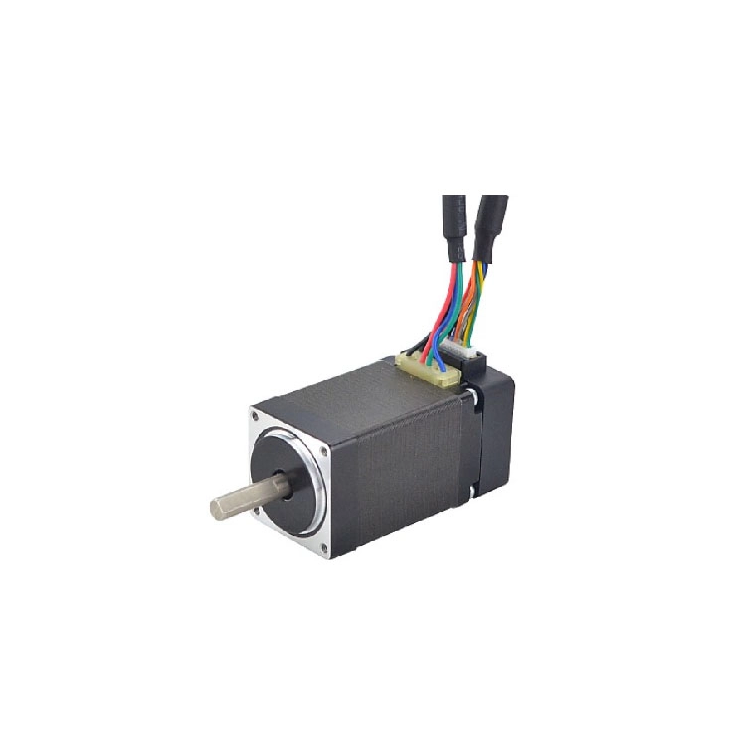
The latest generation of NEMA 11 stepper motors integrates a rotary encoder for closed-loop control. Unlike traditional open-loop stepper systems, closed-loop models provide real-time feedback to ensure accurate position tracking.
Features
Equipped with built-in encoders for position verification.
Automatically corrects any missed steps or errors during operation.
Combines the efficiency of stepper control with the precision of servo systems.
Advantages
No step loss
Higher torque at high speeds
Reduced vibration and noise
Energy-efficient operation
Applications
Conclusion
Choosing the right type of NEMA 11 stepper motor depends on your specific torque, speed, precision, and control requirements. From basic permanent magnet types to advanced closed-loop hybrid models, the versatility of NEMA 11 stepper motors allows them to fit seamlessly into a wide range of motion control applications.
Whether your project requires simple rotational movement, fine linear positioning, or feedback-driven accuracy, there is a NEMA 11 stepper motor configuration designed to meet your needs efficiently and reliably.
NEMA 11 stepper motors operate on the fundamental principle of electromagnetic induction and stepwise movement, allowing precise control over the motor’s rotational position without the need for feedback sensors. Despite their compact size, these motors are capable of achieving high positional accuracy, smooth motion, and excellent repeatability, making them essential components in many precision-driven applications.
Understanding the Basics of Stepper Motor Operation
A stepper motor converts electrical pulses into mechanical rotation. Each pulse moves the motor’s shaft through a fixed angular step, typically 1.8° per step in a standard NEMA 11 motor. By controlling the sequence, frequency, and polarity of these pulses, users can precisely control speed, direction, and position.
Unlike DC or servo motors that rely on continuous rotation, stepper motors move incrementally, which is why they are often referred to as digital motors. This stepwise movement enables exact positioning without requiring external encoders.
Internal Structure of a NEMA 11 Stepper Motor
To understand how a NEMA 11 stepper motor works, it’s helpful to examine its main internal components:
Stator:
The stationary part of the motor, consisting of multiple electromagnetic coils arranged in phases. These coils are energized in a specific sequence to create a rotating magnetic field.
Rotor:
The rotating component, typically made of a magnetized shaft with teeth that interact with the stator’s magnetic field. In hybrid stepper motors (common in NEMA 11 models), the rotor combines features of permanent magnet and variable reluctance designs for improved performance.
Bearings:
Support the rotor and allow smooth and stable rotation, minimizing mechanical friction.
Shaft:
The output shaft transfers the mechanical motion to the connected load or mechanism, such as a lead screw or gear.
Step-by-Step Working Principle
1. Energizing the Coils
When current passes through the stator windings, it produces a magnetic field around the energized coil. The rotor, which is magnetized, aligns itself with this field to minimize magnetic reluctance.
2. Sequential Activation
As the stepper driver energizes each coil (or phase) in sequence, the magnetic field rotates around the stator. The rotor continuously follows the changing magnetic poles, turning in discrete steps.
3. Step Resolution and Rotation
Each activation moves the rotor by one step angle, typically 1.8° for NEMA 11 motors. Thus, a full rotation (360°) requires 200 steps. With microstepping drivers, the motor can divide each step into smaller microsteps (up to 256 per step), producing extremely smooth motion.
4. Direction and Speed Control
By reversing the order in which the coils are energized, the motor’s rotation direction changes. Increasing the frequency of pulses sent to the motor increases its speed, while maintaining precise step control.
Microstepping for Smooth Precision
Microstepping is a key feature that enhances the performance of NEMA 11 stepper motors. Instead of energizing one phase fully at a time, microstepping gradually adjusts the current ratio between phases. This technique creates intermediate positions between full steps, resulting in:
Reduced vibration and noise
Smoother motion
Higher positional accuracy
Improved torque linearity
Microstepping allows NEMA 11 motors to operate efficiently even in applications requiring microscopic motion control, such as in 3D printers, microscopes, and camera systems.
Bipolar vs. Unipolar Operation
NEMA 11 stepper motors are available in two main configurations: bipolar and unipolar.
Contain two coils (phases) that require current reversal to change polarity.
Offer higher torque output because the entire winding is used.
Require an H-bridge driver for proper current control.
Common in industrial and robotics applications for their efficiency.
Have center-tapped windings, allowing current to flow in one direction through each half of the coil.
Easier to control but deliver lower torque than bipolar models.
Suitable for simpler control systems or low-power applications.
Most modern NEMA 11 motors are designed as bipolar, as this configuration provides better torque density and performance for compact systems.
Torque and Speed Relationship
A unique characteristic of stepper motors is the inverse relationship between torque and speed. At low speeds, the motor can deliver maximum holding torque, which decreases as speed increases due to inductive reactance and current lag.
To optimize performance:
Use current-controlled drivers to maintain consistent torque.
Avoid exceeding the motor’s rated speed to prevent step loss or stalling.
Implement acceleration profiles for smooth startup and deceleration.
A stepper driver converts control signals from a microcontroller or PLC into current pulses for the motor windings. The driver determines which coil to energize, the current magnitude, and the timing of each step.
Advanced drivers feature:
Microstepping capability
Overcurrent and overheating protection
Dynamic current adjustment
Closed-loop feedback options
When paired with a motion controller, NEMA 11 motors achieve programmable and repeatable motion sequences, ideal for precision automation tasks.
Closed-Loop vs. Open-Loop Operation
Most stepper motors, including NEMA 11, traditionally operate in open-loop mode, meaning they don’t rely on feedback to confirm position. However, modern systems increasingly use closed-loop control, integrating an encoder to monitor actual position and adjust accordingly.
This hybrid approach combines the simplicity of stepper control with the precision of servo systems.
Summary of Working Principles
To summarize, NEMA 11 stepper motors work by:
Energizing stator coils in a controlled sequence.
Generating a rotating magnetic field.
Causing the rotor to follow in discrete, precise steps.
Using microstepping to refine movement and reduce vibration.
Maintaining accurate, repeatable motion without position sensors.
This ability to transform digital control signals into precise mechanical motion is what makes NEMA 11 motors indispensable in miniature automation, robotics, and medical technology.
Key Features of NEMA 11 Stepper Motors
1. Compact and Lightweight Design
The NEMA 11 stepper motor offers a tiny footprint with a frame size of just 28 x 28 mm, making it suitable for applications where space optimization is a priority. Its compact build allows integration into micro-automation systems, 3D printers, laboratory instruments, and medical devices.
2. High Precision and Repeatability
These motors excel in microstepping performance, delivering smooth motion and fine positional control. With microstepping drivers, the resolution can be increased up to 1/16 or even 1/32 steps, achieving incredible accuracy and smooth low-speed motion.
3. Efficient Torque Output
Despite its size, a NEMA 11 stepper motor can produce holding torques ranging from 6 to 20 oz-in (0.04 to 0.14 N·m). This makes it an excellent fit for light-duty automation systems that require both torque and precision.
4. Wide Voltage and Current Range
These motors typically operate in a voltage range of 2V to 12V, depending on the winding type, and can handle currents up to 1.5A. This allows for compatibility with a wide range of motor drivers and control systems.
5. Long Service Life and Durability
Constructed with high-quality bearings and stainless steel shafts, NEMA 11 stepper motors are designed for continuous operation in demanding environments. They can maintain performance over millions of steps with minimal wear.
1. Precision Control without Feedback
Unlike servo motors that require encoders for positional feedback, NEMA 11 stepper motors achieve precise control through step count, which simplifies design and reduces cost.
2. Excellent Position Holding
Stepper motors inherently hold their position when stopped, making NEMA 11 ideal for applications that require steady, vibration-free positioning—such as camera gimbals or optical alignment systems.
3. Cost-Effective Motion Solution
Compared to servo systems, NEMA 11 stepper motors are more affordable while still providing exceptional performance for light-load applications.
4. Compatibility with Modern Control Systems
These motors work seamlessly with advanced microcontrollers (like Arduino, Raspberry Pi, and STM32) and modern stepper drivers, allowing for easy integration into IoT devices and automation platforms.
5. Low Maintenance Requirements
With no brushes or commutators, NEMA 11 stepper motors offer maintenance-free operation and consistent performance over extended periods.
| Specification | Details |
| Frame Size | 28 x 28 mm |
| Step Angle | 1.8° (200 steps per revolution) |
| Voltage Range | 2V – 12V |
| Current | 0.5A – 1.5A per phase |
| Holding Torque | 6 – 20 oz-in (0.04 – 0.14 N·m) |
| Shaft Diameter | 5 mm |
| Length | 30 – 52 mm (depending on model) |
| Weight | Approx. 120 – 200 g |
The versatility and compactness of NEMA 11 stepper motors make them suitable for a wide range of industries and applications, including:
1. 3D Printers and CNC Machines
Used for precise positioning of print heads and axes, NEMA 11 motors ensure consistent layer alignment and fine detailing in 3D printing and small CNC engravers.
2. Robotics and Automation
Their small size and high control precision make them ideal for robotic grippers, pick-and-place mechanisms, and micro-robotic arms.
3. Medical and Laboratory Equipment
In medical instrumentation, these motors are used for fluid control pumps, automated syringes, and sample positioning systems, where precision and reliability are essential.
4. Optical and Imaging Devices
NEMA 11 stepper motors provide precise focus and lens adjustment for cameras, microscopes, and inspection systems.
5. Textile and Packaging Machinery
They play a vital role in thread tension control, fabric feeding, and label placement systems, enhancing automation accuracy.
Selecting the perfect NEMA 11 motor depends on several performance parameters:
1. Torque Requirement
Determine the holding torque based on the load inertia and desired acceleration. Undersized motors may lead to missed steps, while oversized ones can waste power.
2. Step Angle and Resolution
Choose an appropriate step angle (standard is 1.8°) based on the precision level needed. Use microstepping drivers for smoother motion and higher resolution.
3. Current and Voltage Ratings
Ensure the motor’s current and voltage ratings match the motor driver capabilities. Overdriving can cause overheating, while underdriving limits performance.
4. Environmental Considerations
Select models with sealed housings for dusty or humid environments and high-temperature tolerance for industrial use.
5. Integrated vs. Standard Type
Some NEMA 11 models come with built-in drivers or encoders, reducing wiring complexity and enabling closed-loop control for higher precision.
As automation continues to evolve, NEMA 11 stepper motors are becoming smarter and more efficient. The future is seeing:
Integration with smart controllers for IoT connectivity
Miniaturized closed-loop systems for enhanced feedback and control
Improved torque-to-size ratios using advanced materials and winding techniques
Energy-efficient drivers that minimize heat and power loss
These advancements are pushing the limits of compact motion control, making NEMA 11 a cornerstone of next-generation automation solutions.
Conclusion
The NEMA 11 stepper motor is a powerful combination of compact design, precision, and performance, making it a preferred choice across a wide range of industries—from 3D printing and robotics to medical devices and automation systems. By understanding its specifications, features, and advantages, engineers can unlock unparalleled motion control in even the smallest spaces.
If you’re looking for reliable, efficient, and compact motion solutions, the NEMA 11 stepper motor offers everything you need for precise control and exceptional performance.