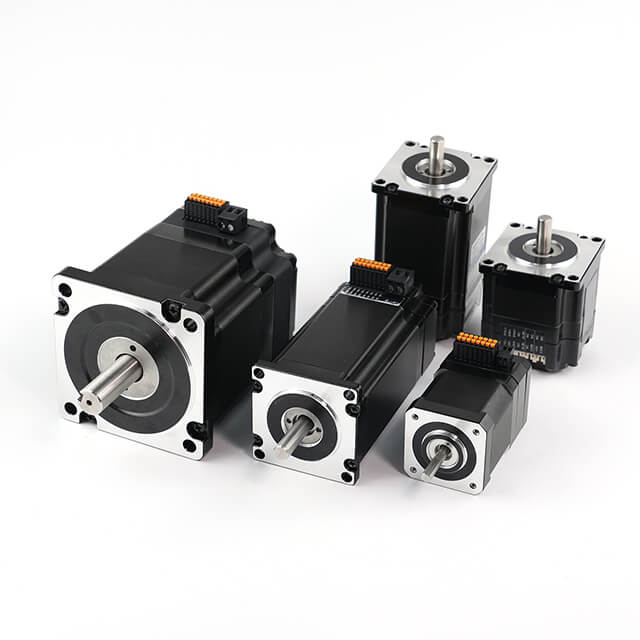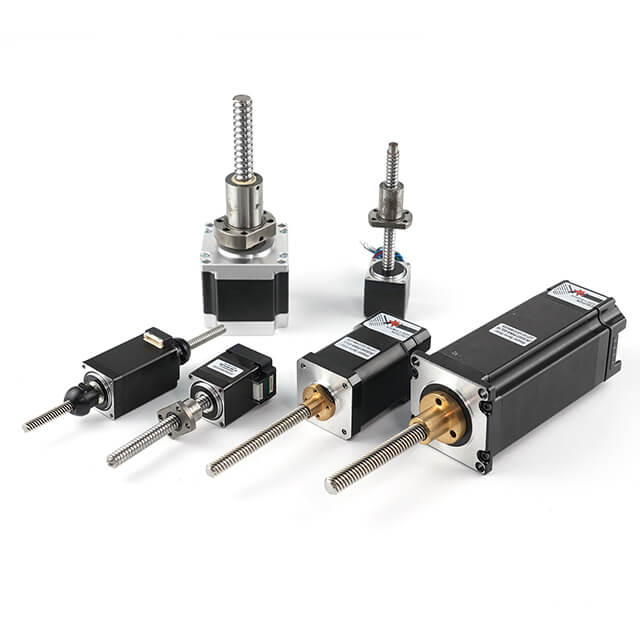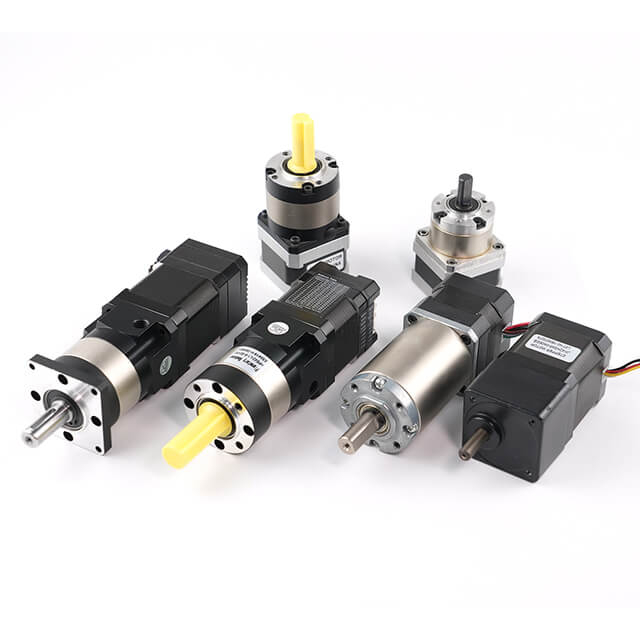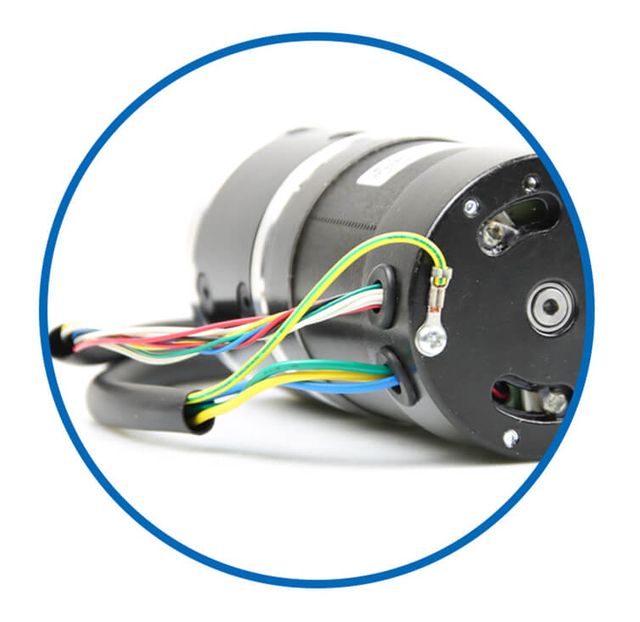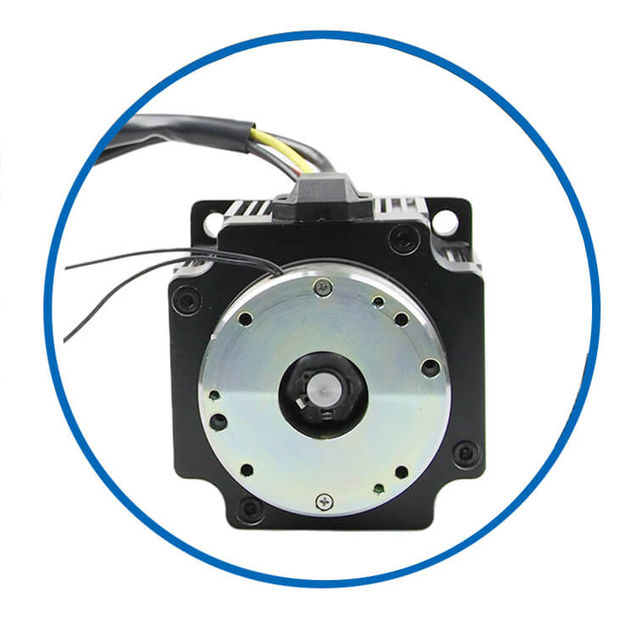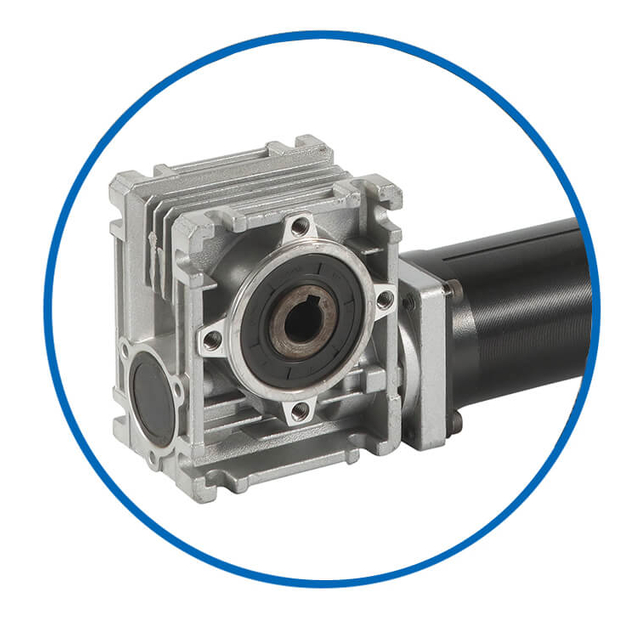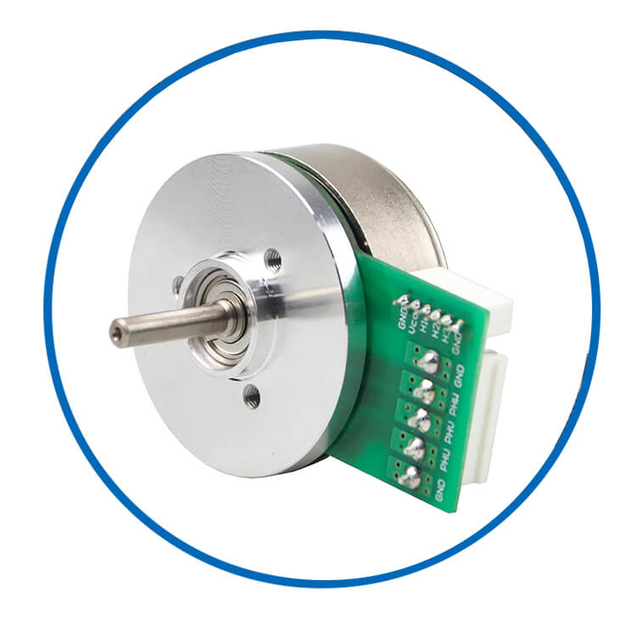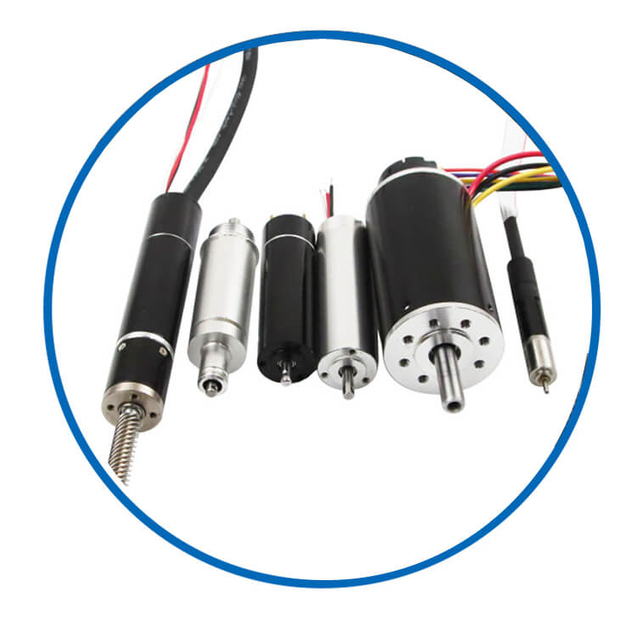
Integrated servo motors represent a significant advancement in modern motion control systems. By combining the servo motor, drive electronics, feedback device, and control intelligence into a single compact unit, integrated servo motors eliminate traditional system complexity while delivering high performance, precision, and reliability. This architecture has become a preferred solution in automation, robotics, CNC machinery, packaging equipment, medical devices, and smart manufacturing environments.
Unlike conventional servo systems that rely on separate motors and external drives housed in control cabinets, integrated servo motors provide a self-contained motion solution designed for efficiency, scalability, and rapid deployment.
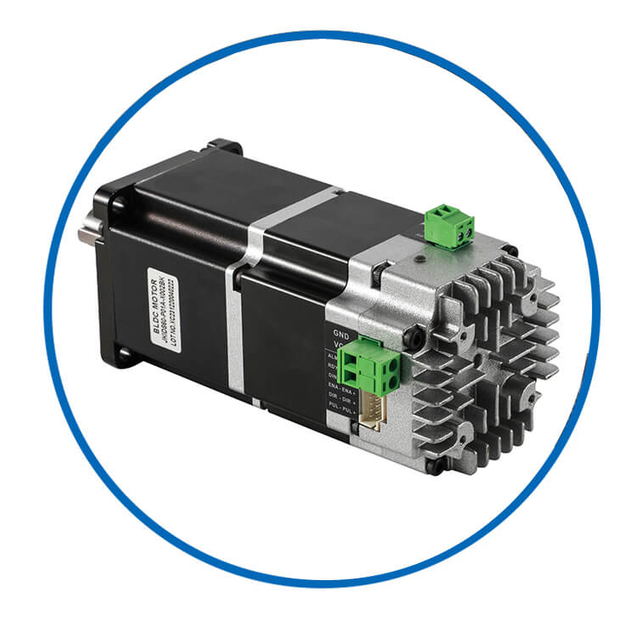
An integrated servo motor consolidates multiple functional elements into one housing:
High-performance servo motor for precise torque and speed control
Integrated servo drive with power electronics and control algorithms
High-resolution encoder or feedback system for accurate positioning
Communication interface for real-time control and synchronization
Thermal management system to ensure long-term stability
This unified design reduces interconnection losses and improves overall system robustness.
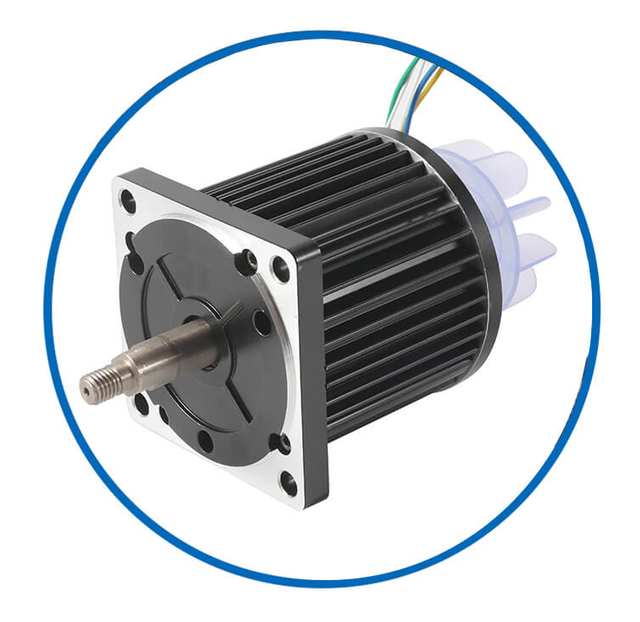
OEM ODM Motor Customized Service
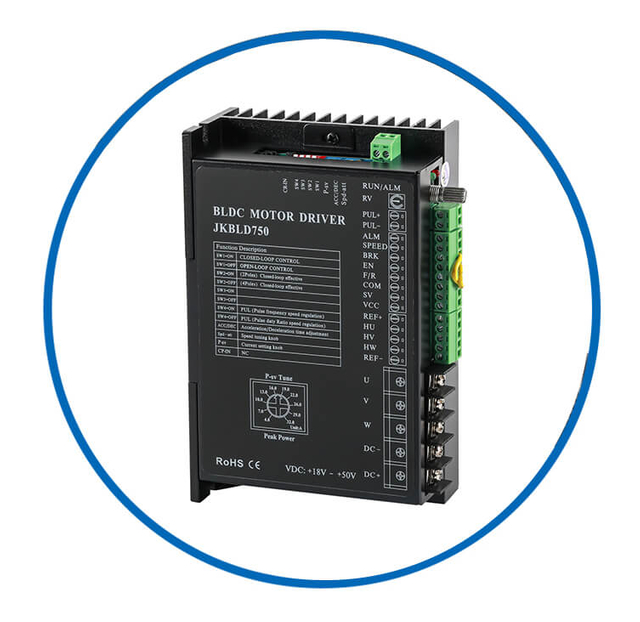
As a professional brushless dc motor manufacturer with 13 years in china, Jkongmotor offer various bldc motors with customized requirements, including 33 42 57 60 80 86 110 130mm, additionally, gearboxes, brakes, encoders, brushless motor drivers and integrated drivers are optional.
![bldc motor supplier]() | ![bldc motor supplier]() | ![bldc motor supplier]() | ![bldc motor supplier]() | ![bldc motor supplier]() | Professional custom brushless motor services safeguard your projects or equipment. No Brushes – Reduced Maintenance and Increased Lifespan High Efficiency and Low Power Loss High Torque-to-Weight Ratio Precise Speed and Position Control Quiet and Smooth Operation Wide Speed Range and Dynamic Performance Excellent Thermal Management Customizable Designs and Modular Configurations Multiple Control Methods Integration with Digital Interfaces and Sensors |
| Wires | Covers | Fans | Shafts | Integrated Drivers |
![bldc motor supplier]() | ![bldc motor supplier]() | ![bldc motor supplier]() | ![bldc motor supplier]() | ![bldc motor supplier]() |
| Brakes | Gearboxes | Out Rotors | Coreless Dc | Drivers |
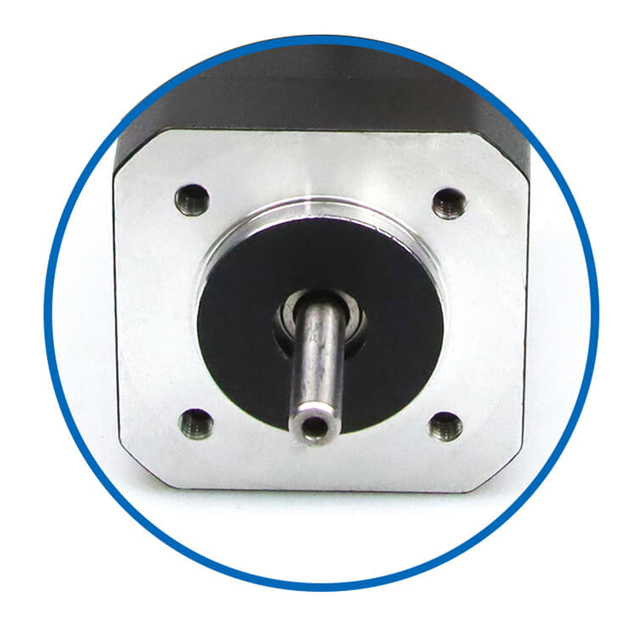
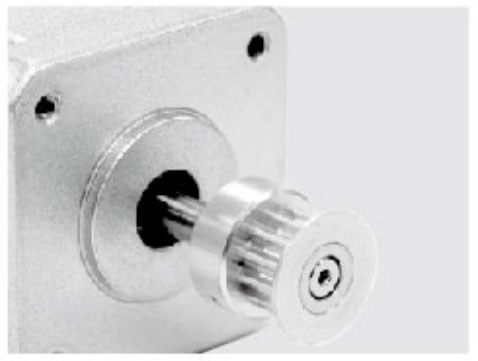
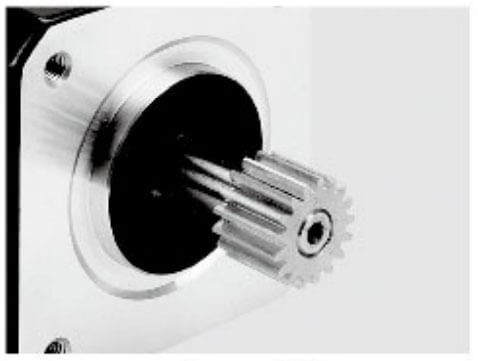
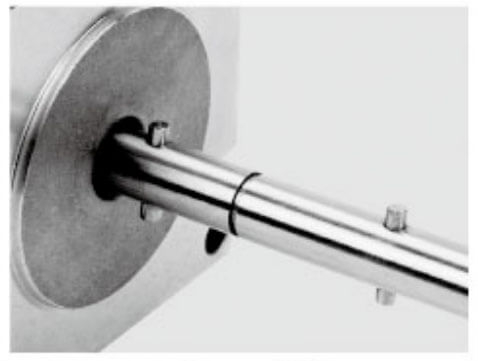
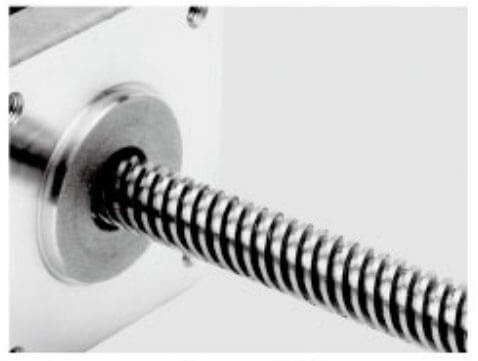
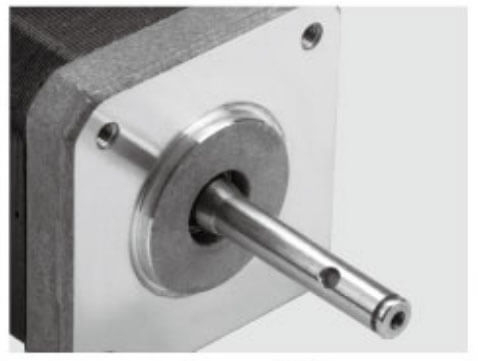
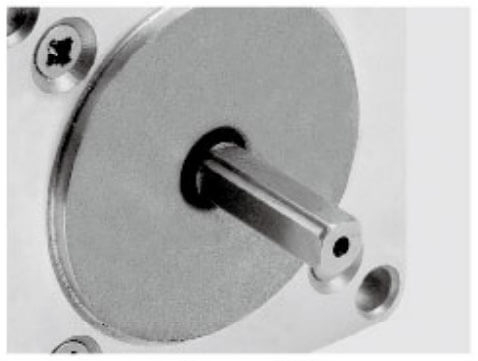
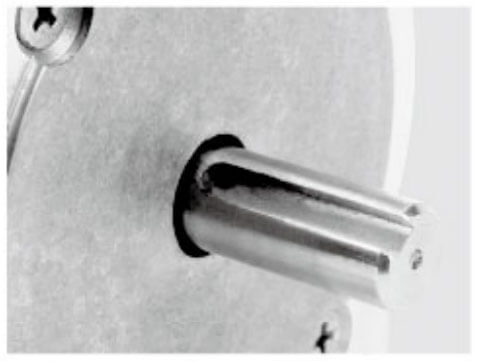
Motor Shaft Customized Service
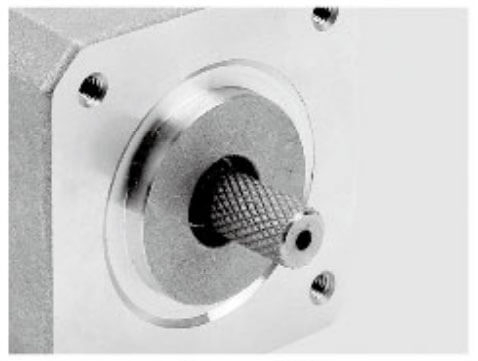
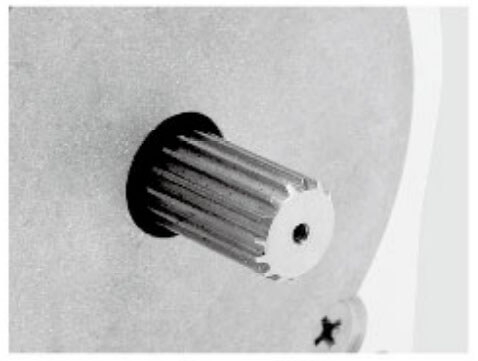
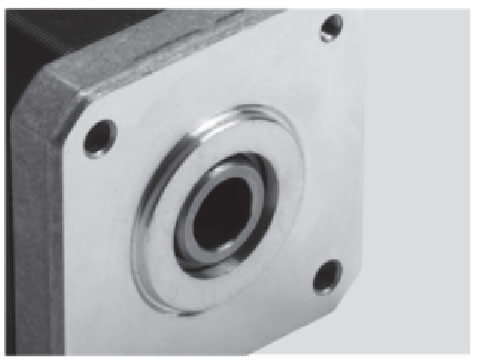
Jkongmotor offer many different shaft options for your motor as well as customizable shaft lengths to make the motor fit your application seamlessly.
Key Advantages of Integrated Servo Motors
Compact and Space-Saving Design
One of the most compelling benefits of integrated servo motors is their compact footprint. By eliminating external drives and reducing wiring requirements, machine designers can:
Minimize control cabinet size
Design smaller, lighter machines
Optimize space-constrained installations
Improve mechanical layout flexibility
This advantage is especially valuable in robotics and modular automation systems.
Simplified Wiring and Installation
Integrated servo motors significantly reduce system wiring complexity. Instead of multiple motor power, encoder, and feedback cables, most integrated servo motors require only:
One power cable
One communication cable
This streamlined setup results in faster installation, fewer wiring errors, and reduced commissioning time.
High Precision and Dynamic Performance
Integrated servo motors deliver exceptional positioning accuracy, speed stability, and torque control. Advanced digital control algorithms combined with high-resolution encoders enable:
Precise position and velocity control
Smooth low-speed operation
High dynamic response
Accurate force and tension control
These capabilities are essential for demanding motion applications where consistency and repeatability are critical.
Energy Efficiency and Thermal Optimization
Energy efficiency is a key design focus of modern integrated servo motors. By optimizing motor electromagnetic design and integrating intelligent drive electronics, these systems achieve:
Integrated thermal sensors and protection functions ensure stable performance even under continuous or high-load operation.
Advanced Communication and Control Capabilities
Integrated servo motors support a wide range of industrial communication protocols, enabling seamless integration into automated systems and Industry 4.0 architectures. Commonly supported protocols include:
EtherCAT
CANopen
PROFINET
EtherNet/IP
RS485 / Modbus
These interfaces allow real-time data exchange, precise synchronization, and easy connection to PLCs, motion controllers, and robotic systems.
Safety and Reliability Built In
Modern integrated servo motors are designed with functional safety and system reliability as core priorities. Many models include built-in safety features such as:
Safe Torque Off (STO)
Overcurrent and overvoltage protection
Overtemperature monitoring
Fault diagnostics and alarms
By embedding safety and protection functions directly into the motor, integrated servo motors reduce external components and enhance system reliability.
Reduced Maintenance and Total Cost of Ownership
Integrated servo motors contribute to lower total cost of ownership through:
Fewer components and connectors
Reduced failure points
Simplified maintenance procedures
Built-in diagnostics for predictive maintenance
Longer service life and reduced downtime make integrated servo motors a cost-effective solution for both OEMs and end users.
Scalability and Modular System Design
Integrated servo motors are available in a wide range of frame sizes, torque ratings, voltage classes, and speed ranges, making them suitable for scalable and modular machine designs. This flexibility allows manufacturers to:
Standardize motion platforms
Reuse designs across multiple machine models
Easily adapt systems to changing requirements
Modularity is a key advantage in rapidly evolving automation environments.
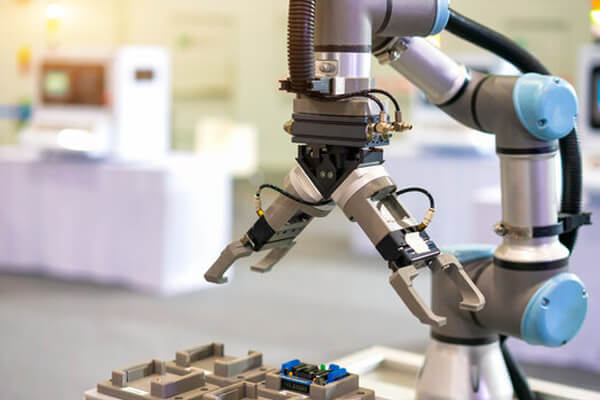
Integrated servo motors have become a foundational component in modern collaborative robot (cobot) systems, redefining how precision motion, safety, and compact design are achieved in automation environments. By combining the servo motor, drive, encoder, and control electronics into a single, unified unit, integrated servo motors deliver unmatched efficiency, reduced complexity, and superior performance. As collaborative robots continue to expand across manufacturing, logistics, healthcare, and laboratory automation, integrated servo motors stand at the core of their reliability and adaptability.
What Makes Integrated Servo Motors Ideal for Cobots
Collaborative robots require motion systems that are compact, intelligent, responsive, and safe. Integrated servo motors are specifically engineered to meet these demands.
Key characteristics include:
All-in-one architecture combining motor, servo drive, and feedback
High torque density in compact form factors
Low latency control for smooth, human-safe interaction
Reduced wiring and cabinet space
Enhanced reliability through fewer interconnections
These attributes allow cobot manufacturers and system integrators to design robots that are lighter, more energy-efficient, and easier to deploy.
Compact Design for Space-Constrained Robot Arms
One of the most critical advantages of integrated servo motors is their space-saving design. In collaborative robots, every joint must balance payload capacity, reach, and safety. By eliminating external servo drives and reducing cabling, integrated servo motors enable:
This compactness directly translates into smoother motion profiles and greater flexibility in tight workspaces.
High-Precision Motion Control and Repeatability
Precision is non-negotiable in collaborative robot systems. Integrated servo motors deliver exceptional positioning accuracy and repeatability through advanced feedback technologies such as absolute encoders, multi-turn encoders, and high-resolution incremental encoders.
Benefits include:
Sub-micron positioning capability
Consistent torque output across speed ranges
Stable low-speed performance
Accurate force and torque control
These features are essential for tasks such as assembly, pick-and-place, dispensing, inspection, and machine tending.
Safety-Oriented Design for Human-Robot Collaboration
Safety is the defining principle of collaborative robotics. Integrated servo motors support functional safety standards by design, enabling cobots to operate alongside humans without physical barriers.
Safety-related capabilities include:
By embedding safety functions directly within the motor unit, integrated servo motors reduce system complexity while enhancing overall operational safety.
Simplified Wiring and Faster System Deployment
Traditional servo systems require extensive wiring between motors, drives, and controllers. Integrated servo motors dramatically reduce this complexity by consolidating components.
Advantages include:
Single power and communication cable
Reduced installation time
Lower risk of wiring errors
Cleaner robot design
This simplification accelerates cobot deployment, minimizes downtime, and lowers total system cost.
Advanced Communication Protocols for Seamless Integration
Integrated servo motors are designed to support modern industrial communication protocols, ensuring seamless integration into collaborative robot architectures and Industry 4.0 environments.
Commonly supported protocols include:
EtherCAT
CANopen
PROFINET
EtherNet/IP
RS485 and Modbus
These protocols enable high-speed synchronization, deterministic control, and easy integration with PLCs, robot controllers, and edge computing systems.
Energy Efficiency and Thermal Optimization
Energy efficiency is a growing priority in automation systems. Integrated servo motors are optimized for high efficiency and effective thermal management, reducing energy consumption while maintaining performance.
Key efficiency features include:
Optimized electromagnetic design
Low-loss power electronics
Integrated temperature monitoring
Efficient heat dissipation structures
Lower operating temperatures enhance motor lifespan and reliability, making integrated servo motors ideal for continuous-duty collaborative robots.
Scalability and Modular Robot Design
Collaborative robot platforms often require modularity to support different payloads, reaches, and application requirements. Integrated servo motors facilitate this modular approach by offering:
Multiple frame sizes
Wide torque and speed ranges
Standardized mechanical interfaces
Configurable control parameters
This scalability allows robot manufacturers to reuse designs across multiple cobot models while maintaining consistent performance.
Reduced Maintenance and Higher System Reliability
By reducing the number of external components and connectors, integrated servo motors significantly improve system reliability. Fewer components mean fewer failure points, leading to:
Lower maintenance requirements
Improved mean time between failures (MTBF)
Simplified diagnostics
Predictive maintenance capabilities
Integrated diagnostics and condition monitoring further enhance uptime in mission-critical collaborative robot applications.
Integrated servo motors have become a core enabling technology for collaborative robots (cobots), supporting their defining characteristics: safety, flexibility, precision, and ease of deployment. By integrating the servo motor, drive, encoder, and control electronics into a single compact unit, integrated servo motors allow cobots to perform complex tasks while safely operating alongside human workers.
As collaborative robots expand across industries, integrated servo motors provide the motion intelligence that enables smooth interaction, accurate control, and reliable long-term operation.
Precision Assembly and Fastening Applications
One of the most widespread applications of integrated servo motors in collaborative robots is precision assembly. Cobots equipped with integrated servo motors excel at tasks that require controlled torque, accurate positioning, and repeatable motion.
Typical applications include:
Integrated servo motors enable fine torque control and low-speed stability, ensuring consistent assembly quality while preventing damage to sensitive components.
Pick-and-Place and Material Handling
Integrated servo motors play a critical role in pick-and-place operations, where speed, accuracy, and smooth motion are essential. Collaborative robots powered by integrated servo motors can handle delicate or irregular objects with precision.
Key advantages in material handling include:
High repeatability for accurate placement
Smooth acceleration and deceleration
Reduced vibration during motion
Precise control of gripping forces
These capabilities make integrated servo motors ideal for handling electronics, medical products, consumer goods, and fragile materials.
Machine Tending and CNC Automation
In machine tending applications, collaborative robots load and unload parts from CNC machines, injection molding machines, and presses. Integrated servo motors provide the robust torque control and positional accuracy required for these repetitive and demanding tasks.
Benefits include:
Reliable positioning for consistent part handling
Compact joint design for accessing tight machine spaces
High durability under continuous operation
Reduced system wiring and faster commissioning
Integrated servo motors help cobots operate efficiently in harsh industrial environments while maintaining safety.
Quality Inspection and Testing
Collaborative robots are increasingly used in quality inspection and testing, where precise motion and stable positioning are critical. Integrated servo motors allow cobots to move sensors, cameras, and probes with extreme accuracy.
Common inspection tasks include:
The high-resolution feedback systems in integrated servo motors ensure consistent inspection results and reliable data collection.
Electronics Manufacturing and PCB Handling
Electronics manufacturing demands exceptional precision, cleanliness, and repeatability. Integrated servo motors enable collaborative robots to meet these requirements across various electronics production processes.
Applications include:
The compact size and smooth motion control of integrated servo motors reduce the risk of electrostatic discharge, vibration, and component damage.
Packaging, Sorting, and Palletizing
In packaging and logistics environments, collaborative robots equipped with integrated servo motors perform sorting, packaging, labeling, and light palletizing tasks.
Advantages in these applications include:
High-speed yet smooth motion
Accurate positioning for consistent packaging
Adaptability to different product sizes
Reduced mechanical complexity
Integrated servo motors support flexible automation solutions that can be easily reconfigured for changing production needs.
Medical and Laboratory Automation
Collaborative robots are increasingly adopted in medical and laboratory settings, where safety, cleanliness, and precision are paramount. Integrated servo motors provide quiet operation, precise control, and compact integration.
Typical medical and lab applications include:
Sample handling and preparation
Automated testing and analysis
Medical device assembly
Pharmacy and dispensing automation
The reliability and low-maintenance design of integrated servo motors make them suitable for regulated and sensitive environments.
Human-Robot Collaboration in Shared Workspaces
A defining feature of collaborative robots is their ability to operate safely alongside humans. Integrated servo motors enable this by supporting advanced safety and force-limiting functions.
Key contributions include:
Precise torque and current monitoring
Smooth, compliant motion profiles
Safe Torque Off (STO) functionality
Rapid response to unexpected contact
These features allow cobots to assist human workers directly without the need for safety cages.
Adaptive Manufacturing and Flexible Production Lines
Integrated servo motors empower collaborative robots to support adaptive manufacturing, where production lines must quickly respond to product changes and customization demands.
Capabilities include:
Rapid reprogramming and redeployment
Modular robot design
Scalable payload and reach options
Seamless integration with smart factory systems
This flexibility enables manufacturers to achieve higher productivity with lower retooling costs.
Small Batch and High-Mix Production
Collaborative robots equipped with integrated servo motors are particularly well-suited for small batch and high-mix production environments. Their compact design and simplified integration allow rapid setup changes without extensive engineering effort.
Key benefits include:
Reduced downtime between product changeovers
Consistent quality across varying tasks
Lower automation barriers for small manufacturers
Efficient use of floor space
Integrated servo motors support agile manufacturing strategies essential in modern markets.
Research, Education, and Prototyping
Integrated servo motors are also widely used in collaborative robots for research, education, and prototyping purposes. Their all-in-one design simplifies system architecture and accelerates development.
Applications include:
Robotics research and development
University and technical training labs
Prototype automation systems
Experimental human-robot interaction studies
The ease of use and reliability of integrated servo motors make them ideal for learning and innovation environments.
Why Traditional Servo Systems Fall Short in Collaborative Robotics
Collaborative robots (cobots) operate under fundamentally different requirements than conventional industrial robots. They must be compact, lightweight, safe, flexible, and easy to deploy, all while maintaining high precision and reliability. Traditional servo systems—built around separate motors, external servo drives, bulky control cabinets, and complex wiring—were not designed with these priorities in mind.
Integrated servo motors address these limitations directly, offering a modern alternative that aligns perfectly with the technical and operational demands of collaborative robotics.
Compact Integration Enables Smaller and Lighter Robot Joints
Traditional servo systems require external drives and extensive cabling, increasing the size and weight of robot joints. In contrast, integrated servo motors consolidate the motor, drive, encoder, and control electronics into a single housing.
This delivers decisive advantages:
Lighter cobots can move faster, consume less energy, and pose lower risks during human interaction—critical factors in collaborative environments.
Reduced Wiring Complexity and Cleaner System Architecture
One of the most significant drawbacks of traditional servo systems is wiring complexity. Multiple cables are required for power, encoder feedback, braking, and communication, increasing installation time and failure risk.
Integrated servo motors simplify system architecture by requiring only:
This streamlined wiring results in:
Faster installation and commissioning
Fewer wiring errors
Improved electromagnetic compatibility
Cleaner and more reliable robot designs
For cobot manufacturers and system integrators, this directly translates into lower engineering effort and faster time to market.
Enhanced Safety for Human-Robot Collaboration
Safety is the defining characteristic of collaborative robots. Traditional servo systems often rely on external safety modules and complex safety wiring to meet functional safety requirements.
Integrated servo motors embed safety functionality directly within the motor unit, enabling:
These built-in safety features allow cobots to react instantly to unexpected contact, reducing injury risk and eliminating the need for safety cages in many applications.
Lower Latency and Faster Control Response
In traditional servo architectures, control commands must travel between the controller, external drive, and motor, introducing latency. Integrated servo motors eliminate these delays by placing control electronics directly at the motor.
This architecture provides:
Faster torque response
Smoother motion transitions
Improved force and impedance control
More natural, human-like robot movement
For collaborative robots performing precision tasks alongside humans, this responsiveness is a critical performance advantage.
Improved Reliability Through Fewer Failure Points
Traditional servo systems consist of multiple discrete components connected by cables and connectors. Each interconnection represents a potential point of failure.
Integrated servo motors dramatically reduce system complexity, resulting in:
Fewer connectors and cables
Lower risk of mechanical and electrical failure
Higher mean time between failures (MTBF)
Greater operational stability
This improved reliability is especially important for cobots deployed in continuous-duty or mission-critical applications.
Reduced Control Cabinet Size or Cabinet-Free Designs
Traditional servo systems require centralized control cabinets to house servo drives, power supplies, cooling systems, and safety hardware. These cabinets consume valuable floor space and increase system cost.
Integrated servo motors enable:
By distributing intelligence directly into the robot joints, cobots become more compact, mobile, and easier to integrate into existing production lines.
Energy Efficiency and Thermal Advantages
Integrated servo motors are designed with optimized electromagnetic structures and intelligent drive electronics, delivering higher efficiency than traditional servo systems.
Key energy advantages include:
Lower operating temperatures extend component lifespan and reduce cooling requirements, further improving system efficiency and reliability.
Simplified Commissioning and Faster Deployment
Commissioning traditional servo systems often requires complex parameter tuning, drive configuration, and safety validation across multiple devices.
Integrated servo motors streamline this process through:
Pre-configured motor-drive pairing
Unified parameter sets
Built-in diagnostics and fault reporting
Simplified safety certification
This allows collaborative robots to be deployed faster, even by users with limited motion control expertise.
Superior Scalability and Modular Robot Design
Collaborative robot platforms often require modularity to support different payloads, reaches, and application requirements. Traditional servo systems complicate scalability due to custom drive sizing and cabinet limitations.
Integrated servo motors support modularity by offering:
Multiple standardized frame sizes
Wide torque and speed ranges
Consistent communication interfaces
Flexible mounting options
This enables cobot manufacturers to reuse designs across multiple robot models while maintaining consistent performance.
Advanced Communication and Industry 4.0 Readiness
Integrated servo motors are designed for modern automation environments and support advanced industrial communication protocols such as:
EtherCAT
CANopen
PROFINET
EtherNet/IP
These protocols enable real-time synchronization, data transparency, and seamless integration with smart factory systems, digital twins, and predictive maintenance platforms—capabilities that traditional servo systems struggle to deliver efficiently.
Lower Total Cost of Ownership
While traditional servo systems may appear cost-effective at the component level, their total system cost is significantly higher due to:
Integrated servo motors reduce total cost of ownership by minimizing these hidden costs, delivering long-term economic advantages for cobot deployments.
Improved Motion Quality for Human-Centric Tasks
Collaborative robots often perform tasks that require smooth, compliant, and predictable motion. Integrated servo motors excel in these applications by enabling:
These characteristics enhance both safety and productivity in shared workspaces.
Future-Proof Architecture for Next-Generation Cobots
Integrated servo motors provide a future-ready platform for emerging collaborative robot applications, including:
AI-driven adaptive motion control
Force-guided teaching and hand guiding
Mobile collaborative robots
Service and healthcare robotics
Their intelligent, decentralized architecture positions integrated servo motors as the preferred solution for next-generation cobot systems.
Conclusion
Integrated servo motors offer decisive advantages over traditional servo systems in collaborative robots. Through compact integration, simplified wiring, enhanced safety, superior reliability, and lower total cost of ownership, they address the core challenges of human-robot collaboration. As cobots continue to expand across industries and applications, integrated servo motors will remain the dominant motion control solution driving performance, safety, and flexibility in collaborative robotics.
Future Applications in Collaborative Robotics
As collaborative robots continue to evolve, integrated servo motors will enable new and more advanced applications, including:
AI-driven adaptive motion control
Force-controlled assembly with human guidance
Mobile collaborative robots
Smart service robots in public environments
Advancements in integrated servo motor technology will further expand the capabilities of collaborative robots across industries.
Conclusion
Integrated servo motors are a cornerstone technology in collaborative robot systems, enabling precise, safe, and flexible automation across a wide range of applications. From precision assembly and material handling to medical automation and adaptive manufacturing, integrated servo motors deliver the performance and simplicity required for effective human-robot collaboration. As cobots continue to redefine industrial and service automation, integrated servo motors will remain essential to their success.
Integrated servo motors are redefining the performance, safety, and efficiency of collaborative robot systems. By combining precision motion control, compact design, advanced safety, and seamless connectivity, they provide a robust foundation for modern cobots. As automation continues to shift toward human-centric and flexible production environments, integrated servo motors will remain a critical enabler of scalable, reliable, and high-performance collaborative robotics.