Views: 0 Author: Jkongmotor Publish Time: 2025-12-11 Origin: Site

Electric hydrofoil boats represent a revolutionary shift in marine mobility, delivering unmatched efficiency, near-silent operation, and exceptional ride smoothness. At the heart of this innovation lies the integrated DC servo motor, a compact and high-performance propulsion and control solution that enables hydrofoil systems to glide effortlessly above the water’s surface. In this comprehensive guide, we dive into how these advanced servo solutions power next-generation hydrofoil vessels with precision, reliability, and efficiency.
Integrated DC servo motors are compact, all-in-one motion control systems that combine several essential components into a single unit. Instead of requiring a separate motor, driver, encoder, and controller, an integrated DC servo motor houses all of these elements together, creating a highly efficient and simplified solution for precision motion control.
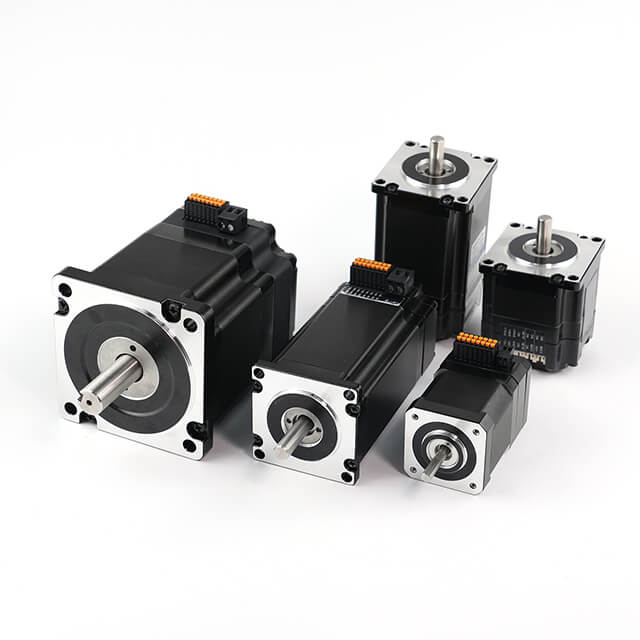
An Integrated DC Servo Motor is a closed-loop motor system where the motor, servo drive (controller), feedback encoder, and often communication interface are built into a single, streamlined housing. It is designed to deliver precise position, speed, and torque control, making it ideal for applications requiring accuracy, responsiveness, and reliability.
Integrated DC servo motors come in several types based on their internal motor structure, feedback system, and application-specific design. Each type offers unique advantages in performance, efficiency, and motion control quality. Below are the most common and important integrated DC servo motor types.
These motors use a brushed DC motor combined with integrated electronics.
Simple motor construction
Moderate cost
Smooth low-speed performance
Suitable for low to medium power applications
Light automation tasks
Basic positioning systems
Educational and prototype models
These are the most widely used servo type today. They use a brushless DC motor, which offers higher efficiency and longer life.
High torque density
Excellent energy efficiency
Long lifespan (no brushes to wear out)
Low heat generation
High-speed capability
Electric hydrofoil boats
Robotics and CNC systems
AGVs and industrial automation
Medical machines
Coreless designs remove the iron core from the rotor, resulting in lightweight and extremely fast acceleration.
Extremely low inertia
Very fast dynamic response
High precision and minimal cogging torque
High-speed positioning tools
Drones
Precision medical devices
Small robotic actuators
These motors use a flat rotor and stator design to achieve a compact, low-profile shape.
Ultra-thin form factor
High torque-to-size ratio
Suitable for space-constrained installations
Electric hydrofoil lift mechanisms
Aerospace devices
Compact robots
Portable automation systems
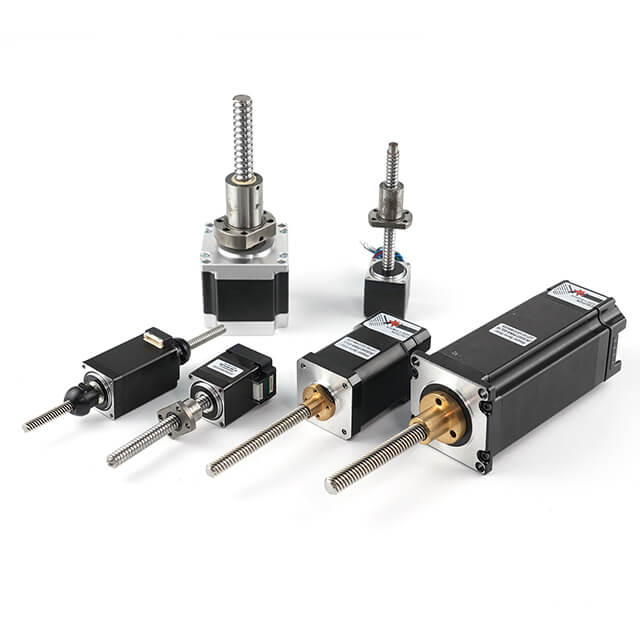
Instead of rotary motion, these servo motors provide direct linear movement.
Extremely smooth linear control
No lead screws or belts required
High accuracy and efficient force control
Linear actuators
Pick-and-place machines
Medical scanning systems
Precision laboratory equipment
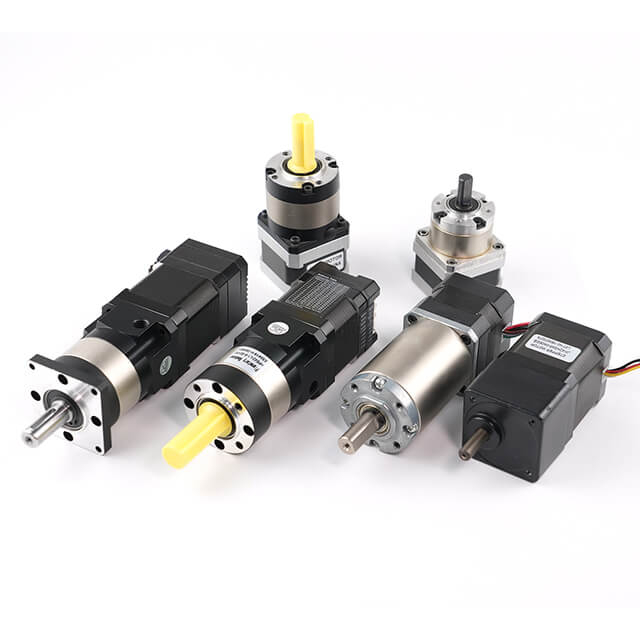
These motors come with pre-installed gearboxes (planetary, harmonic, or spur).
High torque output
Controlled speed range
Increased load-handling capability
High-load hydrofoil lift systems
Industrial robots
Heavy-duty automation
Conveyor systems
A specialized version of the above, using a compact planetary gearbox:
High reduction ratios
Precision positioning
Very high torque in a small package
AGVs
Electric marine systems
CNC axis control
Packaging automation
These motors feature built-in high-resolution encoders (optical or magnetic) to enhance precision.
Closed-loop accuracy
Higher positional repeatability
Ideal for real-time control
Electric hydrofoil stabilization
Precision industrial machines
Robotics joint control
Designed specifically for harsh and wet environments.
IP67–IP69K waterproof protection
Corrosion-resistant materials
Sealed electronics
Electric hydrofoil boats
Underwater robotics
Marine actuators
Outdoor automation
Integrated DC servo motors come in many types, each designed to handle specific performance and environmental requirements. The most popular versions for modern high-performance applications are brushless integrated DC servos, planetary gearbox servos, and marine-grade waterproof servos.
The core moving element that converts electrical energy into mechanical rotation. It provides high torque and fast acceleration.
The internal electronics that process control signals, regulate current, and execute motion commands.
A built-in device (optical or magnetic) that continuously monitors:
Motor position
Speed
Direction
This ensures closed-loop performance and high precision.
Integrated support for industrial protocols such as:
CANopen
RS485
Modbus
PWM / Analog interface
These motors operate in a closed-loop system, meaning they constantly receive feedback from the encoder and adjust their behavior automatically. When the controller detects any deviation from the target position or speed, it corrects the motor instantly.
This real-time feedback loop provides:
High accuracy
Smooth motion
Stable performance under varying loads
Superior efficiency compared to open-loop motors
Integrated DC servo motors combine the motor, controller, encoder, and communication electronics into a single compact assembly. This all-in-one structure significantly reduces wiring complexity, increases reliability in harsh marine environments, and ensures real-time responsiveness—critical for hydrofoil control.
Electric hydrofoil boats rely on dynamic pitch control, rapid foil adjustment, and consistent propulsion. Integrated servo motors provide the torque density, speed accuracy, and environmental durability necessary for these demanding applications while maintaining a lightweight profile essential for hydrofoil lift.
Hydrofoil systems require millisecond feedback loops to adjust the foil angle and maintain lift stability. Integrated DC servo motors offer:
High-resolution encoders for precise micro-adjustments
Closed-loop control for real-time hydrodynamic compensation
Smooth, jitter-free motion essential for stable flight above the water
This ensures that lift height, pitch, and roll remain stable, even in turbulent water conditions.
Electric hydrofoil boats demand components that maximize lift efficiency. Integrated servo motors deliver:
High torque output with minimal added mass
Compact, sealed architecture
Optimized current consumption for long battery life
This results in more efficient flight and reduced drag, extending the boat’s overall range.
Servo systems used in hydrofoils must withstand saltwater, humidity, and vibration. Advanced integrated DC servos utilize:
IP67+ waterproof housings
Corrosion-resistant materials
Thermal management systems for continuous operation
These features enable worry-free performance in rugged marine environments.
By embedding the controller and driver into the motor housing, designers benefit from:
Fewer cables and connectors minimizing failure points
Faster installation and maintenance
Optimized onboard space usage
For hydrofoil boats, where space is extremely limited, this integration is invaluable.
Hydrofoil wings constantly adjust to optimize lift. Integrated servo motors deliver:
Dynamic pitch control
Roll stabilization
Automatic lift regulation
They enable hydrofoils to maintain a stable flight profile even at varying speeds.
Servo-driven steering offers unmatched responsiveness, essential for:
High-speed maneuvering
Tight cornering
Enhanced navigational safety
The result is smooth, predictable control for both casual cruising and competitive applications.
While primary propulsion may be handled by larger motors, integrated DC servo motors:
Assist in fine control of thrust direction
Improve throttle precision
Support hybrid control mechanics in foil-assisted drive systems
This elevates the overall riding experience and energy efficiency.
Electric hydrofoil boats often incorporate automated balancing platforms for riders. Servos enable:
Load compensation
Vibration dampening
Self-leveling capabilities
This is particularly valuable in personal e-foil boards and rental fleets requiring intuitive controls.
Motion smoothness is crucial for comfort and efficiency. Integrated DC servos deliver:
Low ripple torque
Seamless acceleration
Quiet operation
This ensures that transitions during lift-off, turn maneuvers, or water re-entry feel natural and controlled.
The integrated electronics allow hydrofoil systems to:
Collect continuous motor and position data
Run predictive stability algorithms
Automatically adapt to water surface conditions
This makes the hydrofoil experience feel almost autonomous.
Integrated servo motors are engineered to:
Minimize current draw
Maximize battery efficiency
Reduce system heat generation
This directly contributes to longer ride times and reduced cooling requirements.
Safety is critical for electric hydrofoil boats. Built-in protections include:
Overcurrent and thermal protection
Soft-start mechanisms
EMI reduction for water-safe operation
Hydrofoil enthusiasts benefit from safer and more reliable performance on the water.
Choosing the right integrated DC servo motor is essential for ensuring optimal performance, reliability, and long-term efficiency in any motion control system. The following technical parameters must be evaluated carefully before making a selection.
Torque is one of the most important factors in servo motor selection.
Continuous torque: The torque the motor can deliver consistently without overheating
Peak torque: The short-term torque capability for rapid acceleration or sudden load changes
The servo must provide enough torque to move the load smoothly and handle peak load conditions without stalling.
The motor’s speed characteristics greatly affect system dynamics.
Maximum rated speed
Response time for rapid directional changes
Acceleration and deceleration performance
Fast and accurate response ensures:
Smooth movement
Stable control
High precision in dynamic environments
Integrated DC servos often support a range of operating voltages (e.g., 12V, 24V, 48V, 72V).
Compatibility with available power sources
Peak current draw
Efficiency under different loads
Ensures stable and safe operation without electrical overload.
Feedback accuracy determines how precisely the motor can position and regulate speed.
Magnetic encoders
Optical encoders
Absolute or incremental encoders
Higher resolution improves:
Positioning accuracy
Motion smoothness
Closed-loop control stability
Integrated servo motors support multiple communication systems.
CANopen
Modbus RTU
RS485
PWM or analog commands
Controller compatibility
System architecture
Required data update rate
For harsh or outdoor environments, protection levels are crucial.
IP65–IP69K ratings
Corrosion-resistant housings
Sealed connectors
Marine applications
Electric hydrofoil boats
Robotics exposed to moisture or dust
Servo motors generate heat during continuous operation.
Thermal resistance
Built-in cooling systems
Over-temperature protection
Prevents overheating, increases lifespan, and maintains system reliability.
Physical dimensions must match the design layout.
Length and diameter
Weight-to-torque ratio
Mounting flange compatibility
Critical for applications like:
Hydrofoil boats
Robotics
Compact automation systems
High-efficiency servo motors reduce energy use and heat generation.
Motor efficiency rating
Standby current consumption
Power-saving modes
Longer battery life
Lower operating costs
Better thermal stability
Especially important for high-precision or user-facing equipment.
Motor smoothness
Torque ripple
Mechanical vibration characteristics
Improves comfort, accuracy, and performance.
Modern integrated DC servo motors include intelligent electronics.
Overvoltage
Overcurrent
Short-circuit protection
Temperature monitoring
Stall detection
Data logging
Real-time diagnostics
Predictive maintenance
Every application has unique constraints.
Hydrodynamic vibration resistance for hydrofoil boats
High torque for automation robots
Compact size for drones
High precision for medical devices
Selecting a motor tailored to the industry ensures long-term performance and safety.
When selecting an integrated DC servo motor, consider torque, speed, voltage, feedback resolution, communication interface, environmental protection, thermal performance, size, efficiency, and built-in safety features. A careful evaluation of these technical parameters ensures the servo motor will meet your system’s performance, durability, and reliability requirements.
Electric hydrofoil boats are evolving rapidly, becoming faster, smarter, and more energy-efficient. At the core of this evolution are integrated DC servo motors, whose precision, compactness, and intelligent control capabilities make them ideal for advanced hydrofoil systems. As the industry grows, several key trends will define how these motors shape the future of hydrofoil technology.
The next generation of hydrofoil boats will rely heavily on AI-driven stabilization. Integrated DC servo motors with advanced feedback loops will work alongside onboard sensors to enable:
Real-time wave analysis
Predictive foil adjustments
Autonomous ride balancing
Adaptive hydrodynamic compensation
These systems will make hydrofoil operation smoother, even in rough seas, improving safety and comfort.
The trend toward higher energy efficiency will drive innovation in brushless integrated DC servo motors.
Higher torque density magnets
Optimized winding structures
Lower electrical losses
Reduced cogging torque
For electric hydrofoil boats, this means:
Longer battery life
Higher cruising speeds
Extended range
More efficient motors directly translate into longer hydrofoil sessions.
Integrated DC servo motors will become even more rugged for marine environments.
IP69K-rated waterproof sealing
Saltwater-resistant coatings
Internal pressure equalization systems
Shock and vibration reinforcement
These improvements allow servo motors to perform reliably during water impact, salt exposure, and high-speed foil operation.
Manufacturers will increasingly focus on miniaturization without compromising power.
Carbon composite motor housings
Lightweight magnetic materials
Ultra-thin rotor designs
Higher power density electronics
Lightweight integrated servo motors reduce drag and boost lift efficiency for both personal e-foils and commercial hydrofoil vessels.
Future servo systems will include real-time motor data tracking, enabling remote diagnostics and maintenance.
Temperature monitoring
Load and torque analytics
Usage history logs
Early failure detection
This predictive maintenance capability increases reliability, minimizes downtime, and extends the lifespan of hydrofoil boats—especially valuable for rental fleets and commercial operators.
Hydrofoil motors will move toward wireless connectivity, allowing users and operators to monitor performance from mobile devices.
Bluetooth Low Energy (BLE)
Wi-Fi or mesh networks
Cloud-based control dashboards
Benefits include:
Real-time performance tuning
Firmware updates over the air
User-friendly motor configuration
Wireless tuning will make hydrofoil setup faster, more accurate, and more accessible.
Future hydrofoil craft will incorporate multiple synchronized servo motors controlling different foil elements.
Independent left/right foil adjustment
Dynamic roll and pitch compensation
Automated takeoff and landing algorithms
Enhanced maneuverability at high speed
Such multi-axis coordination creates a more stable and intuitive riding experience.
Regenerative technology is emerging in servo motor control. When a hydrofoil lowers its wings or decelerates, the servo system can feed energy back into the battery.
Increased battery efficiency
Longer operational range
Reduced overall energy consumption
This trend is especially important as hydrofoil boats aim for greener, more sustainable performance.
Future integrated servo systems will use advanced sensors such as:
High-resolution magnetic encoders
IMUs (Inertial Measurement Units)
Gyroscopes and accelerometers
These provide extremely accurate feedback for:
Foil position
Wave response
Speed control
Motor load adjustment
The result is unmatched stability and responsiveness.
Hydrofoil makers increasingly demand customizable servo modules.
Swappable communication protocols (CAN, RS485, PWM)
Modular mounting configurations
Integrated cooling options
Configurable torque and rpm ranges
This flexibility allows manufacturers to design hydrofoil boats more efficiently and tailor performance to specific use cases—sport, racing, tourism, or recreation.
Integrated DC servo motors are at the core of the next wave of hydrofoil innovation. With advances in AI integration, environmental protection, energy efficiency, wireless control, predictive maintenance, and multi-axis synchronization, these intelligent motor systems will enable hydrofoil boats to become:
Smarter
Faster
More stable
More efficient
Easier to operate
They will continue to drive the evolution of high-performance electric hydrofoil vessels across both consumer and commercial markets.
Integrated DC servo motors are foundational to the performance, safety, and efficiency of modern electric hydrofoil boats. Their precision, responsiveness, and durability enable hydrofoils to achieve stable, high-speed flight above water with minimal energy consumption. As hydrofoil technology continues to evolve, these advanced servo systems will remain at the forefront, powering the marine innovations of tomorrow.