English
Views: 0 Author: Jkongmotor Publish Time: 2025-04-28 Origin: Site
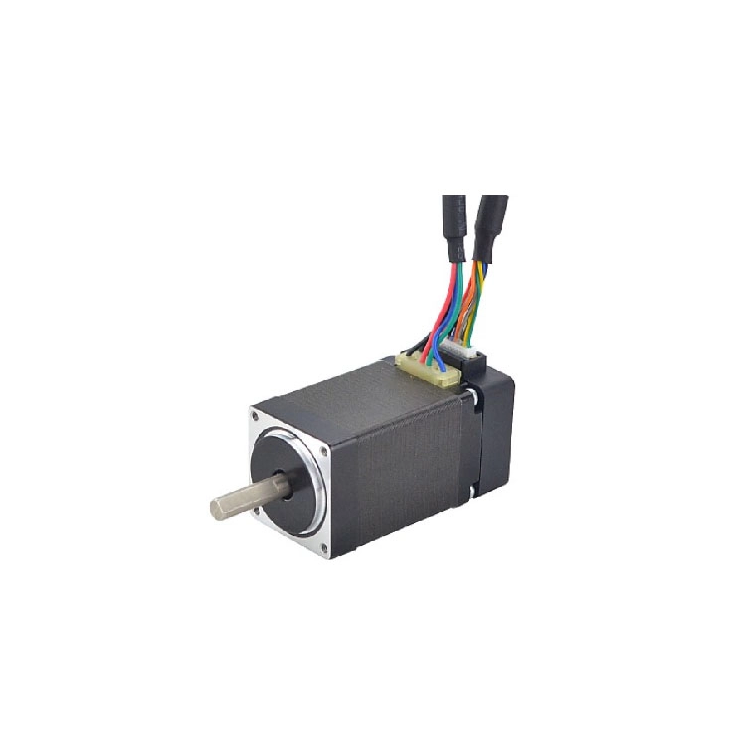
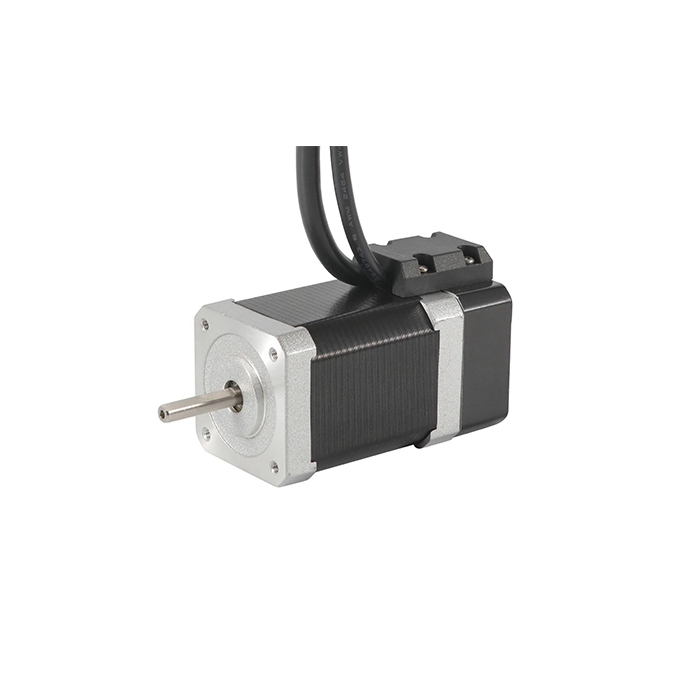
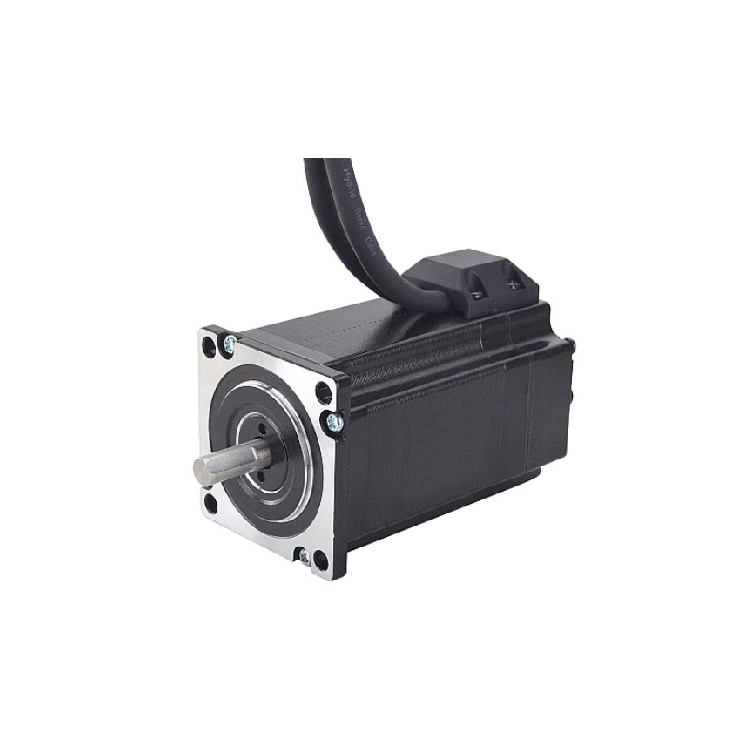
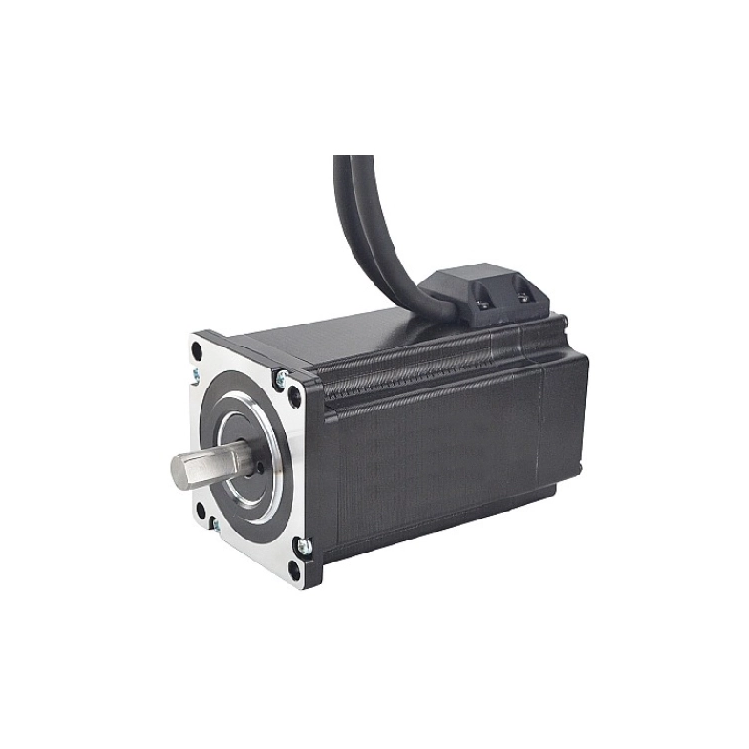
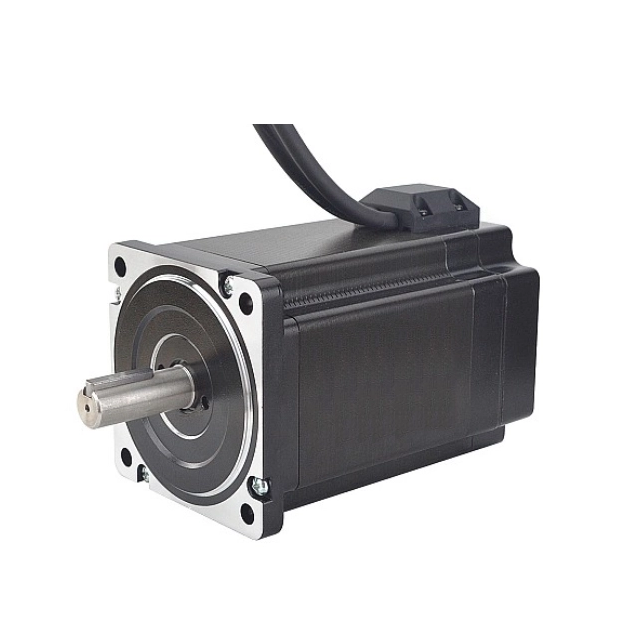
A closed-loop stepper motor represents a significant advancement in motion control systems, combining the simplicity of traditional stepper motors with the accuracy and feedback capabilities of servo systems. We define this technology as a hybrid solution designed to deliver high precision, improved efficiency, and real-time error correction without the complexity and cost associated with conventional servo motors.
In modern automation environments, industries demand reliable positioning, consistent torque, and energy efficiency. Closed-loop stepper motors address these requirements by integrating feedback mechanisms that continuously monitor and adjust motor performance.
At its core, a closed-loop stepper motor system consists of three key components:
Stepper motor
Encoder (feedback device)
Driver/controller
Unlike open-loop systems that operate based on predefined step commands, closed-loop systems utilize the encoder to track the actual rotor position in real time. The controller compares the commanded position with the actual position and automatically corrects any deviation.
The encoder continuously sends positional data back to the controller, enabling:
Automatic error correction
Position verification
Dynamic torque adjustment
This feedback loop ensures that the motor never loses steps, even under varying loads or sudden disturbances.
Closed-loop stepper motors are engineered to deliver high-precision motion control with enhanced efficiency and reliability. By integrating encoder feedback with traditional stepper motor architecture, they provide advanced capabilities that significantly improve performance across a wide range of industrial applications. Below are the most important features that define closed-loop stepper motor technology.
A defining feature of closed-loop stepper motors is the use of an encoder for continuous position monitoring.
Tracks the actual rotor position in real time
Compares commanded vs. actual position
Enables instant correction of any deviation
This feedback loop ensures accurate and reliable motion control, even under varying load conditions.
Unlike open-loop systems, closed-loop stepper motors eliminate the risk of missed steps.
Automatically detects and corrects positioning errors
Maintains synchronization between command and motion
Ensures consistent performance over long operating cycles
Closed-loop stepper motors are designed for applications requiring tight tolerances and consistent positioning.
Delivers accurate incremental movement
Provides excellent repeatability in repetitive tasks
Ideal for precision-driven industries such as CNC and robotics
These motors can adapt torque output based on real-time load requirements.
Supplies higher torque during acceleration or heavy loads
Reduces torque when demand is lower to save energy
Improves overall system efficiency and responsiveness
Closed-loop systems optimize current usage, resulting in lower heat production.
Prevents overheating during extended operation
Enhances motor lifespan and durability
Reduces the need for additional cooling systems
Advanced control algorithms minimize vibration and resonance.
Ensures quiet and stable motion
Improves machine accuracy and output quality
Suitable for environments where low noise is essential
Closed-loop stepper motors can operate efficiently across a broader speed range.
Maintains torque at higher speeds compared to open-loop motors
Supports both low-speed precision and high-speed performance
Enables faster production cycles without compromising accuracy
By adjusting current dynamically, these motors deliver optimized energy consumption.
Reduces power usage during low-load conditions
Improves overall system efficiency
Contributes to lower operating costs
Closed-loop stepper motors are designed for easy implementation in automation systems.
Compatible with standard pulse and direction control signals
Often available with integrated drivers and controllers
Requires minimal tuning compared to servo systems
Modern closed-loop systems include advanced safety and monitoring features.
Protection against overcurrent, overvoltage, and overheating
Real-time fault detection and alerts
Improves system safety and reliability
Closed-loop stepper motors combine precision, intelligence, and efficiency into a single motion control solution. With features such as real-time feedback, zero step loss, dynamic torque control, and energy optimization, they provide superior performance compared to traditional stepper motors. These capabilities make them an ideal choice for applications requiring accurate, stable, and reliable motion control.
| Feature | Open-Loop Stepper Motor | Closed-Loop Stepper Motor |
|---|---|---|
| Feedback | None | Encoder-based |
| Accuracy | Moderate | High |
| Step Loss | Possible | Eliminated |
| Efficiency | Lower | Higher |
| Heat Generation | High | Low |
| Speed Range | Limited | Extended |
Closed-loop stepper motors clearly outperform open-loop systems in precision, reliability, and efficiency, making them the preferred choice in advanced automation systems.
While both systems use feedback, closed-loop stepper motors offer distinct advantages:
Closed-loop stepper systems are generally more affordable than servo systems, especially for medium-performance applications.
Unlike servo motors, which require complex PID tuning, closed-loop stepper motors provide plug-and-play operation with minimal configuration.
Closed-loop stepper motors excel at low-speed torque and positioning, outperforming servo motors in applications requiring steady, slow movement.
Closed-loop stepper motors are widely adopted across industries where precision, reliability, and efficient motion control are essential. By combining feedback control with stepper motor simplicity, they enable high-performance automation in both standard and demanding environments. Below are the most critical application areas where closed-loop stepper motors deliver outstanding results.
Closed-loop stepper motors are extensively used in CNC machines, including milling, drilling, engraving, and cutting systems. These applications require accurate positioning and repeatability, which closed-loop systems provide through continuous feedback.
Ensures precise tool positioning
Eliminates step loss during heavy cutting loads
Improves surface finish and machining quality
Supports high-speed operations without losing accuracy
In 3D printers, motion accuracy directly affects the quality of printed parts. Closed-loop stepper motors ensure smooth, consistent layer deposition and precise movement along all axes.
Maintains exact layer alignment
Reduces print errors caused by skipped steps
Enhances print speed without sacrificing quality
Minimizes vibration for cleaner surface finishes
Modern packaging systems demand high-speed and synchronized motion control. Closed-loop stepper motors enable accurate control of conveyors, fillers, and labeling units.
Provides precise positioning for labeling and sealing
Supports high-throughput production lines
Ensures consistent product handling
Reduces downtime caused by positioning errors
In textile manufacturing, precision is critical for processes such as weaving, knitting, and dyeing. Closed-loop stepper motors deliver accurate tension control and synchronized motion.
Enables precise yarn feeding and fabric alignment
Maintains consistent tension control
Improves production efficiency and fabric quality
Reduces material waste due to misalignment
Closed-loop stepper motors are ideal for medical devices and laboratory automation, where accuracy and reliability are non-negotiable.
Used in syringe pumps, imaging systems, and diagnostic devices
Ensures precise fluid dispensing and positioning
Supports quiet and smooth operation
Enhances safety with real-time error correction
Robotic systems rely on repeatable and accurate motion control. Closed-loop stepper motors are widely used in robotic arms, service robots, and automated assembly lines.
Provides accurate joint movement and positioning
Enhances repeatability in pick-and-place operations
Reduces calibration requirements
Improves overall system reliability
In electronics production, even the smallest positioning error can lead to defects. Closed-loop stepper motors ensure ultra-precise motion control in sensitive environments.
Used in PCB assembly and inspection systems
Supports micro-positioning applications
Maintains high repeatability and accuracy
Reduces defects and improves yield rates
Closed-loop stepper motors play a vital role in inspection systems that require precise movement of cameras and sensors.
Enables accurate positioning for imaging
Ensures consistent scanning and measurement
Supports high-speed inspection processes
Improves detection accuracy in quality control
In food processing, hygiene and precision are critical. Closed-loop stepper motors are used in filling, cutting, and sorting machines.
Ensures accurate portion control
Supports high-speed automated production
Reduces product waste
Maintains consistent processing quality
Closed-loop stepper motors are essential in printers and imaging systems where precise paper handling and print head positioning are required.
Improves print alignment and image quality
Enables smooth and quiet operation
Reduces mechanical errors
Supports high-resolution output
Closed-loop stepper motors are indispensable in applications requiring precision, stability, and efficiency. Their ability to provide real-time feedback, eliminate step loss, and optimize performance makes them a superior choice for modern automation systems across industries.
Closed-loop stepper motors provide a powerful combination of precision control, energy efficiency, and operational reliability, making them a superior choice for modern automation systems. By integrating real-time feedback with traditional stepper motor design, they overcome many limitations of open-loop systems while maintaining cost-effectiveness. Below are the key advantages that make closed-loop stepper motors highly valuable across industries.
One of the most significant advantages is the complete elimination of step loss. Traditional stepper motors can miss steps under heavy loads or rapid acceleration, leading to positioning errors. Closed-loop systems continuously monitor motor position through an encoder and instantly correct any deviation.
Ensures accurate positioning at all times
Prevents cumulative errors in long operations
Enhances overall system reliability
Closed-loop stepper motors deliver exceptional positioning accuracy by verifying actual motor movement against commanded positions.
Achieves precise motion control in critical applications
Maintains repeatability over extended cycles
Ideal for applications requiring tight tolerances
These motors offer enhanced torque output, especially at higher speeds where open-loop stepper motors typically lose efficiency.
Maintains stable torque across a wide speed range
Supports dynamic load conditions
Reduces the risk of stalling during operation
Closed-loop stepper motors optimize current usage based on real-time load requirements, resulting in significant energy savings.
Consumes only the necessary power for operation
Reduces electricity costs
Minimizes unnecessary energy waste
Because current is dynamically controlled, closed-loop systems generate less heat compared to open-loop motors.
Extends motor lifespan
Improves system stability
Reduces the need for additional cooling solutions
Closed-loop control minimizes resonance and vibration, resulting in smoother and quieter performance.
Enhances machine precision and finish quality
Reduces mechanical wear
Ideal for noise-sensitive environments
Closed-loop stepper motors can operate efficiently at higher speeds with rapid acceleration and deceleration.
Improves production throughput
Supports high-speed automation processes
Maintains accuracy even during rapid motion
Compared to servo systems, closed-loop stepper motors offer simpler integration and setup.
Requires minimal tuning and configuration
Reduces system complexity
Enables faster deployment in industrial applications
Closed-loop stepper motors provide many benefits of servo systems at a lower overall cost.
Reduces initial investment compared to servo solutions
Lowers maintenance and operational costs
Offers an excellent balance between performance and affordability
With built-in feedback and error correction, these motors ensure consistent and dependable operation.
Minimizes unexpected downtime
Reduces maintenance requirements
Improves overall system longevity
Closed-loop stepper motors deliver precision, efficiency, and reliability in a single solution. Their ability to eliminate step loss, optimize energy consumption, and provide smooth, high-performance motion makes them an ideal choice for advanced automation systems. By combining the strengths of both stepper and servo technologies, they offer a cost-effective and high-performance alternative for a wide range of industrial applications.
Selecting the right closed-loop stepper motor requires a detailed evaluation of key technical specifications that directly impact performance, efficiency, and system compatibility. Understanding these parameters ensures optimal motor selection for demanding industrial and automation applications.
Torque is one of the most critical specifications when choosing a closed-loop stepper motor.
Holding Torque: The maximum torque the motor can produce when stationary
Rated Torque: The torque available during continuous operation
A properly selected motor must provide sufficient torque to handle load requirements, including peak loads and acceleration forces, without compromising stability.
Closed-loop stepper motors offer an extended speed range compared to open-loop systems, but performance varies across speeds.
Evaluate the torque-speed curve to understand performance at different RPMs
Ensure the motor maintains adequate torque at higher speeds
Consider application requirements for both low-speed precision and high-speed operation
The encoder is the core of the closed-loop system, providing real-time feedback.
Incremental Encoders: Cost-effective and widely used
Absolute Encoders: Provide exact position data even after power loss
Higher encoder resolution ensures:
More precise position feedback
Better error detection and correction
Improved motion smoothness
Step angle determines how much the motor rotates per step, commonly 1.8° or 0.9°.
Smaller step angles provide higher resolution and smoother motion
Microstepping further divides steps for ultra-precise positioning
Important for applications requiring fine control and minimal vibration
Electrical specifications must match the system’s power supply.
Ensure compatibility with available voltage levels (e.g., 24V, 48V)
Verify current requirements for optimal performance
Higher voltage can improve high-speed performance
Closed-loop stepper motors require compatible drivers and controllers.
Support for pulse/direction (PUL/DIR) control
Compatibility with industrial protocols such as:
Modbus
CANopen
EtherCAT
Seamless integration ensures efficient communication and precise control.
The effectiveness of a closed-loop system depends on how quickly and accurately it responds to feedback.
Fast response times ensure real-time error correction
Stable control loops prevent oscillation and overshoot
Critical for high-speed and high-precision applications
Physical compatibility is essential for system integration.
Standard frame sizes (e.g., NEMA 17, NEMA 23, NEMA 34)
Shaft diameter and length must match application requirements
Mounting configurations should align with existing equipment
Efficient heat management is vital for long-term reliability.
Evaluate operating temperature range
Check for built-in overheat protection features
Closed-loop systems typically generate less heat, but proper ventilation is still necessary
Industrial environments often expose motors to dust, moisture, and vibration.
Look for appropriate IP ratings (e.g., IP54, IP65)
Ensure resistance to harsh operating conditions
Consider sealed designs for cleanroom or food-grade applications
Modern closed-loop stepper motors often support additional features to enhance performance:
Integrated drivers for compact design
Brake systems for vertical load holding
Gearbox integration for higher torque
Multi-axis synchronization capabilities
Customization options allow the motor to be tailored for specific application needs.
Carefully evaluating technical specifications such as torque, speed, encoder resolution, electrical parameters, and environmental protection ensures the selection of a closed-loop stepper motor that delivers optimal performance and long-term reliability. A well-matched motor not only improves efficiency but also enhances the overall effectiveness of the motion control system.
Closed-loop stepper motors can be enhanced with additional components to improve performance:
Adding a gearbox allows for:
Higher torque output
Reduced speed with increased precision
Improved load handling
Different encoder types, such as incremental and absolute encoders, provide varying levels of precision and feedback capabilities.
Although more advanced than open-loop systems, modern designs offer integrated solutions that simplify installation.
While slightly higher upfront, closed-loop stepper motors deliver long-term savings through efficiency and reduced downtime.
Ensuring compatibility with existing control systems is crucial; selecting motors with flexible communication interfaces resolves this issue.
The evolution of closed-loop stepper motors is driven by the demand for smart automation and Industry 4.0 integration. Emerging trends include:
Integrated smart controllers with IoT connectivity
Higher-resolution encoders for ultra-precision applications
Energy-optimized designs for sustainable manufacturing
Compact all-in-one motor solutions
These advancements continue to expand the application scope of closed-loop stepper motors in modern industries.
Closed-loop stepper motors offer a powerful combination of precision, efficiency, and reliability, making them an essential component in modern motion control systems. By eliminating step loss, reducing energy consumption, and providing real-time feedback, these motors deliver superior performance across a wide range of applications.
For industries seeking a balance between cost and performance, closed-loop stepper motors represent the optimal solution for high-precision automation and control.