English
Views: 0 Author: Jkongmotor Publish Time: 2025-12-02 Origin: Site

As the global demand for clean energy accelerates, solar tracking systems have become essential for maximizing photovoltaic (PV) efficiency. To achieve precise, reliable, and continuous alignment with the sun’s trajectory, the industry frequently relies on high-performance stepper motors. These motors deliver accurate angular positioning, robust torque at low speeds, and long-term durability—all critical for ensuring consistent solar energy harvesting.
In modern solar tracking architectures, stepper motors play a pivotal role in single-axis and dual-axis trackers, ensuring panels maintain an optimal angle throughout the day. Their ability to move in fixed increments without requiring complex feedback devices makes them a preferred choice for cost-efficient yet highly accurate solar positioning.
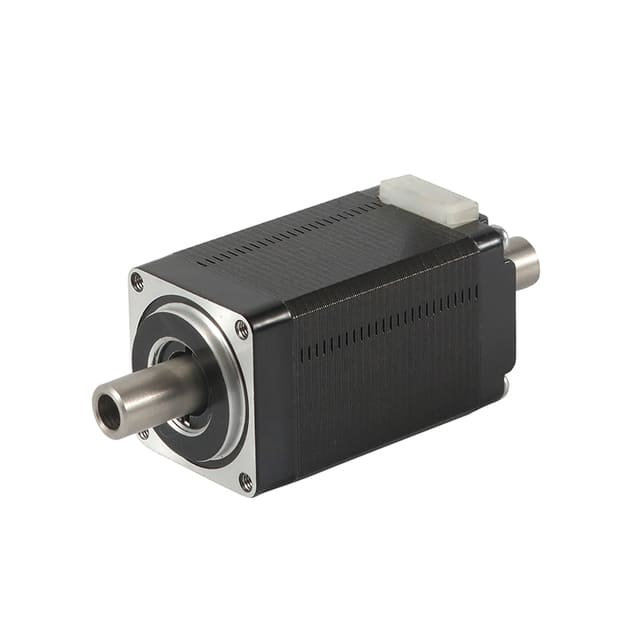
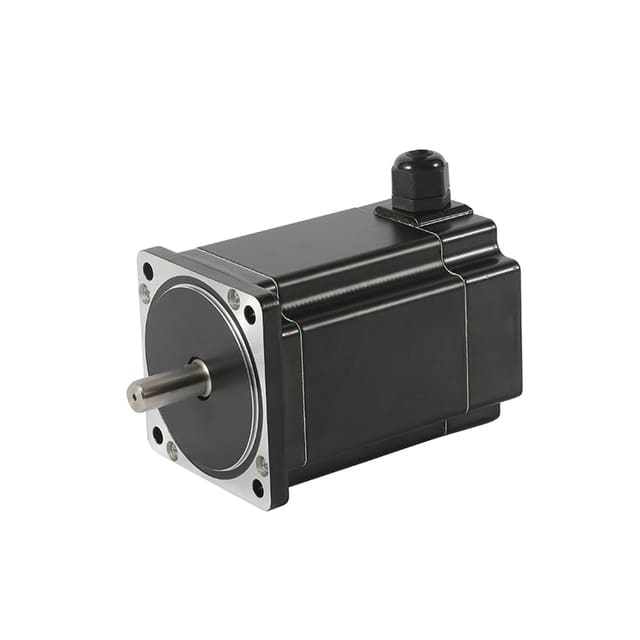
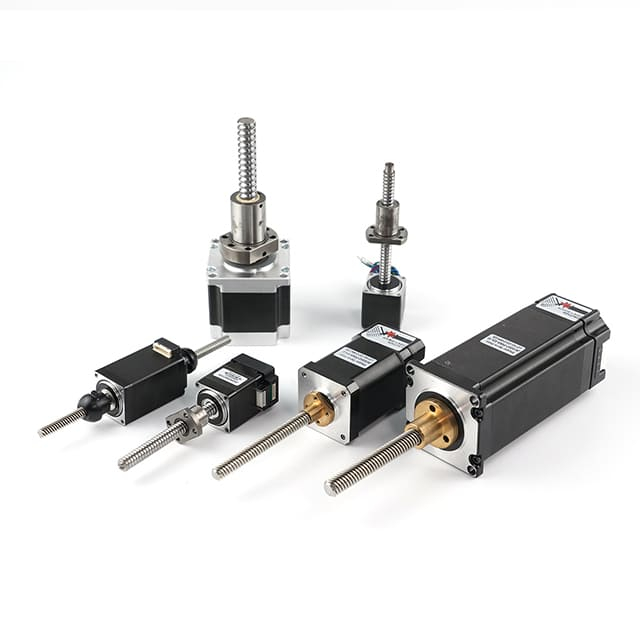
Solar tracking systems require motors that provide precise movement, stable torque, and reliable long-term operation under outdoor conditions. Stepper motors are widely used due to their repeatable positioning and cost-effective control. The main types used in solar tracking include Hybrid Stepper Motors, Permanent Magnet Stepper Motors, Variable Reluctance Stepper Motors, and Closed-Loop Stepper Motors.
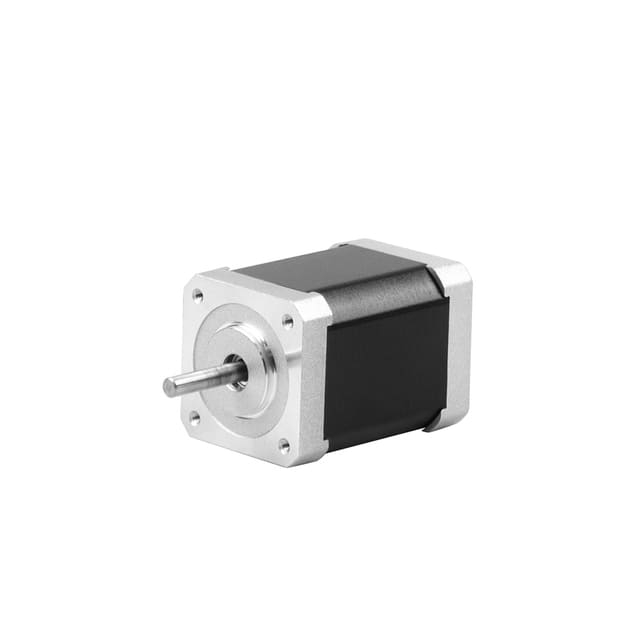
Hybrid stepper motors are the most commonly used in solar tracking systems because they combine the strengths of both variable reluctance and permanent magnet designs.
High torque output ideal for moving heavy solar panel arrays
Fine step resolution, typically 1.8° or 0.9° per step
Strong low-speed performance
Excellent positional accuracy without complex feedback systems
Hybrid steppers provide the perfect balance of power, precision, and durability, making them suitable for both single-axis and dual-axis trackers.
Permanent Magnet stepper motors use a magnetized rotor and are simpler and more economical.
Lower cost than hybrid models
Smooth rotational motion
Moderate torque output
Good energy efficiency
PM steppers are used primarily in small-scale or lightweight tracking systems, such as:
Portable solar trackers
DIY or off-grid solar tracking setups
Lightweight PV modules
They offer dependable performance where torque demands are not high.
Variable reluctance stepper motors operate using a soft iron rotor that aligns with magnetic fields in the stator.
Very simple construction
High stepping rates
No permanent magnets
Cost-effective for low-load applications
While not as common as hybrid or PM motors, VR steppers may be used in economy-focused trackers or low-torque mechanisms, especially in sunny regions with minimal wind forces.
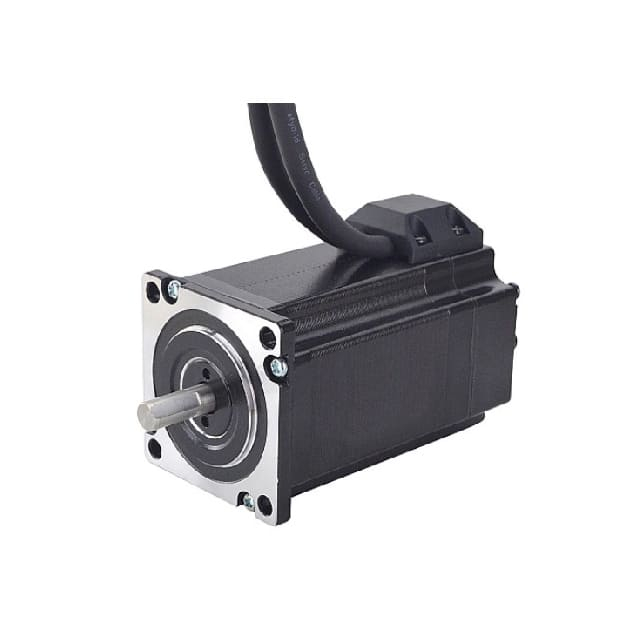
Closed-loop stepper motors incorporate encoders and smart drivers to enhance performance and reliability.
Automatic position correction
High torque efficiency with reduced heat
Zero lost steps
Quieter, smoother movement
Servo-like dynamics with stepper simplicity
Closed-loop stepper motors are ideal for large solar farms, high-value PV projects, or locations with:
Strong wind
High mechanical load
Demanding accuracy requirements
Their ability to prevent missed steps and compensate for external forces makes them ideal for long-term, mission-critical solar tracking.
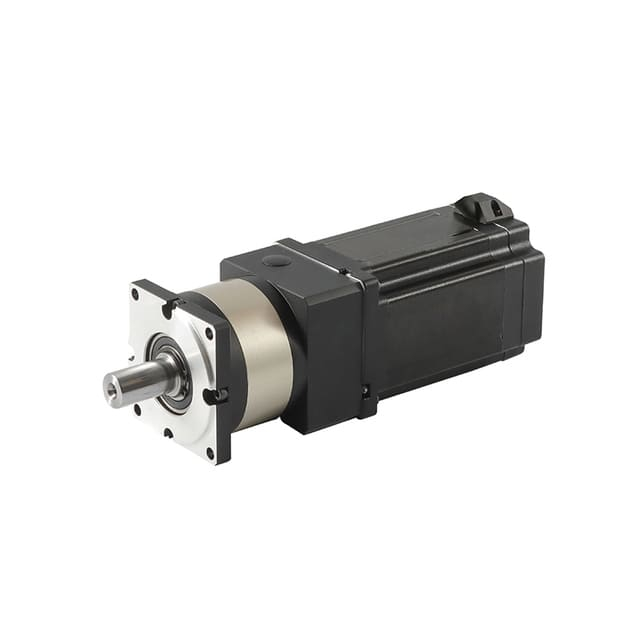
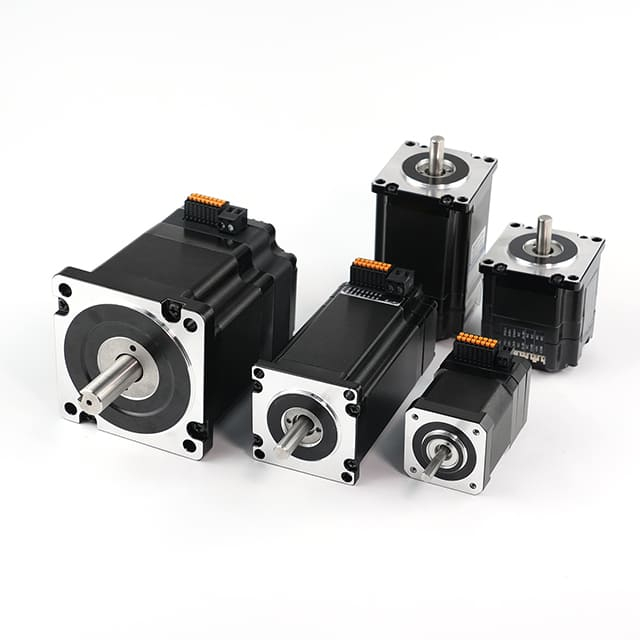
Integrated stepper motors combine the motor, driver, and control electronics into one compact unit.
Simplified wiring and installation
Reduced failure points
Compact, sealed housing
Built-in microstepping and current control
These motors are perfect for:
Solar farms needing fast deployment
Installations where maintenance access is limited
Systems that require clean cable layouts and high reliability
Integrated units provide a plug-and-play solution with fewer electrical errors and lower overall system costs.
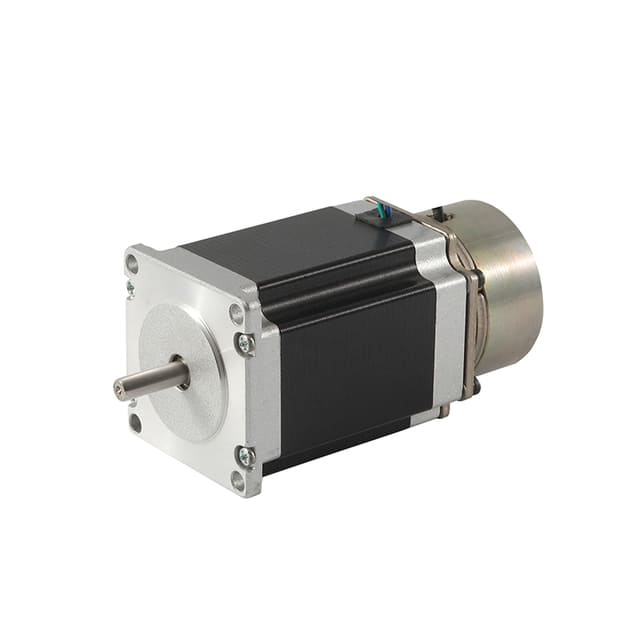
Many solar tracking systems rely on NEMA 23, NEMA 24, NEMA 34, or NEMA 42 stepper motors for their robust torque output.
Strong holding torque for resisting wind loads
Rugged mechanical structure
Long operational life
Heavy-duty NEMA sizes are ideal for:
Large PV panels
Dual-axis tracking systems
Commercial solar tracker mechanisms
They ensure panel stability and maintain precise alignment throughout the day.
| Stepper Motor Type | Best For | Advantages |
|---|---|---|
| Hybrid Stepper Motor | Most solar tracker designs | High torque, precision, durability |
| PM Stepper Motor | Lightweight or portable trackers | Low cost, energy-efficient |
| VR Stepper Motor | Basic, low-torque systems | Simple, economic |
| Closed-Loop Stepper Motor | High-accuracy or high-wind applications | Feedback control, no missed steps |
| Integrated Stepper Motor | Large farms & easy installation | All-in-one electronics, reliability |
| High-Torque NEMA Motors | Heavy PV structures | Robust torque & stability |
Solar tracking systems demand reliable, precise, and energy-efficient actuation to keep photovoltaic panels aligned with the sun throughout the day. Stepper motors are widely preferred in both single-axis and dual-axis solar trackers due to their exceptional accuracy, robustness, and cost-effectiveness. Their unique electromechanical characteristics make them an excellent choice for long-term outdoor tracking operations.
Stepper motors operate in fixed angular increments, enabling extremely accurate control of the panel’s orientation. With step resolutions as fine as 0.9° or 1.8°, they ensure that the solar panel maintains the ideal tilt angle throughout the solar cycle.
Even a small misalignment can significantly reduce energy output.
Precision tracking with stepper motors increases energy capture by 25–40% compared to fixed installations.
Their exact positioning ability ensures reliable sun-facing performance all day, every day.
Solar trackers operate at very slow rotational speeds, often just a few degrees per minute. Stepper motors deliver high torque even at low RPM, making them capable of moving:
Heavy solar modules
Large tracking structures
Off-grid PV arrays
Unlike other motor types, stepper motors do not lose torque during slow motion, ensuring stable, smooth movement under varying load conditions.
One of the biggest challenges in solar tracking is preventing panel drift due to wind pressure. Stepper motors offer strong holding torque, allowing panels to remain firmly in position without requiring constant power or continuous movement.
Prevents unwanted rotation under gusty conditions
Keeps panels safe in storm events
Reduces actuator wear and mechanical fatigue
High holding torque directly increases system stability and lifespan.
Unlike servo motors that require complex feedback loops, stepper motors can be controlled using:
Basic microcontrollers (Arduino, STM32, etc.)
PLCs
Low-cost solar tracker controllers
Lower system cost
Minimal tuning required
Faster integration into tracker designs
Reduced maintenance burden
This simplicity makes stepper motors ideal for large-scale installations where cost and reliability must be optimized.
Stepper motors have a brushless design, meaning:
No brushes or commutators to wear out
Minimal maintenance
Long operational lifespan (10+ years in solar trackers)
Additionally, many stepper motors used in solar systems come with:
IP-rated protective housings
Rust-resistant materials
UV-resistant insulation
High shock and vibration tolerance
This makes them well-suited for harsh outdoor environments.
Modern stepper drivers support microstepping, which divides each full step into many smaller steps. This enables:
Ultra-smooth movement
Extremely fine resolution
Low mechanical stress
Quiet operation
Smooth tracking reduces wear on linkages, bearings, and tracker arms, extending the mechanical life of the system.
Stepper motors work seamlessly with all common tracking methods, including:
Astronomical algorithms (calculated sun position)
Light sensor-based tracking (LDR systems)
Hybrid sensor + algorithm tracking
AI-assisted adaptive tracking
Their predictable, precise movement makes them ideal actuators for both advanced and simple tracker logic.
In more demanding applications, stepper motors can be upgraded to closed-loop stepper systems, featuring built-in encoders.
Automatic correction of missed steps
Higher energy efficiency
No overheating
Smoother torque delivery
Capability to handle sudden wind loads
This provides servo-like performance while retaining the simplicity and affordability of stepper technology.
Stepper motors are ideal for solar trackers because they offer the perfect blend of precision, strength, durability, and cost-efficiency. Their ability to deliver accurate positioning, high holding torque, and smooth low-speed performance makes them the preferred choice for modern solar tracking applications—from residential setups to large utility-scale solar farms.
Solar tracking systems operate under demanding outdoor conditions, requiring stepper motors that deliver long-term precision, reliability, and mechanical strength. To ensure optimal tracking performance, durability, and energy efficiency, stepper motors must meet several critical performance requirements. These requirements directly affect the accuracy of solar alignment and the overall energy output of photovoltaic installations.
Stepper motors must provide strong holding torque to keep solar panels stable, especially during high winds or sudden gusts. Holding torque is essential because the motor must maintain panel orientation even when not actively rotating.
Prevents back-driving due to wind forces
Maintains precise alignment throughout the day
Reduces tracking errors during turbulent weather
Protects the tracker structure from unnecessary motion
High holding torque ensures both safety and energy production stability.
Solar trackers move very slowly—often just a few degrees per minute. Stepper motors must maintain consistent torque at low speeds to drive the load smoothly.
Ensures stable rotational movement
Prevents stalling under panel weight
Reduces mechanical wear on linkages and joints
Low-speed torque is one of the primary reasons stepper motors outperform DC motors in tracking applications.
Accurate sun tracking requires stepper motors with fine step resolution (typically 0.9° or 1.8° per step) and the ability to perform microstepping.
Maximizes solar irradiation capture
Enables superior alignment accuracy
Supports dual-axis systems requiring multi-angle control
Improves energy generation efficiency by up to 40%
Precision is essential for commercial-scale installations where performance gains translate directly into revenue.
Solar trackers operate outdoors for years, exposed to harsh environmental conditions. Stepper motors must be engineered to withstand:
High UV exposure
Moisture, rain, and humidity
Dust and sand
Corrosion
Temperature fluctuations (-20°C to +70°C or more)
IP-rated enclosures (IP54, IP65 or higher)
Stainless steel or corrosion-resistant shafts
Sealed bearings
UV-protected wiring and insulation
Environmental durability directly impacts reliability and life expectancy.
Because solar tracking systems operate continuously throughout the day, energy consumption of the stepper motor and driver is an important factor.
Efficient microstep drivers
Low idle current draw
Smart current reduction during holding torque
Optimized driver electronics for minimal heat generation
Energy-efficient stepper systems help maximize net energy gain of the PV installation.
Solar trackers require smooth movement to prevent mechanical stress on the panel structure. Stepper motors with microstepping capabilities offer:
Quiet operation
Reduced vibration and resonance
Longer mechanical component life
Stable motion throughout the tracking cycle
Smooth operation is especially crucial in dual-axis systems where continuous fine adjustments are required.
Stepper motors in solar trackers must handle:
Panel weight
Wind-induced load
Torque spikes during sudden weather changes
Long-period mechanical stress
High-strength rotor and stator design
Durable shaft and bearing assembly
Reinforced housing for outdoor applications
Mechanical integrity ensures consistent performance over many years.
Motors must integrate seamlessly with tracking controllers that use:
Astronomical calculations
Light sensor feedback
AI-based optimization
Hybrid tracking logic
Support for microstepping
High driver resolution
Easy interfacing with PLCs, microcontrollers, or solar trackers
Compatibility with both open-loop and closed-loop control
Good compatibility ensures smoother integration and higher system accuracy.
Closed-loop stepper motors include encoders that provide feedback, enabling:
Automatic correction of missed steps
Higher torque efficiency
Reduced heat generation
Real-time positioning accuracy
Stall detection and recovery
This is especially important for:
Large solar farms
High-wind regions
Systems with heavy panels
Closed-loop operation enhances reliability and precision.
To ensure maximum efficiency, reliability, and longevity, stepper motors for solar trackers must deliver high torque, precise positioning, environmental durability, energy efficiency, and smooth motion. When these performance requirements are met, solar trackers operate safely and accurately, significantly boosting the energy output of photovoltaic systems.
Solar tracking systems are designed to keep photovoltaic panels oriented toward the sun throughout the day, maximizing the exposure to sunlight and increasing energy output. Stepper motors play a crucial role in this process by delivering the precision, stability, and control required for efficient and predictable tracking performance. Their electromechanical characteristics make them one of the most effective actuation solutions in modern solar tracker designs.
Stepper motors operate in precise angular increments, which allows solar panels to follow the sun’s path with fine accuracy. This precise control ensures that the panels remain aligned at the optimal angle throughout the day.
Reduces angular deviation between panel and sun
Increases the panel’s solar energy capture capability
Contributes to 25–40% more annual energy output compared to fixed installations
Precise positioning is the foundation of enhanced tracking efficiency.
Solar trackers require slow, steady, and smooth motion to maintain optimal orientation. Stepper motors offer microstepping capabilities, dividing each step into smaller increments. This ensures:
Smooth rotation without jerks
Minimal vibration
Reduced mechanical shock on tracker components
Smooth operation minimizes mechanical wear, reduces energy wasted in friction or oscillation, and supports long-term system reliability.
Solar tracking systems often involve large panel arrays with significant weight and inertia. Stepper motors excel at delivering high torque even at very low speeds, allowing the system to move heavy loads gradually and accurately.
Prevents stalling during slow adjustments
Ensures consistent motion regardless of load
Maintains tracking precision even in heavy-duty solar farms
High torque performance ensures reliable sun tracking under all conditions.
When the tracker reaches its required position, the motor must hold it firmly in place—especially during wind gusts or sudden weather changes. Stepper motors provide strong holding torque, preventing unwanted movement.
Maintains optimal orientation without constant power consumption
Reduces tracking errors caused by wind-induced drift
Improves consistency of daily energy production
Stability equals more efficient energy capture.
Solar trackers often need continuous micro-adjustments based on:
Time of day
Solar angle changes
Environmental conditions (clouds, wind, etc.)
Light-sensor feedback
Stepper motors respond quickly and precisely to these signals.
Eliminates over-correction or under-correction
Improves responsiveness of tracking system
Maintains peak panel performance through the entire day
Real-time fine-tuning multiplies the energy gains.
Stepper motors seamlessly integrate with modern control systems using:
Astronomical algorithms
Light-dependent resistor (LDR) systems
Hybrid sensor-based + algorithm approaches
AI-enhanced predictive tracking
These algorithms require motors capable of:
Reliable micro-positioning
Predictable step response
Accurate repeatability
Stepper motors match perfectly with algorithmic precision, resulting in smarter and more efficient tracking.
Advanced stepper drivers include:
Automatic current reduction
Microstepping power optimization
Sleep modes and idle current control
Highly efficient PWM drivers
Energy used by the motor is minimized, ensuring that most of the power generated by the solar panels contributes to the net system output.
Closed-loop stepper motors integrate encoders to provide feedback on the motor’s actual position. This ensures:
No missed steps
Automatic error correction
High torque efficiency
Smooth and accurate tracking
By ensuring perfect movement and correcting any deviations immediately, the system maintains exact alignment with the sun at all times.
Stepper motors are brushless and feature long service life with minimal mechanical wear. Their durability contributes directly to tracking efficiency by:
Preventing downtime
Reducing tracking errors over years
Ensuring consistent energy output
Reliable motors equal consistent solar performance.
Stepper motors significantly enhance solar tracking efficiency by offering precise positioning, smooth motion, strong torque performance, high stability, and excellent compatibility with modern tracking algorithms. Their reliability, accuracy, and energy-efficient operation make them the ideal choice for both single-axis and dual-axis solar tracking systems.
Stepper motors are a core component in modern solar tracking systems, enabling photovoltaic panels to maintain optimal alignment with the sun. Their precise positioning, high torque at low speeds, and robust reliability make them suitable for a wide range of solar tracking applications—from small residential setups to large utility-scale solar farms. Below, we explore the primary applications of stepper motors in solar tracking.
Single-axis solar trackers rotate panels along a horizontal or vertical axis, typically east-to-west, following the sun’s daily path.
Provide precise incremental movement throughout the day
Maintain alignment with minimal drift
Offer sufficient torque to handle the weight of the panels and mechanical linkages
Up to 25% more energy yield than fixed systems
Smooth low-speed operation reduces mechanical stress
Reliable operation in residential and small commercial installations
Dual-axis trackers adjust panels along both azimuth (horizontal) and elevation (vertical) axes. This allows panels to follow the sun’s movement more accurately throughout the day and year.
Each axis is driven by a dedicated stepper motor
Fine step resolution ensures maximum solar exposure
Microstepping capability allows smooth movement even with large panel arrays
Maximizes energy capture year-round, especially at higher latitudes
Improves the efficiency of both small and large-scale PV systems
Reduces shading and misalignment losses
CSP systems focus sunlight using mirrors or lenses onto a receiver. Accurate alignment is crucial for maximum thermal energy capture.
Precisely control the orientation of mirrors or lenses
Enable small, incremental adjustments for high-accuracy focus
Support automated tracking for thermal energy collection
Maximizes thermal efficiency of CSP plants
Ensures consistent energy output throughout the day
Reduces maintenance by providing precise, stable positioning
Small off-grid systems, agricultural solar pumps, and portable PV setups often require lightweight, compact trackers.
Drive single-axis or dual-axis trackers for small panels
Provide sufficient torque without heavy or complex mechanisms
Allow integration with low-cost controllers or microcontrollers
Cost-effective and energy-efficient solution for off-grid installations
Enhances output from small-scale solar projects
Simplifies maintenance and deployment
Advanced solar trackers combine sensor-based and algorithm-based control to adapt to environmental conditions.
Respond to real-time signals from light sensors (LDRs) or cameras
Adjust panel angles dynamically based on cloud movement, shading, or partial obstruction
Integrate with AI or predictive control systems for optimized tracking
Increases energy yield in variable conditions
Provides smooth, precise motion with minimal overshoot
Reduces power loss due to misalignment
Some solar trackers use stepper motors with built-in drivers or controllers, simplifying installation and reducing failure points.
Combine motor, driver, and control electronics in a single compact unit
Provide microstepping, torque control, and protection features
Enable plug-and-play operation for large solar farms
Reduces wiring and installation complexity
Increases system reliability
Supports large-scale deployment with minimal maintenance
Commercial solar farms require reliable, high-torque motors to handle heavy PV panels in harsh outdoor environments.
Drive multiple-axis trackers with high load capacities
Maintain precise positioning even under wind or load variations
Operate continuously for years with minimal maintenance
Maximizes ROI through higher energy production
Reduces operational downtime
Ensures consistent long-term tracking accuracy
Stepper motors are versatile and essential in a wide range of solar tracking applications. From single-axis residential trackers to dual-axis commercial farms and concentrated solar power systems, their precision, torque, durability, and energy efficiency make them ideal for keeping solar panels perfectly aligned with the sun. By enabling smooth, accurate, and reliable motion, stepper motors directly contribute to higher energy yields and system longevity.
Selecting the right stepper motor is critical to ensure optimal performance, energy efficiency, and long-term reliability in solar panel tracking systems. A poorly chosen motor can lead to tracking errors, energy losses, increased maintenance, and reduced system lifespan. Here, we provide a detailed guide on how to choose the best stepper motor for solar tracking applications.
The first step in selecting a stepper motor is to determine the mechanical load it must handle. This includes:
Panel weight: Large panels require motors with higher torque capacity.
Wind load: Consider maximum wind forces the motor will resist while holding the panels in position.
Gear ratios and linkages: Mechanical systems may increase or reduce the effective torque required.
Choose a motor with a torque rating 20–30% higher than the calculated requirement to account for unexpected loads.
For dual-axis trackers, calculate torque separately for azimuth and elevation movements.
Stepper motors operate in discrete steps, typically 1.8° or 0.9° per full step. Microstepping drivers can divide these steps further for finer resolution.
High-resolution motors ensure precise panel alignment.
Reduces energy losses due to misalignment.
Supports smooth motion for long-life operation.
For commercial solar farms or large panels, consider microstepping-capable stepper motors to maintain smooth, precise tracking.
Solar tracking systems are exposed to harsh outdoor conditions. Stepper motors must be chosen for durability and environmental resilience:
IP Rating: IP54 or higher to resist dust and water ingress.
Temperature Range: Motors should operate reliably from -20°C to +70°C (or wider if local climate demands).
Corrosion Resistance: Stainless steel shafts, sealed bearings, and anti-rust housing are essential.
UV and Weather Protection: Ensures long-term insulation and housing integrity.
Outdoor-rated stepper motors reduce maintenance and system downtime over the life of the tracker.
The stepper motor must be compatible with the tracking system’s control electronics:
Open-loop or closed-loop configuration
Microcontroller or PLC interface
Power supply voltage and current capacity
Pulse rate and driver type
Integrated stepper motors with built-in drivers simplify wiring and improve reliability, particularly in large-scale solar farms.
Energy consumption of stepper motors affects the net gain of the solar system. Efficient motors and drivers:
Reduce idle current draw during holding
Minimize heat generation
Optimize energy use for motion
Look for stepper motors with current reduction or sleep modes during idle periods.
Closed-loop systems can further improve efficiency by reducing unnecessary torque.
Stepper motors must withstand long-term mechanical stress from panel weight, wind, and continuous movement.
High-strength rotor and stator materials
Durable shaft and bearing assembly
Reinforced housing for environmental protection
Motors with robust construction improve reliability and extend system lifespan.
Open-Loop Stepper Motors: Simple, cost-effective, ideal for small trackers and low-wind areas.
Closed-Loop Stepper Motors: Include encoders for real-time position feedback, preventing lost steps and improving accuracy.
Use closed-loop motors for large commercial trackers, dual-axis systems, or high-wind regions.
Consider NEMA sizes commonly used in solar trackers (e.g., NEMA 23, 34, or 42):
Larger NEMA motors provide higher torque for heavy panels.
Smaller motors are suitable for lightweight or compact trackers.
Ensure the motor fits within the mechanical design of the tracker without causing alignment issues.
Stepper motors should require minimal maintenance and operate consistently over many years. Features to look for:
Brushless design (long life)
Sealed housing to prevent dust and moisture ingress
Low heat generation under continuous operation
Motors designed for harsh outdoor conditions reduce operational costs and improve overall solar energy yield.
While cost is important, choosing the cheapest motor may compromise performance and reliability. Consider:
Energy output gains versus motor cost
Expected lifespan
Maintenance requirements
Installation complexity
Investing in a high-quality stepper motor pays off through higher energy efficiency, reduced downtime, and lower total cost of ownership.
Choosing the best stepper motor for solar panel tracking requires careful consideration of torque, precision, environmental durability, energy efficiency, control compatibility, and long-term reliability. By evaluating these factors, system designers can ensure maximum energy capture, smooth tracking performance, and extended operational life for solar tracking systems of all sizes—from residential installations to large-scale solar farms.
Stepper motors have become indispensable in modern solar tracking systems thanks to their precision, durability, and cost-effective performance. From small off-grid trackers to large commercial solar farms, stepper motors provide the ideal balance of torque, efficiency, and reliability needed to maximize photovoltaic output. As the renewable energy sector continues to grow, advanced stepper motor technology will remain a driving force behind more efficient and intelligent solar tracking architectures.