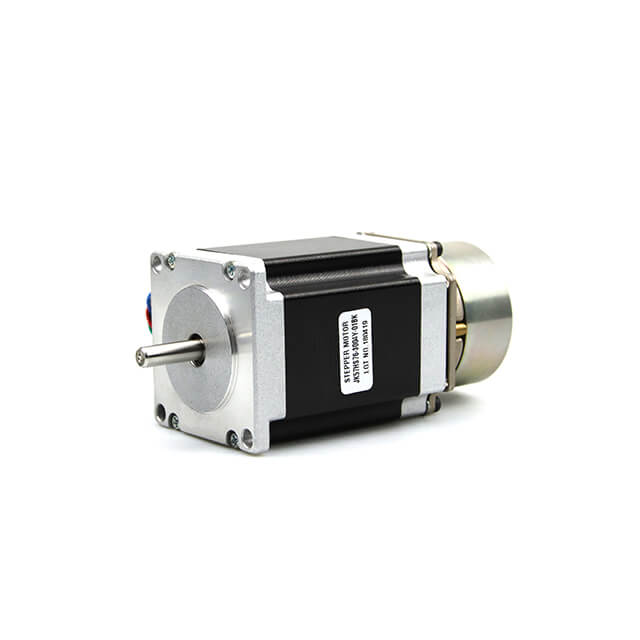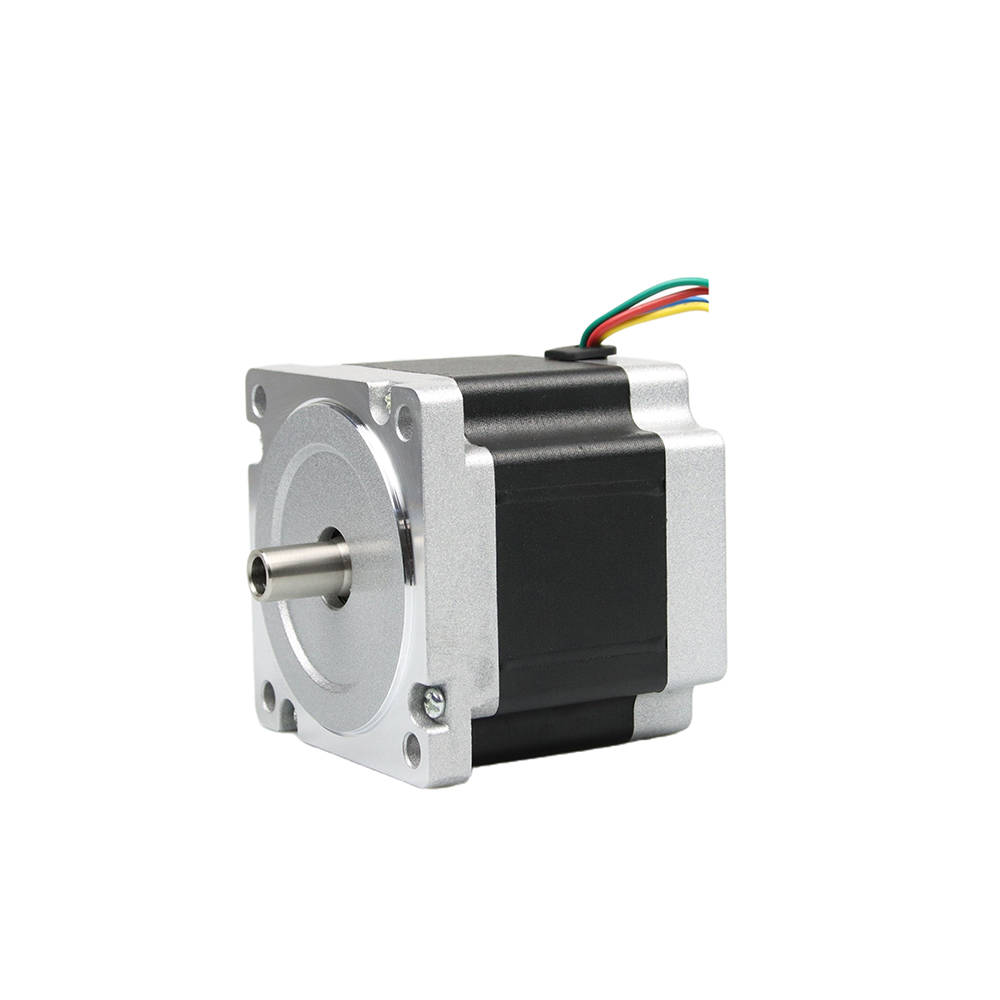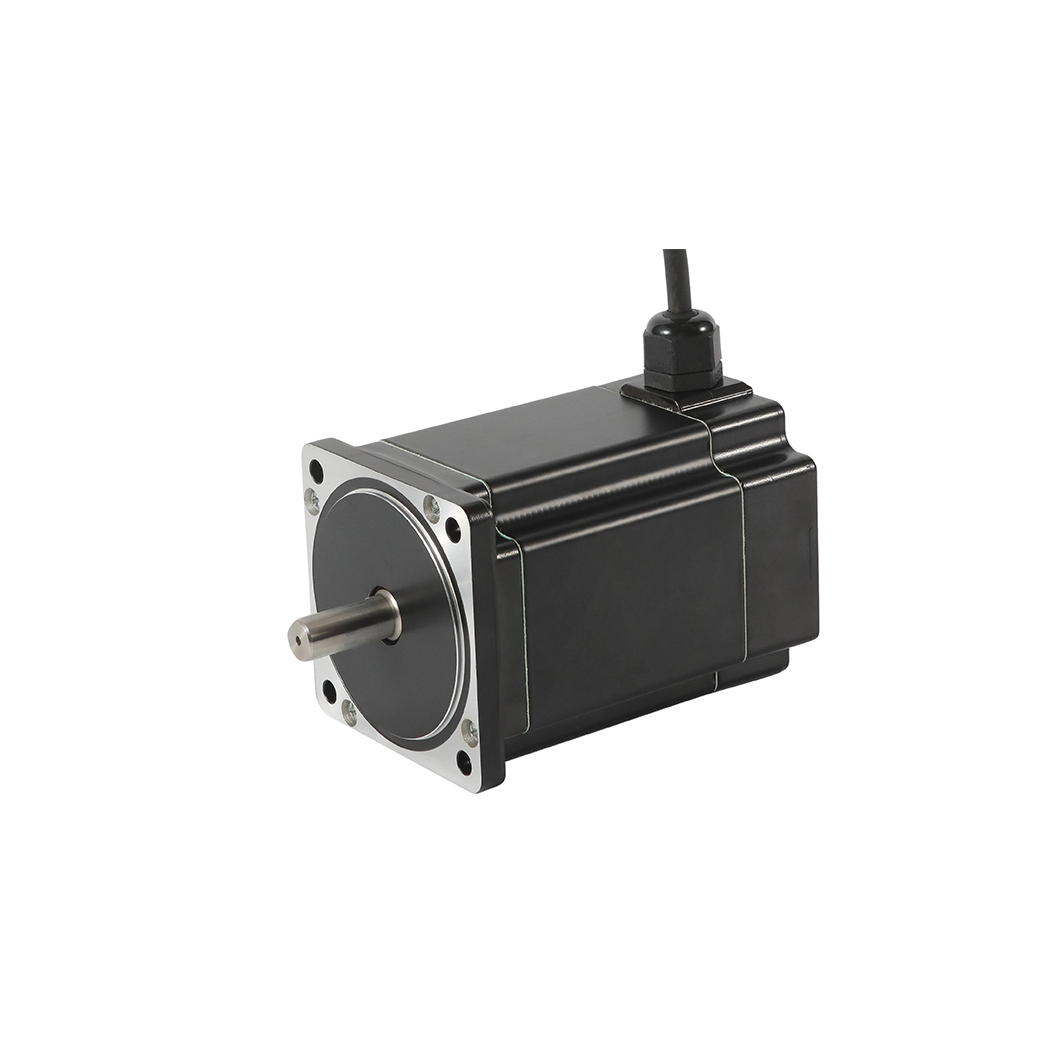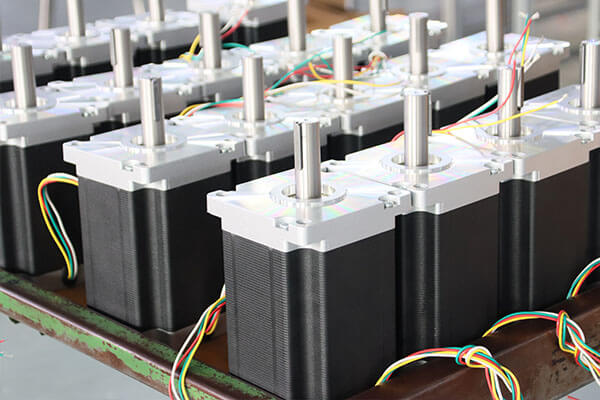
In the world of motion control systems, the NEMA 23 stepper motor with encoder stands as a critical component for applications that demand accuracy, repeatability, and closed-loop control. These motors combine the reliability of traditional stepper technology with the intelligence of encoder feedback, creating a system that delivers impeccable positioning and speed control even under varying load conditions.
What Is a NEMA 23 Stepper Motor with Encoder?
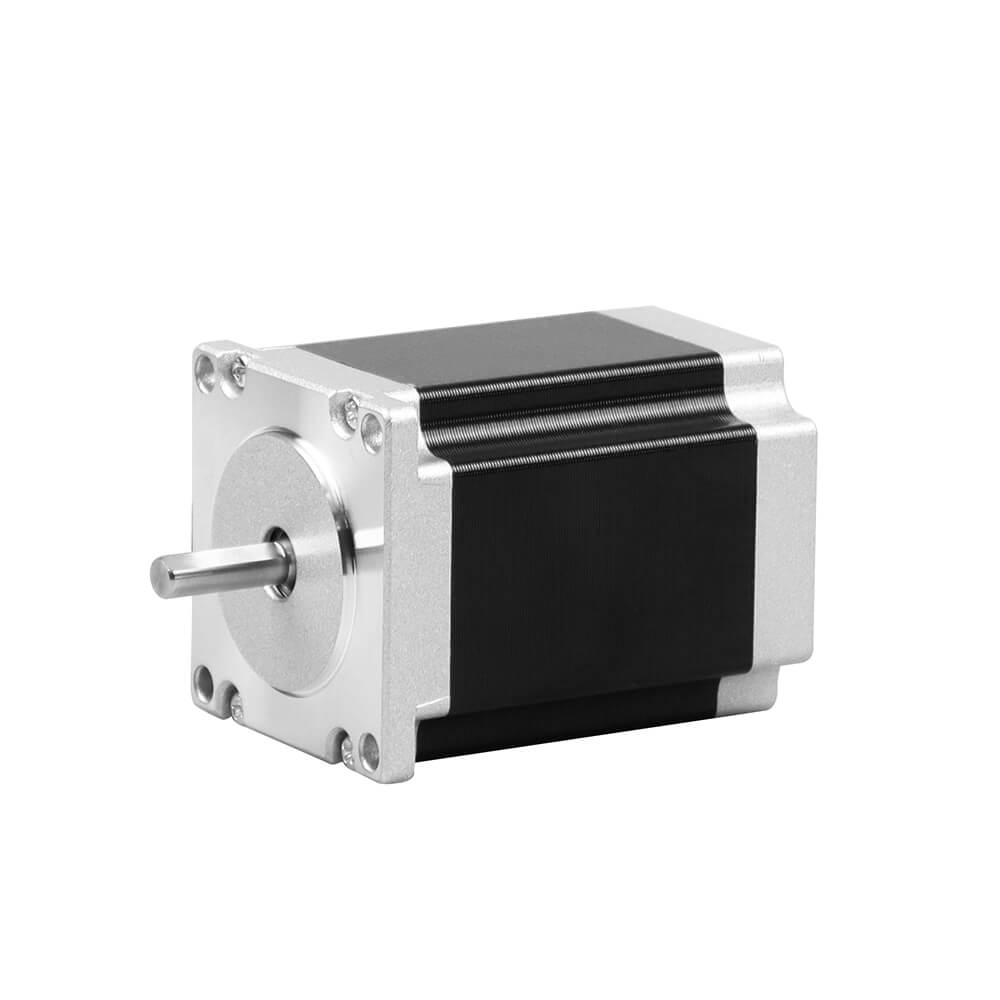
A NEMA 23 stepper motor refers to a motor with a 2.3-inch (57mm) square faceplate, part of the National Electrical Manufacturers Association (NEMA) standard sizing system. The addition of an encoder transforms this motor into a closed-loop system, capable of monitoring and correcting position errors in real time.
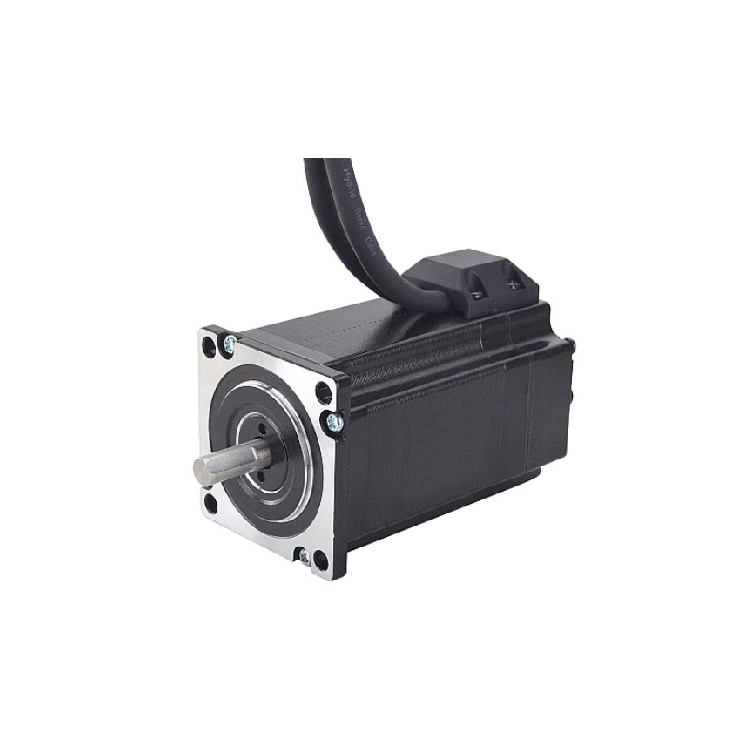
The encoder, mounted on the rear shaft of the motor, provides feedback signals to the driver or controller. This allows the system to detect missed steps, adjust performance instantly, and maintain precise synchronization between commanded and actual positions.
In essence, a NEMA 23 stepper motor with encoder bridges the gap between open-loop stepper motors and servo systems, offering the best of both worlds — cost-effective control and reliable performance.
The NEMA 23 stepper motor with encoder is engineered for high precision, reliability, and dynamic performance. It combines the accuracy of stepper motor technology with the real-time feedback of an encoder, delivering exceptional control and efficiency in industrial automation and motion systems. Below are the key features that make it a preferred choice for engineers and machine designers worldwide.
1. Closed-Loop Feedback System
Unlike traditional open-loop stepper motors, the NEMA 23 with encoder operates in a closed-loop configuration. The encoder continuously monitors the motor shaft position and sends feedback to the controller. This ensures precise positioning, prevents missed steps, and enables automatic error correction, maintaining synchronization between commanded and actual movement.
2. High Torque and Stable Performance
The NEMA 23 frame size provides a strong torque output, typically ranging from 1.2 N·m to over 3 N·m, depending on the model. The encoder feedback allows the system to maintain constant torque even under load variations, resulting in smooth and consistent operation across a wide speed range.
3. Exceptional Positioning Accuracy
With encoder resolutions ranging from 1000 to 5000 pulses per revolution (PPR), these motors achieve extremely accurate positioning. This makes them ideal for applications requiring fine motion control, such as CNC machinery, 3D printers, and robotics.
4. Smooth and Quiet Operation
Thanks to advanced microstepping control and encoder feedback, the motor delivers fluid motion with minimal vibration and noise. This feature is particularly valuable in laboratory equipment, medical devices, and automated inspection systems, where smooth movement and low acoustic output are critical.
5. Real-Time Error Detection and Correction
The encoder provides instant feedback if the motor loses steps, stalls, or experiences overload. The controller can quickly correct deviations, ensuring reliable and uninterrupted performance. This also protects the system from damage due to mechanical jams or excessive loads.
6. Energy Efficiency and Reduced Heat Generation
In closed-loop operation, the motor draws only the current required for its load instead of constantly operating at full current like an open-loop stepper. This results in lower power consumption, reduced heat buildup, and longer motor life.
7. High-Speed Response
The encoder feedback enables rapid acceleration and deceleration while maintaining precise position control. This makes the NEMA 23 stepper motor with encoder suitable for dynamic applications such as pick-and-place systems, conveyors, and automated cutting tools.
8. Overload and Stall Protection
One of the most valuable features of an encoder-equipped stepper motor is its built-in safety mechanism. When an overload or stall occurs, the feedback loop detects it immediately, allowing the system to reduce power or stop safely, preventing hardware damage and ensuring operational reliability.
9. Compact and Versatile Design
Despite its power and advanced feedback features, the NEMA 23 stepper motor maintains a compact 57mm frame size, making it easy to integrate into various machines and systems. It supports both incremental and absolute encoders, offering flexibility for diverse industrial and commercial uses.
10. Compatibility with Intelligent Drivers
Modern NEMA 23 stepper motors with encoders are designed to work seamlessly with smart motor drivers that support closed-loop control. This allows for optimized motion profiles, automatic tuning, and improved communication through protocols like RS485, CANopen, or Modbus.
11. Enhanced Reliability and Maintenance Monitoring
The encoder’s continuous feedback enables real-time performance tracking and helps detect early signs of wear or mechanical misalignment. This supports predictive maintenance, reducing unplanned downtime and improving overall system reliability.
12. Wide Range of Customization Options
Manufacturers offer customization options such as different torque ratings, encoder resolutions, shaft diameters, and connector types. This adaptability makes the NEMA 23 stepper motor with encoder suitable for robotics, automation, packaging, and medical industries.
13. Long Service Life
With reduced mechanical stress, efficient power use, and continuous feedback optimization, these motors offer an extended operational lifespan. The encoder ensures the system runs efficiently, minimizing wear and maximizing productivity.
Conclusion
The NEMA 23 stepper motor with encoder is an exceptional choice for applications demanding precision, efficiency, and control. Its advanced feedback system, high torque performance, and intelligent energy management make it a versatile and dependable solution for a wide range of automation tasks. Whether you’re building a CNC router, robotic arm, or medical device, this motor provides the accuracy and reliability needed for consistent success.
Technical Specifications
While configurations may vary depending on the manufacturer, typical NEMA 23 stepper motor with encoder specifications include:
| Parameter | Specification |
| Frame Size | 57 x 57 mm |
| Step Angle | 1.8° (200 steps/rev) |
| Holding Torque | 1.2 to 3.0 N·m |
| Rated Current | 2.0 to 4.5 A per phase |
| Shaft Diameter | 6.35 mm or 8 mm |
| Encoder Resolution | 1000 – 5000 PPR |
| Drive Voltage | 24V to 48V DC |
| Feedback Type | Incremental or Absolute Encoder |
| Rotor Inertia | 300 – 800 g·cm² |
| Operating Temperature | -10°C to +50°C |
These specifications highlight the powerful yet precise nature of NEMA 23 motors with encoders, making them adaptable for a wide range of industrial automation and control systems.
A NEMA 23 closed-loop stepper motor combines the traditional stepper motor design with real-time feedback from an encoder, enabling precise and efficient motion control. Unlike open-loop stepper motors, which move a fixed number of steps regardless of load or resistance, a closed-loop system actively monitors its position and corrects errors in real time. Here’s a detailed explanation of how it works.
1. Basic Structure of a NEMA 23 Stepper Motor
The NEMA 23 designation refers to a 2.3-inch (57 mm) square flange size, part of the standard NEMA motor frame system.
Key components include:
Rotor: Permanent magnet or hybrid rotor that rotates in discrete steps.
Stator: Consists of multiple windings arranged to create a magnetic field.
Shaft: Transfers rotational motion to the load.
Encoder (in closed-loop models): Mounted on the rear shaft to provide positional feedback.
In closed-loop systems, the encoder plays a critical role, transforming a conventional stepper motor into an intelligent motion system.
2. Working Principle
A NEMA 23 closed-loop stepper motor operates using stepper motor fundamentals, enhanced by feedback from an encoder. The process involves three main steps:
a. Command Input
A controller or driver sends step and direction signals to the motor.
Each step corresponds to a precise angular movement, typically 1.8° per step for standard NEMA 23 motors.
b. Motor Movement
The stator windings are energized in a specific sequence, creating a rotating magnetic field.
The rotor aligns with the magnetic field and moves to the next step position.
This movement repeats for each pulse sent by the driver, allowing precise rotational control.
c. Feedback and Error Correction
The encoder continuously monitors the rotor’s actual position.
The encoder sends feedback signals (incremental or absolute) to the motor driver.
The driver compares the commanded position with the actual position.
If a deviation is detected, the driver adjusts current or steps to correct the error immediately.
This process ensures accurate positioning, torque control, and prevention of missed steps, even under variable load or high-speed conditions.
3. Role of the Encoder
The encoder is the heart of the closed-loop system, providing real-time data to maintain precision:
Incremental Encoders: Output pulses representing changes in position. The controller calculates relative movement and direction.
Absolute Encoders: Provide a unique digital value for every shaft position, ensuring exact positional knowledge even after power loss.
With encoder feedback, the system can:
Detect stalls or overloads.
Adjust torque dynamically based on load conditions.
Maintain high positional accuracy during acceleration or deceleration.
4. Advantages of Closed-Loop Operation
A NEMA 23 closed-loop stepper motor offers several key advantages over open-loop stepper motors:
High Precision: Real-time feedback ensures accurate positioning and repeatable motion.
Missed Step Prevention: The system corrects any deviation caused by load changes or mechanical resistance.
Torque Optimization: Current is adjusted based on load, improving efficiency and reducing heat.
Reduced Vibration: Smooth motion is achieved via feedback-controlled microstepping.
Overload Protection: The motor detects stalls and overload conditions, protecting both motor and machinery.
5. Summary of Operation
Step signals are sent from the controller to the motor driver.
The motor rotor moves in discrete steps according to the magnetic field generated by the stator.
The encoder monitors the actual position of the rotor.
The driver compares commanded vs actual position and corrects any error in real-time.
The motor maintains high accuracy, torque, and efficiency even under varying loads.
In short, a NEMA 23 closed-loop stepper motor works by combining the reliable stepper motion principle with real-time encoder feedback, achieving servo-level precision at a lower cost and simpler implementation.
The NEMA 23 stepper motor with encoder offers a remarkable combination of precision, reliability, and control, making it one of the most sought-after solutions for industrial automation, robotics, and CNC machinery. By integrating an encoder into a traditional stepper motor, this advanced system bridges the gap between open-loop stepper control and closed-loop servo performance. Below are the key advantages that make it an excellent choice for motion control applications.
1. Unmatched Positioning Accuracy
One of the primary benefits of a NEMA 23 stepper motor with encoder is its superior positioning accuracy. The encoder continuously monitors the shaft’s position, ensuring every step is executed exactly as commanded. This eliminates step loss and position drift, common issues in open-loop systems, guaranteeing precise and repeatable motion in high-precision environments such as CNC machines, 3D printers, and laser cutters.
2. Closed-Loop Feedback Control
The integration of an encoder enables closed-loop feedback, allowing the system to compare the actual position with the commanded position in real time. If discrepancies occur, the controller instantly corrects them. This ensures consistent operation, even under fluctuating loads or high-speed conditions, providing servo-like performance without the complexity or cost of full servo systems.
3. Elimination of Missed Steps and Overruns
In open-loop systems, missed steps can cause cumulative positioning errors and mechanical faults. With an encoder, every rotation is tracked, and any deviation is corrected immediately. This eliminates missed steps, reduces mechanical wear, and enhances the reliability of long-duration or multi-axis operations.
4. High Torque at Low Speeds
NEMA 23 stepper motors are known for their strong holding torque, particularly at low speeds. When combined with encoder feedback, the motor can maintain maximum torque output with precise control, making it ideal for low-speed, high-torque applications like conveyors, textile machinery, and material handling systems.
5. Energy Efficiency and Reduced Heat Generation
A major advantage of using a closed-loop NEMA 23 system is dynamic current control. The motor draws only the current needed for the actual load, unlike open-loop systems that constantly consume maximum current. This leads to lower power consumption, reduced heat buildup, and longer motor life — resulting in a more energy-efficient operation.
6. Real-Time Error Detection and Correction
Encoders provide instant feedback on position and speed, allowing real-time monitoring and automatic correction of errors. If a mechanical obstruction or overload occurs, the system can adjust torque or shut down safely, protecting both the motor and connected components from potential damage.
7. Smooth and Quiet Operation
Closed-loop stepper motors with encoders operate more smoothly than traditional steppers. The feedback loop helps maintain consistent motion, minimizing vibrations and resonance. This translates into quieter performance and smoother movement, which is essential in medical, laboratory, and optical equipment where low noise and precision are critical.
8. Improved Acceleration and Deceleration Control
Thanks to encoder feedback, these motors achieve faster response times and optimized acceleration/deceleration curves. The system can ramp up or slow down efficiently while maintaining positional accuracy, enhancing the performance of dynamic applications such as pick-and-place machines and robotic arms.
9. Overload and Stall Protection
When unexpected load increases or mechanical jams occur, open-loop systems typically lose synchronization. However, in a NEMA 23 stepper motor with encoder, the feedback loop detects the stall condition immediately and triggers protective measures. This prevents overheating, excessive torque, and system failure, ensuring safe and stable operation.
10. Lower Maintenance and Extended Service Life
The continuous feedback provided by the encoder helps detect early signs of mechanical wear, misalignment, or performance degradation. This enables predictive maintenance, reducing unplanned downtime. Additionally, the efficient power usage and lower heat levels extend the overall service life of the motor.
11. Compact Design with High Versatility
Despite its high performance, the NEMA 23 stepper motor retains a compact 57mm frame size, allowing it to fit easily into existing mechanical setups. It can be used in CNC routers, printing machines, packaging systems, and automation lines without major design modifications. Its compatibility with various drivers and control interfaces also increases its versatility across multiple industries.
12. Cost-Effective Alternative to Servo Motors
A NEMA 23 stepper motor with encoder provides servo-level performance at a fraction of the cost. It offers precise control, torque efficiency, and feedback accuracy without the high expenses associated with servo drives and tuning complexity. This makes it an economical yet powerful solution for manufacturers seeking high precision and reliability on a budget.
13. Enhanced System Efficiency and Productivity
The ability to monitor performance and adjust dynamically improves overall system productivity. By maintaining consistent accuracy, preventing mechanical stress, and reducing energy loss, these motors contribute to better throughput, lower operational costs, and higher manufacturing efficiency.
14. Compatibility with Modern Motion Controllers
Most modern NEMA 23 stepper motors with encoders are compatible with advanced motor drivers that support closed-loop control. These systems can interface through communication protocols like RS485, CANopen, or Modbus, enabling smart diagnostics, real-time performance monitoring, and remote control integration within industrial networks.
15. Reliable Performance in Demanding Environments
Whether operating in continuous production lines, automated test systems, or precision robotics, the encoder-equipped NEMA 23 stepper motor delivers reliable performance under variable loads and conditions. Its robust construction and advanced control capabilities make it suitable for 24/7 industrial applications where accuracy and dependability are paramount.
Conclusion
The NEMA 23 stepper motor with encoder provides a perfect balance between precision, control, and efficiency. By integrating feedback technology, it overcomes the traditional limitations of open-loop systems and delivers servo-like accuracy without the associated costs. Its high torque, low noise, energy efficiency, and reliability make it an indispensable component in modern automation, robotics, and motion control industries.
Whether your application involves CNC machining, packaging automation, or robotic assembly, the NEMA 23 stepper motor with encoder ensures smooth, accurate, and efficient performance that enhances overall system quality and productivity.
The NEMA 23 stepper motor with encoder is widely used in industries that demand precise positioning, reliable performance, and closed-loop control. Combining the high torque of a NEMA 23 frame with the real-time feedback of an encoder, this motor provides servo-like performance while maintaining the simplicity and cost-effectiveness of stepper technology. Its versatility allows it to power a vast range of industrial, commercial, and automation applications.
Below are some of the most common and impactful applications of NEMA 23 stepper motors with encoders across various sectors.
1. CNC Machines and Milling Equipment
One of the most popular uses for the NEMA 23 stepper motor with encoder is in CNC (Computer Numerical Control) machines such as routers, mills, and lathes.
The encoder feedback ensures precise tool positioning and consistent cutting accuracy, even during high-speed or high-load operations.
The closed-loop control system prevents step loss, enabling perfect repeatability and flawless machining quality.
It supports smooth acceleration and deceleration, critical for complex multi-axis CNC operations.
Typical Applications: CNC routers, milling machines, plasma cutters, laser engravers, and woodworking machines.
2. 3D Printers and Additive Manufacturing
In 3D printing, precision and consistency are essential for maintaining print quality. The NEMA 23 stepper motor with encoder ensures accurate extrusion control and precise movement along all axes.
The feedback system maintains layer accuracy, ensuring uniform prints even during long, continuous operations.
Encoder-equipped motors also prevent print failures by detecting missed steps or obstructions in real time.
Typical Applications: Industrial 3D printers, resin-based printers, and large-format additive manufacturing systems.
3. Robotics and Automation Systems
In robotic systems, smooth motion and exact positioning are crucial. The NEMA 23 motor with encoder delivers precise angular control, real-time feedback, and high torque, making it suitable for a wide range of robotic tasks.
Ensures synchronized multi-axis motion for robotic arms.
Provides stable and responsive actuation for pick-and-place robots and assembly systems.
Reduces vibration, allowing for quiet and smooth movement in collaborative or precision-based robotics.
Typical Applications: Robotic arms, AGVs (Automated Guided Vehicles), assembly robots, packaging automation, and inspection robots.
4. Conveyor and Material Handling Systems
The NEMA 23 stepper motor with encoder provides the torque and control necessary for automated conveyor systems and material handling equipment.
The encoder ensures accurate speed synchronization between multiple conveyor belts.
It allows precise control over start-stop timing, essential in sorting and labeling operations.
The closed-loop system detects overload conditions, ensuring safe and uninterrupted material flow.
Typical Applications: Automated packaging lines, labeling machines, sorting systems, and product transfer conveyors.
5. Textile Machinery
In the textile industry, precision in yarn tension, fabric movement, and needle control is critical. The NEMA 23 stepper motor with encoder enhances textile machinery by offering:
Consistent speed regulation across multiple spindles.
High accuracy in controlling fabric feed and pattern movement.
Energy-efficient performance, reducing machine wear and downtime.
Typical Applications: Sewing machines, embroidery systems, knitting equipment, and weaving machines.
6. Medical and Laboratory Equipment
Medical devices and laboratory automation systems demand silent operation, smooth motion, and exact positioning—all of which are provided by the NEMA 23 stepper motor with encoder.
Enables precise dosage control in syringe pumps and infusion systems.
Ensures accurate sample positioning in diagnostic analyzers and microscopes.
Provides low-vibration operation, critical for sensitive imaging and analytical instruments.
Typical Applications: Syringe pumps, blood analyzers, centrifuges, optical inspection machines, and imaging equipment.
7. Packaging and Printing Machines
In packaging and printing industries, accuracy in movement, timing, and alignment determines the quality of the final product.
The closed-loop control ensures synchronized motion of rollers, feeders, and cutters.
The encoder maintains exact positioning for labeling, wrapping, and sealing applications.
It enhances productivity by preventing slippage or misalignment errors during continuous operation.
Typical Applications: Label printers, carton sealers, bag filling machines, and high-speed packaging lines.
8. Semiconductor and Electronics Manufacturing
The electronics industry requires extremely fine control during assembly and inspection processes. The NEMA 23 stepper motor with encoder provides micro-level accuracy in:
PCB drilling and soldering machines, ensuring perfect alignment of components.
Pick-and-place systems, where precise positioning of electronic parts is crucial.
Optical inspection equipment, ensuring smooth and repeatable scanning motion.
Typical Applications: PCB assembly lines, SMT equipment, automated soldering robots, and inspection conveyors.
9. Camera and Optical Systems
In camera positioning systems and optical instruments, accurate angular motion is vital for focus control and image alignment.
The encoder provides real-time position feedback to maintain consistent optical focus.
Stepper precision ensures smooth lens movement without vibration or overshoot.
Its quiet operation makes it ideal for broadcasting, film equipment, and scientific imaging devices.
Typical Applications: Pan-tilt camera mounts, telescopes, microscopy systems, and laser alignment instruments.
10. Food and Beverage Automation
In food processing and packaging applications, the NEMA 23 motor with encoder offers precise motion control and hygiene-compatible performance.
Maintains accurate portioning and filling cycles.
Controls timing and placement in automated packaging and labeling systems.
Withstands continuous operation in high-demand production environments.
Typical Applications: Food packaging machines, bottling systems, weighing conveyors, and filling machines.
11. Aerospace and Defense Applications
In aerospace and defense systems, where precision and reliability are mission-critical, NEMA 23 stepper motors with encoders deliver:
Accurate positioning control in testing and simulation equipment.
Stable movement for optical targeting and radar calibration systems.
Rugged performance under variable environmental conditions.
Typical Applications: Flight simulators, control systems, radar tracking units, and testing instruments.
12. Renewable Energy Systems
In the renewable energy sector, these motors play a vital role in tracking and alignment systems.
Used in solar panel positioning systems (solar trackers) to maintain the best angle for maximum sunlight exposure.
Provide high-precision adjustment control in wind turbine blade positioning and sensor calibration mechanisms.
Typical Applications: Solar tracking systems, wind turbine control modules, and smart energy equipment.
13. Automated Testing and Inspection Systems
For quality control and testing environments, precise positioning and repeatable motion are essential. The NEMA 23 stepper motor with encoder provides:
Consistent linear and rotary motion for test platforms.
Accurate scanning for visual or mechanical inspection.
Real-time correction to ensure flawless repeatability.
Typical Applications: Automated test equipment (ATE), inspection cameras, and product validation stations.
Conclusion
The NEMA 23 stepper motor with encoder is a powerful, versatile, and cost-effective solution that enhances performance across a wide range of industries. Its closed-loop feedback system ensures precision, efficiency, and reliability, making it suitable for CNC machining, robotics, packaging, medical, and automation systems.
By combining high torque, positional accuracy, and real-time feedback, this motor provides the ideal balance of power and intelligence needed for modern motion control applications. Whether in manufacturing, research, or robotics, the NEMA 23 stepper motor with encoder delivers the precision and dependability required for next-generation technology.
Incremental Encoders
These encoders output a series of pulses per revolution, allowing the controller to calculate position, direction, and speed. They are cost-effective and widely used in general automation systems.
Absolute Encoders
Absolute encoders provide a unique digital value for every shaft position, ensuring accurate positioning even after power loss. They are preferred in critical systems requiring non-volatile position tracking.
Selecting the right NEMA 23 stepper motor with encoder is critical for achieving precision, efficiency, and reliable performance in automation, robotics, CNC machinery, and other motion control applications. With numerous models available on the market, choosing a motor that meets your specific torque, speed, and accuracy requirements can be challenging. This guide provides a step-by-step approach to selecting the most suitable NEMA 23 stepper motor with encoder for your system.
1. Determine Torque Requirements
Torque is the most crucial factor when selecting a stepper motor. NEMA 23 motors typically offer holding torques from 1.2 N·m to over 3 N·m, but your application may require higher or lower torque.
Considerations:
Static Torque: Needed to hold a position without moving.
Dynamic Torque: Required during acceleration, deceleration, and under load.
Load Characteristics: Calculate the torque needed to move the mechanical system, accounting for friction, weight, and inertia.
Choosing a motor with insufficient torque can lead to missed steps, stalls, or reduced accuracy, while over-specifying torque can increase cost and energy consumption.
2. Select the Appropriate Encoder Type
The encoder provides feedback to ensure accurate position control. Choosing the correct encoder type depends on your precision and control requirements.
Options:
Incremental Encoders: Provide relative position and speed information. They are cost-effective and suitable for most industrial applications.
Absolute Encoders: Provide a unique position value for every shaft rotation, ensuring the motor knows its exact position even after power loss. These are ideal for critical positioning applications.
Tip: Consider the encoder resolution, typically expressed in pulses per revolution (PPR). Higher PPR values deliver finer positional accuracy, essential for CNC, robotics, and high-precision equipment.
3. Determine Step Angle and Microstepping Needs
The step angle determines how far the motor rotates per step. Standard NEMA 23 motors have a 1.8° step angle (200 steps per revolution).
Considerations:
Microstepping: Improves resolution and smoothness by subdividing each full step into smaller increments.
Application Needs: Fine positioning tasks, such as laser engraving or 3D printing, may require high microstepping resolutions.
Tip: Ensure the motor driver supports the desired microstepping configuration for optimal performance.
4. Define Speed and Acceleration Requirements
Stepper motors perform differently at various speeds. Higher speeds reduce torque due to inductive limitations.
Factors to evaluate:
Required RPM range: Calculate the peak and continuous speeds needed for your application.
Acceleration and Deceleration: Determine the rate of change needed to move loads efficiently without overshooting.
Closed-Loop Benefits: An encoder helps maintain torque at higher speeds and provides real-time correction, enhancing motion smoothness.
5. Consider Motor Voltage and Current Ratings
Voltage and current specifications determine power consumption, heat generation, and compatibility with the driver.
Tips:
Ensure the motor’s rated current matches your driver’s capability.
Higher voltage motors can achieve faster response times due to reduced current lag.
Closed-loop stepper motors draw only the current needed for the load, reducing energy consumption and heat.
6. Evaluate Shaft and Mounting Requirements
Mechanical compatibility is essential for seamless integration.
Key parameters:
Shaft Diameter and Length: Must match your couplings or gear mechanisms. Common NEMA 23 shafts are 6.35 mm (1/4 inch) or 8 mm.
Mounting Pattern: Standard NEMA 23 mounting uses a 57 x 57 mm faceplate, but check bolt hole spacing and depth.
Load Orientation: Consider axial and radial loads that the motor shaft will experience.
7. Analyze Environmental and Operating Conditions
Stepper motors operate in various environments, from clean labs to harsh industrial floors.
Factors to consider:
Temperature Range: Most NEMA 23 motors operate between 10°C and +50°C, but verify if your system has extreme conditions.
Humidity and Dust Protection: Choose motors with an IP rating if exposed to moisture, dust, or contaminants.
Vibration and Shock Resistance: Critical for robotics, aerospace, or mobile applications.
8. Check Driver and Control Compatibility
The motor’s encoder output must be compatible with your driver and controller for closed-loop operation.
Considerations:
Encoder Signal Type: Quadrature (A/B), index pulse (Z), or SSI/absolute signals.
Communication Protocols: RS485, CANopen, Modbus, or other industrial interfaces.
Driver Features: Confirm the driver supports microstepping, torque adjustment, and stall detection.
9. Assess Application-Specific Requirements
Each application may have unique demands. Consider:
Robotics: High precision and smooth motion for multi-axis coordination.
CNC Machines: High torque and repeatable accuracy under continuous load.
3D Printers: Smooth microstepping for precise layer deposition.
Medical Devices: Low vibration, quiet operation, and high reliability.
Matching the motor specifications to these specific operational requirements ensures optimal system performance.
10. Factor in Cost and Maintenance Considerations
While higher-spec motors provide better performance, balance cost against operational requirements. Closed-loop stepper motors with encoders are more expensive than open-loop models, but they reduce downtime, maintenance, and error-related costs, offering long-term ROI.
Tip: Prioritize motors that provide predictive maintenance capabilities through encoder feedback to enhance longevity and reliability.
11. Future-Proofing Your Selection
When selecting a NEMA 23 stepper motor with encoder, consider future needs:
Scalability: Will the motor accommodate potential increases in load or speed?
Integration with Automation Systems: Ensure compatibility with Industry 4.0-ready drivers and control systems.
Upgradability: Modular motors allow for encoder or driver upgrades without replacing the motor entirely.
Conclusion
Choosing the right NEMA 23 stepper motor with encoder requires a comprehensive analysis of torque, speed, encoder resolution, environmental conditions, and system compatibility. By carefully evaluating these factors, engineers can ensure precision, reliability, and efficiency in their applications. The correct selection not only improves system performance but also reduces downtime, maintenance costs, and energy consumption, making it a smart long-term investment for industrial, commercial, and research applications.
Future Trends in Stepper Motor Technology
Stepper motors have long been a cornerstone of precision motion control, offering high accuracy, reliability, and cost-effective performance across industries like robotics, CNC machining, 3D printing, and medical devices. As technology evolves, stepper motors are no longer limited to traditional open-loop systems. Integration with encoders, intelligent drivers, and IoT technologies is transforming the field, enabling more efficient, adaptive, and intelligent motion control solutions. Here are the key future trends shaping stepper motor technology.
1. Integration of Smart Encoders and Closed-Loop Systems
One of the most significant trends is the widespread adoption of smart encoders in stepper motors. Traditional open-loop steppers are prone to missed steps, stalls, and positioning errors under heavy load or high-speed conditions.
Future developments include:
High-resolution encoders (up to tens of thousands of PPR) for ultra-precise positioning.
Intelligent closed-loop control, allowing motors to dynamically adjust torque and speed based on real-time feedback.
Self-correcting systems capable of preventing step loss and maintaining synchronization in multi-axis machines.
These innovations make stepper motors more competitive with traditional servo systems while maintaining cost-effectiveness and simplicity.
2. Advanced Microstepping and Motion Smoothness
Microstepping technology continues to advance, allowing for finer movement resolution and reduced vibration.
Key trends:
Higher microstepping levels for smoother torque delivery.
Adaptive microstepping algorithms that adjust step resolution based on load, speed, and position for optimized performance.
Enhanced quiet operation, critical for medical, laboratory, and consumer electronics applications.
These advancements will allow stepper motors to operate in applications previously dominated by servo motors, such as high-speed automation and precision instrumentation.
3. IoT and Real-Time Diagnostics
The Industrial Internet of Things (IIoT) is driving the adoption of connected stepper motors capable of real-time performance monitoring.
Emerging features include:
Predictive maintenance using motor data analytics to detect early signs of wear, overheating, or misalignment.
Remote monitoring and cloud-based control systems, enabling centralized management of multi-axis machines.
Integration with digital twin technology, allowing manufacturers to simulate and optimize motor performance before deployment.
This trend enhances uptime, efficiency, and cost savings, particularly in large-scale automation systems.
4. High-Torque, High-Efficiency Designs
Future stepper motors are being optimized for higher torque density while maintaining compact size and low power consumption.
Developments include:
Improved magnetic materials that increase torque output without enlarging motor dimensions.
Efficient thermal management to allow higher continuous current without overheating.
Energy-efficient operation, reducing wasted power and extending motor lifespan.
These improvements are particularly beneficial in robotics, CNC machinery, and electric vehicles, where space and energy efficiency are critical.
5. Integration with Advanced Drivers and Controllers
Stepper motors are increasingly paired with intelligent motor drivers that enhance performance and simplify control.
Key innovations:
Closed-loop drivers with real-time feedback processing.
Adaptive current control to optimize torque while minimizing heat.
Multi-protocol compatibility including CANopen, EtherCAT, and Modbus for seamless industrial integration.
Plug-and-play functionality, enabling faster system commissioning and reduced setup time.
This integration allows stepper motors to achieve servo-like performance, expanding their applicability in high-performance automation systems.
6. Miniaturization and Compact Motor Designs
The demand for smaller, lighter, and more compact stepper motors is increasing in medical devices, consumer electronics, and precision robotics.
Trends include:
Miniature NEMA 8, 11, and 14 motors with integrated encoders for high-precision micro-positioning.
Compact designs with high torque-to-size ratios, enabling dense multi-axis systems in robotics and instrumentation.
Integrated solutions combining motor, encoder, and driver into a single compact unit.
These innovations will expand the use of stepper motors in portable devices and highly constrained applications.
7. Enhanced Materials and Manufacturing Techniques
Stepper motor manufacturers are adopting advanced materials and production methods to improve durability and performance.
Examples:
High-strength rotor magnets for increased torque and efficiency.
Low-friction bearings and coatings for smoother operation and longer lifespan.
Additive manufacturing techniques to create custom motor geometries for optimized performance.
These developments enable high-performance, long-lasting motors suitable for demanding industrial environments.
8. Smart Integration with AI and Machine Learning
Artificial intelligence (AI) and machine learning are beginning to influence motion control optimization.
Applications include:
AI-driven motion profiling, automatically adjusting motor speed and torque based on predicted load patterns.
Machine learning algorithms for predictive maintenance and fault detection, improving system reliability.
Adaptive closed-loop tuning, reducing setup time and improving multi-axis coordination in complex machinery.
These technologies will allow stepper motors to self-optimize, improving efficiency and performance in real time.
9. Hybrid Stepper-Servo Systems
Hybrid systems combining stepper motors and servo technology are emerging as a trend. These motors provide:
High torque and accurate step control like traditional stepper motors.
Dynamic closed-loop correction like servo systems.
Cost-effective alternatives to full servo drives for precision applications.
Hybrid systems are particularly useful in multi-axis automation, robotics, and industrial assembly lines where precision and reliability are crucial.
10. Industry 4.0 and Smart Factories
Stepper motors are becoming a core component of smart factories, where real-time connectivity, monitoring, and automation are essential.
Expected developments:
Motors fully integrated into Industry 4.0 networks, sharing performance, load, and predictive maintenance data.
Automated calibration and system optimization using networked feedback.
Improved energy management and operational efficiency through real-time adjustments.
This trend positions stepper motors as intelligent, connected devices rather than simple motion components.
Conclusion
The future of stepper motor technology is defined by intelligence, connectivity, and precision. With smart encoders, closed-loop systems, AI integration, and IoT connectivity, stepper motors are evolving into highly efficient, adaptable, and reliable motion control solutions. These innovations will continue to expand the applicability of stepper motors in robotics, CNC machinery, medical devices, automation, and beyond, making them a central component of modern industrial and technological advancement.
The NEMA 23 stepper motor with encoder is a cornerstone of modern automation. It combines the precision of stepper control with the intelligence of feedback systems, offering unmatched reliability for diverse applications—from robotics to medical devices. Whether you’re designing a CNC system, 3D printer, or automated assembly line, this motor delivers high performance, stability, and energy efficiency that sets a new standard in motion control.