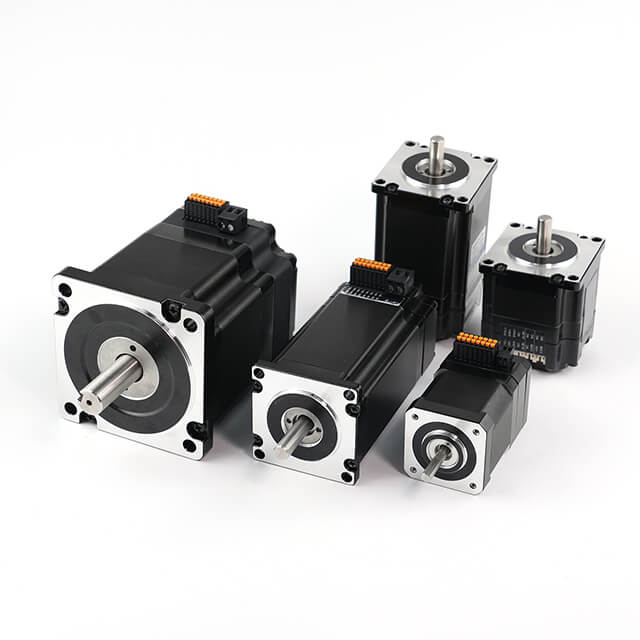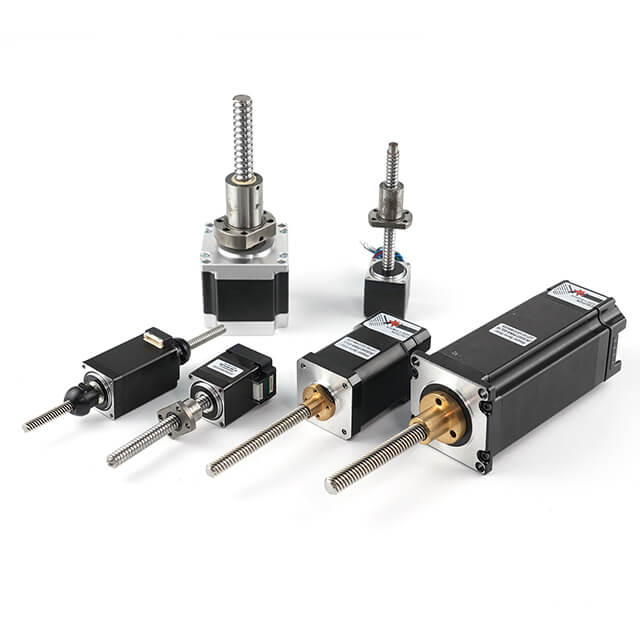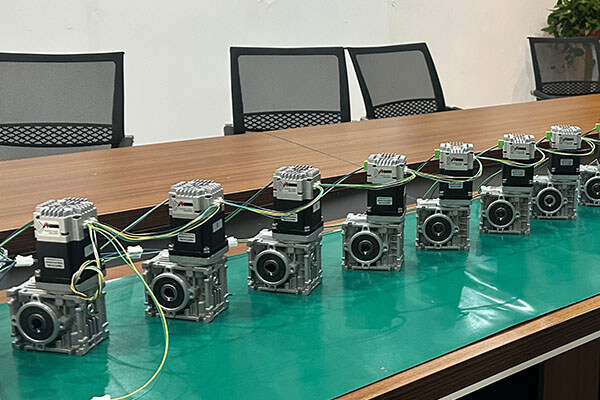
In modern automation, precision, efficiency, and compactness are essential. As industries evolve, they increasingly rely on integrated servo motors and controllers to achieve superior motion performance with simplified architecture. These all-in-one units combine a servo motor, driver, controller, encoder, and communication interface into one compact assembly, drastically improving system reliability, installation ease, and energy efficiency.
This comprehensive guide explores how integrated servo motors and controllers work, the advantages they deliver, key applications across industries, and how to choose the best system for your machine.
An integrated servo motor and controller is a compact mechatronic device that merges the core components of servo motion control—motor, servo drive, and control electronics—into a single housing. Unlike traditional servo systems that require separate components and extensive wiring, integrated servo motors significantly reduce complexity and cost.
They typically include:
This integration provides a self-contained motion solution ready for plug-and-play installation into various automated systems.
Integrated Servo Motor and Controller Types
Integrated servo motors have become essential in modern automation thanks to their ability to combine the motor, driver, controller, encoder, and communication interface into one compact unit. These systems reduce wiring, simplify installation, and deliver high-precision closed-loop control. To choose the right solution, it’s important to understand the different types of integrated servo motors and controllers available today.
Below are the major categories, classified by motor type, control method, communication interface, power level, and application design.
1. Types by Motor Technology
● Integrated AC Servo Motors
Use AC permanent magnet synchronous motors (PMSM)
Offer high torque density, excellent accuracy, and smooth operation
Ideal for industrial automation, CNC machines, robotics
Often paired with absolute encoders and EtherCAT/CANopen
Best for: high-performance applications requiring precision motion control.
Use brushless DC motors with built-in controllers
Compact, lightweight, highly efficient
Suitable for small automation systems, AGVs, medical devices
Best for: portable equipment, mobile robots, compact automation platforms.
Combine a stepper motor with encoder feedback and servo algorithms
Provide servo-like precision at lower cost
Eliminate step loss while maintaining high torque at low speeds
Less expensive than AC servo types
Best for: packaging machines, 3D printers, labeling, pick-and-place units.
2. Types by Control Method
● Position-Control Integrated Servo Motors
Execute point-to-point, multi-axis, and interpolation motions
Commonly used for robotic joints, CNC axes, precision linear stages
Applications: robotics, semiconductor equipment, CNC machining.
● Speed-Control Integrated Servo Motors
Maintain extremely stable speed profiles
Support adjustable acceleration, deceleration, and S-curve control
Applications: conveyors, AGVs/AMRs, extruders, grinders.
● Torque-Control Integrated Servo Motors
Maintain constant torque for pressurized or tension-controlled tasks
Can operate as electronic cams, tension winders, or torque limiters
Applications: winding machines, pressing systems, robotic force control.
3. Types by Communication Interface
Integrated servos often include built-in industrial networking for real-time control.
● EtherCAT Integrated Servo Motors
High-speed, low-latency fieldbus
Supports multi-axis synchronization and precise interpolation
Ideal for complex robotic and CNC systems
● Modbus-RTU / Modbus-TCP Servo Motors
● PROFINET / Ethernet/IP Integrated Servos
● Pulse + Direction / Analog Input Types
4. Types by Power and Voltage Rating
Key Benefits: low heat, long battery life, quiet operation.
● High-Voltage Integrated AC Servo Motors (110V/220V/380V AC)
Applications: CNC machinery, presses, large conveyors, industrial robots.
5. Types by Mechanical Structure
● Standard Round-Body Integrated Servo Motors
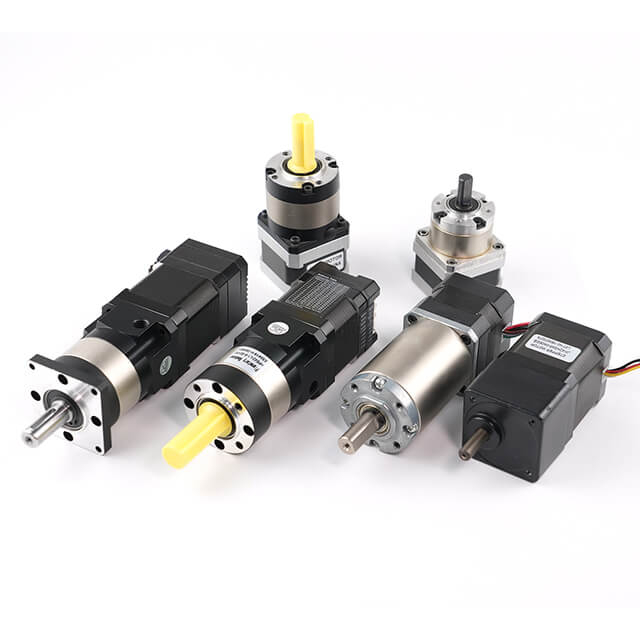
● Integrated Servo Motors With Gearbox
Applications: robotic joints, rotary actuators, heavy-load drives.
● Flat / Frameless Integrated Servo Motors
Applications: semiconductor tools, compact robotic platforms, rotary tables.
● Integrated Servo Motors With Brake
Applications: vertical axes, lifting systems, safety-critical mechanisms.
6. Types by Application Specialty
High-efficiency BLDC cores
Low-voltage operation (24–48V DC)
Built-in algorithms for traction and steering control
Conclusion
Integrated servo motors and controllers come in a wide variety of types, each designed for specific performance requirements, communication needs, and environmental conditions. By understanding the classifications—motor type, control mode, protocol, voltage, structure, and application—you can select an optimized motion solution that enhances efficiency, precision, and reliability in modern automation.
Integrated servo motors combine the motor, encoder, driver, and controller into a single compact unit. This architecture simplifies motion control, reduces wiring, and improves system reliability. To understand how they work, it’s important to look at the internal components and the step-by-step operation that enables precise, closed-loop control.
1. Core Components Working Together
An integrated servo system contains several essential elements built into one housing:
Servo Motor (BLDC or AC PMSM)
Produces rotational motion using electromagnetic fields and sinusoidal commutation.
Encoder (Incremental or Absolute)
Provides high-resolution feedback on rotor position and speed.
Servo Drive (Amplifier)
Controls current and voltage to the motor phases based on real-time feedback.
Integrated Motion Controller
Executes motion profiles such as positioning, speed control, or torque regulation.
Communication Interface
Receives commands from PLCs or host controllers using EtherCAT, CANopen, Modbus, etc.
All components are pre-matched to work together seamlessly, enabling faster response and greater accuracy.
2. Step-by-Step Operation of an Integrated Servo Motor
Step 1: Command Input From Controller or PLC
A host controller sends motion commands such as:
These commands are transmitted via fieldbus or digital I/O.
Step 2: Motion Controller Interpretation
The integrated controller interprets incoming commands and calculates:
It then generates control signals for the servo drive.
Step 3: Servo Drive Regulates Motor Power
The internal drive applies the necessary current and voltage to the motor’s windings using advanced algorithms such as:
These algorithms maintain smooth rotation, high torque output, and precise speed stability.
Step 4: Encoder Feedback Loop
As the motor rotates, the encoder continuously measures:
This feedback is sent instantly to the controller, creating a closed-loop system.
Step 5: Real-Time Closed-Loop Correction
The controller compares actual movement to the commanded values. If any deviation occurs, the system instantly adjusts:
Current
Velocity
Motor position
This loop runs thousands of times per second, allowing:
Step 6: Monitoring and Diagnostics
Integrated servo systems also include advanced safety and diagnostic functions such as:
These features ensure reliable operation and prevent equipment damage.
3. Control Modes Inside an Integrated Servo Motor
Integrated servo systems typically support three main operation modes:
Position Control Mode
Controls the exact target position with micro-level precision.
Used in robotics, CNC axes, pick-and-place machines.
Speed Control Mode
Maintains stable speed regardless of load changes.
Used in conveyors, AGVs, pumps.
Torque Control Mode
Controls output torque for force-sensitive applications.
Used in winding machines, pressing, robotic force feedback.
4. Communication and Networking
Integrated servo controllers communicate directly with automation systems using:
EtherCAT (high speed, multi-axis synchronization)
CANopen (cost-effective, widely used in robotics)
Modbus-RTU / Modbus-TCP (simple integration)
PROFINET / Ethernet/IP (industrial automation)
Pulse/Direction or Analog (legacy systems)
Because the drive and controller are built into the motor, network latency and cabling complexity are significantly reduced.
5. Benefits of the Integrated Working Principle
The way integrated servos operate provides several critical performance advantages:
Faster response time
Minimal signal path length improves reaction speed.
Higher precision
Internal feedback loops eliminate noise and interference common in external wiring.
Lower installation effort
No separate wiring between motor, encoder, and driver.
Increased system reliability
All components are built, calibrated, and optimized as a single unit.
Superior energy efficiency
Advanced control algorithms and reduced power losses improve overall efficiency.
Conclusion
Integrated servo motors and controllers operate using a sophisticated closed-loop system that combines command processing, real-time current control, encoder feedback, and high-speed communication into one compact unit. This integration delivers precise motion, simplified wiring, faster installation, and superior performance across robotics, CNC machinery, packaging automation, AGVs, and more.
1. Reduced Wiring and Simplified Installation
By combining motor and electronics in a single housing, integrated systems eliminate:
This reduces wiring by up to 70%, lowering cost and installation errors.
2. Compact Footprint
Compact design makes these motors ideal for space-restricted machines such as robotic arms, conveyor modules, and medical equipment.
3. Enhanced Efficiency and Performance
Advanced algorithms like vector control and FOC deliver:
4. Increased Reliability and Reduced Maintenance
Fewer components and connections result in:
5. Cost Savings
Integrated systems reduce:
Component count
Panel space
Cable length
Engineering design time
This makes them cost-effective despite advanced features.
6. Seamless Communication
Most modern integrated servos support industrial protocols such as:
CANopen
EtherCAT
Modbus-RTU/TCP
PROFINET
EtherNet/IP
This makes integration with PLCs and control systems effortless.
Integrated servo systems are used across countless industries where precision, reliability, and compact design are critical.
1. Robotics
Their compact structure and built-in intelligence significantly reduce robot wiring complexity.
2. Packaging Machinery
Labeling
Pick-and-place
Filling machines
Conveyor control
High-speed, accurate motion improves throughput and efficiency.
3. CNC and Machine Tools
Precision and rigidity make them ideal for metalworking and machining operations.
4. Medical Devices
Surgical robots
Lab automation
Imaging devices
Their reliability and smooth motion meet strict medical requirements.
5. AGVs and AMRs
Integrated servo motors power autonomous robots:
Drive wheels
Lifting modules
Steering actuators
Their ruggedness and efficiency extend battery life and performance.
6. 3D Printers and Automation Systems
Advanced motion accuracy enhances print quality and repeatability.
How Integrated Servo Motors Improve Machine Performance
Integrated servo systems elevate machine performance through several critical factors:
Faster Response and Dynamic Control
High bandwidth control loops allow:
Better Thermal Efficiency
Optimized motor-drive pairing reduces heat and improves continuous torque output.
Reduced Signal Interference
Short internal wiring avoids EMI issues common with separate servo setups.
Intelligent Diagnostics
Built-in monitoring detects:
Overload
Overvoltage
Temperature rise
Encoder faults
This protects machinery and minimizes downtime.
Choosing the right integrated servo motor requires analyzing key performance and application criteria.
1. Torque and Speed Requirements
Determine:
Rated torque
Peak torque
Operating speed range
Match motor output with load inertia and machine dynamics.
2. Encoder Type
Select from:
3. Communication Protocol
Choose a protocol compatible with your PLC or automation controller.
4. Environmental Rating
For harsh or wet environments, use IP65/IP67-rated servo motors.
5. Power Supply Specifications
Ensure compatibility with:
24V/48V DC systems
110/220V AC systems
6. Application-Specific Features
Some specialized applications require:
The shift toward smart, compact, energy-efficient motion solutions is accelerating across industries. Integrated servo systems are transforming automation due to:
Modular design for flexible machine architectures
Lower total system cost
Reduced wiring effort
Higher reliability and safety
Improved motion performance
Easy scalability for multi-axis systems
As Industry 4.0 advances, integrated servo motors will continue to play a critical role in creating smarter, more connected machines.
Conclusion
Integrated servo motors and controllers deliver unmatched benefits in precision, efficiency, reliability, and simplicity. Their compact design and advanced features make them ideal for modern automation systems across robotics, packaging, medical devices, AGVs, and industrial machinery.
Businesses looking to enhance machine performance, reduce design complexity, and adopt next-generation automation technologies will find integrated servo systems to be a powerful solution.