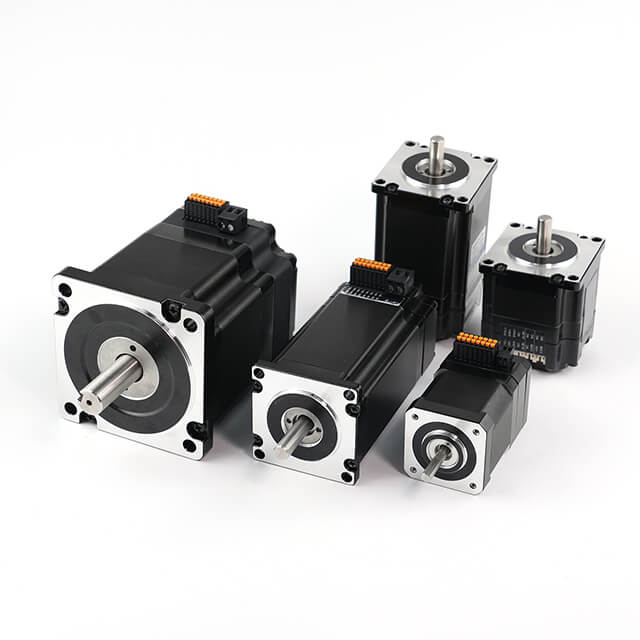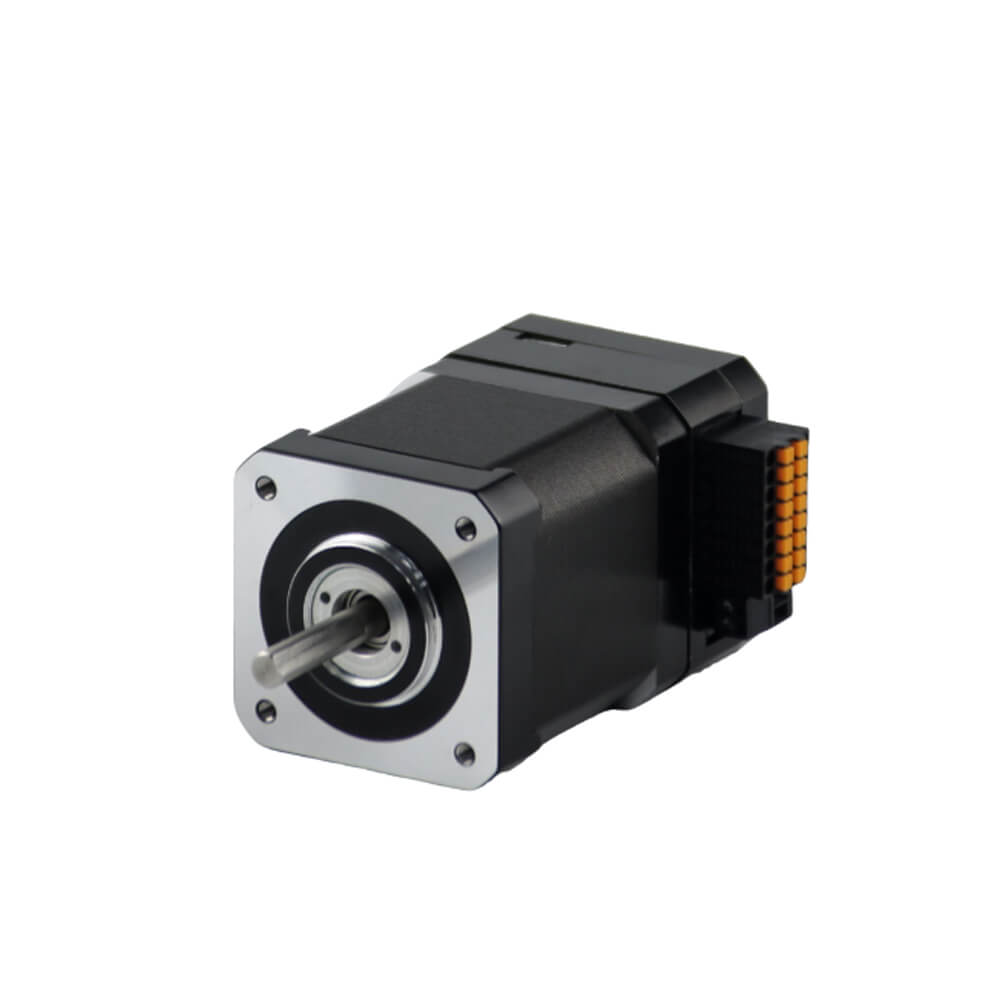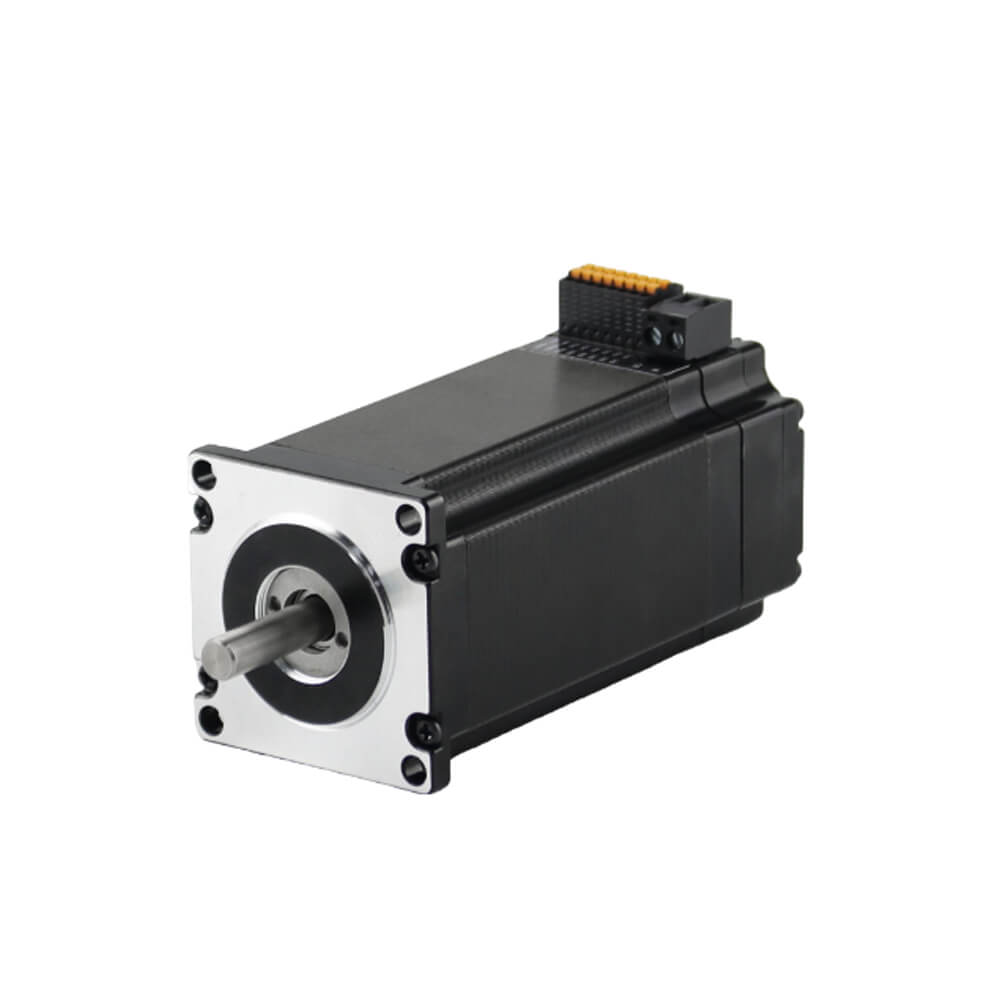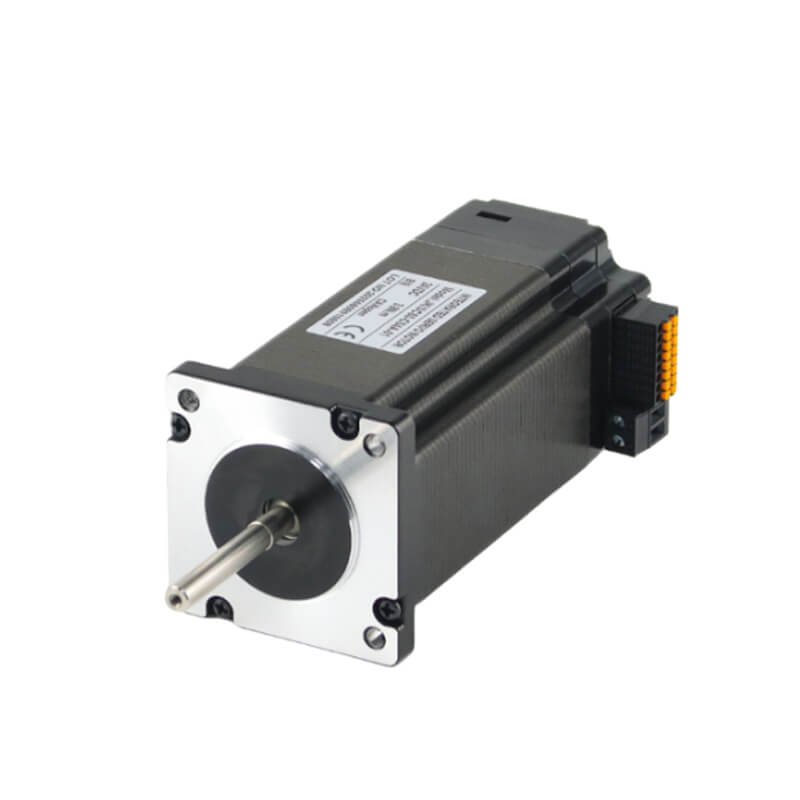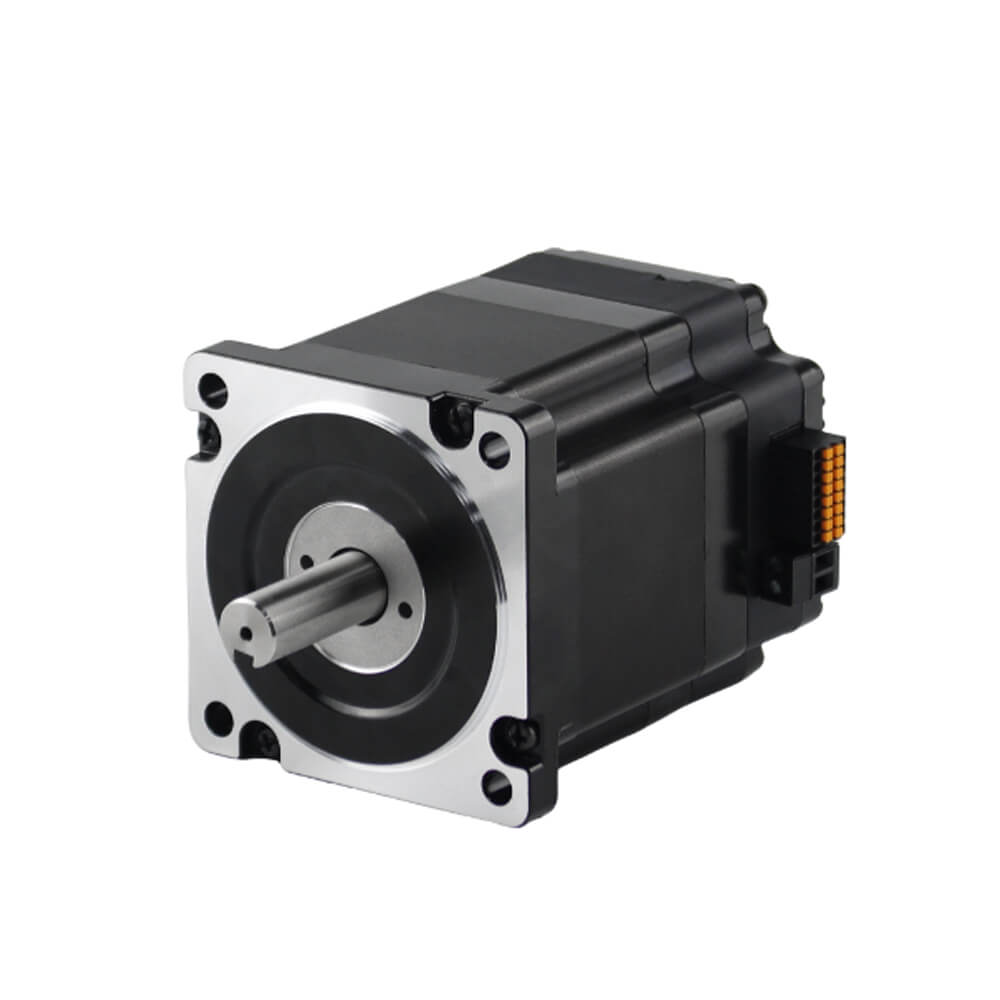
Integrated closed loop stepper motors have rapidly transformed modern motion control systems by delivering unmatched accuracy, real-time feedback correction, and exceptional torque efficiency. As industries demand smarter, more compact, and maintenance-free automation components, these advanced motors have become the preferred choice for engineers and manufacturers who require high performance without the complexity of traditional servo systems.
This comprehensive guide explores everything about integrated closed loop stepper motors—technology, architecture, advantages, applications, performance benefits, and how to choose the right system for demanding automation tasks.
What Are Integrated Closed Loop Stepper Motors?
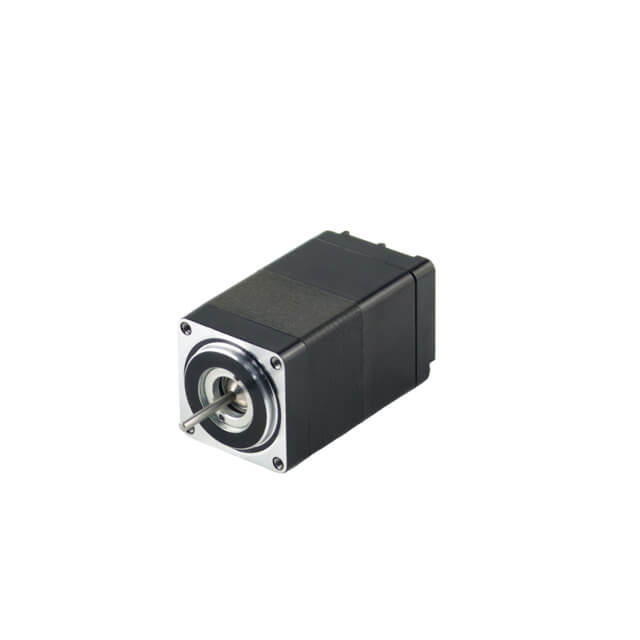
Integrated closed loop stepper motors are advanced stepper systems with built-in encoders and intelligent controllers that continuously monitor the motor’s actual position and adjust power delivery in real time. Unlike open loop steppers, which operate blindly based on commanded steps, these motors eliminate position loss, overheating, noise, and vibration through feedback-driven optimization.
These integrated systems combine:
By merging all elements into a single compact unit, integrated closed loop steppers provide high torque, quick response, and servo-like performance without the cost and complexity of traditional servo motors.
Major Types of Integrated Closed Loop Stepper Motors
Integrated closed loop stepper motors are revolutionizing motion control by combining a stepper motor, encoder, and intelligent driver into one compact, high-performance unit. These systems eliminate step loss, reduce heat, and deliver servo-like performance with exceptional efficiency. To help you fully understand the landscape of available technologies, this comprehensive guide explores the main types of integrated closed loop stepper motors, how they differ, and where each type excels.
1. NEMA-Based Integrated Closed Loop Stepper Motors
These are grouped by standard NEMA frame sizes, making it easy to match motors to machine requirements.
Compact and lightweight
Ideal for 3D printers, medical devices, and light automation
High precision with minimal vibration
Typical torque range: 0.065–0.12 Nm
Applications: small robotics, micro-machining, compact pick-and-place systems.
Compact and lightweight
Ideal for 3D printers, medical devices, and light automation
High precision with minimal vibration
Typical torque range: 0.5–0.8 Nm
Applications: small robotics, micro-machining, compact pick-and-place systems.
The most popular and versatile type
High torque with excellent dynamic response
Suitable for industrial and commercial automation
Typical torque range: 1.2–3 Nm
Applications: CNC machines, labeling equipment, packaging machinery.
Typical torque range: 2–4 Nm
Applications: heavy-duty conveyors, gantry systems.
Typical torque range: 6–12 Nm
Applications: large CNC routers, industrial robots, linear actuators.
2. By Control Interface Type
Integrated closed loop steppers differ widely in communication protocols and control options.
Pulse + Direction Type
Simple and widely compatible
Ideal for upgrading open-loop stepper systems
Easy plug-and-play integration
Used in CNC machines, 3D printers, and legacy control systems.
RS-485 / Modbus Integrated Closed Loop Steppers
Robust multi-drop communication
Ideal for distributed automation networks
Support for long cable distances
Applications: textile machinery, packaging lines, automated storage systems.
Popular in automotive and robotics
High-speed data communication
Standardized motion profiles
Perfect for: industrial robots, AGVs, collaborative robots.
EtherCAT Integrated Closed Loop Stepper Motors
Ultra-fast, real-time industrial communication
Ideal for synchronized multi-axis motion
Servo-like control performance
Applications: semiconductor tools, micro-assembly, precision automation lines.
3. By Encoder Type and Resolution
The encoder is the heart of feedback control. Motors can be classified by encoder resolution and technology.
Incremental Encoder Closed Loop Motors
Most common
Cost-effective
Fast positional feedback
Typical resolutions: 1000–5000 PPR
Perfect for medical devices, robotics, and multi-axis machines.
Magnetic Encoder Closed Loop Systems
Durable and resistant to dust, oil, vibration
Slightly lower precision than optical encoders
Ideal for harsh industrial environments.
Optical Encoder Closed Loop Systems
Best for fine control applications: CNC machining, semiconductor equipment.
4. By Motion Structure Type
Integrated closed loop stepper motors are also categorized by how they generate motion.
Rotary Integrated Closed Loop Stepper Motors
Used across all automation industries.
These include:
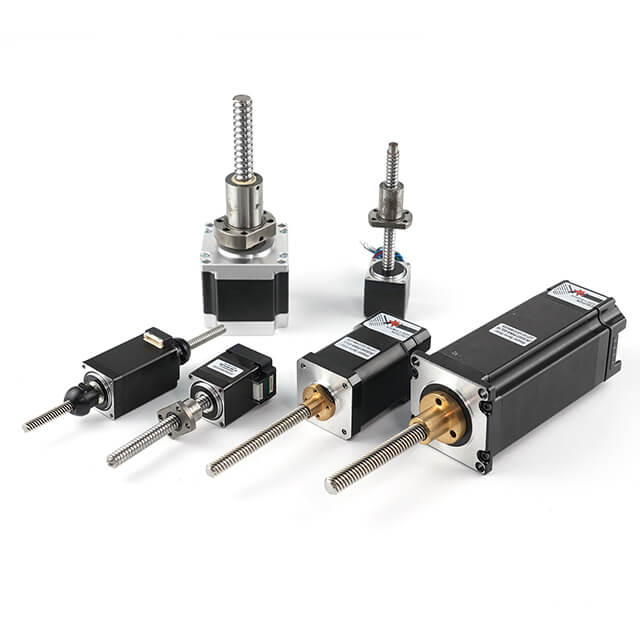
A. Linear Stepper Actuators
Used in pick-and-place machines, dispensing, medical dosing.
B. Linear Slide Integrated Motors
Used in lab automation, scanning stages, compact robots.
5. By Mechanical Configuration
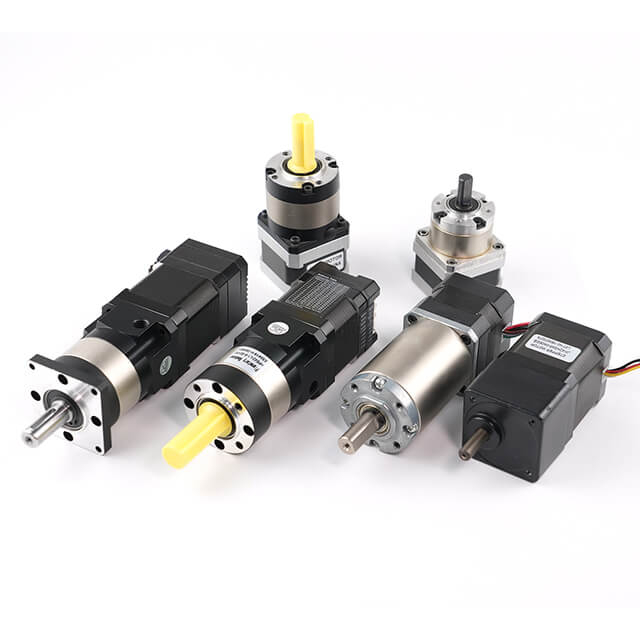
Include precision planetary or spur gearboxes
Multiply torque output while maintaining accuracy
Reduce speed for controlled fine movement
Ideal for heavy load lifting, indexing tables, and robotic arms.
Hollow-Shaft Integrated Closed Loop Stepper Motors
Allow cables, optics, or mechanical shafts to pass through
Excellent for rotary tables and indexers
Used in semiconductor manufacturing and advanced automation systems.
6. By Performance Class
Combine stepper torque with servo speed
High-speed, high-efficiency motion
Adaptive auto-tuning for optimal performance
Often called “hybrid servo systems,” they provide the best balance of cost and performance.
High-Torque Integrated Closed Loop Steppers
Optimized coils and magnetic structure
Deliver significantly higher torque
Maintain power across wider speed ranges
Used in industrial-grade machinery and heavy-duty equipment.
Which Type Is Best for Your Application?
Choosing the right integrated closed loop stepper motor depends on:
Required torque and speed
Environmental conditions
Motion profile complexity
Accuracy and repeatability needs
Communication interface
Space and mounting constraints
Power availability
NEMA 17 → small devices, labs, compact automation
NEMA 23/24 → mid-range automation, packaging, CNC
NEMA 34 → heavy industrial systems, robotics
EtherCAT/CANopen → high-speed robotics and multi-axis control
Absolute encoder models → high precision, safety-sensitive systems
Linear integrated motors → directly driven long-stroke applications
Selecting the right type ensures superior performance, longer lifespan, and more stable automation processes.
Final Thoughts
Integrated closed loop stepper motors offer unmatched flexibility, precision, and efficiency for modern automation. With a wide range of types—categorized by size, performance, interface, encoder, and mechanical structure—these motors ensure optimized motion control for virtually any application. Understanding these categories empowers engineers and manufacturers to design smarter, more reliable, and more efficient systems that meet the demands of today's high-performance industries.
Integrated closed loop steppers rely on a feedback control algorithm, continuously comparing the commanded position with real-time encoder data. This creates a dynamic, intelligent control loop. Integrated closed loop stepper motors represent a major leap in motion control technology, combining the precision of stepper motors with the intelligence of servo feedback systems. These advanced motors integrate a stepper motor, high-resolution encoder, and smart driver into one powerful unit, delivering real-time feedback, zero missed steps, and exceptional motion accuracy.
1. Motion Command Input
The motor receives motion commands from a controller (PLC, CNC, microcontroller, or automation system).
Command types include:
The integrated driver interprets these commands and generates expected trajectory data.
2. Encoder Captures Real-Time Motor Position
As the motor shaft rotates, the encoder generates pulses that represent:
Actual step count
Angular displacement
True speed profile
This live feedback is transmitted instantly to the integrated controller.
3. Controller Compares Commanded vs. Actual Position
The system continuously compares:
Commanded path (from driver) vs. Actual position (from encoder)
This comparison occurs thousands of times per second.
If there is any deviation or lag, the controller detects an error value.
4. Closed Loop Correction Algorithm Activates
The integrated control system uses advanced PID or servo-style algorithms to:
Increase or decrease phase current
Modify torque output
Adjust microstep position
Regulate speed and acceleration
The process is dynamic and instantaneous, ensuring:
No skipped steps
No stalls
No position drift
The motor always returns to the commanded trajectory.
5. Adaptive Current Control Enhances Efficiency
A major advantage of closed loop steppers is automatic current optimization.
Instead of supplying constant current (like open loop motors), closed loop steppers:
Use full current only under load
Reduce current when torque demand decreases
Prevent motor overheating
Lower overall power consumption
This dramatically increases motor lifespan and efficiency.
6. Automatic Stall Detection and Recovery
If external forces prevent the motor from reaching position, the system:
Detects torque overload instantly
Stops motion cleanly
Reports an alarm to the controller
Attempts recovery when permissible
This is impossible in open loop systems.
7. High-Speed Performance with Servo-Like Response
The feedback loop enables:
This makes closed loop steppers suitable for demanding industrial applications where open loop motors fail.
Final Thoughts
Integrated closed loop stepper motors combine the strengths of stepper motors with the intelligence of servo systems. Through encoder feedback, real-time correction, and adaptive current control, they deliver high torque, flawless positioning, and energy-efficient performance far superior to open loop designs.
Their compact design, servo-like behavior, and integrated electronics make them the ideal choice for next-generation automation, robotics, and precision machinery.
Integrated closed loop stepper motors deliver unmatched precision, torque stability, and operational intelligence by combining a stepper motor, encoder, and driver into one compact, high-performance unit. These motors provide servo-like performance while retaining the simplicity and affordability of stepper technology. Below is an in-depth exploration of the key features that make integrated closed loop stepper motors the preferred choice for modern automation systems.
1. High-Resolution Encoder Feedback
One of the most defining features is the built-in high-resolution encoder, which continuously monitors the rotor position. This encoder provides real-time positional data to the integrated driver, enabling:
Typical encoder resolutions range from 1000 to 5000 PPR, offering exceptional accuracy for demanding applications.
2. Real-Time Closed Loop Control
Closed loop control transforms a traditional stepper into a smart positioning system. By comparing commanded steps to actual encoder feedback, the motor:
This dynamic control loop gives the motor servo-like behavior while maintaining stepper characteristics.
3. Integrated Driver and Electronics
All motion control electronics—including the driver, processor, and power stage—are integrated directly into the motor body. This architecture delivers:
The compact, all-in-one design makes integration convenient and space-efficient.
4. Automatic Torque Optimization
Integrated closed loop stepper motors intelligently regulate current based on load requirements. Instead of constantly applying full current like open loop systems, these motors:
Deliver higher current only when needed
Reduce current when the load decreases
Prevent unnecessary heat buildup
Improve energy efficiency
This feature increases motor lifespan and reduces power consumption significantly.
5. High Torque at Low and Medium Speeds
Thanks to enhanced control algorithms and optimized current delivery, these systems maintain strong torque across the operating range. Benefits include:
This makes them ideal for applications where open-loop steppers typically struggle.
6. Smooth and Quiet Motion
Closed loop control minimizes vibration and resonance through:
The result is silky-smooth, low-noise operation, even at high speeds.
7. Stall Detection and Protection
One of the greatest weaknesses of open loop steppers is undetected stalls. Closed loop systems eliminate this risk by providing:
This ensures operational safety and prevents mechanical damage.
8. High Position Accuracy and Repeatability
Because the encoder constantly validates shaft position, the system maintains exceptional accuracy with typical repeatability of:
This precision is essential for equipment such as CNC machines, semiconductor tools, and medical instrumentation.
9. Energy Efficiency and Reduced Heat Generation
With intelligent current control, these motors only use the power necessary for the task. Benefits include:
This energy-efficient performance is one of the biggest advantages over open loop systems.
10. Advanced Communication Interfaces
Integrated motors often support multiple industrial communication protocols, such as:
RS-485 / Modbus-RTU
CANopen
EtherCAT
Pulse/Direction
Analog input
Digital I/O control
These options allow seamless integration with PLCs, CNC controllers, robotics, and automation networks.
11. Plug-and-Play System Integration
Since the driver and encoder are already built into the motor, installation becomes:
Faster
Cleaner
More reliable
No tuning or calibration is needed in most cases, making the system plug-and-play for both new and retrofit applications.
12. Reduced System Complexity
Integrated closed loop stepper motors replace multiple components:
External drivers
Encoder modules
Cables and wiring
Power electronics
This reduces:
Overall system cost
Wiring errors
Maintenance time
13. Versatile Control Modes
These motors support a variety of operating modes, including:
This flexibility makes them suitable for a wide range of machinery.
14. Compact and Durable Design
All components are housed in a single protective enclosure. Features often include:
Sealed housing for dust/oil protection
Vibration-resistant construction
Industrial-grade connectors
This ensures long-term reliability in harsh or high-duty environments.
15. Seamless Upgrade Path from Open Loop Systems
Integrated closed loop solutions can directly replace open loop steppers without major mechanical changes. Benefits include:
Same mounting dimensions (NEMA sizes)
Compatible wiring options
Immediate performance upgrade
This makes them ideal for retrofitting older machines to modern standards.
Final Thoughts
Integrated closed loop stepper motors combine the simplicity of steppers with the intelligence of servo feedback systems. With features such as real-time encoder correction, smooth motion control, energy-saving current optimization, and robust communication capabilities, these motors deliver superior accuracy, reliability, and efficiency across demanding industrial applications.
Their compact design and advanced functionality make them the go-to solution for modern automation, robotics, CNC equipment, packaging, medical devices, and more.
Integrated closed loop stepper motors are transforming the performance and reliability of modern motion control systems. By combining a stepper motor, driver, encoder, and controller into a single compact unit, these motors offer unmatched precision, efficiency, and ease of use. Below is a comprehensive, in-depth look at the key advantages that make integrated closed loop stepper motors superior to traditional open loop systems and an increasingly popular alternative to servo motors.
1. Zero Missed Steps and Accurate Positioning
The most significant advantage is the ability to eliminate lost steps entirely. The built-in encoder continuously monitors the shaft position, ensuring:
Real-time correction of any position error
Reliable movement regardless of sudden load changes
Guaranteed position accuracy for critical applications
This results in 100% position integrity, which open loop steppers cannot achieve.
2. Higher Torque Output and Better Performance at All Speeds
Closed loop stepper motors automatically adjust current to meet the exact torque demand. This enables:
Higher peak torque when needed
Strong torque at low and mid-range speeds
Improved acceleration and deceleration
Better performance under dynamic loads
This leads to servo-like behavior without the cost and complexity of full servo systems.
3. Smooth, Quiet, and Vibration-Free Operation
Integrated closed loop control uses:
The result is dramatically smoother operation with:
This makes the motor ideal for applications requiring silent, stable motion.
4. Increased Energy Efficiency
Unlike open loop systems that constantly draw full current, closed loop steppers intelligently adjust power consumption. They:
Reduce current when the load is light
Prevent overheating
Consume significantly less energy
Extend motor and driver lifespan
This efficiency results in cooler operation and lower electricity costs.
5. Integrated Design Reduces System Complexity
A closed loop stepper integrates:
Motor
Encoder
Driver
Controller
Communication interface
All in one compact device.
This design eliminates the need for:
External drivers
Separate encoder wiring
Complex control cabinets
The result is a simple, clean, and highly reliable system with minimal wiring and faster installation.
6. Superior Reliability and Built-In Safety Features
Integrated closed loop stepper systems offer:
These features significantly reduce downtime, making the entire motion system more robust and consistent.
7. Better Heat Management and Longer Life
Because closed loop motors operate only with the required current, they run cooler than open loop steppers. This leads to:
Lower winding temperatures
Reduced mechanical strain
Longer bearing and motor lifespan
This is especially beneficial in 24/7 industrial environments.
8. Enhanced Speed Capabilities
Thanks to feedback correction and optimized current control, integrated closed loop stepper motors achieve:
Higher maximum speed than open loop steppers
Stable movement at high RPM
Faster response to command changes
They maintain accuracy even under rapid acceleration, making them perfect for fast-paced automation.
9. Stall Prevention and Automatic Recovery
If a stall or overload occurs, the system detects it instantly and reacts by:
This prevents machinery damage and keeps operations safe and predictable.
10. Reduced Maintenance Requirements
The integrated system reduces maintenance by eliminating:
With fewer components and self-correcting control, systems require far less upkeep over time.
11. Highly Flexible Communication Options
Integrated closed loop stepper motors offer advanced control interfaces such as:
RS-485 / Modbus-RTU
CANopen
EtherCAT
Pulse/Direction
Digital/Analog I/O
This flexibility allows easy integration with nearly any PLC, microcontroller, or industrial automation platform.
12. Compact Footprint for Space-Constrained Systems
With everything housed in a single unit, these motors:
Ideal for compact machines such as medical devices, robotics modules, and portable automation equipment.
13. Easy Retrofitting for Legacy Equipment
Integrated closed loop stepper motors share the same NEMA frame sizes as traditional steppers, enabling:
This allows manufacturers to modernize equipment without redesigning the entire mechanical structure.
14. Cost-Effective Alternative to Servo Motors
Closed loop steppers provide many servo benefits such as:
High speed
Precise feedback
Smooth motion
Energy savings
At a significantly lower cost and with simpler integration requirements. This makes them ideal for applications that need precision without the high price of servo systems.
15. High Reliability in Harsh Operating Conditions
Many integrated motors come with:
This ensures long-term reliability even in demanding environments such as packaging, manufacturing, or mobile automation.
Final Thoughts
Integrated closed loop stepper motors offer a powerful combination of precision, efficiency, and simplicity. With features such as real-time feedback, high torque, smooth operation, and advanced communication capabilities, they outperform traditional open loop steppers and provide a cost-effective alternative to servo systems.
These advantages make them an indispensable choice for modern automation, robotics, CNC machinery, medical equipment, and industrial production lines.
Integrated closed loop stepper motors have become a preferred motion-control solution across modern industries due to their precision, high torque, energy efficiency, and built-in driver–controller architecture. Their ability to combine the accuracy of steppers with the reliability of servo-like feedback makes them indispensable in equipment that demands consistent performance, minimal maintenance, and compact installation. Integrated closed loop stepper motors excel in industries demanding precision, speed, and reliability. Some of the most common applications include:
1. Industrial Automation & Manufacturing Systems
Integrated closed loop steppers are heavily utilized in automated production lines, where consistent speed and positional accuracy are essential. Their built-in feedback systems eliminate missed steps and ensure the machinery maintains accuracy, even under variable loads.
Common uses include:
Pick-and-place systems
Automated inspection machines
Packaging and labeling equipment
Sorting and dispensing systems
Robotic tooling movement
The integrated design reduces wiring complexity and supports rapid installation, greatly improving uptime in high-volume manufacturing environments.
2. CNC Machines and Precision Machining Tools
CNC machinery demands high torque at low speed, absolute positioning accuracy, and smooth motion—all strengths of closed loop stepper motors.
Typical CNC applications include:
CNC routers, mills, and lathes
Engraving machines
Laser cutters and plasma cutters
3D printers with closed loop extrusion and axis drives
Because closed loop systems prevent “lost steps,” operators benefit from improved surface finish, repeatability, and error-free machining.
3. Medical & Laboratory Equipment
In healthcare and analytical labs, reliability and micro-accuracy are critical. Integrated closed loop stepper motors provide the precise control necessary for delicate operations while maintaining low noise and smooth motion.
Used in devices such as:
Syringe pumps and infusion systems
Centrifuges and sample preparation machines
Diagnostic analyzers
Optical imaging and scanning equipment
Automated microfluidics systems
The integrated architecture ensures consistent performance and compliance with strict operational standards.
4. Robotics, Mechatronics, and Cobots
Robotic systems benefit from closed loop steppers due to their ability to deliver servo-like motion without the complexity and cost of traditional servo systems.
Applications include:
Articulated robotic arms
Collaborative robots (cobots)
SCARA robots
AGV/AMR drive and steering systems
Gimbal, camera, and sensor stabilizers
Their fast response, smooth microstepping, and high positioning accuracy make them ideal for multi-axis robotic systems.
5. Textile and Apparel Machinery
The textile industry operates fast-moving, continuous machines where motor precision directly affects product quality. Integrated closed loop stepper motors help maintain accuracy and reduce mechanical wear.
Used in functions like:
Automated sewing and embroidery machines
Fabric cutting and spreading systems
Yarn winding and spooling machinery
Pattern forming actuators
Their built-in feedback ensures reliable operation at high speeds without overheating.
6. Printing, Packaging & Labeling Equipment
From industrial printers to packaging automation, these motors ensure accurate media movement and synchronized processes.
Common applications:
Large-format printing systems
Label printing & application machines
Folding-carton packaging systems
High-speed coding and marking machines
Closed loop control maintains print alignment and quality, even during rapid bidirectional motion.
7. Security, Surveillance & Pan-Tilt Mechanisms
Security systems require precise, repeatable movements for camera positioning. Integrated closed loop stepper motors provide stable rotation with minimal vibration.
Examples include:
PTZ cameras (pan–tilt–zoom)
Automatic tracking systems
Motion-controlled lighting and sensors
Their ability to maintain position under wind load or vibration makes them superior to open-loop steppers.
8. Material Handling, Conveyors & Logistics Equipment
Integrated closed loop steppers play a major role in modern intralogistics and warehouse automation.
Used for:
Small conveyors and indexing systems
Parcel sorters
Actuators in automated storage and retrieval systems (AS/RS)
Pick-to-light and shuttle systems
The motors ensure synchronized, accurate movement essential for fast and error-free distribution operations.
9. Aerospace, Optics & High-Precision Instruments
High-end scientific and aerospace applications demand vibration-free precision and reliability under extreme conditions.
Integrated closed loop stepper motors assist in:
Optical alignment systems
Aerospace actuators
Astronomical instruments and telescopes
High-resolution positioning stages
Laser alignment systems
Their ability to maintain micro-positioning accuracy makes them preferred in mission-critical systems.
10. General Motion Control & Custom Automation
Finally, integrated closed loop stepper motors are widely used in:
Automatic gates and doors
Motion stages and linear actuators
Home automation devices
Food processing machinery
Custom robotics projects
Their modular design, efficient performance, and easy integration make them suitable for almost any automated motion system.
Conclusion
Integrated closed loop stepper motors deliver the ideal blend of precision, high torque, energy efficiency, and reliable feedback control. Their versatility allows them to be used across nearly every modern automated industry—from healthcare to manufacturing, robotics, aerospace, and beyond. As industries continue to demand smarter, more compact, and more reliable motion systems, these motors will play an increasingly vital role in next-generation automation.
No More Stalling or Lost Motion
Open loop steppers can lose steps during rapid acceleration or heavy loads. Closed loop systems continuously correct errors, preventing stalls entirely.
Less Heat, Less Noise
Encoder feedback allows the driver to reduce phase current when full torque is not needed, leading to cooler and quieter operation.
Better Speed and Acceleration
Closed loop control optimizes torque delivery dynamically, enabling smoother motion profiles and faster response.
Higher Efficiency and Torque Reserve
The driver only provides the exact amount of current needed and increases it only when torque demand rises.
Comparison: Integrated Closed Loop Stepper vs. Servo Motor
| Feature | Closed Loop Stepper | Servo Motor |
| Cost | Lower | Higher |
| Tuning | Not required | Required |
| Torque at Low Speed | High | Moderate |
| Torque Ripple | Low | Very Low |
| Speed Range | Moderate–High | Very High |
| Stability | Excellent | Excellent |
| Complexity | Simple | Complex |
Integrated closed loop stepper motors provide a perfect middle ground: near-servo performance at lower cost and complexity.
Selecting the right motor involves understanding application requirements. Key selection factors include:
1. Torque Requirements
Determine:
Closed loop steppers excel in applications with variable torque or high dynamic motion.
2. Motor Size & Frame
Common NEMA sizes:
3. Encoder Resolution
Higher resolution = better precision
Typical options range from 1,000 to 4,000 PPR.
4. Communication Interface
Choose depending on control system:
RS-485
Modbus
CANopen
EtherCAT
Pulse/Direction
5. Driver Current and Voltage
Higher voltage drives enable:
Faster acceleration
Higher max speed
Improved torque response
6. Environmental Conditions
Consider:
Cooling needs
Dust and moisture levels
Vibration exposure
As manufacturing shifts toward smarter and more efficient systems, integrated closed loop stepper motors offer the ideal blend of:
Their ability to operate with precision and reliability while minimizing system cost makes them a critical component in Industry 4.0 automation, advanced robotics, semiconductor production, and next-generation smart machinery.