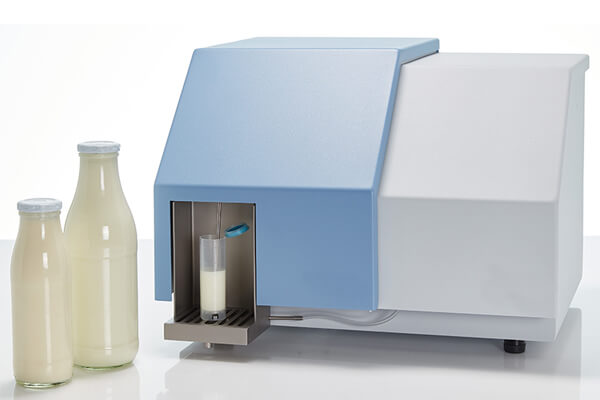
Milk analyzers demand exceptional accuracy, repeatability, and long-term reliability to ensure precise measurements of fat, SNF, protein, density, lactose, water adulteration, and other crucial parameters. At the heart of these machines, NEMA 17 stepper motors have become the preferred choice for manufacturers seeking dependable motion control solutions. Their compact design, high torque output, and exceptional positioning accuracy make them essential across modern dairy testing applications.
This comprehensive guide explores the role, benefits, and selection criteria of NEMA 17 stepper motors for milk analyzers, offering deep technical insights and practical knowledge for OEMs and engineering teams aiming for maximum equipment performance.
Types of NEMA 17 Stepper Motors
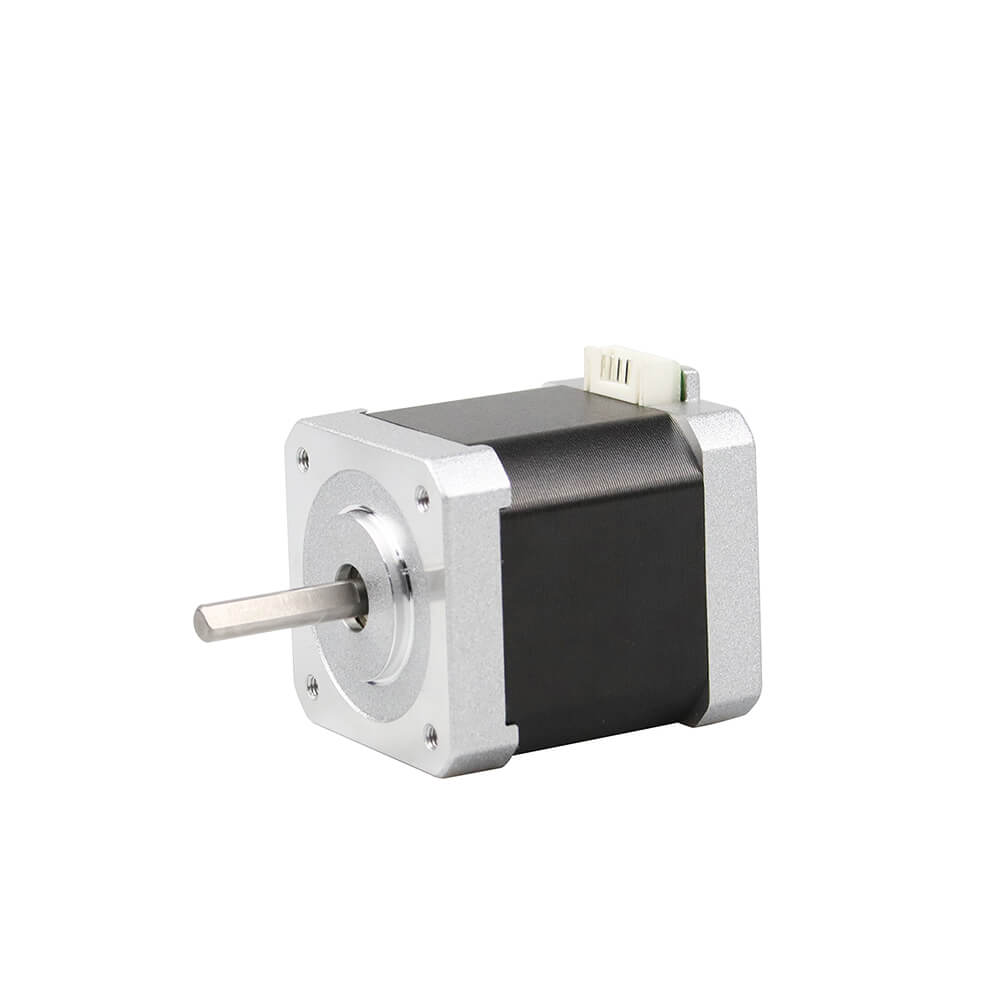
NEMA 17 stepper motors come in several variations designed to meet different torque, speed, and precision requirements. Although they share the same 1.7 × 1.7 inch (42 × 42 mm) faceplate size, their internal construction and performance characteristics can vary significantly. Below are the main types of NEMA 17 stepper motors used across automation, 3D printers, medical devices, food-processing machines, and laboratory instruments.
This is the most widely used type.
Features
4-wire configuration
Higher torque and efficiency than unipolar
Compatible with modern microstepping drivers
Smooth rotation and good accuracy
Applications
3D printers, CNC machines, pumps, analyzers, automation systems.
Less common in modern designs but still available.
Features
5-wire or 6-wire configuration
Easier to drive but lower torque
Can switch between unipolar and bipolar mode (6-wire types)
Applications
Legacy electronics, simple control systems.
Designed with longer motor bodies and stronger magnetic structures.
Features
Longer lengths: 40mm, 48mm, 60mm, 70mm
Higher holding torque (up to 65–80 N·cm)
Stronger coils for demanding loads
Applications
Industrial automation, milk analyzers, robotic systems, heavier loads.
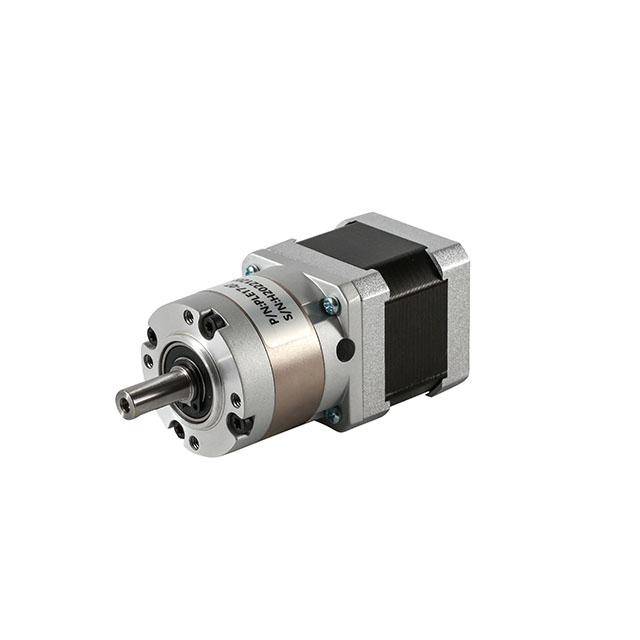
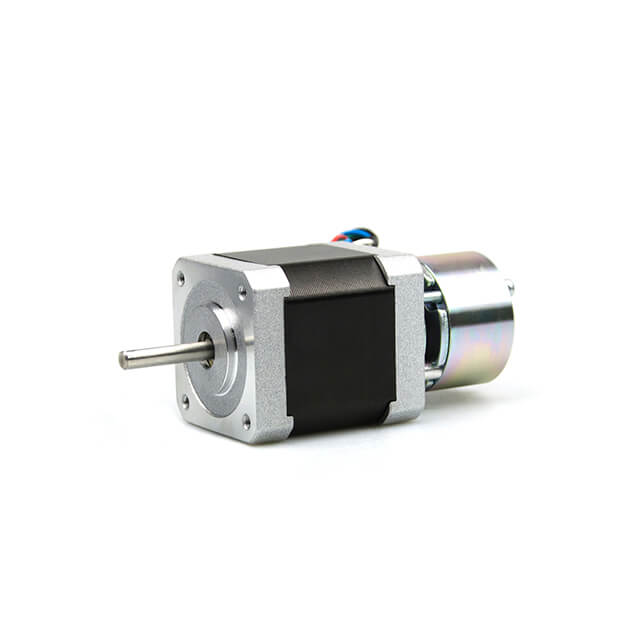
Includes a planetary or spur gearbox attached to the motor shaft.
Features
High torque multiplication
Extremely fine resolution
Very slow, controlled speeds
Ideal for precise dosing or lifting
Applications
Laboratory analyzers, robotic arms, dosing pumps, medical devices.
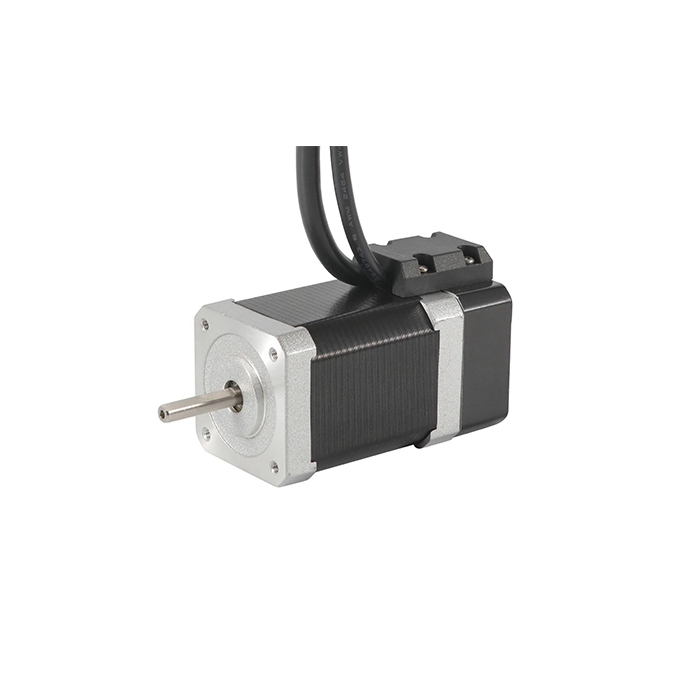
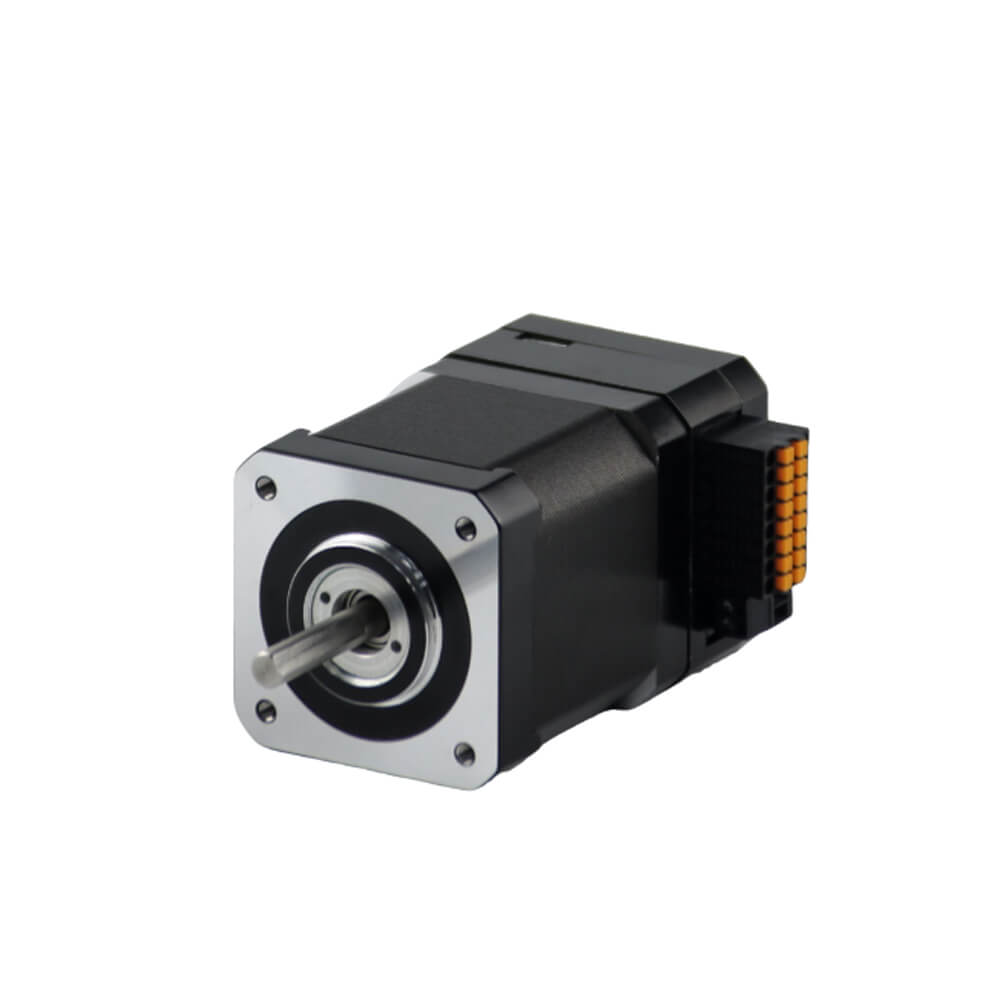
Motor + driver + controller in a single unit.
Features
Applications
Compact machines, automation systems, portable devices.
Adds an optical or magnetic encoder to the rear shaft.
Features
Applications
Precision pumps, robotics, CNC, analyzers requiring exact flow measurement.
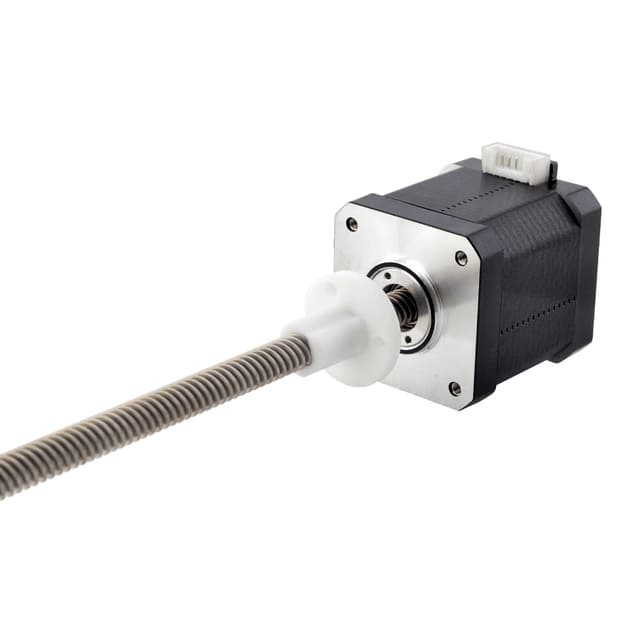
Convert rotation into linear motion.
Types
External linear actuator (leadscrew extends from motor)
Non-captive actuator (nut moves on a fixed screw)
Captive actuator (integrated anti-rotation mechanism)
Applications
Linear stages, dosing pumps, syringe pumps, automation positioning systems.
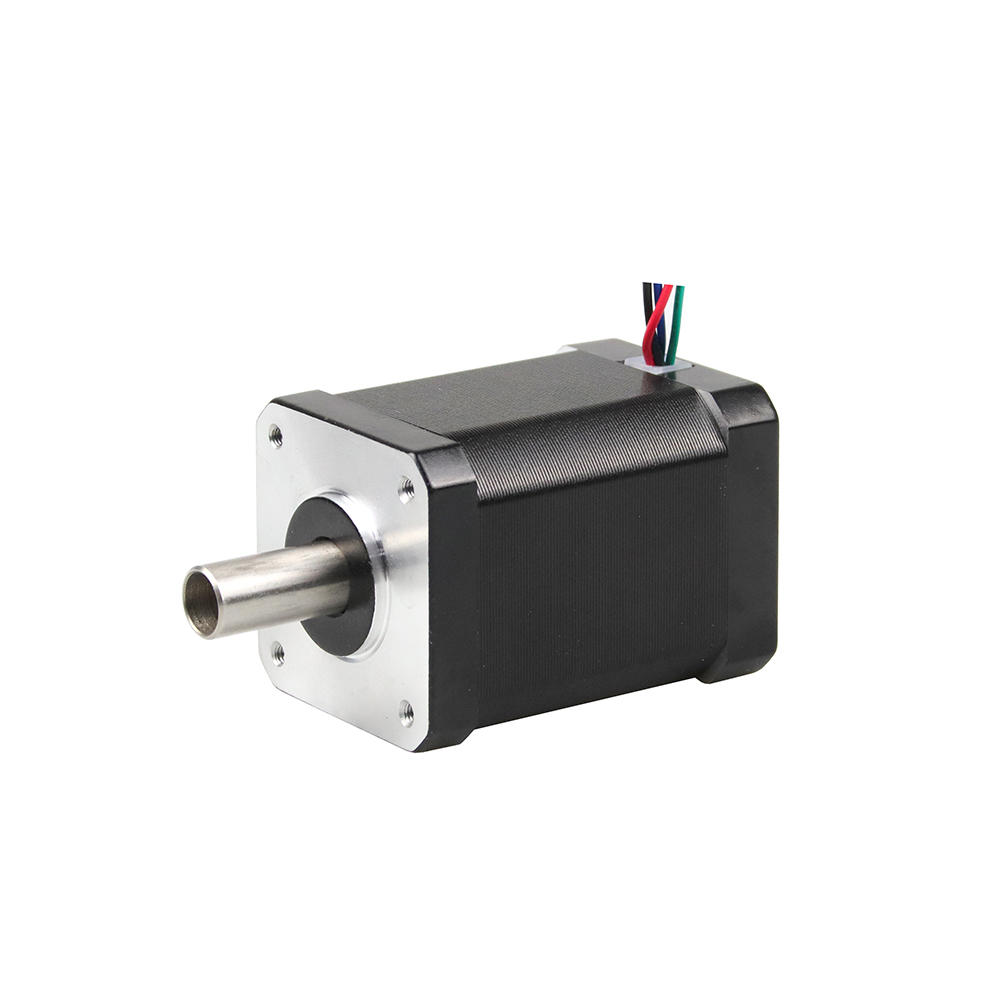
Features a hole through the rotor shaft.
Features
Allows cables, tubing, or optics to pass through
Useful for compact rotating assemblies
Applications
Optical devices, fluid systems, specialty pumps.
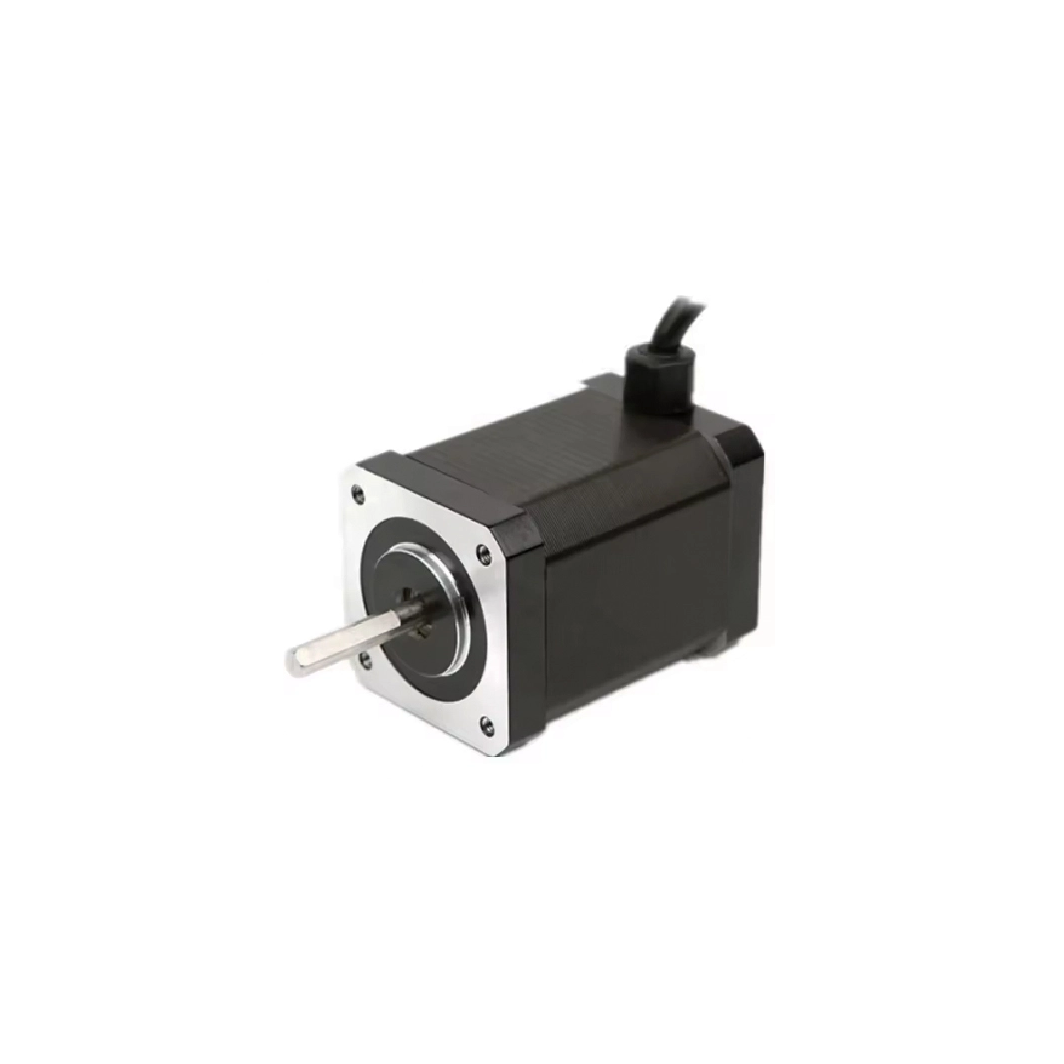
Designed for harsh environments.
Features
Applications
Food equipment, dairy analyzers, outdoor devices.
Manufacturers offer customizations such as:
Summary Table of NEMA 17 Motor Types
| Type | Key Features | Best For |
| Standard Bipolar | High efficiency, 4-wire | 3D printers, analyzers |
| Unipolar | Easier driving, lower torque | Legacy systems |
| High Torque | Longer body, stronger output | Industrial loads |
| Gearbox | High torque + fine resolution | Precision dosing |
| Integrated Driver | Compact, smart control | Automation |
| Encoder Motor | Closed-loop accuracy | Robotics, CNC |
| Linear Actuator | Rotary-to-linear conversion | Pumps, positioning |
| Hollow Shaft | Center hole for cables/tubes | Optical, fluid systems |
| Waterproof IP | Resistant to liquids/dust | Food/dairy machines |
| Custom | Tailored specs | OEM equipment |
How a NEMA 17 Stepper Motor Works
A NEMA 17 stepper motor is an electromechanical device that converts electrical pulses into precise mechanical movements. Although “NEMA 17” only refers to its mounting size (1.7 × 1.7 inches or 42 × 42 mm), the internal working principle is the same as other hybrid stepper motors.
Below is a simple, accurate explanation of how it works:
1. Basic Principle of Operation
A NEMA 17 stepper motor works on the principle of electromagnetism.
Inside the motor:
The stator (stationary part) has multiple coils, grouped into phases.
The rotor (rotating part) contains permanent magnets.
When current flows through the coils, they become electromagnets.
By energizing the coils in a specific sequence, the magnetic field rotates step by step, causing the rotor to follow that sequence.
Each electrical pulse = one step of rotation.
2. Step-by-Step Rotation
The motor rotates in small, fixed angles:
Most NEMA 17 motors have 1.8° per step (200 steps per revolution).
When microstepping is used, the steps become smaller (e.g., 400, 800, 1600, 3200, 25600 steps/rev).
This step-by-step rotation allows precise positioning without feedback sensors.
3. Bipolar Coil Energizing Sequence
Most NEMA 17 motors are bipolar, meaning they use two coils, but current direction can reverse.
The driver sends pulses to energize the coils in this sequence:
Coil A energized → rotor aligns
Coil B energized → rotor moves to next step
Coil A reversed → rotor moves again
Coil B reversed → next step
This creates a rotating magnetic field.
The rotor follows the magnetic field, producing smooth rotation.
4. The Role of the Stepper Driver
A stepper motor cannot run directly from a power source.
It needs a stepper motor driver, which does two critical jobs:
1). Sends pulses (step signals)
Each pulse tells the motor to move one step.
2). Controls coil current
Drivers like A4988, DRV8825, or TMC series regulate current so the motor runs:
Correctly
Smoothly
Without overheating
The driver defines:
5. Torque Generation
When a coil is energized, it generates a magnetic field that pulls the rotor into alignment.
Torque depends on:
Current through the coils
Coil inductance
Motor length (longer = higher torque)
Magnetic strength of rotor
Higher current = higher torque.
6. Microstepping for Smoother Motion
Microstepping divides each full step into smaller steps by adjusting coil current with sine-wave control.
Example:
1/16 microstepping gives 3200 steps per revolution
1/256 microstepping gives 51,200 steps per revolution
Benefits:
This is why NEMA 17 motors perform very smoothly in:
3D printers
CNC machines
Laboratory pumps
Milk analyzers
7. Speed Control
Stepper motor speed is controlled by the frequency of pulses sent by the driver.
However, stepper motors lose torque at higher speeds due to back-EMF and coil inductance.
8. Holding Torque (Magnetic Locking)
When the motor is powered but not moving, the rotor locks into position.
This is called holding torque.
It is useful for:
9. No Feedback Needed (Open-Loop Control)
Unlike servo motors, stepper motors do not need position sensors.
Because each pulse equals a fixed movement, the system knows the position mathematically as long as no steps are missed.
This simplifies control and reduces cost.
10. Summary: How a NEMA 17 Stepper Motor Works
A NEMA 17 stepper motor works by:
Energizing coils in sequence
Creating a rotating magnetic field
Pulling the permanent-magnet rotor step by step
Converting electrical pulses into precise motion
The combination of 1.8° step angle, microstepping capability, high torque, and excellent repeatability makes NEMA 17 motors ideal for high-precision devices.
Why NEMA 17 Stepper Motors Are Ideal for Milk Analyzer Systems
Compact Size with High Torque Density
Milk analyzers are built for compactness, portability, and efficient internal component layout. NEMA 17 stepper motors provide high torque in a small form factor, making them highly suitable for systems that require precise mechanical movements within limited space. Their torque output is adequate for:
Sample aspiration and dispensing
Pumping milk into test chambers
Positioning optical components
Controlling reagent flow
Running internal mixing mechanisms
Exceptional Positioning Accuracy
In milk analyzers, even a slight deviation in liquid quantity or timing can alter test results. NEMA 17 motors deliver precise step angles—typically 1.8° per step or microstepping accuracy of up to 1/256—ensuring perfect control over:
Highly Repeatable Performance
A major reason manufacturers trust NEMA 17 motors is their ability to repeat identical motions thousands of times with zero drift or loss of position. This is critical for:
Daily high-volume testing
Calibration routines
Automated workflows in dairy laboratories
Portable field-detection devices
A NEMA 17 stepper motor plays a crucial role in ensuring precision, reliability, and consistency inside modern milk analyzer systems. These devices require accurate control of fluid movement, reagent dosing, mixing, optical alignment, and automated cleaning. Thanks to their compact size, high torque, and excellent positioning accuracy, NEMA 17 stepper motors have become the industry standard for milk-testing instruments used in dairy farms, laboratories, milk collection centers, and quality-control facilities.
Below are the main applications of NEMA 17 stepper motors in milk analyzer equipment:
1. Sample Aspiration and Pumping Mechanisms
The first and most important use of NEMA 17 motors in milk analyzers is to control fluid movement.
Where they are used:
Why NEMA 17 is ideal:
Precise flow control
Stable torque for viscous milk
Clean and consistent sample transportation
No pulsation during microstepping
This ensures the correct amount of milk is drawn into the analyzer every time.
2. Reagent Dispensing and Dosing Systems
Milk analyzers use various reagents to determine fat, protein, SNF, density, and adulteration levels. NEMA 17 motors accurately dose these fluids.
Key benefits:
Accurate micro-dosing
Repeatability in chemical ratios
Improved test reliability
No under- or over-delivery
Precision dosing is essential for high-accuracy milk analysis.
3. Mixing and Homogenization Units
Before optical or chemical measurements, milk samples must be thoroughly mixed.
NEMA 17 drives:
Magnetic stirrers
Agitation paddles
Homogenizing impellers
Reaction chamber mixers
Advantages:
Consistent rotational speed
Smooth mixing via microstepping
Zero vibration for stable analysis
Proper mixing ensures stable sample uniformity for measurement.
4. Optical and Sensor Alignment Systems
Advanced milk analyzers rely on optical components to measure:
Fat
Protein
Lactose
SNF
Density
NEMA 17 stepper motors provide precise motion for:
The accuracy of these movements ensures correct light penetration and detection.
5. Valve Actuation and Flow Switching
Milk analyzers use multiple valves to control:
Sample routing
Cleaning fluid flow
Reagent switching
Intake and drainage
NEMA 17 motors provide:
Controlled rotation for valve positioning
Stable movement for multi-port valves
Reliable switching without slippage
This ensures smooth operation during the testing cycle.
6. Automated Cleaning and Flushing Systems
Milk analyzers must remain sanitary to avoid cross-contamination between tests.
NEMA 17 motors operate:
Cleaning pumps
Waste disposal systems
Flushing valves
Rinse-fluid dispensers
Benefits:
7. Temperature-Control Mechanism Actuators
In some analyzers, temperature-sensitive components require mechanical adjustment.
NEMA 17 motors help control:
This stabilizes internal temperature for reliable readings.
8. Calibration Systems
Milk analyzers require periodic calibration to maintain accuracy.
NEMA 17 stepper motors support:
Microstepping ensures exact and repeatable calibration steps.
9. Internal Transport and Mechanism Movement
Some advanced milk analyzers include moving platforms, sample holders, or microfluidic systems. NEMA 17 motors manage:
Linear transport of sample trays
Rotary movement of sample tubes
Actuation of mechanical levers and arms
10. High-Precision Syringe Pumps (in Chemical Analysis Models)
In analyzers that use chemical titration or reagents, NEMA 17-driven syringe pumps deliver:
This is essential in advanced or laboratory-grade milk analyzers.
Summary: Why NEMA 17 Motors Are Ideal for Milk Analyzers
NEMA 17 stepper motors offer:
High torque in compact size
Excellent 1.8° or microstepping precision
Low noise and vibration
High repeatability
Long service life
Affordability
Compatibility with most stepper drivers
These characteristics make them perfect for applications requiring accurate sample control, fluid movement, optical precision, and automated cleaning—all essential for modern milk analysis.
Milk analyzers require exceptional precision, stability, and reliability to deliver accurate fat, protein, SNF, lactose, and adulteration readings. High-performance NEMA 17 stepper motors play a critical role in achieving this level of accuracy by controlling pumps, dosing systems, mixers, valve actuators, and optical positioning units.
Below are the essential features that make NEMA 17 stepper motors ideal for milk analyzer applications:
1. High Torque Output for Reliable Fluid Handling
Milk analyzers rely on stepper-driven pumps to move samples and reagents with precision. High-performance NEMA 17 motors deliver:
Strong holding and running torque for handling viscous milk samples
Torque stability even at low speeds, which is important for micro-dosing
Motor lengths ranging from 40mm to 60mm to support increased torque
This ensures consistent sample flow, accurate reagent delivery, and stable internal fluid movement.
2. Precision Step Angle (Typically 1.8°)
Milk analysis requires ultra-accurate mechanical motion. NEMA 17 motors feature:
This level of precision ensures the motor can:
Deliver exact fluid volumes
Position optical components with micron-level accuracy
Maintain consistent timing for chemical reactions
3. Smooth and Low-Vibration Operation
Low vibration is essential to maintain the stability of milk samples and prevent interference in optical measurement. High-performance NEMA 17 motors provide:
This ensures stable conditions inside the analyzer, improving measurement reliability.
4. Excellent Position Repeatability
Milk analyzers must reproduce identical movements thousands of times per day. NEMA 17 motors offer:
This guarantees accurate and repeatable sample aspiration, dosing, and optical alignment during every test.
5. Compatibility with Advanced Microstepping Drivers
High-performance NEMA 17 motors work seamlessly with modern drivers such as:
TMC2208
TMC2130
DRV8825
A4988
These drivers enable:
This leads to reliable long-term operation within milk analyzer systems.
6. Optimized Thermal Management
Milk analyzers often run continuously in dairy labs or collection centers. High-quality NEMA 17 motors are designed for:
Efficient heat dissipation
Low internal resistance windings
High-temperature insulation (Class B or higher)
Better thermal performance ensures safe operation without overheating, even during long test cycles.
7. Durable Construction for Long-Term Use
High-performance NEMA 17 motors are built with:
Hardened steel shafts
High-quality copper windings
Precision-machined rotors
Reinforced motor housings
Long-life bearings
This durability makes them reliable for continuous operation in demanding environments—an important factor for milk analyzers used in remote collection centers and high-throughput labs.
8. Compact Size for Efficient System Integration
With a standard 42 × 42 mm body, NEMA 17 motors fit easily into compact analyzer designs. Benefits include:
This allows manufacturers to design smaller, more portable milk analyzer devices.
9. High Holding Torque for Stable Positioning
Holding torque is crucial for systems that need to maintain fixed positions, such as:
Valve actuators
Optical components
Plunger-based pumps
NEMA 17 motors provide strong holding torque that ensures stability even when the motor is not moving.
10. Optional Enhancements for Specialized Milk Analyzers
Manufacturers can choose additional features depending on system requirements:
Encoders
Gearboxes
Double Shafts
IP-Rated Models
These options enhance performance for advanced milk analyzer systems.
11. Energy-Efficient Operation
Modern NEMA 17 stepper motors are designed for low power consumption, which is beneficial for:
Efficient operation reduces heat buildup and extends component life.
12. Consistent Performance Under Varying Loads
Milk consistency varies based on source and temperature. High-performance NEMA 17 motors maintain stability even when load conditions change, making them ideal for:
Peristaltic pumps handling varying milk viscosity
Dosing systems with different reagent thickness
Multi-stage analysis cycles
Conclusion
High-performance NEMA 17 stepper motors offer the precision, durability, smooth operation, and torque stability required for modern milk analyzer equipment. Their ability to move samples, dose reagents, drive pumps, position optical parts, and support automated cleaning systems makes them essential for accurate dairy testing.
NEMA 17 stepper motors have become one of the most widely used motion components in modern milk analyzers due to their precision, reliability, and compact design. In laboratory and dairy-processing environments where accuracy is crucial, these motors deliver stable and repeatable performance for various analytical functions.
Below are the key benefits of using NEMA 17 stepper motors in milk analyzer systems:
1. High Precision and Repeatability
Milk analyzers require accurate handling of small fluid samples, precise mixing cycles, and controlled movement of internal mechanisms.
NEMA 17 stepper motors offer:
Accurate step angle control (typically 1.8° or better)
Repeatable positioning for consistent test results
Smooth motion essential for optical or chemical measurement stability
This ensures reliable measurements for fat, protein, lactose, density, SNF, and other milk parameters.
2. Compact Size Yet Powerful Performance
Despite their small form factor, NEMA 17 motors deliver impressive torque suitable for:
Their compact size makes them ideal for space-constrained benchtop milk analyzers.
3. Low Vibration and Quiet Operation
Milk analyzers often operate in laboratories or small dairy facilities where noise reduction and stability are required.
NEMA 17 stepper motors provide:
This reduces interference with optical or temperature-based sensors.
4. Cost-Effective and Easy to Integrate
NEMA 17 motors are widely available and compatible with many driver and control systems.
Benefits include:
Lower cost compared to servo systems
Easy maintenance and replacement
Simple integration with microcontrollers, PLCs, and embedded boards
This reduces overall development and long-term maintenance costs.
5. High Reliability and Long Operational Life
Milk analyzers often run continuously in dairy collection centers or processing plants.
NEMA 17 motors offer:
Their robust performance helps reduce machine downtime.
6. Excellent Speed and Torque Control
Milk analyzers require accurate sample flow control and precise timing.
NEMA 17 steppers provide:
Fine-tuned speed adjustment
Stable torque even at low speeds
Smooth motion essential for pump-driven or mechanical dosing systems
This ensures consistent and accurate sample handling.
7. Compatibility with Advanced Control Systems
Modern milk analyzers use automation and embedded electronics for fast sample processing.
NEMA 17 motors support:
Microstepping for ultra-smooth motion
Smart drivers with feedback options (closed-loop stepper systems)
Customizable torque and speed profiles
This makes them suitable for high-end, automated milk testing systems.
8. Energy Efficiency
Compared to larger servo motors, NEMA 17 stepper motors consume less power while still delivering sufficient torque for typical analyzer operations. This helps make the device more energy-efficient and eco-friendly.
Conclusion
NEMA 17 stepper motors offer an ideal blend of precision, size, cost-effectiveness, and reliability, making them the preferred choice in modern milk analyzer equipment. Their ability to deliver accurate, smooth, and repeatable motion ensures high-quality milk testing results, improved machine performance, and reduced operational costs.
1. Determine Required Torque and Speed
Analyze your mechanical load requirements:
Select motors with sufficient torque to handle peak loads.
2. Choose Optimal Step Angle and Microstepping
Smaller step angles or higher microstepping improves measurement accuracy. Choose motors supporting high microstep resolution.
3. Evaluate Shaft Type
Milk analyzers may require:
Round shafts for couplings
D-shaft models for anti-slip operation
Double shafts for secondary encoders
4. Consider Motor Length and Weight
Choose motor sizes such as:
depending on the required torque and space availability.
5. Match Electrical Specifications
Check:
Rated voltage
Current per phase
Resistance
Inductance
Compatibility ensures reliable performance and long motor life.
6. Look for Enhanced Durability Features
Consider motors that offer:
Double-shielded bearings
Reinforced rotor structure
High-temperature insulation class
Moisture-resistant coatings
These features improve reliability in dairy environments.
NEMA 17 motors have become an industry standard because they deliver unmatched precision, reliability, and cost efficiency. Whether used in portable milk analyzers or advanced laboratory-grade systems, they provide the performance needed for:
High-throughput testing
Accurate fat and protein analysis
Reliable field measurement
Long-term continuous operation
Their adaptability and dependability allow manufacturers to innovate and produce fast, accurate, and affordable milk testing solutions.
Conclusion
NEMA 17 stepper motors play a crucial role in delivering precision, durability, and efficiency to modern milk analyzers. Their high torque, accurate step control, low noise operation, and compatibility with various pump and optical systems make them indispensable for dairy testing technology. By selecting high-quality NEMA 17 motors, manufacturers ensure enhanced accuracy, reduced maintenance, and long-term equipment reliability.