Views: 0 Author: Jkongmotor Publish Time: 2025-12-09 Origin: Site

In the evolving world of food automation, integrated servo motors have become the backbone of high-performance doner kebab machines. As the demand for faster, safer, and more consistent food preparation increases, modern kebab systems require precise motion control, high efficiency, and uncompromised reliability. Integrated servo motors deliver all of this in a compact, unified design that perfectly suits rotisserie, doner, shawarma, and gyro equipment.
This comprehensive guide explores the engineering advantages, applications, performance features, and selection criteria of integrated servo motors specifically designed for doner kebab machines. The insights presented here empower manufacturers, suppliers, and food-service operators to make informed decisions for improved productivity and superior food quality.
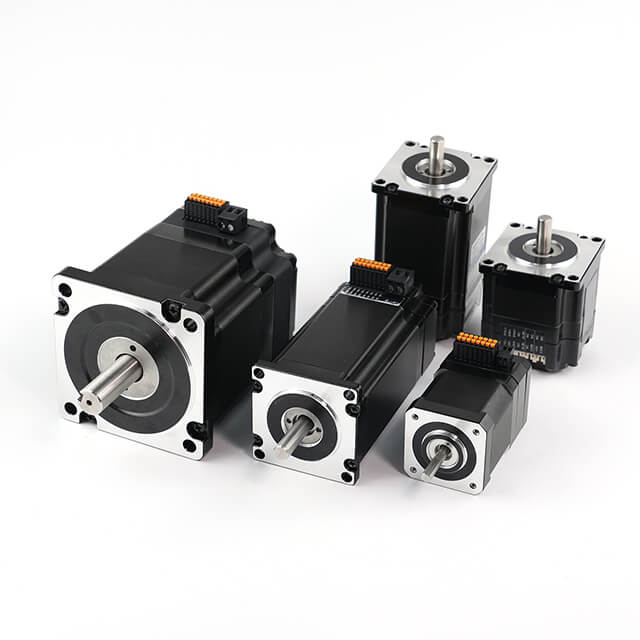
Integrated servo motors play a crucial role in the modern design and performance of doner kebab machines. These motors combine multiple essential components into one compact unit—typically the motor, encoder, drive electronics, and controller. This integration provides reliable motion control, high precision, and efficient operation, making the technology ideal for commercial food equipment.
An integrated servo motor is a motion-control solution that includes:
Servo Motor – Provides rotational motion and torque
Encoder – Measures position, speed, and rotation accuracy
Motor Driver/Controller – Manages power delivery and motor behavior
Communication Interface – Allows integration with control systems or automation
All components are built into the motor body, eliminating the need for external drivers and reducing wiring complexity. For doner kebab machines, this compactness is essential due to limited internal space and demanding kitchen environments.
Doner kebab machines must rotate heavy meat stacks continuously and evenly while maintaining stable performance throughout long working hours. Integrated servo motors fulfill this requirement by offering:
Even cooking depends on uniform rotation. Servo motors maintain a constant, controlled speed—even when load conditions change as the meat cooks and becomes lighter. This ensures:
Consistent browning
Uniform heat exposure
Better texture and flavor
A doner kebab machine must rotate a large vertical meat stack—sometimes weighing up to 50 kg. Integrated servo motors generate high starting torque and sustain torque output at low RPMs, preventing stalling and ensuring smooth operation.
With encoder feedback, the motor can automatically adjust its speed or torque based on load variations. In advanced kebab machines that include automated slicing, this feedback becomes even more important for accurate blade positioning and cutting consistency.
Because the motor and controller are combined:
Fewer parts are needed
Wiring is simplified
Fault points are reduced
This results in greater machine reliability and easier servicing, which is beneficial in commercial kitchens where downtime must be minimized.
Integrated servo motors are commonly sealed with high IP ratings (IP65 or higher), protecting them from:
Grease
Smoke
High temperature
Cleaning chemicals
This durability is vital for handling the harsh environment inside shawarma and kebab equipment.
Using integrated servo motors in doner kebab machines enhances several performance areas:
More consistent cooking due to stable rotation
Improved slicing accuracy in automated machines
Higher energy efficiency compared to traditional motors
Longer operational life with less mechanical wear
Compact design ideal for modern equipment layouts
Integrated servo motors bring advanced motion control, precision, and reliability to doner kebab machines. Their ability to maintain smooth rotation, deliver high torque, and support automation makes them a key component in producing high-quality doner kebab efficiently and consistently. As food-service equipment evolves, integrated servo motors will remain essential for achieving top-tier performance and long-term durability.
An integrated servo motor combines the motor, encoder, controller, and power electronics into a single compact unit. For doner kebab machines—both electric and gas-powered—this architecture offers unmatched benefits in precision slicing, smooth rotation, torque delivery, and speed control.
Unlike brushed motors or standalone servo systems, integrated servo motors minimize wiring, reduce installation complexity, and enhance durability in demanding commercial kitchen environments.
Key advantages for kebab equipment include:
High-precision rotation for even cooking and perfect meat texture
Accurate position control, ideal for automated slicers
Compact design that fits within tight machine housings
Reduced heat generation, ensuring long operational life
Superior reliability in environments with smoke, grease, and continuous movement
Preparing high-quality doner kebab requires consistent rotation speed, continuous torque output, and accurate cutting cycles. Integrated servo motors provide these performance essentials, enabling machines to deliver predictable and repeatable cooking results.
Unlike basic DC motors, integrated servo motors maintain constant RPM under varying load, ensuring that:
Meat cooks uniformly on all sides
Heat distribution remains stable
The meat surface develops a balanced seal and caramelization
Servo technology allows doner machines to integrate:
Automatic slicing systems
Programmable rotation profiles
Multi-axis motion for premium cutting units
Smart sensors for load detection
This level of automation reduces human error and enables scalable, repeatable food production.
To withstand the challenges of commercial food equipment, servo motors must offer robust engineering, optimized thermal management, and high mechanical strength. The following features are essential for doner kebab systems.
Doner machines rotate large, heavy meat stacks—sometimes 50 kg or more. Integrated servo motors offer high torque at low speeds, ensuring:
Smooth rotation even under heavy loads
Zero stalling during long operating hours
Stable RPM for optimal cooking
Encoders enable micro-level motion accuracy. With high-resolution optical or magnetic encoders, servo motors deliver:
Precise position feedback
Optimized slicing accuracy
Smooth motor adjustments for variable thickness cutting
An integrated motor eliminates separate controllers, reducing:
Wiring complexity
Cabinet space
EMI interference
It also ensures faster installation and easier maintenance.
Kebab machines expose components to grease, heat, moisture, and cleaning agents. IP65 or higher ratings ensure:
Protection against kitchen environments
Extended lifespan
Reliable operation in continuous-duty environments
A key advantage of integrated servo motors is their efficient thermal behavior, preventing overheating during extended operation—common in 24/7 restaurants and commercial kitchens.
Integrated servo motors have become a cornerstone technology in modern doner kebab machines, offering precise motion control, high reliability, and compact design. These motors enable a wide range of applications within doner systems, from controlling rotation and slicing to powering automated accessories and smart monitoring systems. Understanding these applications helps manufacturers and operators optimize performance, food quality, and operational efficiency.
The most fundamental application of servo motors in doner machines is rotating the meat stack. Key aspects include:
Precision RPM Control: Servo motors maintain stable rotation speeds for even cooking, ensuring consistent browning and flavor.
Variable Speed Profiles: Operators can adjust the rotation speed for different types of meat or cooking requirements.
High Torque Capability: Servo motors handle heavy meat loads without stalling, even at slow rotation speeds.
This application ensures that meat cooks uniformly, reduces overcooking on certain sides, and improves the final product’s texture and appearance.
Many modern doner kebab machines incorporate automatic slicing mechanisms, where integrated servo motors are essential for:
Blade Positioning: Servo motors precisely control the vertical or horizontal position of slicing blades.
Consistent Slice Thickness: High-resolution encoder feedback ensures that each slice is uniform, improving portion control and presentation.
Smooth Motion: Integrated servo motors eliminate jerky movements, preventing tearing or uneven cuts.
This application is critical in high-volume kitchens where efficiency, consistency, and safety are priorities.
For machines with adjustable slicing mechanisms, servo motors power the movement of blade carriages:
Vertical Travel: Moves blades along the height of the meat stack, allowing uniform slicing from top to bottom.
Horizontal Travel: Enables side-to-side motion for precise portioning and automated cutting patterns.
Programmable Motion Sequences: Servo motors can execute pre-programmed cutting routines for different slice thicknesses or portion sizes.
This ensures precise and repeatable results in automated doner kebab systems.
Integrated servo motors can monitor load and torque, supporting real-time safety and operational control:
Detect excessive load on the motor or meat stack
Automatically adjust rotation speed to prevent stalling
Trigger alerts for maintenance or operational issues
These features protect both the machine and the food product, reducing downtime and improving reliability.
In advanced doner kebab systems, servo motors are used in smart, connected operations:
Remote Monitoring: Operators can check motor performance, rotation speed, and slicing cycles via apps or cloud platforms.
Predictive Maintenance: Continuous monitoring allows early detection of wear or abnormal operation, reducing unexpected breakdowns.
Data Logging: Performance data can be recorded for operational optimization and quality control.
Servo motors with built-in communication interfaces are essential for these IoT-enabled applications.
Large-scale doner production lines use multiple servo motors for synchronized operations:
Rotating multiple meat stacks in parallel
Coordinating automated slicing with rotation and meat feeding systems
Integrating with conveyor belts or robotic portioning systems
This application demonstrates the versatility and scalability of integrated servo motors in high-volume commercial environments.
Using integrated servo motors in these applications also contributes to:
Reduced Power Consumption: Servo motors adjust power dynamically to match load requirements.
Minimized Mechanical Wear: Smooth motion reduces stress on gears and bearings.
Extended Lifespan: Reliable components and closed-loop control enhance long-term performance.
This makes servo-driven doner kebab systems both cost-effective and durable.
Integrated servo motors serve multiple critical applications within doner kebab machines, from primary meat rotation and automated slicing to blade carriage control and smart system integration. Their precision, torque capability, and compact design make them ideal for commercial and industrial doner systems, improving food quality, operational efficiency, and reliability. Adopting servo-driven technology allows manufacturers and operators to deliver consistent, high-quality kebabs while reducing maintenance and energy costs.
Integrated servo motors offer significant advantages for modern doner kebab machines, making them the preferred choice for manufacturers aiming for high-performance, reliable, and efficient equipment. Their compact, smart, and precise design improves every aspect of kebab preparation—from rotation and slicing to energy consumption and long-term machine durability.
One of the most important benefits is high-precision rotational control. Doner kebab machines rely on consistent rotation to ensure even heat distribution across the meat stack. Integrated servo motors maintain stable RPM regardless of load changes, ensuring:
Even browning on all sides
Consistent caramelization and texture
Better heat penetration and juicier meat
This directly improves the overall food quality and reduces cooking inconsistencies.
Doner kebab machines often carry large meat stacks that can weigh up to 50 kg or more. Integrated servo motors deliver high torque at low speeds, which is essential for:
Lifting heavy initial loads without stalling
Smooth, controlled rotation throughout service hours
Stable performance even as the meat weight decreases
This ensures reliable operation from start to finish, regardless of load variations.
Integrated servo motors support advanced control features that are critical in automatic doner and shawarma machines. With built-in controllers and encoders, they enable:
Automated slicing systems
Adjustable rotation speed profiles
Precise blade positioning
Programmable cooking and cutting routines
These capabilities allow manufacturers to produce fully or semi-automated machines, reducing labor and improving efficiency.
Servo motors are significantly more energy-efficient than brushed DC motors or basic AC motors. They achieve:
Higher electrical-to-mechanical efficiency
Reduced heat generation
Smart load management
Lower power consumption over long working hours
This makes them ideal for restaurants that operate their kebab machines continuously.
Since integrated servo motors combine the motor, driver, and control electronics into one compact unit, they reduce the number of components that can fail. Benefits include:
Fewer wiring issues
Simplified troubleshooting
Reduced need for mechanical adjustments
Longer service intervals
Their sealed, industrial-grade construction also protects them from grease, dust, heat, and moisture in commercial kitchens.
In doner kebab machines, internal space is limited. Integrated servo motors eliminate the need for external controllers, significantly reducing the machine’s wiring footprint. This offers:
More compact machine designs
Cleaner internal layouts
Easier installation and assembly
This is particularly beneficial for countertop doner machines and modern compact rotisserie systems.
For machines equipped with automatic cutters, integrated servo motors ensure:
Accurate blade travel
Controlled cutting pressure
Adjustable slice thickness
Smooth and repeatable cutting cycles
This results in perfectly portioned slices, improving presentation and reducing food waste.
Integrated servo motors often include high IP-rated protection (typically IP65 or higher). This ensures resilience against:
Grease and oil exposure
High ambient heat
Steam and moisture
Frequent cleaning routines
Their durability ensures long operational life, even under 24/7 commercial use.
Many integrated servo motors are compatible with modern communication protocols such as CANopen, Modbus, or EtherCAT. This enables:
Remote monitoring
Predictive maintenance
Real-time performance tracking
Integration with smart kitchen systems
These features reduce unexpected failures and improve operational efficiency.
Overall, integrated servo motors increase:
Machine lifespan
Food quality consistency
Operational efficiency
User convenience
Brand reputation for manufacturers
The result is a durable, precise, and high-performance doner kebab machine that outperforms models using traditional motors.
Selecting the right integrated servo motor for a doner kebab machine is a key step in ensuring reliable performance, consistent cooking, efficient slicing, and long-term durability. The choice depends on the machine’s size, capacity, intended use (manual or automated slicing), expected load, duty cycle, and environmental conditions. Below are critical factors and criteria to guide your decision.
Estimate Meat Stack Weight: Begin by calculating the maximum weight of meat your machine will rotate — this includes full capacity meat stack, plus any skewers, rods, or supporting hardware.
Match Motor Torque Output: Choose a servo motor whose torque rating comfortably exceeds the required torque to rotate that load at low speed. High torque is especially important at startup (initial load), and when meat is heavy or uneven.
Ensure Continuous Torque Stability: For extended cooking hours, select a motor able to deliver continuous torque without overheating or stalling.
Define Target RPM Range: Doner kebab machines often rotate at relatively low RPMs for even cooking. Ensure the servo motor supports smooth operation in that low–to–medium RPM range.
Support Variable Speed Control: If you require adjustable rotation speeds — for example, slow rotation for searing and faster rotation for initial cooking — choose a motor with precise speed regulation.
Maintain Stability Under Load Variation: As meat is consumed (weight decreases), the motor should maintain consistent speed automatically.
High‑Resolution Encoder: For machines using automatic slicing or automated control, a high-resolution encoder ensures accurate position feedback. This improves cutting precision if blades or slicing mechanisms are involved.
Closed‑Loop Control Capability: Integrated servo motors with closed-loop control adjust power output dynamically based on load feedback. This enhances torque stability, speed consistency, and overall system responsiveness.
Compact Integrated Design: Because internal space in kebab machines is often limited, preference should go to servo motors combining motor, driver, and control electronics.
Standard Mounting Interface: Ensure the motor’s flange, shaft, and mounting pattern match your machine’s design, or can be adapted without structural changes.
Sufficient Shaft Strength and Size: The shaft must resist bending or wobble under heavy meat loads and maintain alignment over time.
Continuous-Duty Rating: Choose a motor rated for continuous use (rather than intermittent or short duty cycles), particularly for commercial kitchens or high-volume restaurants.
Heat Dissipation Features: Integrated servo motors should have good thermal design, possibly including aluminum housings or built‑in cooling mechanisms, to prevent overheating.
Overload Protection & Monitoring: Features such as over-temperature shutdown or overload alarms are valuable for protecting both motor and meat stack integrity.
Ingress Protection (IP) Rating: Prefer motors rated IP65 or higher, to resist grease, dust, steam, and moisture common in shawarma/doner environments.
Corrosion-Resistant Construction: Stainless steel or coated housings offer greater resistance against grease, cleaning chemicals, or humidity.
Vibration and Shock Resistance: The motor should withstand vibrations from heavy rotating meat and occasional mechanical impacts without degradation.
Communication Protocols: If your machine is part of a more advanced system, ensure the servo motor supports relevant control protocols (e.g., analog/digital I/O, pulse‑and‑direction, or fieldbus standards) for integration into PLC/HMI environments.
Encoder Output Format: Confirm that the encoder’s feedback signals (e.g., incremental, absolute, resolver) match the automation controller or slicing system.
Ease of Integration: Integrated servo motors should simplify wiring and reduce external hardware requirements — this eases installation, maintenance, and future upgrades.
Modular or Replaceable Components: Although integrated, check that key parts (e.g., bearings, seals, encoder modules) can be serviced or replaced if needed.
Manufacturer Support & Specifications: Reliable documentation, wiring diagrams, installation guidelines, and replacement part availability are critical for long-term operation.
Spare Parts Availability: Choose models from vendors who supply spare units or service kits — especially for high-use commercial machines.
Avoid Over-Specification: While choosing a robust servo motor is important, overspending on excessive torque or capacity may not yield practical benefits for small or low‑volume machines.
Plan for Future Upgrades: If you expect to scale up volume, or add automated slicing or other features later, selecting a slightly more capable motor now might save upgrades later.
Consider Total Cost of Ownership: Evaluate energy consumption, maintenance frequency, downtime costs, and longevity — a more expensive servo motor may pay off through reliability and lower operating costs.
Food-Safe Materials and Coatings: While the motor itself doesn’t touch food, using corrosion-resistant materials ensures safe operation in a food-preparation environment.
Electromagnetic Compatibility (EMC) and Electrical Safety: Ensure the motor’s electronics are designed to meet safety and EMI standards, to prevent interference with other kitchen devices or control systems.
Certifications & Warranty Coverage: Prefer motors with industry-standard certifications and a warranty that covers commercial-duty usage.
Selecting the proper integrated servo motor for a doner kebab machine requires careful evaluation of load requirements, speed and torque needs, environmental conditions, integration compatibility, and long‑term maintenance considerations. By systematically assessing these factors, you can ensure reliable performance, consistent cooking and slicing, and a durable machine that operates smoothly in demanding commercial settings.
The evolution of doner kebab machines is being shaped by the integration of smart technologies and servo-driven automation. As restaurants and food-service operators demand higher efficiency, consistent food quality, and scalable operations, integrated servo motors are becoming central to the next generation of intelligent doner machines.
One of the most significant trends is IoT connectivity. Modern servo-driven doner machines are increasingly equipped with sensors and communication modules that connect to cloud or local networks, allowing:
Real-time monitoring of motor performance, rotation speed, and torque load
Remote diagnostics and predictive maintenance alerts
Data logging for energy consumption, duty cycles, and operational efficiency
This connectivity enables operators to optimize performance, reduce downtime, and enhance service consistency without needing to manually inspect each machine.
Artificial intelligence is starting to influence kebab machine operation by:
Analyzing meat size, weight, and moisture content to automatically adjust rotation speed
Optimizing slicing patterns for uniform portioning
Predicting optimal cooking times to maintain consistent taste and texture
Servo motors, with precise motion control and rapid feedback loops, make it possible for AI algorithms to execute these adjustments accurately in real time, elevating both food quality and operational efficiency.
Smart servo systems are enabling full automation of slicing mechanisms. This trend includes:
Blade positioning and thickness control managed entirely by servo-driven actuators
Multi-axis motion for vertical or horizontal slicing adjustments
Integration with weight sensors to produce portions of consistent size
These automated systems reduce labor dependency, ensure uniform portions, and support high-volume commercial kitchens without sacrificing food quality.
Future servo-driven doner machines are designed for optimized energy use, leveraging:
Variable torque control to match motor output with load conditions
Sleep or idle modes during low-demand periods
Dynamic power management to reduce heat generation and electricity consumption
This not only lowers operating costs but also contributes to sustainability, an increasingly important factor in modern food-service businesses.
Smart servo motors provide detailed operational data, enabling predictive maintenance. Key benefits include:
Early detection of abnormal load conditions, vibration, or heat build-up
Alerts before mechanical wear or component failure
Scheduling maintenance based on actual usage rather than fixed intervals
This approach minimizes unexpected downtime, extends motor lifespan, and improves overall machine reliability in high-demand commercial environments.
The future favors compact, modular servo-driven systems. Key developments include:
Fully integrated motors with built-in controllers reducing machine footprint
Modular servo units that can be replaced or upgraded without redesigning the machine
Scalable systems that allow multiple motors to work in synchronization for larger or automated doner production lines
This flexibility supports both small restaurants and large-scale industrial food production.
Next-generation servo-driven doner machines will seamlessly integrate into smart kitchen ecosystems, where multiple appliances communicate and coordinate for efficiency. Examples include:
Linking meat preparation, rotation, and slicing to inventory and cooking schedules
Automated reporting of operational efficiency and food production metrics
Coordinated energy management across multiple kitchen devices
Such integration maximizes productivity and supports consistent quality, even in high-volume environments.
The future of doner kebab machines lies in smart, servo-driven automation. From AI-assisted cooking and precision slicing to IoT-enabled monitoring and predictive maintenance, integrated servo motors are central to achieving efficiency, reliability, and consistent food quality. Manufacturers investing in these technologies will lead the industry by delivering innovative, high-performance kebab machines that meet the demands of modern food-service operations.
Integrated servo motors have transformed the performance capabilities of doner kebab machines, delivering unmatched precision, efficiency, and reliability. Their ability to maintain perfect rotation, support automation, and ensure consistent slicing makes them the cornerstone of advanced doner equipment. By choosing the right integrated servo system, manufacturers can significantly enhance machine durability, food quality, and operational efficiency—ensuring long-term success in the competitive food-service market.