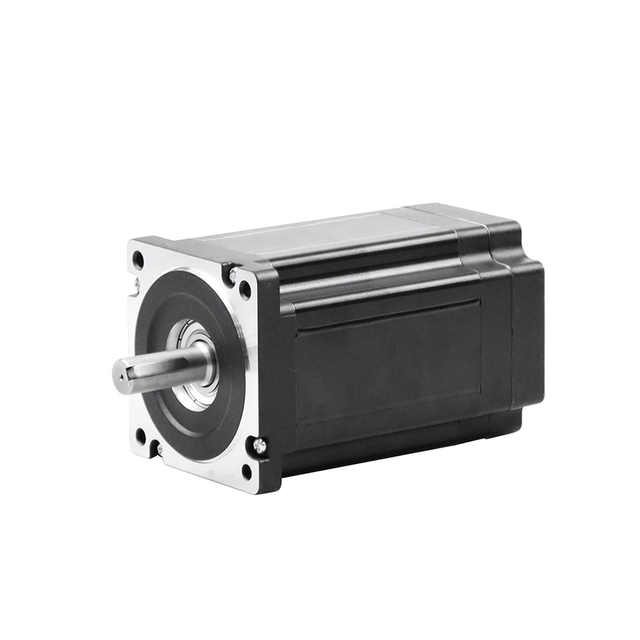
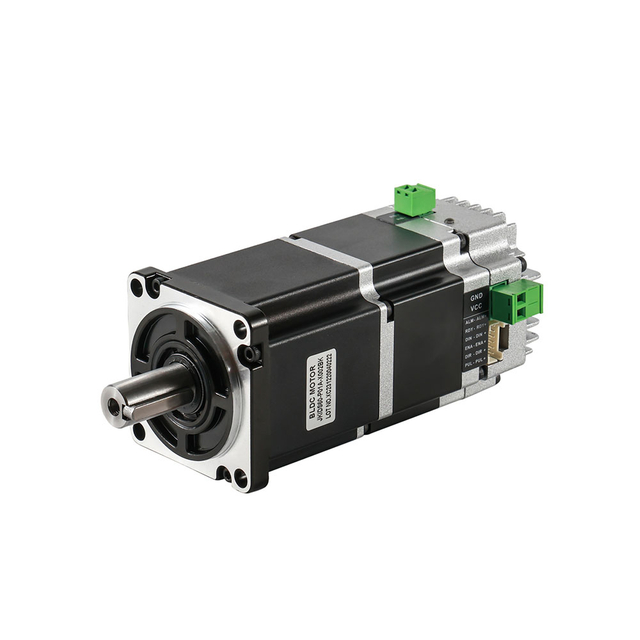
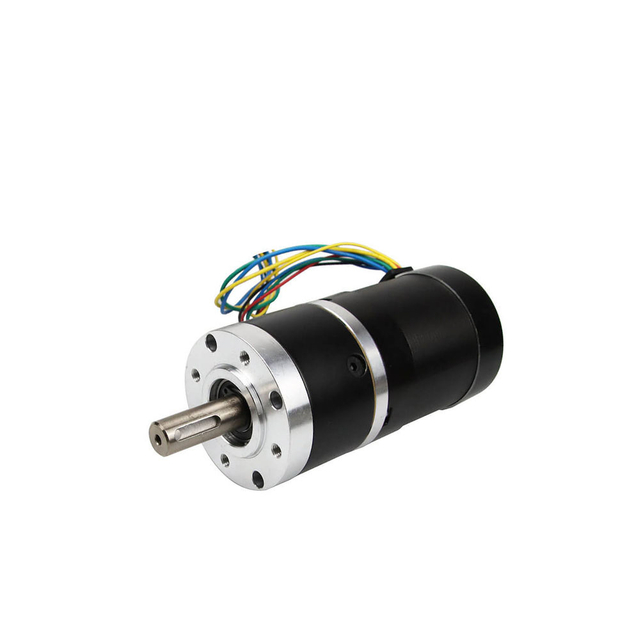
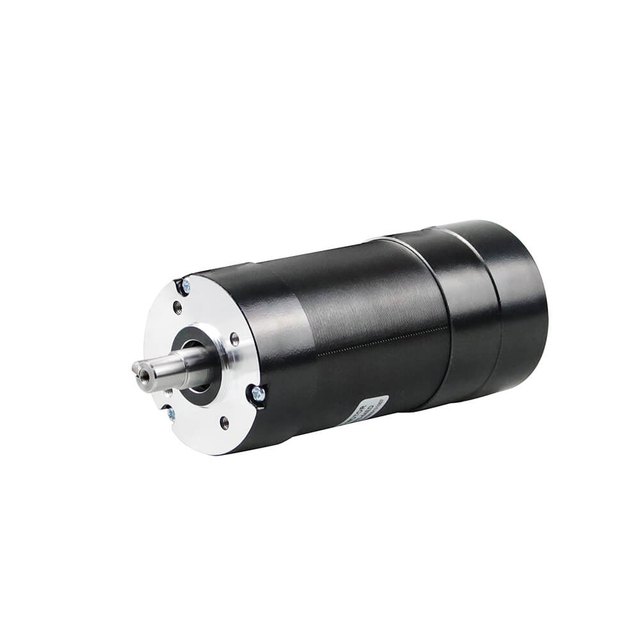
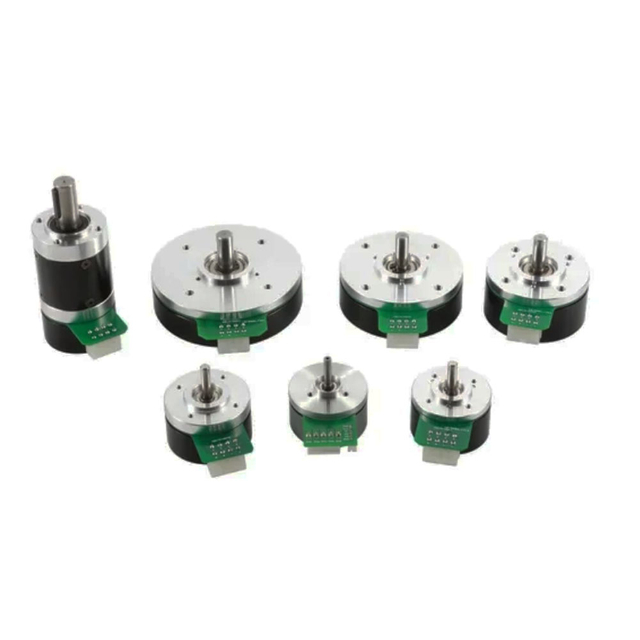
A brushless DC motor (BLDC motor) is an electric motor that operates on direct current (DC) power and uses electronic commutation instead of mechanical brushes to generate rotational motion. Unlike traditional brushed DC motors, a brushless DC motor does not rely on physical contact between brushes and a commutator, which significantly improves efficiency, reliability, and lifespan.
Brushless DC Motor Types
Brushless DC (BLDC) motors are widely used across industrial automation, robotics, medical devices, HVAC systems, electric vehicles, and packaging machinery due to their high efficiency, long lifespan, and precise control. Based on construction, control method, and application requirements, BLDC motors can be classified into several distinct types.
Inner rotor BLDC motors feature a rotor positioned inside the stator windings. This is the most common BLDC motor configuration used in industrial and commercial equipment.
Key Characteristics:
High rotational speed capability
Excellent heat dissipation through the stator
Compact and lightweight design
Precise speed and torque control
Typical Applications:
In outer rotor BLDC motors, the rotor surrounds the stator, increasing torque output at lower speeds.
Key Characteristics:
High torque at low RPM
Smooth and quiet operation
Higher inertia compared to inrunner motors
Ideal for direct-drive applications
Typical Applications:
Sensor-based BLDC motors use Hall effect sensors or encoders to detect rotor position and ensure accurate commutation.
Key Characteristics:
Reliable startup under load
Precise speed and position control
Stable torque output
Excellent low-speed performance
Typical Applications:
Sensorless BLDC motors operate without physical position sensors, using back-EMF detection for commutation.
Key Characteristics:
Typical Applications:
5. Trapezoidal (Six-Step) Brushless DC Motors
These BLDC motors use trapezoidal commutation, where current is applied in six distinct steps per electrical cycle.
Key Characteristics:
Typical Applications:
6. Sinusoidal Brushless DC Motors (Vector-Control BLDC Motors)
Sinusoidal BLDC motors use advanced control algorithms to deliver smooth current waveforms.
Key Characteristics:
Typical Applications:
Precision packaging machines
Medical imaging equipment
Robotics and automation
Semiconductor manufacturing
Integrated BLDC motors combine the motor, drive, controller, and sometimes encoder into a single compact unit.
Key Characteristics:
Typical Applications:
Smart packaging equipment
Automated guided vehicles (AGVs)
Conveyor and material handling systems
Compact industrial machines
8. Frameless Brushless DC Motors
Frameless BLDC motors are supplied as stator and rotor kits, allowing direct integration into machine structures.
Key Characteristics:
Typical Applications:
Collaborative robots (cobots)
High-end automation systems
Aerospace and defense equipment
Medical robotics
9. High-Voltage Brushless DC Motors
These motors operate at higher voltage levels, enabling increased power output and efficiency.
Key Characteristics:
Typical Applications:
Conclusion
The wide range of brushless DC motor types allows engineers and manufacturers to select the ideal motor for each application based on torque requirements, speed range, control precision, efficiency, and installation constraints. From compact sensorless motors to advanced integrated and frameless designs, BLDC motors continue to drive innovation across modern industrial and commercial systems.
How a Brushless DC Motor Works
A brushless DC motor consists of three main components:
Stator – Contains multiple windings that create a rotating magnetic field when energized
Rotor – Made of permanent magnets that follow the rotating magnetic field
Electronic Controller (Drive) – Switches current between stator windings based on rotor position
The controller determines the rotor’s position using Hall effect sensors, encoders, or sensorless back-EMF detection. By precisely controlling the sequence and timing of current flow, the controller produces continuous, smooth rotation.
In today’s highly automated industrial landscape, packaging machines demand motion systems that deliver precision, durability, energy efficiency, and intelligent control. We recognize that the brushless motor for packaging machine applications has become the cornerstone of modern packaging lines, supporting higher throughput, reduced downtime, and consistent product quality. As packaging processes evolve toward greater speed and flexibility, brushless motors stand out as the preferred drive technology across food, beverage, pharmaceutical, cosmetic, and industrial packaging sectors.
What Makes Brushless Motors Ideal for Packaging Machines
Brushless motors have become the preferred drive solution in modern packaging machines due to their ability to deliver high precision, continuous reliability, and superior efficiency. As packaging lines demand faster cycle times, consistent quality, and reduced operating costs, brushless motor technology provides a clear technical and economic advantage.
High Precision and Repeatable Motion Control
Packaging machines require exact control over speed, position, and torque to ensure consistent sealing, cutting, labeling, and product placement. Brushless motors, combined with advanced electronic drives and feedback devices, deliver highly repeatable motion with minimal deviation. This precision ensures uniform package dimensions, accurate label positioning, and synchronized multi-axis operation.
High-Speed Operation with Stable Performance
Modern packaging equipment operates at increasingly high speeds to meet production targets. Brushless motors maintain stable torque output across wide speed ranges, allowing machines to run faster without sacrificing accuracy or reliability. Smooth acceleration and deceleration reduce mechanical stress and improve overall machine lifespan.
Energy Efficiency and Lower Operating Costs
Energy consumption is a major concern in continuous packaging operations. Brushless motors convert electrical energy into mechanical power with minimal losses, resulting in significantly higher efficiency than brushed or induction motors. This leads to lower power consumption, reduced heat generation, and decreased energy costs over the lifetime of the machine.
Low Maintenance and Long Service Life
The absence of brushes and mechanical commutators eliminates common wear components. Brushless motors operate with minimal mechanical friction, reducing maintenance requirements and extending service intervals. This is especially valuable in packaging environments where downtime directly impacts productivity and profitability.
Excellent Torque Density in Compact Designs
Packaging machines often have space constraints. Brushless motors provide high torque output in compact frame sizes, enabling machine designers to reduce overall equipment footprint while maintaining performance. This high torque density supports direct-drive designs, minimizing the need for gearboxes and reducing system complexity.
Smooth and Quiet Operation
Noise and vibration can affect product quality and workplace comfort. Brushless motors produce low acoustic noise and minimal vibration, ensuring smooth machine operation. This is particularly important in food, pharmaceutical, and cosmetic packaging, where precision and cleanliness are critical.
Superior Thermal Management
Brushless motors generate less heat due to higher efficiency and stator-based heat dissipation. Improved thermal performance allows for continuous-duty operation without overheating, ensuring stable performance in high-speed, high-load packaging lines.
Seamless Integration with Automation Systems
Packaging machines rely on advanced control systems such as PLCs, servo drives, and industrial networks. Brushless motors integrate easily into these systems, supporting real-time control, diagnostics, and synchronization across multiple machine axes. This enables higher automation levels and smarter packaging solutions.
Hygienic and Washdown-Friendly Designs
In food and pharmaceutical packaging, hygiene is essential. Brushless motors are available with sealed housings, smooth surfaces, and high IP ratings, making them suitable for washdown and cleanroom environments. Reduced maintenance also minimizes human intervention in sensitive areas.
Flexibility for Diverse Packaging Applications
From film feeding and sealing to conveying and robotic handling, brushless motors adapt to a wide range of packaging tasks. Their versatility allows manufacturers to standardize motor platforms across multiple machines, simplifying design, maintenance, and spare parts management.
Conclusion
Brushless motors are ideal for packaging machines because they combine precision, speed, efficiency, reliability, and compact design. Their ability to support continuous high-speed operation, integrate seamlessly with automation systems, and reduce total cost of ownership makes them the optimal choice for modern and future-ready packaging equipment.
High-Speed Performance with Stable Output
Packaging machines such as form-fill-seal systems, cartoners, and labeling machines operate at increasingly higher cycle rates. Brushless motors maintain stable torque at high RPM, ensuring uninterrupted motion without vibration or speed fluctuation. This stability translates directly into higher packaging accuracy and reduced product waste.
Energy Efficiency and Cost Optimization
Energy consumption is a critical cost factor in continuous packaging operations. Brushless motors offer significantly higher efficiency compared to brushed or induction motors. With optimized electromagnetic design and electronic control, these motors convert electrical energy into mechanical power with minimal loss, delivering lower operating costs and supporting sustainability initiatives.
Low Maintenance and Extended Service Life
By removing brushes, brushless motors eliminate one of the most common wear components in traditional motors. Packaging machines benefit from reduced maintenance intervals, lower spare part costs, and extended uptime. This is particularly valuable in 24/7 packaging lines where unexpected downtime leads to substantial financial loss.
Precision Motion Control for Advanced Packaging Tasks
Modern packaging machines require precise synchronization between multiple axes. Brushless motors, paired with encoders and servo drives, enable exact speed, position, and torque control. This precision supports demanding applications such as cut-to-length film feeding, accurate label placement, and multi-axis robotic packaging systems.
Form-Fill-Seal Packaging Systems
In vertical and horizontal form-fill-seal machines, brushless motors control film transport, sealing jaws, and cutting mechanisms. Their precise motion ensures consistent bag length, accurate sealing, and clean cuts, even at high production speeds.
Conveying and Product Handling Systems
Packaging lines rely heavily on conveyors for product transfer. Brushless motors provide smooth acceleration and deceleration, reducing product movement and ensuring stable transport of fragile items such as bottles, blister packs, or cartons.
Labeling and Coding Machines
High-speed labeling machines require motors that can respond instantly to changing speeds and positions. Brushless motors deliver fast dynamic response, ensuring labels are applied with perfect alignment regardless of line speed variations.
Cartoning and Case Packing Equipment
Cartoners and case packers involve complex, synchronized movements. Brushless motors enable multi-axis coordination, ensuring cartons are erected, filled, and sealed with maximum precision and minimal mechanical stress.
Robotic Packaging Systems
In robotic pick-and-place and palletizing applications, brushless motors power robot joints and linear axes, providing high torque density and accurate positioning. This supports flexible packaging solutions capable of handling diverse product formats.
Technical Features That Define High-Quality Brushless Motors
Integrated Encoders for Closed-Loop Control
Encoders provide real-time feedback on position and speed, enabling packaging machines to maintain tight tolerances and adapt instantly to load changes. This ensures consistent performance even during rapid acceleration or deceleration cycles.
Compact and High Torque Density Design
Space optimization is critical in packaging machinery. Brushless motors offer high torque in compact frames, allowing machine designers to reduce overall equipment size while maintaining performance.
Advanced Thermal Management
Continuous operation generates heat that can impact motor lifespan. High-quality brushless motors incorporate optimized winding design and efficient heat dissipation, ensuring reliable operation in demanding production environments.
Compatibility with Industrial Automation Systems
Brushless motors integrate seamlessly with PLC-controlled systems, industrial Ethernet networks, and smart drives. This enables real-time monitoring, predictive maintenance, and data-driven optimization of packaging lines.
Brushless Motors vs Traditional Motor Technologies
Selecting the right motor technology is critical for achieving optimal performance, efficiency, and reliability in modern machinery. Brushless motors have increasingly replaced traditional motor technologies due to their advanced design and superior operational characteristics. Below is a detailed comparison between brushless motors and traditional motor technologies, including brushed DC motors and induction (AC) motors.
Brushless Motors Overview
Brushless motors use electronic commutation to control the current supplied to stator windings, eliminating mechanical brushes and commutators. This design enables precise control, high efficiency, and extended service life.
Key Features:
Traditional Brushed DC Motors
Brushed DC motors rely on physical brushes and a commutator to switch current within the motor.
Characteristics:
Simple control and low initial cost
Mechanical wear due to brush contact
Higher electrical noise and sparking
Limited speed and lifespan
AC Induction Motors
Induction motors are widely used in industrial applications due to their rugged construction and ability to operate directly from AC power.
Characteristics:
Robust and durable design
Lower initial motor cost
Limited speed control without a variable frequency drive (VFD)
Lower efficiency at partial loads
Efficiency Comparison
Brushless motors deliver significantly higher efficiency than both brushed DC and induction motors. The absence of brushes reduces electrical losses, while optimized magnetic design improves energy conversion. This results in lower power consumption and reduced heat generation during continuous operation.
Maintenance and Reliability
Brushless motors require minimal maintenance because there are no brushes to replace. Traditional brushed motors experience mechanical wear that leads to frequent servicing. Induction motors, while durable, may still require maintenance for bearings and external drive components.
Speed and Torque Control
Brushless motors provide precise control of speed, torque, and position using electronic drives and feedback systems. Brushed DC motors offer basic speed control but lack accuracy at low speeds. Induction motors require additional control hardware to achieve comparable precision.
Noise and Vibration
Brushless motors operate with low noise and minimal vibration, making them ideal for precision and clean environments. Brushed motors generate electrical noise and sparking, while induction motors can produce audible mechanical and electromagnetic noise at high loads.
Size and Power Density
Brushless motors offer high torque density in compact designs, allowing for smaller and lighter machines. Traditional motors typically require larger frames to deliver equivalent power, increasing system size and weight.
Thermal Performance
Heat in brushless motors is primarily generated in the stator, where it can be efficiently dissipated. Traditional motors often experience higher internal heat buildup, which can shorten component lifespan and reduce reliability.
System Integration and Automation
Brushless motors integrate seamlessly with modern automation systems, including PLC-controlled machines, servo drives, and industrial networks. Traditional motors often require additional components for advanced control, increasing system complexity.
Cost Considerations
While brushless motors typically have a higher initial cost, their lower energy consumption, reduced maintenance, and longer lifespan result in a lower total cost of ownership compared to traditional motor technologies.
Application Suitability
Brushless Motors: Automation, packaging machines, robotics, medical devices, electric vehicles
Brushed DC Motors: Low-cost, low-duty applications
Induction Motors: Constant-speed industrial applications, pumps, fans
Conclusion
Brushless motors outperform traditional motor technologies in efficiency, precision, reliability, and long-term cost effectiveness. As industries continue to demand higher performance and smarter automation, brushless motors have become the preferred solution for modern motion control and power transmission systems.
Hygiene and Compliance in Packaging Environments
Hygiene and regulatory compliance are critical requirements in modern packaging environments, particularly in the food, beverage, pharmaceutical, cosmetic, and medical device industries. Packaging equipment must be designed and operated to prevent contamination, ensure product safety, and comply with strict international standards. We recognize that achieving consistent hygiene is not only a regulatory obligation but also a key factor in maintaining brand integrity and consumer trust.
Importance of Hygiene in Packaging Operations
Packaging is often the final stage before products reach consumers. Any contamination introduced at this stage can compromise product quality and safety. Proper hygiene in packaging environments helps to:
Prevent microbial, chemical, and physical contamination
Maintain product integrity and shelf life
Ensure consistent product quality
Protect consumer health
Reduce product recalls and regulatory penalties
Regulatory Standards and Compliance Requirements
Packaging environments are governed by a range of international and regional standards. Compliance with these regulations is essential for market access and operational continuity.
Commonly Applied Standards Include:
FDA regulations for food and pharmaceutical packaging
EU food contact and machinery directives
GMP (Good Manufacturing Practice) guidelines
HACCP (Hazard Analysis and Critical Control Points) systems
ISO 22000 and ISO 9001 quality management standards
Packaging machinery and components must be designed to support compliance with these frameworks.
Hygienic Design of Packaging Equipment
Hygienic design minimizes the risk of contamination and simplifies cleaning and sanitation processes.
Key Design Principles Include:
Smooth, non-porous surfaces to prevent residue buildup
Rounded edges and crevice-free construction
Sealed housings to protect internal components
Minimal horizontal surfaces where debris can accumulate
Equipment designed with hygiene in mind reduces cleaning time and improves operational efficiency.
Role of Motors and Drives in Hygienic Packaging
Motors play a critical role in packaging machinery hygiene. Poorly designed motors can become contamination points due to lubricant leakage, dust accumulation, or water ingress.
Hygienic motor features include:
Washdown-capable designs
High ingress protection (IP65, IP67, or higher)
Corrosion-resistant materials such as stainless steel
Smooth external surfaces for easy cleaning
Brushless motors are particularly well suited for hygienic packaging environments due to their sealed construction and low maintenance requirements.
Cleaning and Washdown Requirements
Packaging equipment must withstand regular cleaning procedures, including high-pressure washdowns and the use of chemical detergents.
Effective washdown design ensures:
Protection against water and chemical ingress
Resistance to corrosion and surface degradation
Long-term reliability under frequent sanitation cycles
Equipment that meets washdown requirements reduces downtime and supports continuous production.
Environmental Control and Cleanroom Considerations
Certain packaging applications, especially pharmaceuticals and medical devices, require controlled environments.
Key cleanroom considerations include:
Low particle emission from equipment
Reduced vibration and air turbulence
Enclosed and sealed motion components
Compatibility with cleanroom classifications
Hygienic equipment design supports compliance with cleanroom standards and reduces contamination risk.
Documentation, Traceability, and Validation
Compliance is not only about equipment design but also about proper documentation and process control.
Critical compliance practices include:
Material and component traceability
Validation and qualification of packaging equipment
Maintenance and sanitation records
Regular audits and inspections
These practices demonstrate regulatory compliance and support continuous improvement.
Preventive Maintenance and Hygiene Assurance
Preventive maintenance programs are essential to sustaining hygienic conditions.
Effective maintenance strategies include:
Scheduled inspections and cleaning
Replacement of worn seals and components
Monitoring equipment performance and integrity
Training personnel on hygiene protocols
Proactive maintenance reduces contamination risks and ensures consistent compliance.
Conclusion
Hygiene and compliance in packaging environments are fundamental to product safety, regulatory approval, and brand reputation. Through hygienic equipment design, compliant materials, reliable motors, and disciplined operational practices, packaging facilities can maintain the highest standards of cleanliness and regulatory adherence. A robust focus on hygiene not only protects consumers but also strengthens operational efficiency and long-term business success.
Customization Options for Packaging Machine Manufacturers
Customization has become a critical factor for packaging machine manufacturers as production requirements grow more diverse and market demands continue to evolve. We recognize that no two packaging applications are identical. By offering tailored design and engineering options, manufacturers can optimize machine performance, improve reliability, and deliver differentiated solutions across multiple industries.
Customized Motor and Drive Selection
Packaging machines require motion systems that match specific speed, torque, and duty-cycle requirements.
Customization options include:
Voltage and power rating selection
Torque and speed optimization
Integrated servo or brushless motor-drive solutions
Encoder type and resolution customization
These options ensure precise motion control while maximizing energy efficiency and system lifespan.
Mechanical Design and Mounting Flexibility
Packaging machines vary widely in layout and available space. Custom mechanical configurations enable seamless integration into existing designs.
Mechanical customization includes:
Custom shaft dimensions and keyways
Specialized mounting flanges and brackets
Compact or space-saving motor housings
Direct-drive or gearbox-integrated solutions
Such flexibility reduces installation time and simplifies machine assembly.
Control System Integration
Modern packaging equipment relies on advanced automation platforms. Customization ensures compatibility with customer-specific control architectures.
Integration options include:
PLC and motion controller compatibility
Support for industrial communication protocols
Preconfigured control parameters
Integrated safety and monitoring functions
This enables faster commissioning and reliable operation.
Environmental and Hygienic Design Options
Packaging machines often operate in demanding environments such as food processing or pharmaceutical production.
Environmental customization includes:
High IP-rated enclosures for washdown environments
Corrosion-resistant materials
Sealed and smooth-surface designs
Temperature and humidity resistance
These features ensure compliance with hygiene and safety standards.
Software and Motion Profile Customization
Software customization allows packaging machines to adapt to varying product formats and production speeds.
Software-related options include:
Custom motion profiles and acceleration curves
Recipe-based operation for multiple product types
Adaptive speed and load control
Diagnostic and predictive maintenance features
These capabilities enhance flexibility and reduce changeover time.
Modular System Design
Modular designs allow manufacturers to build scalable packaging platforms.
Benefits of modular customization include:
Easy expansion or reconfiguration
Simplified spare parts management
Faster upgrades and retrofits
Reduced total cost of ownership
Modular systems support long-term adaptability.
Safety and Compliance Customization
Packaging machines must comply with regional and industry-specific safety regulations.
Customization options include:
Integrated functional safety features
Emergency stop and torque-off functions
Compliance with international safety standards
Risk assessment and validation support
Safety customization ensures regulatory approval and operator protection.
Branding and Aesthetic Customization
In competitive markets, machine appearance can be a differentiator.
Branding options include:
Custom color schemes
Branded housings and panels
User interface customization
Consistent visual identity across machine lines
These elements enhance brand recognition and customer perception.
Testing, Validation, and Documentation Support
Customized packaging solutions require thorough validation.
Support services include:
Factory acceptance testing
Performance validation
Documentation and technical manuals
Training and after-sales support
This ensures reliable operation and long-term customer satisfaction.
Conclusion
Customization options empower packaging machine manufacturers to deliver high-performance, compliant, and future-ready equipment. By tailoring motors, controls, mechanical design, software, and environmental protection, manufacturers can meet diverse application needs while improving efficiency, reliability, and competitiveness in a rapidly evolving packaging industry.
The packaging industry is undergoing a rapid transformation driven by digitalization, Industry 4.0, and intelligent automation. At the core of this evolution are smart brushless motors, which combine high-efficiency electromechanical design with advanced electronics, connectivity, and data intelligence. We recognize that these technologies will define the next generation of packaging automation, enabling higher productivity, greater flexibility, and smarter decision-making.
Integration of Intelligence at the Motor Level
Future brushless motors are no longer passive motion components. They are evolving into intelligent mechatronic units with embedded processors, sensors, and firmware.
Key developments include:
Built-in motion control algorithms
Embedded condition monitoring
Onboard diagnostics and fault detection
Local data processing at the motor level
This intelligence reduces system complexity and enhances real-time responsiveness.
Advanced Connectivity and Industrial Networking
Smart brushless motors are being designed for seamless integration into modern packaging networks.
Emerging connectivity features include:
Native support for industrial Ethernet protocols
Real-time data exchange with PLCs and MES systems
Cloud connectivity for remote monitoring
Secure communication for industrial environments
This connectivity enables transparent machine operation and centralized performance management.
Predictive Maintenance and Condition Monitoring
Unplanned downtime is a major cost driver in packaging operations. Smart brushless motors leverage sensor data to support predictive maintenance strategies.
Key monitoring parameters include:
Temperature and vibration trends
Load and torque variations
Operating hours and duty cycles
Electrical performance indicators
By analyzing these data points, maintenance can be scheduled proactively, reducing downtime and extending equipment life.
Adaptive and Self-Optimizing Motion Control
Future packaging machines will require rapid adaptation to changing products and formats. Smart brushless motors enable adaptive motion behavior.
Capabilities include:
Automatic tuning based on load conditions
Dynamic speed and torque adjustment
Self-optimization for energy efficiency
Real-time compensation for mechanical wear
This adaptability improves consistency and reduces setup time.
Energy Management and Sustainability
Energy efficiency and sustainability are becoming strategic priorities in packaging automation.
Smart motor features support:
Real-time energy consumption tracking
Optimization of power usage during idle states
Reduced peak power demand
Compliance with energy efficiency regulations
These capabilities help manufacturers meet sustainability targets while lowering operating costs.
Modular and Decentralized Drive Architectures
Packaging automation is shifting toward decentralized machine designs, where intelligence is distributed across the system.
Advantages include:
Reduced control cabinet size
Simplified wiring and installation
Greater system scalability
Faster machine commissioning
Smart brushless motors are central to this modular approach.
Enhanced Safety and Functional Integration
Safety requirements continue to evolve alongside automation complexity.
Future brushless motors will feature:
Integrated functional safety functions
Safe torque off and speed monitoring
Built-in diagnostics for safety compliance
Simplified safety certification processes
These features enhance operator protection while reducing system complexity.
Support for Digital Twins and Virtual Commissioning
Digitalization enables packaging machine manufacturers to simulate and optimize performance before physical deployment.
Smart brushless motors support:
Digital twin modeling
Virtual commissioning and testing
Performance simulation under different scenarios
Faster development cycles
This reduces time-to-market and improves design accuracy.
AI-Driven Motion Optimization
Artificial intelligence is emerging as a key enabler in smart packaging systems.
Future applications include:
AI-based motion optimization
Automated anomaly detection
Continuous performance improvement
Intelligent fault prediction
Brushless motors will increasingly act as data sources for AI-driven optimization platforms.
Conclusion
Smart brushless motors represent the future of packaging automation by combining efficiency, intelligence, connectivity, and adaptability. As packaging systems evolve toward fully digital, data-driven operations, these motors will play a critical role in enabling higher productivity, reduced downtime, energy efficiency, and flexible manufacturing. Embracing smart brushless motor technology positions packaging machine manufacturers for long-term competitiveness in an increasingly automated world.
Conclusion: Why Brushless Motors Are Essential for Packaging Machines
We recognize that the brushless motor for packaging machine applications is no longer an option but a necessity. With unmatched efficiency, precision, reliability, and adaptability, brushless motors empower packaging manufacturers to meet rising production demands while maintaining quality and cost control. By integrating advanced brushless motor technology, packaging machines achieve superior performance, extended service life, and readiness for the future of automated manufacturing.