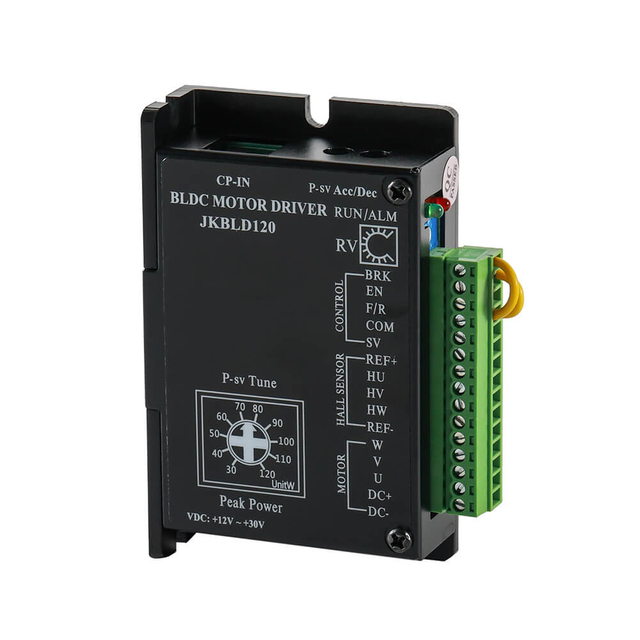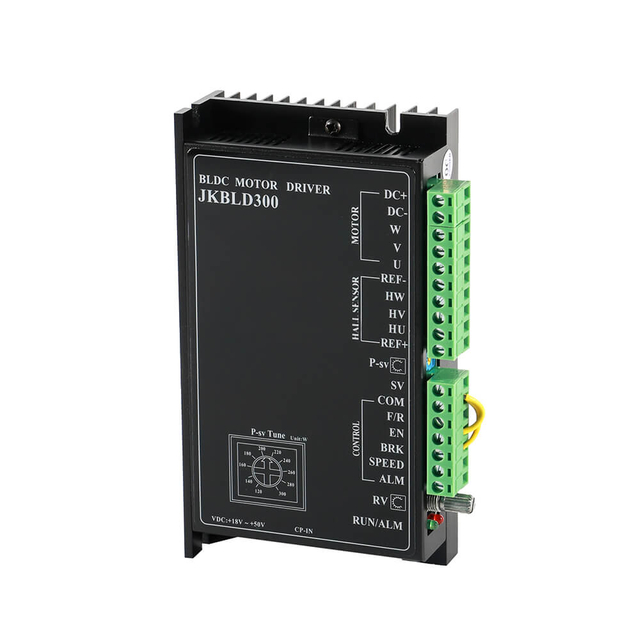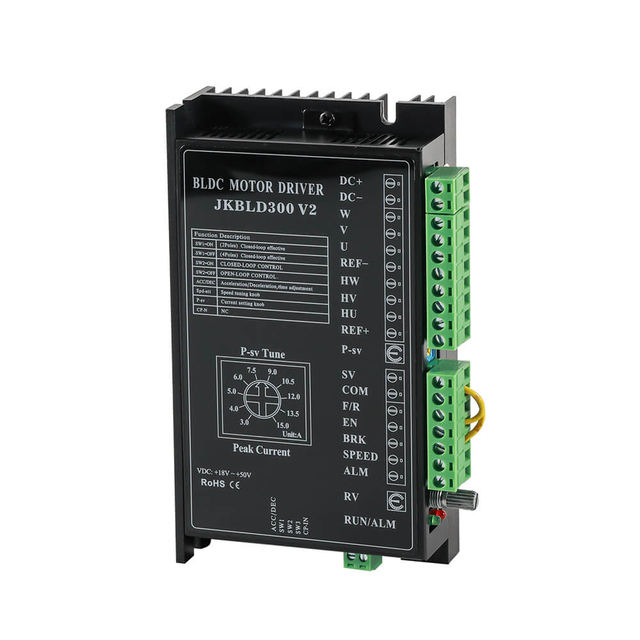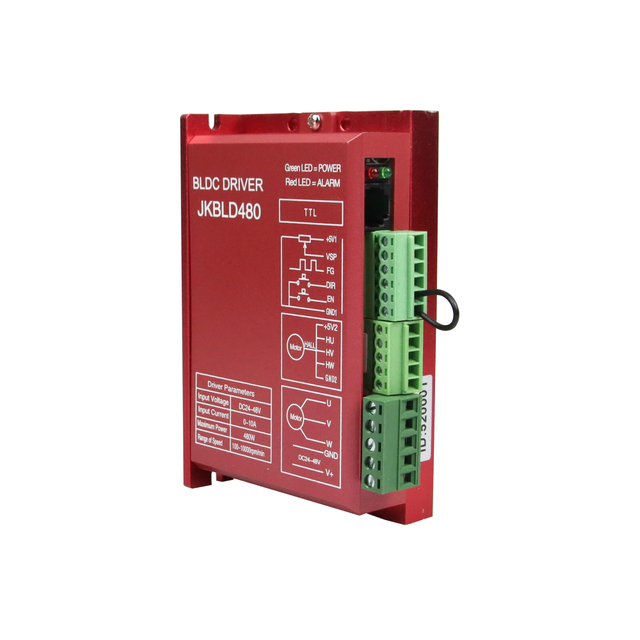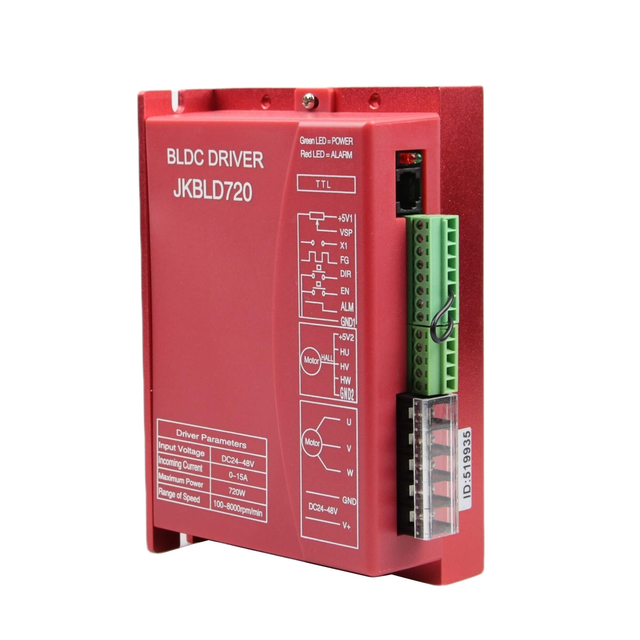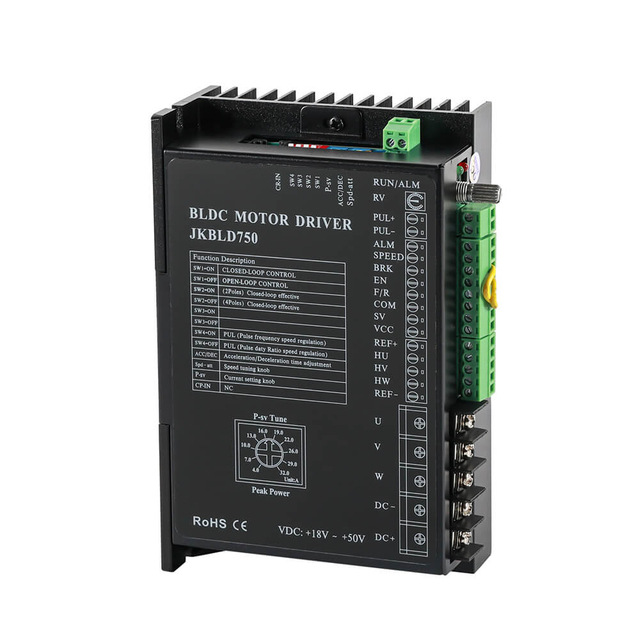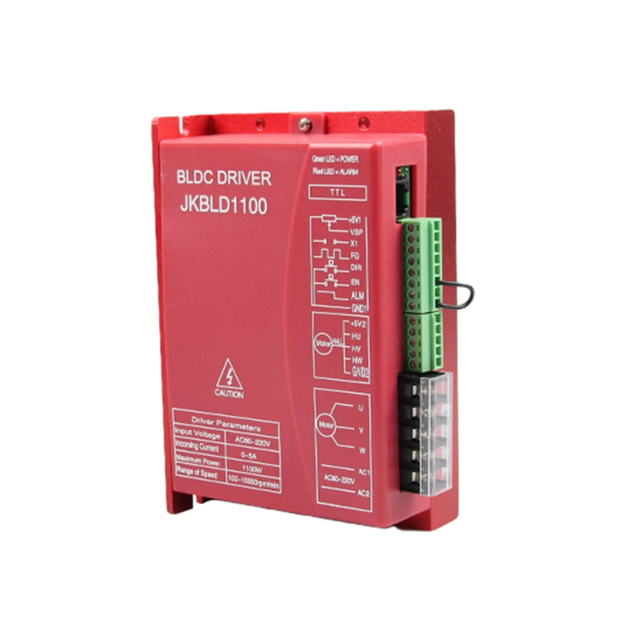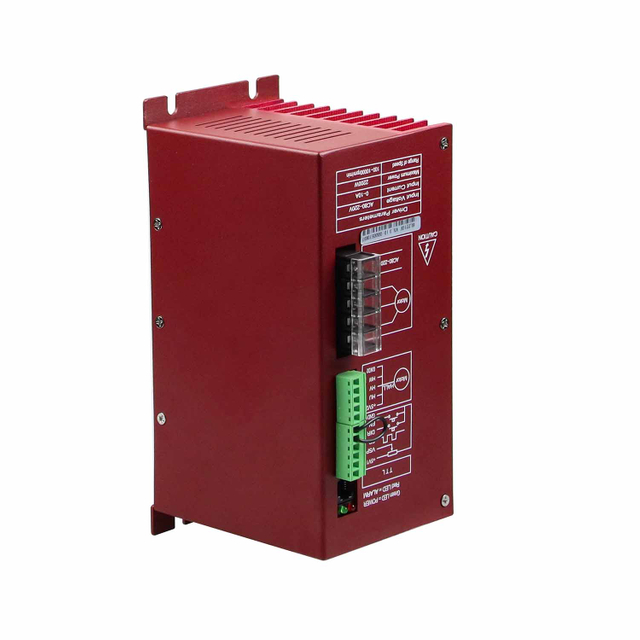
Selecting the right customized BLDC motor driver is a critical decision that directly influences system efficiency, reliability, noise performance, controllability, and lifecycle cost. We approach this process not as a simple component choice, but as a system-level engineering decision. A well-designed BLDC motor driver becomes the intelligence core of your motion system, determining how precisely, safely, and efficiently electrical energy is converted into mechanical motion.
This guide delivers a deep, structured, and application-oriented framework to help engineering teams, product managers, and procurement specialists confidently specify a custom BLDC motor driver that aligns with technical, environmental, and commercial requirements.
A BLDC motor driver is far more than a power amplifier. It integrates power electronics, control algorithms, sensing interfaces, communication protocols, and protection mechanisms into a unified control platform.
A customized driver enables us to:
Match electrical parameters precisely to the motor
Optimize torque, speed, and efficiency curves
Integrate application-specific protections
Embed communication and intelligence
Reduce system footprint and BOM cost
Enhance long-term reliability
Customization transforms a generic controller into a purpose-built motion control solution.
Define Electrical and Performance Requirements with Precision
Voltage and Current Matching
We begin by defining nominal voltage, peak voltage tolerance, continuous current, and peak current demand. These parameters determine:
A professionally customized driver always incorporates headroom for transient loads, regenerative energy, and startup surges. Oversizing is avoided; intelligent engineering replaces brute-force margins.
Torque, Speed, and Dynamic Response
BLDC applications vary dramatically. We analyze:
Rated torque and peak torque
Base speed and maximum speed
Acceleration and deceleration profiles
Load inertia and friction
This data dictates the control topology, current loop bandwidth, and PWM strategy. High-dynamic systems demand fast current regulation, while continuous-duty systems prioritize efficiency and thermal stability.
Six-Step vs. Sinusoidal vs. Field-Oriented Control
The selected control method defines system behavior:
Six-step (trapezoidal) control offers simplicity and cost efficiency
Sinusoidal control reduces torque ripple and acoustic noise
Field-Oriented Control (FOC) delivers maximum efficiency, smooth torque, and high-speed precision
Customized drivers allow us to implement application-optimized firmware, balancing performance, cost, and processing load.
Open-Loop vs. Closed-Loop Systems
We determine whether the system requires:
Sensorless estimation
Hall-effect feedback
Incremental encoders
Absolute encoders
Resolver interfaces
Each option impacts startup behavior, low-speed torque, positioning accuracy, and system redundancy. A customized driver supports multiple sensing architectures or a dedicated optimized solution.
Thermal Design and Power Density Optimization
Heat Generation as a Primary Design Constraint
Every customized BLDC driver must treat thermal performance as a first-order engineering variable. We calculate:
From these values, we design multi-layer PCBs, thermal vias, aluminum substrates, or integrated heat spreaders.
Cooling Strategies
Depending on environment and power density, we specify:
Natural convection layouts
Forced-air channels
Conduction-cooled baseplates
Liquid-cooled cold plates
Customized solutions ensure junction temperatures remain stable, even under worst-case loading and ambient conditions.
Environmental and Mechanical Customization of BLDC Motor Driver
Operating Conditions
Professional customization accounts for:
Ambient temperature extremes
Humidity and condensation
Dust and chemical exposure
Vibration and shock
Altitude derating
We design drivers with conformal coatings, sealed enclosures, reinforced connectors, and vibration-resistant layouts.
Form Factor and Integration
Mechanical design impacts cost, performance, and reliability. We optimize:
Mounting orientation
Connector placement
Cable routing
EMI separation
Service accessibility
A customized BLDC motor driver becomes a mechanical subsystem, not just an electronic board.
Protection, Safety, and Reliability Engineering of BLDC Motor Driver
Core Electrical Protections
A robust customized driver integrates layered protection:
These functions are implemented at both hardware and firmware levels, ensuring microsecond-level reaction speed.
Functional Safety and Compliance
For regulated industries, customization extends to:
A professionally customized solution simplifies certification and market approval.
EMC, EMI, and Signal Integrity Considerations of BLDC Motor Driver
Conducted and Radiated Emissions
High-speed switching introduces noise risks. We engineer:
Optimized gate drive profiles
LC and common-mode filtering
Shielded current paths
Star-grounding architectures
Customized BLDC drivers are laid out to meet global EMC standards while maintaining control accuracy.
Noise Immunity
We also protect low-level signals from interference through:
This ensures stable operation in electrically harsh environments.
Communication and System Intelligence of BLDC Motor Driver
Industrial and Embedded Protocols
Customization enables native integration of:
We design drivers to function as networked motion nodes, not isolated components.
Embedded Features
Advanced customized drivers may include:
This transforms the driver into a smart actuator controller.
Firmware Customization and Algorithm Tuning of BLDC Motor Driver
Motor-Specific Optimization
We customize firmware to match:
This enables precise torque control, higher efficiency, and smoother commutation.
Application-Specific Logic
Customized firmware can embed:
Speed profiles
Position limits
Safety interlocks
Auto-calibration
Fault recovery routines
The driver becomes a functional extension of the product itself.
Manufacturing, Scalability, and Lifecycle Strategy of BLDC Motor Driver
Design for Manufacturability
We ensure:
A customized BLDC motor driver must support mass production without performance drift.
Long-Term Supply and Support
Customization also considers:
Component longevity
Second-source strategies
Firmware version control
Field upgradeability
Service documentation
This protects the product across its entire commercial lifecycle.
Cost Engineering Without Performance Compromise
Professional customization balances:
Silicon selection
PCB complexity
Mechanical tooling
Certification scope
Assembly automation
We engineer the driver to deliver maximum functional density per dollar, avoiding unnecessary features while protecting core performance and safety metrics.
A successful customization program always follows a structured methodology:
System requirement mapping
Motor characterization
Control architecture definition
Thermal and mechanical modeling
EMC and protection design
Firmware algorithm development
Validation under real operating conditions
Manufacturing transition planning
This approach ensures the final driver is not merely compatible, but fully optimized for its intended application.
Conclusion
Choosing a customized BLDC motor driver is an engineering investment that directly impacts product differentiation, operational reliability, efficiency benchmarks, and customer satisfaction. When electrical, thermal, mechanical, and firmware domains are unified into a single customized architecture, the result is a high-performance, application-specific motion control platform built for long-term success.
FAQs — Customized BLDC Motor Driver / Brushless DC Motor Controller / BLDC Motor Controller
1. What is a BLDC motor driver?
A BLDC motor driver is an electronic controller that powers and regulates a brushless DC motor by switching current in the appropriate sequence to ensure precise speed and torque control.
2. What does a brushless DC motor controller do?
A brushless DC motor controller manages commutation, speed, acceleration, and braking by generating the correct three-phase electrical signals to the motor based on rotor position.
3. How is a customized BLDC motor driver different from a standard one?
A customized BLDC motor driver is tailored to specific performance requirements (power level, communication interface, control algorithm, protections, etc.) to match the application’s unique needs rather than using a generic off-the-shelf controller.
4. Can a BLDC motor operate without a BLDC motor controller?
No — brushless DC motors require an electronic controller (driver) to perform commutation and manage current timing since they have no brushes or mechanical commutators.
5. What control signals does a BLDC motor driver accept?
Common control inputs include PWM, analog voltage input, potentiometer control, or communication interfaces like RS-485 or CAN for integration with PLCs or microcontrollers.
6. What speed range can a typical BLDC motor controller support?
Many BLDC motor drivers support wide speed ranges — for example, 0–20,000 RPM — adjustable via analog, PWM, or software controls.
7. What protection features are included in modern BLDC motor drivers?
Modern drivers often include overcurrent protection, overvoltage/undervoltage lockout, thermal protection, short-circuit shutdown, and stall detection for safe operation.
8. What is the role of rotor position detection in BLDC motor controllers?
Rotor position detection (via Hall sensors or sensorless back-EMF estimation) allows the controller to time commutation correctly for smooth and efficient motor operation.
9. Can a BLDC motor controller support both sensor-based and sensorless motors?
Yes — some controllers are designed to operate with either Hall-sensor feedback (for precise low-speed control) or sensorless back-EMF estimation (for simpler, cost-effective systems).
10. What types of commutation can BLDC controllers use?
Controllers may use trapezoidal (six-step) or advanced methods like Field-Oriented Control (FOC) to improve efficiency, smoothness, and responsiveness.
11. Can JKongmotor provide customized BLDC motor driver designs?
Yes — JKongmotor supports OEM/ODM customized BLDC motor driver solutions tailored to customer-specific power ratings, control features, interfaces, and protections.
12. Can customized drivers include specific communication protocols?
Yes — protocols such as RS-485, CANopen, Modbus, or others can be added based on application needs to integrate with automation systems.
13. Is firmware customization possible in a BLDC motor controller?
Yes — customized firmware can be developed to suit special control profiles, feedback logic, tuning parameters, and motion requirements.
14. Can protection features be enhanced in customized BLDC drivers?
Yes — additional protections like enhanced thermal shutdown, fault reporting, or environmental resilience can be integrated.
15. Can the factory build integrated BLDC controller + driver combinations?
Yes — integrated solutions where motor control logic and power electronics are combined can be supplied to save space and simplify wiring.
16. Can a brushless DC motor controller be used in closed-loop systems?
Yes — controllers can support closed-loop speed and current control for improved precision and dynamic performance.
17. Can a customized BLDC motor driver work with a PLC system?
Yes — many customized drivers can interface with PLCs via standard communication protocols or digital control signals.
18. Are dynamic braking features supported by BLDC motor controllers?
Yes — dynamic braking and direction reversal control help stop or reverse motors smoothly when needed.
19. Do BLDC motor drivers support external speed displays or computer parameter setup?
Some models allow connection to displays or computers to view/control speed and set acceleration/deceleration parameters during commissioning.
20. Which applications benefit most from customized BLDC motor controllers?
Applications like industrial automation, robotics, packaging equipment, pumps, high-speed spindles, medical devices, and automotive systems benefit from tailored driver/control solutions.