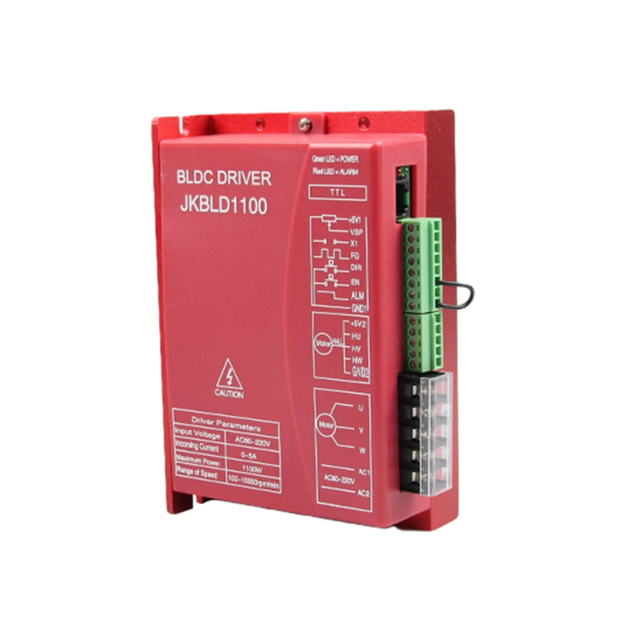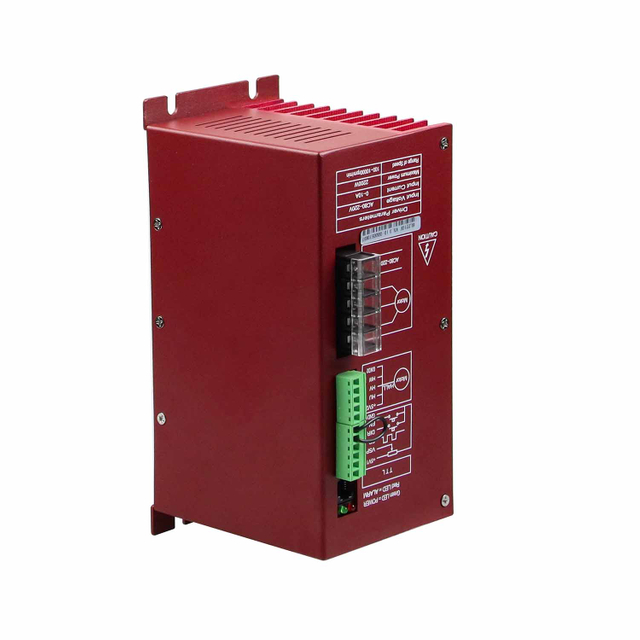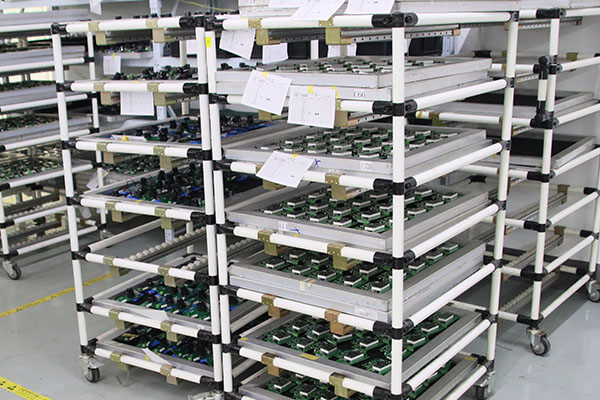
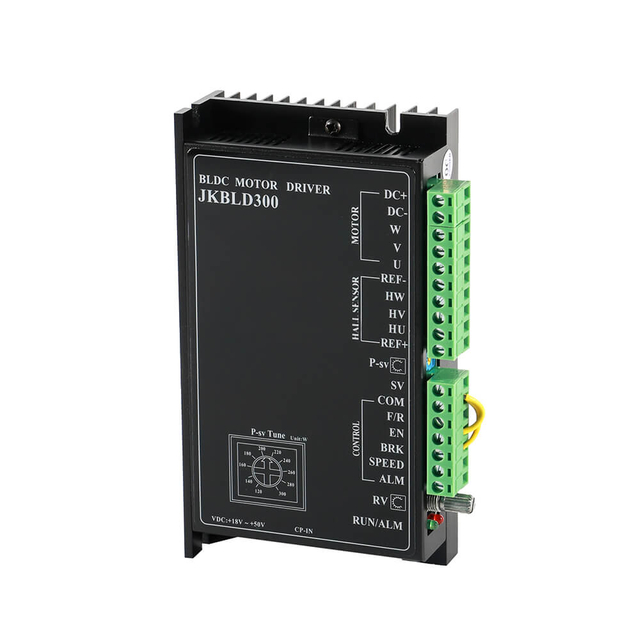
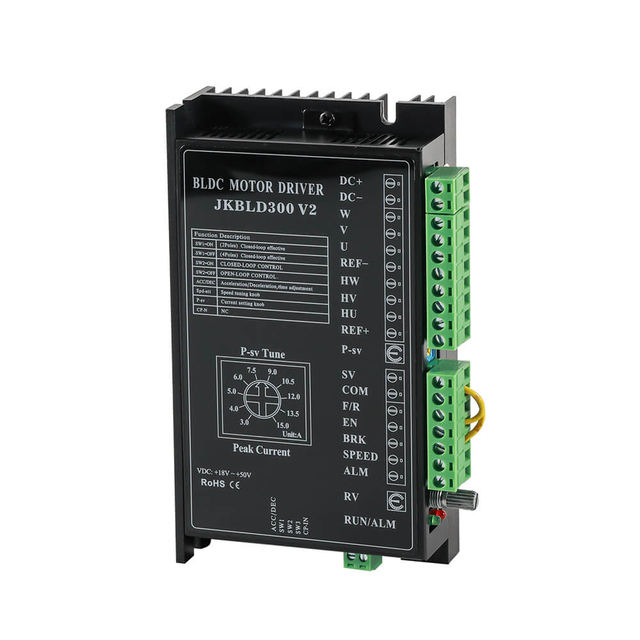
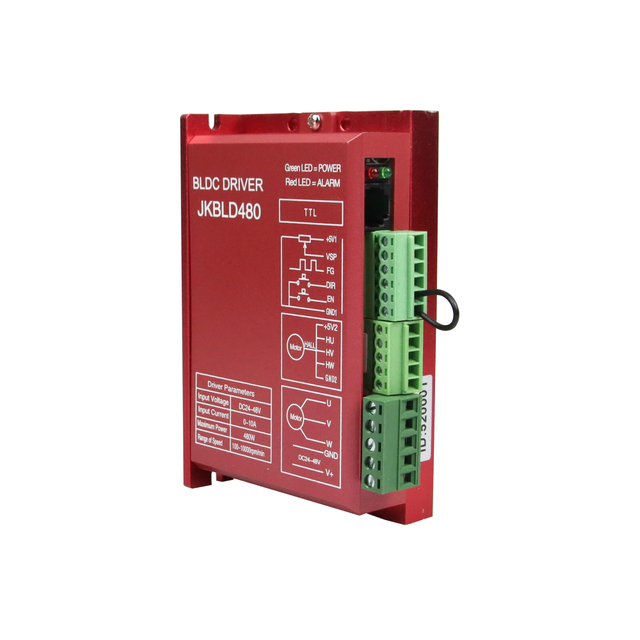
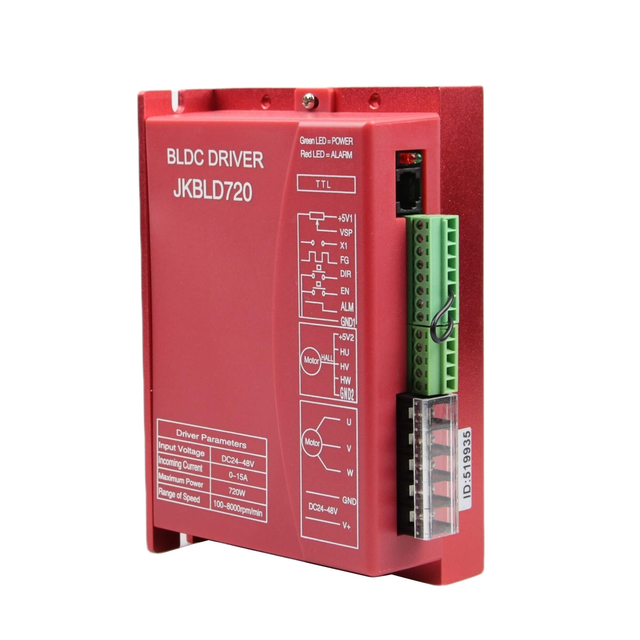
A BLDC motor driver, also known as an ESC (Electronic Speed Controller) or BLDC controller, is an essential electronic device that powers, controls, and manages the operation of Brushless DC (BLDC) motors. Since BLDC motors do not have brushes or mechanical commutators, the driver is responsible for performing electronic commutation, controlling motor speed, torque, and direction with high precision.
BLDC motor drivers are used across industries—from electric vehicles and drones to industrial automation and household appliances—ensuring reliable, efficient, and intelligent motor performance.
1. What Does a BLDC Motor Driver Do?
A BLDC motor driver performs several key functions:
1.1 Electronic Commutation
Switches current among the motor’s three phases
Replaces mechanical brushes
Synchronizes switching with rotor position
1.2 Speed Control
1.3 Torque Control
1.4 Direction Control
1.5 Protection Functions
Modern drivers include protections such as:
Overcurrent
Overvoltage
Overtemperature
Undervoltage lockout
Short circuit protection
BLDC (Brushless DC) motor drivers—also known as ESCs (Electronic Speed Controllers) or BLDC controllers—are essential for operating brushless motors. They handle electronic commutation, regulate speed and torque, and ensure smooth motor performance. Because different applications require different control methods, BLDC motor drivers come in several types, each optimized for specific performance, cost, and precision needs.
Below are the main types of BLDC motor drivers used across modern industries.
2.1. Trapezoidal (Six-Step) BLDC Motor Drivers
Overview
Also known as block commutation drivers, these are the most common and cost-effective BLDC motor drivers.
Key Features
Uses six-step (120°) commutation
Produces trapezoidal back-EMF
Simple control algorithms
Low cost and efficient at medium-to-high speeds
Advantages
Typical Applications
Cooling fans
Pumps and blowers
Electric scooters
Household appliances
2.2. Sinusoidal BLDC Motor Drivers
Overview
These drivers generate sinusoidal waveforms for smoother motor operation.
Key Features
Uses sinusoidal commutation
Reduced torque ripple
Cleaner and quieter operation
Improved efficiency under light load
Advantages
Typical Applications
Air conditioners
Medical devices
High-quality appliances
Precision motion systems
2.3. Field-Oriented Control (FOC) BLDC Motor Drivers
Overview
FOC, also called Vector Control, is the most advanced control method for BLDC motors.
Key Features
Controls motor magnetic field in real time
Delivers maximum torque per ampere (MTPA)
Superior speed regulation
Extremely smooth operation
Advantages
Typical Applications
Electric vehicles (EVs)
Robotics and servos
Drones and gimbals
Industrial automation
Overview
Designed to work with BLDC motors equipped with Hall-effect sensors or encoders.
Key Features
Reads rotor position from sensors
Accurate low-speed startup
Stable operation under varying loads
Advantages
Typical Applications
Servo motors
Robotics
Automotive systems
Automation machines
Overview
Operate without rotor position sensors using back-EMF feedback.
Key Features
Advantages
More cost-effective
Higher efficiency
Improved reliability
Typical Applications
Fans and blowers
Pumps
Drones
Appliances
Overview
These drivers combine the control electronics and driver circuitry into one compact module.
Key Features
Built-in microcontroller
Reduced PCB space
Plug-and-play design
Advantages
Typical Applications
Consumer electronics
Smart devices
Compact appliances
2.7. High-Voltage BLDC Motor Drivers
Overview
Designed for industrial and electric vehicle use, capable of handling high voltages and current loads.
Key Features
Supports 48V, 72V, 96V, or higher
Heavy-duty MOSFETs or IGBTs
Robust protection systems
Advantages
Typical Applications
Electric vehicles (EVs)
Industrial machinery
High-power robotics
Overview
Optimized for small motors running at 5V–24V.
Key Features
Advantages
Typical Applications
Drones
Small pumps
Computer cooling fans
Portable tools
2.9. Multi-Axis BLDC Motor Drivers
Overview
Drivers capable of controlling two or more BLDC motors simultaneously.
Key Features
Advantages
Typical Applications
Robotic arms
3D printers
CNC machines
Summary
BLDC motor drivers come in many types—trapezoidal, sinusoidal, FOC, sensored, sensorless, high-voltage, low-voltage, integrated, and multi-axis. Each type is designed to meet specific performance requirements, from basic fan motors to advanced robotics and electric vehicles.
Choosing the right BLDC motor driver ensures:
3.1 Sensored Drivers
Use Hall-effect sensors or encoders for rotor position detection.
Benefits:
Applications: Robotics, servo motors, automation machinery
3.2 Sensorless Drivers
Determine rotor position using back-EMF feedback.
Benefits:
Applications: Fans, pumps, drones, high-speed devices
4. Input and Control Methods
BLDC motor drivers can accept various input types depending on the application:
4.1 PWM Input
4.2 Analog Voltage Input
4.3 Communication-Based Input
Advanced drivers support digital communication protocols:
UART
CAN bus
RS485
I⊃2;C
SPI
Used in industrial automation, EVs, and robotics for intelligent control and monitoring.
5. Key Specifications to Consider When Choosing a BLDC Driver
Selecting the right BLDC (Brushless DC) motor driver is critical to ensuring optimal motor performance, efficiency, and reliability. Whether the application is industrial automation, robotics, EV systems, drones, or consumer electronics, the BLDC driver must match the motor’s electrical characteristics and operational requirements.
5.1. Voltage Rating (Input Voltage Range)
What It Means
The voltage rating determines the driver’s maximum allowable supply voltage.
Why It Matters
Must match the motor’s operating voltage (e.g., 12V, 24V, 48V).
Overvoltage risks driver failure.
Undervoltage limits torque and speed.
Checklist
5.2. Current Rating (Continuous & Peak Current)
What It Means
Indicates the maximum current the driver can handle safely.
Why It Matters
Checklist
5.3. Control Method (Commutation Type)
Available Options
Why It Matters
Different applications require different performance levels.
Trapezoidal → cost-effective
Sinusoidal → smoother operation
FOC → best efficiency and precision
Checklist
5.4. Sensored vs. Sensorless Compatibility
Sensored Drivers
Sensorless Drivers
Checklist
Does the motor have Hall sensors?
Do you need precise low-speed control?
Is the application cost-sensitive?
5.5. Switching Frequency
What It Means
PWM switching frequency impacts efficiency, noise, and motor heating.
Why It Matters
Checklist
5.6. Protection Features
Critical for protecting the motor and electronics.
Must-Have Protections
Overcurrent protection (OCP)
Overvoltage protection (OVP)
Undervoltage lockout (UVLO)
Overtemperature protection (OTP)
Short-circuit protection
Reverse polarity protection
Why It Matters
Prevents system failure and extends lifespan.
5.7. Communication & Control Interface
Common Control Inputs
PWM
Analog voltage (0–5V)
Digital I/O
Speed/Torque commands
Advanced Interfaces
CAN Bus
UART
I⊃2;C
SPI
RS485
Checklist
Required command type (speed, torque, position)
Compatibility with microcontrollers/PLC
Integration complexity
5.8. Motor Power Rating Compatibility
The driver must support the motor’s mechanical load.
Important Parameters
Why It Matters
A mismatched driver may:
5.9. Thermal Management & Efficiency
Considerations
Why It Matters
5.10. Physical Size & Mounting Requirements
What to Consider
Why It Matters
Small form-factor devices need compact drivers, while industrial systems may require larger, more powerful ones.
5.11. Application-Specific Requirements
Each industry has unique needs:
For Robots
High precision
FOC control
Encoder feedback
For Electric Vehicles
For Drones
Lightweight
High switching frequency
Fast response time
Summary
When selecting a BLDC motor driver, consider the following key specifications:
Voltage & current rating
Commutation method (Trapezoidal / Sinusoidal / FOC)
Sensored or sensorless compatibility
Switching frequency
Protection features
Communication interface
Thermal and power requirements
Physical size and application needs
Choosing the right BLDC driver ensures:
✔ Efficient motor performance
✔ Long system lifespan
✔ Smooth and stable operation
✔ Safety for both motor and electronics
BLDC motor drivers play a crucial role in enabling efficient, precise, and reliable control of Brushless DC motors. These drivers are essential in industries where high performance, energy efficiency, compact design, and smooth operation are required. Because BLDC motors rely on electronic commutation instead of brushes, the driver serves as the “brain” of the system—managing speed, torque, rotation direction, and protection functions.
6.1. Automotive and Electric Vehicles (EVs)
BLDC motor drivers are foundational in modern automotive systems, especially in electric and hybrid vehicles.
Common Applications
Electric vehicle traction control
Electric power steering (EPS)
Battery cooling fans and blowers
Fuel and coolant pumps
HVAC systems
Seat motors and window actuators
Drivers in automotive systems must handle high current, offer precise torque control, and support safety features such as overcurrent and thermal protection.
6.2. Industrial Automation and Machinery
BLDC drivers enable accurate motion control in industrial environments where precision and efficiency are critical.
Applications
BLDC drivers in this sector often support advanced control techniques like FOC (Field-Oriented Control) for smooth and stable performance.
6.3. Robotics and Mechatronics
Robotic applications require motors that deliver high torque, fast response, and precise motion—making BLDC drivers essential.
Applications
Drivers in robotics often integrate with communication protocols such as CAN, UART, or RS485, allowing seamless connectivity with control systems.
6.4. Consumer Electronics and Home Appliances
BLDC drivers power many everyday devices, providing quiet operation and energy savings.
Applications
Drivers in this sector focus on low noise, compact size, and high efficiency, improving user comfort and device lifespan.
6.5. Drones, UAVs, and Aerospace
In aviation and drone technology, BLDC drivers must deliver lightweight performance with rapid response.
Applications
Drone motors (ESC controllers)
VTOL aircraft systems
Gyro-stabilized platforms
Aircraft cooling systems
Satellite positioning actuators
These drivers require high switching frequencies for smooth, high-speed motor operation and rapid acceleration.
6.6. Medical Devices and Healthcare Equipment
Medical devices demand precision, safety, and extremely smooth motion control.
Applications
BLDC drivers used in medical equipment often incorporate low-noise, low-vibration, and high-reliability features to ensure patient safety.
6.7. Renewable Energy and Environmental Systems
BLDC drivers contribute to energy conservation and sustainability.
Applications
Solar tracking systems
Wind turbine pitch control
Battery-powered pumps and fans
Smart energy systems
Electric compressor units
Their efficiency helps maximize energy capture and reduce system losses.
6.8. Marine and Underwater Technology
BLDC motor drivers are widely used in marine systems due to their ability to operate in harsh environments.
Applications
Drivers in marine environments must be corrosion-resistant and support precise torque control for maneuverability.
6.9. Power Tools and Portable Equipment
Cordless tools rely heavily on BLDC drivers for strong torque and long battery life.
Applications
Electric drills
Angle grinders
Chainsaws
Screwdrivers
Saws and cutters
Impact wrenches
Here, BLDC drivers focus on high torque density, temperature protection, and efficient power usage.
6.10. HVAC and Building Automation
BLDC drivers contribute to energy efficiency and intelligent building management systems.
Applications
BLDC drivers allow precise airflow control while reducing energy consumption.
Summary
BLDC motor drivers are essential in numerous industries due to their ability to deliver:
Their use spans from advanced robotics and EV propulsion to smart home appliances, medical devices, renewable energy systems, and industrial automation.
Selecting the appropriate BLDC (Brushless DC) motor driver is critical for ensuring optimal performance, efficiency, and longevity of both the motor and the overall system. The BLDC motor driver acts as the “brain” of the motor, providing electronic commutation, controlling speed and torque, and safeguarding the motor against operational risks. Using the correct driver unlocks numerous benefits that are crucial across industries such as automotive, robotics, drones, industrial automation, and consumer electronics.
7.1. Enhanced Motor Efficiency
How It Works
The right BLDC driver delivers current to the motor with precise timing and waveform control, ensuring maximum torque per ampere and reducing electrical losses.
Benefits
7.2. Precise Speed and Torque Control
How It Works
Advanced BLDC drivers, especially those with Field-Oriented Control (FOC) or sinusoidal control, regulate speed and torque accurately based on input signals.
Benefits
Smooth motor operation at all speeds
High performance under varying loads
Stable acceleration and deceleration
Consistent torque delivery in robotics, drones, and industrial automation
7.3. Improved Motor Reliability and Lifespan
How It Works
The right driver protects the motor from overcurrent, overvoltage, overheating, and reverse polarity. Electronic commutation eliminates wear associated with brushes.
Benefits
Reduced mechanical stress and friction
Minimized maintenance requirements
Extended operational life
Higher reliability in critical applications such as medical devices or EVs
7.4. Noise and Vibration Reduction
How It Works
Drivers that provide sinusoidal or FOC control produce smoother waveforms and reduce torque ripple, unlike basic trapezoidal drivers.
Benefits
Low-noise operation suitable for medical, laboratory, or consumer devices
Reduced vibration and wear on mechanical components
Enhanced user comfort and precision
7.5. Flexibility and Application Adaptability
How It Works
Modern BLDC drivers support multiple input types (PWM, analog, CAN, UART) and can operate sensored or sensorless motors.
Benefits
Easy integration with microcontrollers, PLCs, or smart systems
Ability to adapt to different motors and applications
Supports dynamic and complex motion profiles in robotics, automation, and drones
7.6. Safety and Protection Features
How It Works
The right BLDC driver includes protection mechanisms like:
Overcurrent protection (OCP)
Overvoltage protection (OVP)
Undervoltage lockout (UVLO)
Thermal shutdown
Short-circuit and reverse polarity protection
Benefits
Prevents damage to the motor and controller
Enhances safety for operators and surrounding equipment
Reduces downtime and maintenance costs
7.7. Optimized Thermal Management
How It Works
A properly matched BLDC driver minimizes energy losses and includes features to manage heat generation effectively, such as heatsinks or integrated thermal sensing.
Benefits
Reduced risk of overheating
Maintains motor performance under heavy load
Supports continuous operation in industrial, automotive, or drone applications
7.8. Energy Savings and Cost Efficiency
How It Works
Efficient drivers reduce wasted energy and optimize power delivery, particularly important in battery-powered or high-voltage systems.
Benefits
7.9. Advanced Control Features
How It Works
Modern BLDC drivers can include smart features like:
Closed-loop control
Regenerative braking support
Programmable speed and torque profiles
Integration with IoT and automation platforms
Benefits
Greater system intelligence
Enhanced precision in robotics and automation
Improved energy recovery in EVs and industrial systems
Simplified monitoring and predictive maintenance
7.10. Scalability for Various Applications
How It Works
BLDC drivers are available for low-voltage, small motors as well as high-power industrial and automotive motors.
Benefits
Easy scaling across products or systems
Versatility for multiple industrial, commercial, or consumer applications
Consistent performance across different motor sizes and power ratings
Summary
Using the right BLDC motor driver provides multiple tangible benefits:
✔ High motor efficiency and reduced power consumption
✔ Precise speed and torque control
✔ Enhanced reliability and extended motor life
✔ Low noise and vibration
✔ Advanced safety and protection
✔ Flexibility for diverse applications
✔ Optimized thermal management
✔ Energy savings and operational cost reduction
In essence, selecting a properly matched BLDC driver is not just a matter of powering a motor—it is a critical factor in ensuring optimal system performance, longevity, and safety across industries.
A BLDC motor driver is the core technology that brings brushless motors to life. By providing precise electronic commutation, speed control, and protection, the driver plays a critical role in ensuring optimal motor performance. Selecting the right BLDC driver—based on voltage, current, control method, and application—can significantly improve efficiency, reliability, and lifespan in any project or product.


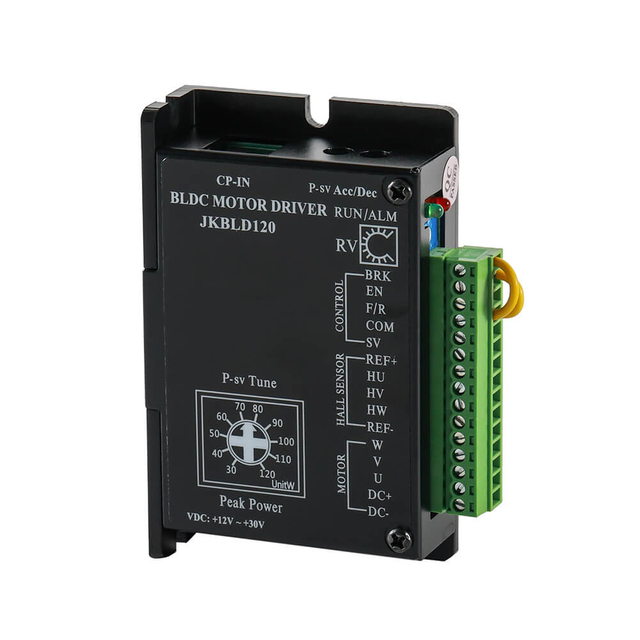
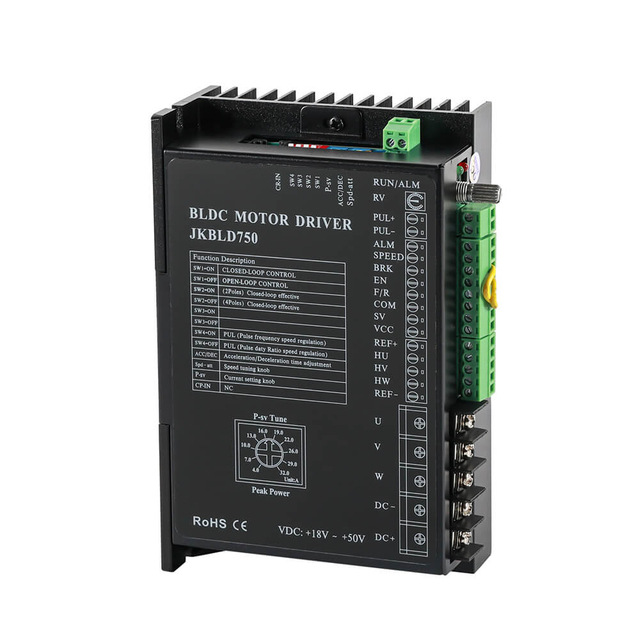 JKBLD750