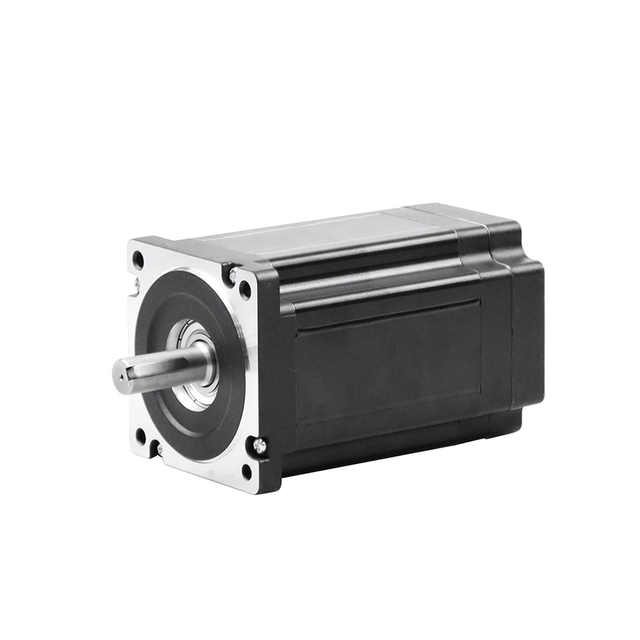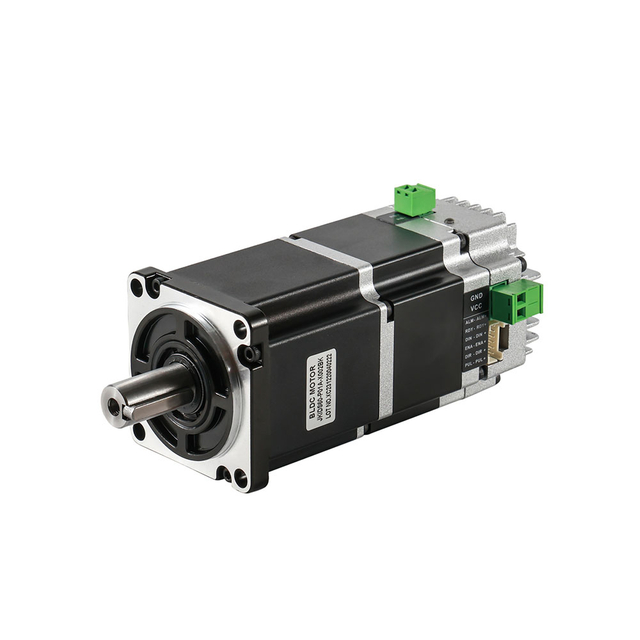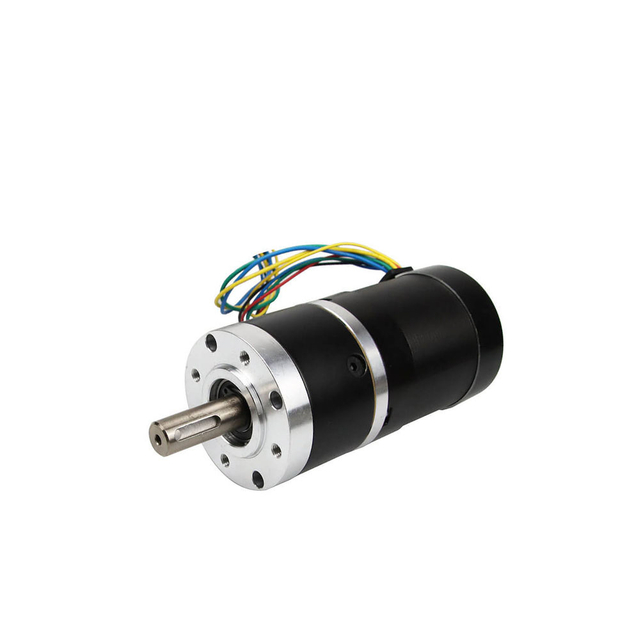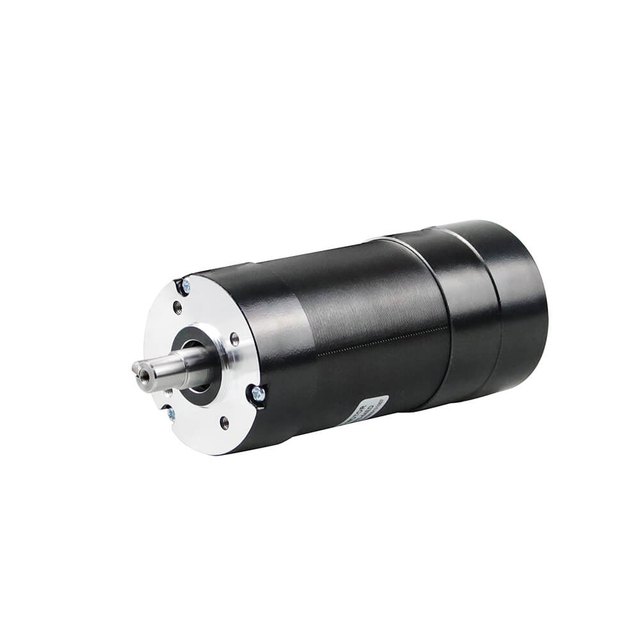
Brushless DC (BLDC) motors have become the cornerstone of modern engineering, powering industries that demand precision, efficiency, and reliability. As technological innovation accelerates, BLDC motors continue to lead the transformation in automation, robotics, consumer electronics, automotive systems, and renewable energy applications. In this comprehensive guide, we explore the full spectrum of BLDC motor technology—its structure, working principles, classifications, benefits, applications, and key selection guidelines—to help you make informed decisions when choosing high-performance motion solutions.
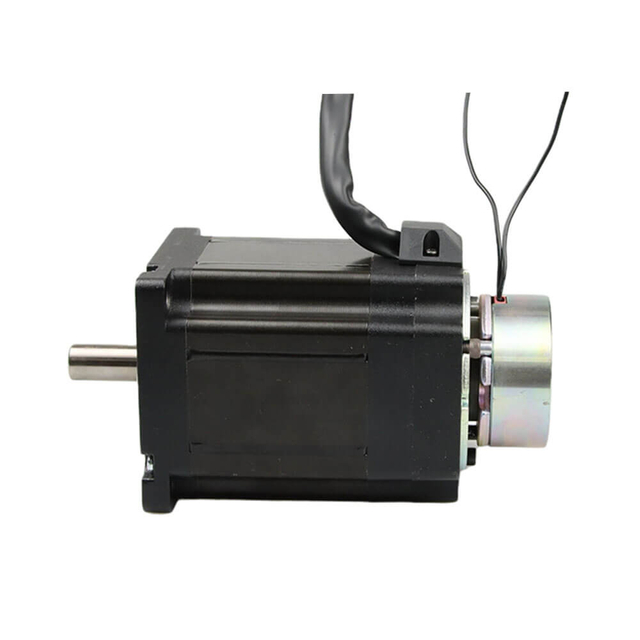
A Brushless DC Motor (BLDC) is a synchronous electric motor powered by direct current and controlled electronically through a commutation system. Unlike traditional brushed motors, BLDC motors eliminate mechanical brushes and commutators, replacing them with sophisticated electronic controllers that manage current flow and torque production. This brushless architecture significantly enhances the motor’s efficiency, lifespan, and performance consistency, particularly in applications requiring high torque density, minimal maintenance, and reliable operation under varying load conditions.
BLDC Motor Types
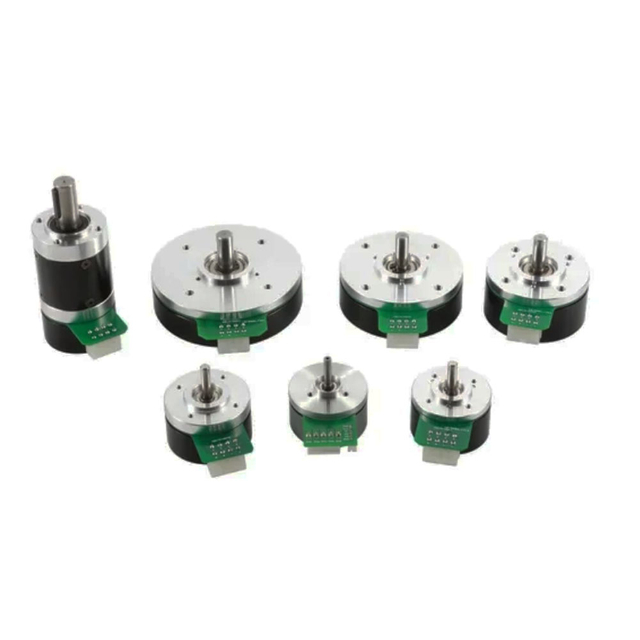
Brushless DC (BLDC) motors come in several types, each engineered to meet specific performance requirements across various industries. While all BLDC motors share the same foundational technology—electronic commutation, permanent magnet rotors, and high-efficiency design—their configurations and control methods can differ significantly. Below are the major BLDC motor types you should know.
Description
In an inner rotor BLDC motor, the rotor is located at the center, surrounded by stator windings.
Key Characteristics
Common Applications
Electric vehicles
Power tools
Robotics
Industrial machinery
Description
In this design, the rotor is located on the outside, rotating around the stator.
Key Characteristics
Common Applications
Drone motors
Cooling fans
Gimbals
HVAC systems
Description
These motors use Hall-effect sensors or encoders to precisely detect rotor position.
Key Characteristics
Applications
Servo systems
Industrial automation
Medical equipment
Description
Sensorless BLDC motors rely on back-EMF detection instead of physical sensors.
Key Characteristics
Applications
Pumps and blowers
Fans
Appliances
Portable devices
5. Slotless BLDC Motors
Description
These motors have a stator without slots. The coils are wound on a cylindrical or distributed core.
Key Characteristics
Applications
Precision instruments
Medical devices
Aerospace applications
6. Slotted BLDC Motors
Description
Stator teeth contain slots where windings are embedded.
Key Characteristics
Applications
Industrial motors
Power tools
Electric vehicles
Description
A sub-type of inner-rotor motors, “inrunner” motors keep the rotor inside and spin at high speed.
Key Characteristics
Applications
RC cars
Robotics
Electric aircraft
Description
A subtype of outer-rotor motors where the rotor rotates around the stationary stator in a drum-like design.
Key Characteristics
Applications
Drones
E-bikes
Model aircraft
Description
These motors have a disc-shaped construction for applications with limited axial space.
Key Characteristics
Very compact design
High responsiveness
Lightweight
Applications
10. IPM (Interior Permanent Magnet) BLDC Motors
Description
Magnets are embedded inside the rotor instead of being mounted on the surface.
Key Characteristics
Applications
Summary: Choosing the Right BLDC Motor Type
Selecting the best BLDC motor depends on factors such as:
Required torque and speed
Control precision
Sensor vs. sensorless operation
Environmental and thermal conditions
Space and mounting limitations
Every BLDC motor type is optimized for a unique combination of performance, efficiency, and reliability.
Brushless DC (BLDC) motors are advanced electric motors that offer high efficiency, precise control, and exceptional reliability. Their operation is fundamentally different from traditional brushed motors, replacing mechanical commutation with electronic control, resulting in higher durability and superior performance. Understanding how BLDC motors work requires exploring their structure, operating principles, and control systems.
1. Basic Structure of a BLDC Motor
A BLDC motor consists of two main components:
1.1 Rotor (Permanent Magnets)
The rotor contains permanent magnets, typically rare-earth magnets like Neodymium (NdFeB).
The number of poles (e.g., 2, 4, 6, 8) affects torque and speed characteristics.
Since no windings are on the rotor, reliability increases and rotor inertia is reduced.
1.2 Stator (Electromagnetic Windings)
The stator has coils arranged in slots or, in slotless designs, wound around a smooth core.
These coils create electromagnetic fields when energized.
BLDC stators are typically arranged in three phases (A, B, and C).
2. How BLDC Motors Produce Motion
2.1 Electronic Commutation
Unlike brushed motors that use a mechanical commutator and carbon brushes, BLDC motors use electronic commutation controlled by an external motor controller.
The controller:
Supplies current to the stator windings
Switches current sequences based on rotor position
Creates a rotating magnetic field
This rotating magnetic field interacts with the permanent magnets on the rotor, causing it to turn.
2.2 Role of Rotor Position Detection
To ensure precise timing, the controller must know the rotor position.
There are two methods:
A. Sensored BLDC (with Hall Sensors)
Built-in Hall-effect sensors detect magnetic field changes
Provide accurate low-speed starting
Used in robotics, servo systems, and automotive applications
B. Sensorless BLDC (using Back-EMF Feedback)
Controller estimates rotor position by measuring back electromotive force
Sensors are not required
Ideal for fans, pumps, and high-speed applications
3. Three-Phase Operation and Commutation Sequence
A standard BLDC motor operates in a three-phase system, energizing phases A, B, and C in sequence.
3.1 Six-Step Commutation (Trapezoidal Control)
The most common control method
Energizes two phases at a time
Produces a trapezoidal back-EMF waveform
Efficient and simple
3.2 Field-Oriented Control (FOC / Sinusoidal Control)
Uses sinusoidal waveforms
Provides smoother rotation
Reduces torque ripple
Ideal for precision and quiet operation
4. Magnetic Field Interaction
When a stator coil is energized, it creates a magnetic north and south pole.
The rotor magnets naturally align with these magnetic poles.
As the controller changes which coils are energized:
A rotating magnetic field is formed
The rotor follows this field
Speed increases or decreases depending on switching frequency
5. Speed, Torque, and Efficiency Characteristics
5.1 Speed Control
Speed is proportional to:
Applied voltage
Commutation frequency
Increasing switching frequency results in faster rotation.
5.2 Torque Production
Torque depends on:
BLDC motors offer high torque density, delivering more torque for their size compared to brushed motors.
5.3 Efficiency
BLDC motors achieve efficiencies of 85–95% due to:
6. Advantages of BLDC Motor Operation
No mechanical wear (brushless design)
Longer lifespan
High-speed capability
Precise control of speed and torque
Low noise and vibration
Excellent thermal performance
These benefits make BLDC motors ideal for a variety of demanding applications.
7. Applications That Rely on BLDC Technology
BLDC motors are widely used in industries where performance and reliability are critical:
Electric vehicles (EVs)
Drones and UAVs
Robotics and automation
Fans, pumps, and compressors
CNC machines and servo drives
Medical equipment
Household appliances
The combination of efficiency, low maintenance, and intelligent control has made BLDC motors the preferred choice in modern engineering.
Brushless DC (BLDC) motors have become the preferred choice in modern engineering due to their exceptional efficiency, precision, and long service life. By eliminating brushes and replacing them with electronic commutation, BLDC motors deliver performance far superior to traditional brushed motors. Below are the key advantages that make BLDC technology the leading solution across industries.
1. High Efficiency and Low Energy Consumption
One of the most significant advantages of BLDC motors is their outstanding electrical efficiency, often reaching 85–95%.
This efficiency is achieved through:
As a result, BLDC motors consume less power, making them ideal for battery-powered devices, electric vehicles, drones, and renewable energy systems.
2. Longer Lifespan and Minimal Maintenance
Because BLDC motors do not use brushes, there is no mechanical wear caused by friction. This dramatically extends the motor’s operational life.
Key benefits include:
This makes BLDC motors particularly valuable in industries where maintenance access is limited or costly.
3. Superior Speed and Torque Control
BLDC motors offer precise, dynamic control over both speed and torque thanks to advanced electronic controllers.
Control advantages include:
This makes BLDC motors indispensable in automation, robotics, CNC machines, and servo applications.
4. High Power Density in a Compact Size
BLDC motors deliver impressive torque and power relative to their physical size.
This is due to:
Because of their excellent torque-to-weight ratio, BLDC motors are preferred in applications that require powerful yet compact solutions, such as drones, handheld tools, and medical devices.
5. Low Noise and Vibration
The absence of brushes and smooth electromagnetic operation allow BLDC motors to run:
Quietly
Smoothly
With minimal vibration
This is especially important in:
BLDC motors contribute to a quieter and more user-friendly environment.
6. Excellent Thermal Management
BLDC motors typically dissipate heat more effectively because:
The stator (where most heat is generated) is attached to the outer housing
Efficient winding design minimizes losses
Less heat is produced compared to brushed motors
Better thermal performance leads to higher efficiency, longer motor life, and greater reliability under heavy loads.
7. Increased Reliability and Consistent Performance
BLDC motors maintain stable performance across a wide range of operating conditions.
They offer:
This reliability makes BLDC motors suitable for critical applications like drones, EV systems, and industrial automation.
8. Enhanced Safety and Clean Operation
BLDC motors are cleaner and safer due to:
No brush arcing or sparking
Lower electromagnetic interference (EMI)
Reduced risk of overheating
Cleaner environments (no carbon dust from brushes)
This advantage is crucial in medical environments, explosive environments, clean rooms, and electronic devices.
9. Highly Customizable and Compatible with Smart Technology
BLDC motors can be easily integrated with smart controllers, enabling:
Closed-loop feedback
IoT connectivity
Data logging
Remote monitoring
Predictive maintenance
This makes them a key component of Industry 4.0 and future automation technologies.
10. Wide Application Versatility
Because of their strong performance advantages, BLDC motors are used across a broad range of industries:
Their adaptability ensures they continue to expand into new markets.
Summary
BLDC technology offers unmatched advantages in efficiency, performance, durability, and control. These benefits make brushless motors the top choice for modern engineering solutions, especially where reliability, precision, and energy savings are essential.
Brushless DC (BLDC) motors have become the preferred choice across a broad range of industries due to their high efficiency, long lifespan, precise control, and compact design. Their brushless architecture and advanced electronic commutation enable superior performance compared to traditional brushed motors. As a result, BLDC motors power countless modern technologies. Below are the major industrial sectors where BLDC motors play a critical role.
1. Automotive Industry
The automotive sector is one of the largest users of BLDC motors. Their reliability, efficiency, and smooth operation make them ideal for both traditional and electric vehicles.
Common Applications
Electric vehicle (EV) traction motors
Electric power steering (EPS)
Cooling fans and blowers
Fuel pumps and water pumps
HVAC systems
Sunroof and window actuators
In EVs, BLDC motors deliver high torque, fast response, and excellent thermal stability, contributing to extended driving range and improved performance.
2. Industrial Automation and Machinery
BLDC motors are essential in modern automation systems due to their precision, durability, and adaptability.
Applications
CNC machines
Servo motors and actuators
Conveyor belts
Automated assembly systems
Packaging machinery
Robotic arms and pick-and-place systems
Their ability to deliver consistent torque and operate continuously with minimal maintenance makes them ideal for round-the-clock industrial operations.
3. Robotics and Mechatronics
Robotics demands motors that are compact, responsive, and reliable—criteria perfectly met by BLDC motors.
Applications
Mobile robots (AGVs and AMRs)
Robotic joints and servos
UAV and drone propulsion systems
Exoskeletons
Humanoid robots
BLDC motors enable smooth motion control, rapid acceleration, and high torque density, supporting advanced robotic functionality.
4. Consumer Electronics
BLDC motors are widely used in consumer products that require quiet operation and energy efficiency.
Applications
Computer cooling fans
Printers and scanners
Hard disk drives
Vacuum cleaners
Hair dryers
Air purifiers
Their low noise and long lifespan improve user experience and product reliability.
5. Medical Devices and Healthcare Equipment
The medical sector relies on BLDC motors for their precision, low noise, and dependable operation.
Applications
Ventilators and respiratory devices
Surgical tools
Infusion pumps
Laboratory automation equipment
Dental tools
MRI-compatible devices (non-magnetic designs)
Their consistent performance ensures accuracy and safety in critical medical procedures.
6. Aerospace and Aviation
BLDC motors provide high power-to-weight ratios, making them ideal for aerospace applications where efficiency and weight are crucial.
Applications
Their efficiency contributes to longer flight times and more reliable system performance.
7. HVAC Systems and Home Appliances
Home appliances increasingly use BLDC motors to reduce energy consumption and improve performance.
Applications
BLDC motors deliver quieter operation, lower power bills, and improved system longevity.
8. Renewable Energy and Green Technologies
BLDC motors support sustainability efforts by improving the efficiency of renewable energy systems.
Applications
Their precise control helps optimize energy harvesting and storage.
9. Power Tools and Machinery
Power tools require motors that deliver high torque, fast response, and durability—all strengths of BLDC motor technology.
Applications
Drills and drivers
Angle grinders
Chainsaws
Electric wrenches
Industrial cutters
BLDC-powered tools stay cooler, work longer, and provide more consistent performance.
10. Marine and Underwater Equipment
Due to their sealed, efficient design, BLDC motors perform exceptionally well in underwater environments.
Applications
Their corrosion resistance and low power consumption make them ideal for marine work.
Summary
BLDC motors have become a universal technology powering industries such as automotive, robotics, consumer electronics, renewable energy, aerospace, and industrial automation. Their high efficiency, long lifespan, and superior controllability make them a fundamental component of modern engineering solutions.
Key Factors to Consider When Selecting a Brushless Motor BLDC
Selecting the right Brushless DC (BLDC) motor is essential to achieving optimal performance, efficiency, and reliability in your application. Because BLDC motors come in many configurations—each with unique characteristics—engineering teams must evaluate several important factors before choosing the ideal model. Below are the key considerations that influence performance, durability, and compatibility when selecting a BLDC motor.
1. Required Torque and Speed
Torque Requirements
Determine:
Starting torque
Continuous (rated) torque
Peak torque
Load characteristics (constant, variable, or intermittent)
Applications such as robotics and power tools require high torque, while fans and pumps need moderate torque at steady speeds.
Speed Requirements
Consider:
Selection must align with the motor’s torque–speed curve for ideal performance.
2. Voltage and Current Ratings
BLDC motors are commonly available in:
Choose based on your power supply and controller capability.
Ensure the maximum current rating supports the load without causing overheating or efficiency losses.
3. Motor Size, Weight, and Mounting Configuration
Mechanical constraints often dictate motor dimensions.
Key questions include:
What diameter or length is allowed?
Is weight critical (e.g., drones or handheld tools)?
Is a standard mounting interface required?
Frame size, shaft diameter, and mounting holes must match your mechanical design.
4. Sensored vs. Sensorless Operation
Sensored BLDC Motors
Use Hall sensors or encoders for rotor detection.
Best for:
Precise low-speed control
High starting torque
Robotics, servo motors, medical devices
Sensorless BLDC Motors
Use back-EMF feedback instead of sensors.
Best for:
Cost-sensitive applications
High-speed fans, pumps, blowers
Environments with low-speed control not required
Choose based on your need for precision, reliability, and environmental tolerance.
5. Control Strategy and Driver Compatibility
The BLDC motor must be compatible with the intended controller (ESC or driver).
Common control methods:
Factors to check:
Maximum speed capability
PWM frequency compatibility
Communication protocols (CAN, UART, RS485)
Closed-loop vs. open-loop control options
A good controller–motor match ensures optimal torque, efficiency, and smooth operation.
6. Efficiency and Power Consumption
Efficiency is crucial for:
Battery-powered devices
Electric vehicles
Portable tools
Renewable energy systems
Higher-efficiency BLDC motors deliver:
Longer runtime
Less heat
Lower operational cost
Review the motor’s efficiency curve rather than a single peak value.
7. Environmental and Operating Conditions
Consider the environment in which the motor will operate.
Important factors include:
Ambient temperature
Humidity and moisture exposure
Dust or debris
Corrosive chemicals
Vibration and shock
IP rating requirements (e.g., IP54, IP67)
For harsh environments, choose motors with sealed housings, stainless steel shafts, or special coatings.
8. Noise Level and Vibration
Certain industries require low-noise operation, such as:
Medical devices
Household appliances
Laboratory equipment
Office electronics
Slotless or sinusoidal-control BLDC motors offer quieter and smoother performance.
9. Thermal Management and Heat Dissipation
BLDC motors produce heat during operation. Ensure:
Adequate cooling (natural, forced air, or liquid)
Proper thermal insulation
Appropriate winding temperature rating
Reliable thermal protection
Overheating shortens motor lifespan and reduces efficiency.
10. Duty Cycle and Operating Mode
Understand the motor’s expected operating profile:
Continuous duty
Intermittent duty
Cyclic operation
Start/stop cycles
Different motors are optimized for different duty cycles, affecting winding choice, insulation class, and mechanical design.
11. Cost, Availability, and Customization Options
Depending on the application:
Off-the-shelf motors may be sufficient for consumer products
Customized motors may be required for robotics, EVs, or aerospace
Customization options include:
Special windings
Custom shafts
Integrated sensors
Waterproof housings
Modified mounting shapes
Balance cost with performance and long-term reliability.
Summary
Selecting the right BLDC motor requires evaluating performance requirements, environmental conditions, electrical specifications, and control needs. By carefully considering torque, speed, voltage, sensor type, thermal constraints, and integration possibilities, engineering teams can ensure that the chosen BLDC motor delivers optimal performance, longevity, and efficiency for the intended application.
Why BLDC Motors Represent the Future of Motion Technology
The future of motion control is undeniably brushless. As industries embrace electrification, automation, and energy efficiency, BLDC motors offer the ideal balance of power, precision, and sustainability. Their compatibility with AI-driven control, IoT integration, and advanced power electronics ensures continuous evolution in performance and functionality.
As next-generation systems demand compact designs, minimal maintenance, and intelligent control capability, BLDC motors will continue to shape the backbone of modern engineering across all sectors—from smart homes to autonomous vehicles.