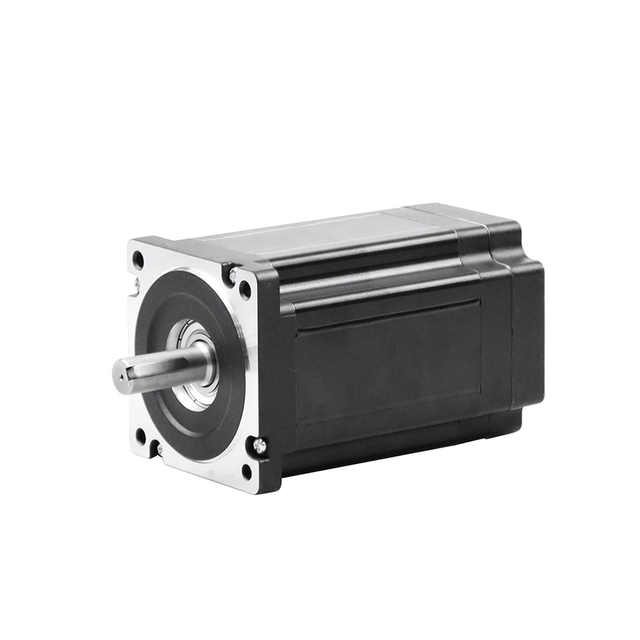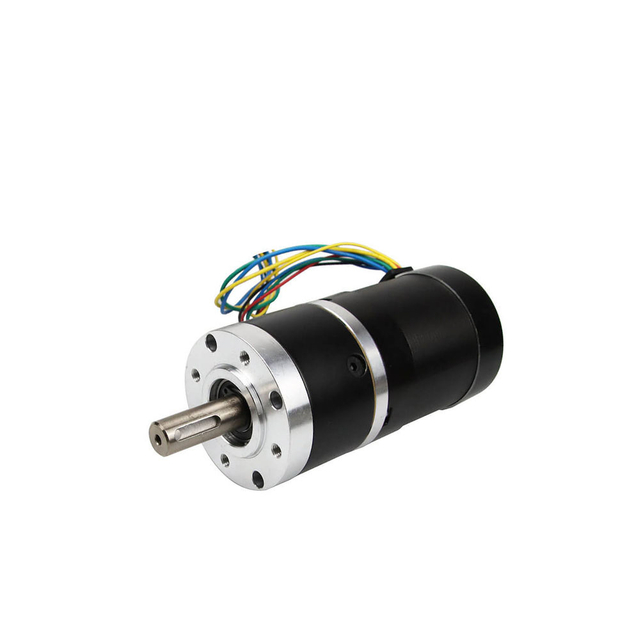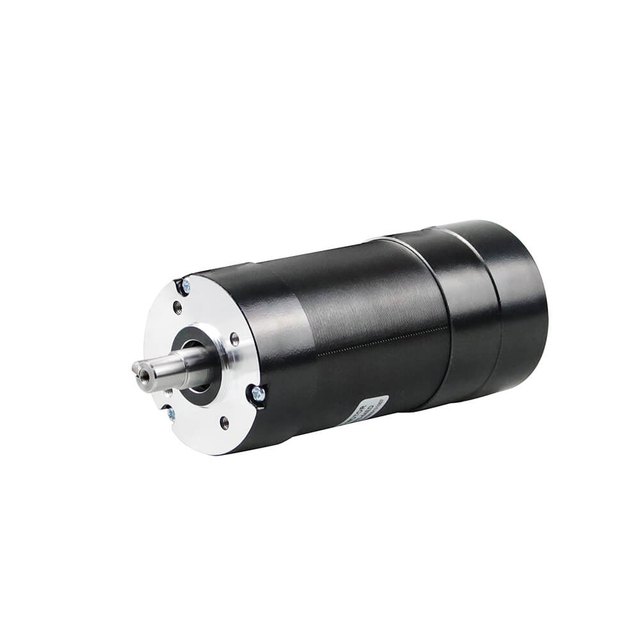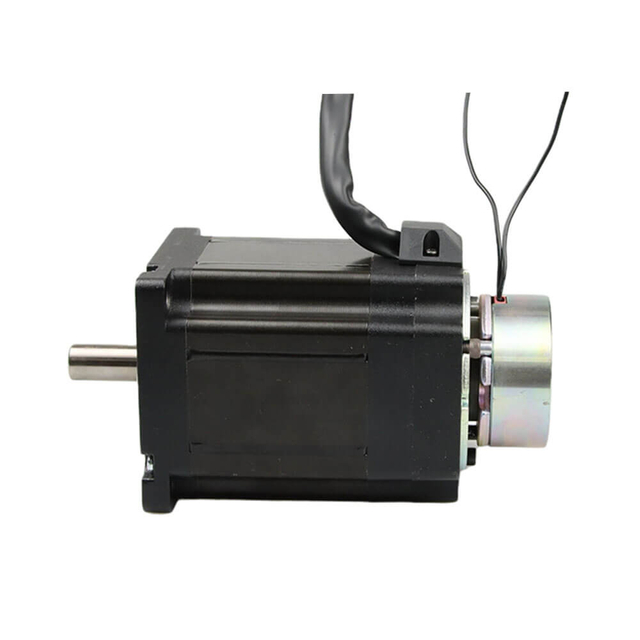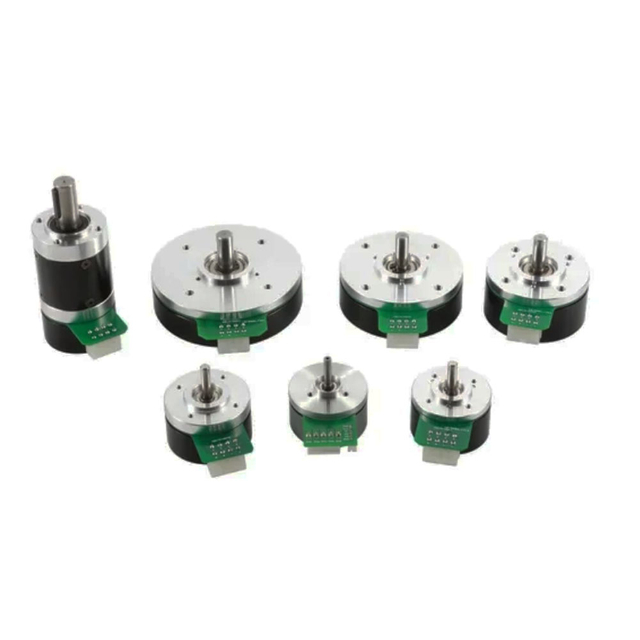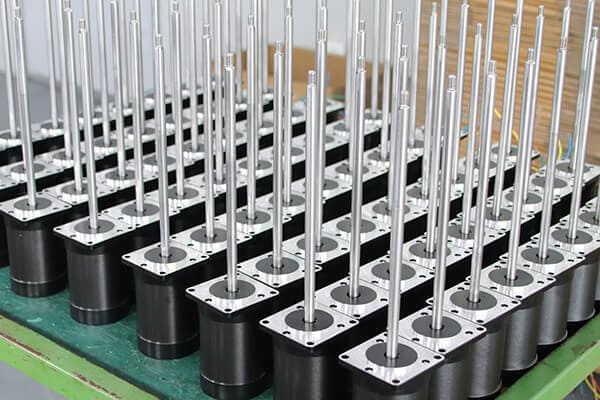
BLDC servo motors have become a cornerstone of modern automation, robotics, CNC machinery, and advanced industrial systems. As industries push toward higher accuracy, faster response times, and improved energy efficiency, BLDC servo motors deliver exceptional performance that conventional motors cannot match. In this comprehensive guide, we explore everything essential to understanding, selecting, and applying BLDC servo motors for optimal operational excellence.
BLDC servo motors, or Brushless DC servo motors, combine the benefits of brushless DC motor technology with closed-loop servo control. This fusion enables extremely accurate and dynamic motion control, making them ideal for high-precision positioning, consistent torque delivery, and optimized efficiency.
These motors use electronic commutation, eliminating mechanical brushes and minimizing wear. Paired with servo feedback elements—such as encoders or resolvers—they maintain stable performance across varying speeds and loads.
Key characteristics include:
High power density
Low maintenance operation
Smooth torque control
Rapid acceleration and deceleration
Outstanding positioning accuracy
Types of BLDC Servo Motors
BLDC servo motors come in several configurations, each designed to meet specific performance requirements, environmental conditions, and mechanical constraints. Their variations allow them to support a wide range of applications, from robotics and CNC machinery to aerospace and medical equipment. Below are the main types of BLDC servo motors and their key characteristics.
Slotless BLDC servo motors are designed without traditional stator slots. Instead, the motor windings are wound in a smooth, cylindrical structure.
Key Features:
Zero or minimal cogging torque
Extremely smooth rotational motion
Low vibration and noise
High acceleration capability
Excellent for precision applications
Best Used For:
These motors are favored in applications requiring ultra-smooth performance and minimal magnetic interference.
Slotted BLDC servo motors feature stator laminations with slots where windings are embedded.
Key Features:
High torque density
Superior thermal dissipation
Better mechanical stability
Efficient magnetic coupling
Best Used For:
Industrial automation
Robotics
Packaging machinery
High-load motion systems
Slotted designs are ideal when torque output and efficiency are top priorities.
Frameless servo motors do not include a housing or bearings; instead, they consist only of the rotor and stator as separate components.
Key Features:
Ultra-compact and lightweight
Easily integrated into custom assemblies
High torque-to-weight ratio
No unnecessary structural mass
Best Used For:
Aerospace systems
Robotic joints
UAV gimbals
Direct-drive mechanisms
Frameless motors are excellent for applications requiring tight integration, reduced weight, or custom mechanical design.
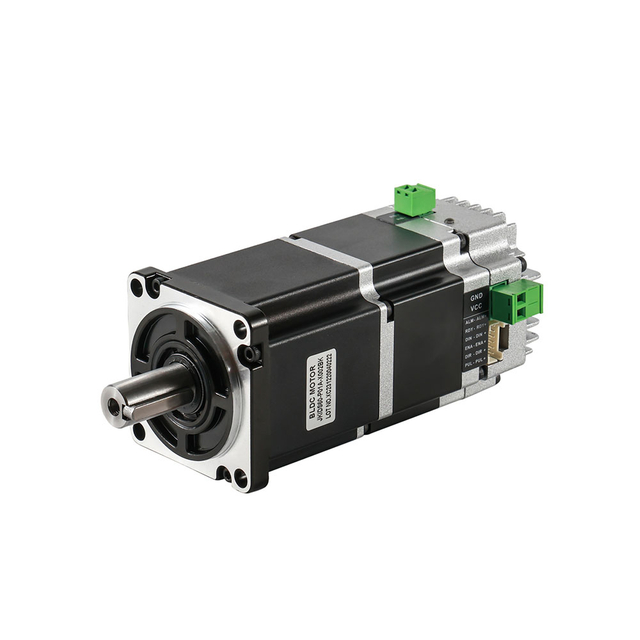
These motors combine the motor, encoder, and servo drive into a single, compact unit.
Key Features:
Simplified wiring and installation
Reduced cabinet space
Lower system cost and complexity
Built-in intelligence and diagnostics
Best Used For:
Integrated servo motors streamline systems by reducing external components and improving plug-and-play usability.
Flat BLDC servo motors feature a disk-shaped design with minimal axial length.
Key Features:
Best Used For:
Robotics grippers
Automated inspection systems
Turntables and rotary actuators
Semiconductor processing equipment
Their flat, low-profile design makes them suitable for compact machinery and tight robotic joints.
These motors are specifically engineered for extremely high rotational speeds, often reaching tens of thousands of RPM.
Key Features:
Low rotor inertia
Minimal hysteresis and eddy current losses
High-frequency electronic commutation
Excellent balance and vibration control
Best Used For:
High-speed BLDC servo motors offer the precision and stability needed for advanced machining and rotational applications.
7. Waterproof and Harsh-Environment BLDC Servo Motors
For challenging industrial environments, ruggedized BLDC servo motors are built to withstand exposure to dust, moisture, chemicals, or vibration.
Features:
IP65, IP67, or higher ratings
Corrosion-resistant materials
Reinforced seals and bearings
Wide temperature tolerance
Best Used For:
These motors ensure reliable performance even in demanding or hazardous locations.
Summary of BLDC Servo Motor Types
| Motor Type | Key Strength | Ideal Applications |
| Slotless | Smooth, cog-free motion | Medical, precision instruments |
| Slotted | High torque density | Robotics, automation |
| Frameless | Compact, lightweight | Aerospace, direct-drive robotics |
| Integrated | All-in-one simplicity | Mobile robots, conveyors |
| Flat/Pancake | Ultra-thin design | Compact machinery, turntables |
| High-Speed | Extreme RPM performance | Spindles, dental tools |
| Rugged/Waterproof | Harsh environment durability | Food processing, outdoor equipment |
BLDC servo motors are engineered with precision to deliver high efficiency, exceptional control accuracy, and long-term reliability. Their superior performance comes from a combination of advanced mechanical, electrical, and electronic components. Below are the essential core components that define the structure and functionality of BLDC servo motors.
1. Stator Assembly
The stator is the stationary part of the motor and houses the motor windings. It plays a crucial role in generating the electromagnetic field required for rotation.
Key Features:
Constructed from laminated steel to reduce eddy current losses
Contains 3-phase copper windings for efficient current flow
Optimized slot design for maximum torque production
Enhanced thermal dissipation for continuous-duty operation
The stator produces a rotating magnetic field when energized by the servo drive, enabling smooth and precise rotation of the rotor.
2. Rotor with Permanent Magnets
The rotor is the moving part of the motor and typically consists of high-strength permanent magnets such as Neodymium (NdFeB) or Samarium Cobalt (SmCo).
Rotor Advantages:
High magnetic flux for superior torque density
Lightweight structure for fast acceleration
Reduced inertia for responsive motion control
Strong demagnetization resistance, especially in high-temperature environments
The rotor is engineered to maintain stability even at high rotational speeds, making it ideal for dynamic and precision-driven applications.
3. Encoder or Resolver (Feedback Device)
A BLDC servo motor is defined by its closed-loop control, which relies heavily on precise feedback.
Common Feedback Devices:
Incremental encoder – provides pulse signals for speed and position feedback
Absolute encoder – offers exact position information even after power loss
Resolver – highly robust option for harsh environments
Why Feedback Matters:
Ensures accurate position tracking
Minimizes errors and overshoot
Enables smooth start, stop, and directional changes
Supports high-resolution motion control
Feedback devices allow the servo system to precisely synchronize motor output with commanded instructions.
4. Servo Drive / Motor Controller
The servo drive is the intelligence behind the BLDC servo motor. It manages power distribution and interprets feedback signals to adjust motor behavior.
Main Functions:
Electronic commutation of motor windings
Real-time current, speed, and position control
Implementation of algorithms such as FOC (Field-Oriented Control)
Monitoring of motor temperature, load, and fault conditions
Communication Interfaces:
Many servo drives support industry-standard protocols:
EtherCAT
CANopen
Modbus
Ethernet/IP
Profinet
The servo drive ensures optimized performance and precise synchronization with automation systems and motion controllers.
5. Housing and Mechanical Structure
The motor housing protects internal components and ensures efficient heat dissipation.
Key Characteristics:
Made from high-grade aluminum or steel
Designed with fins or ventilation paths for cooling
Provides structural rigidity and protection against dust, debris, and vibration
Often includes an IP-rated enclosure for industrial environments
A durable housing enhances motor longevity and stability, especially in high-duty cycles.
6. Bearings
High-quality bearings ensure smooth and reliable rotation of the rotor.
Roles of Bearings:
Support the rotor during high-speed operation
Reduce mechanical friction
Maintain alignment of moving components
Extend the motor’s operational life
Precision bearings are essential in minimizing noise and ensuring the motor’s long-term durability.
7. Shaft
The motor shaft transmits mechanical output to the connected load.
Design Considerations:
High-strength steel construction
Compatible with couplings, gearboxes, and direct-drive mechanisms
Engineered to withstand torsional forces and repeated cycles
The shaft is often customized for specific applications, enhancing system integration flexibility.
8. Cooling System (Optional or Integrated)
Depending on application and power level, BLDC servo motors may include:
Natural air cooling
Forced air cooling
Liquid cooling systems
Cooling elements prevent overheating and ensure consistent performance during heavy workloads.
Summary
The effectiveness of a BLDC servo motor lies in its carefully engineered combination of:
Stator windings
Permanent magnet rotor
Precision feedback elements
Advanced servo drive electronics
Robust mechanical construction
Together, these components deliver the high-speed accuracy, efficiency, torque density, and reliability that industries require for modern automation and motion control.
How BLDC Servo Motors Work: Closed-Loop Precision Engineering
BLDC servo motors operate in a closed-loop system. This means the motor continuously receives feedback and adjusts its output to match the commanded position, speed, or torque.
1. Electronic Commutation System
Instead of brushes, BLDC servo motors use an electronic controller that switches current in the stator windings. This system:
The controller precisely times the current phases to produce a consistent rotating magnetic field.
2. Rotor Position Feedback
A position sensor—typically an incremental or absolute encoder—detects the rotor’s exact angle. This data is sent back to the servo drive to maintain synchronization.
Feedback ensures:
3. Servo Drive Control Algorithms
The servo drive uses advanced algorithms such as:
These optimize motor performance in real time, ensuring fast settling times and high accuracy.
BLDC servo motors offer a wide range of performance benefits that make them ideal for advanced industrial, robotics, and automation applications. Their combination of brushless DC motor technology and closed-loop servo control allows them to achieve precision, efficiency, and reliability unmatched by conventional motor systems.
1. Exceptional Precision and Positioning Accuracy
BLDC servo motors operate in a closed-loop feedback system, allowing them to maintain precise control of position, speed, and torque. With encoder or resolver feedback, they can achieve high-resolution accuracy, often at the micron or sub-micron level.
This makes them ideal for applications requiring repeatable, smooth, and accurate movements, such as CNC machines, robotics, semiconductor equipment, and medical devices.
2. High Efficiency and Energy Savings
Brushless motors eliminate mechanical brushes and commutators, resulting in minimal friction, reduced heat, and decreased energy loss. Their efficiency often exceeds 85–90%, providing substantial energy savings in continuous-duty environments.
This reduced heat generation extends both motor and component lifespans while lowering cooling requirements.
3. Smooth and Stable Torque Output
BLDC servo motors deliver consistent torque across the entire speed range, including high-speed operation. Because electronic commutation precisely controls current flow, they eliminate torque ripple and deliver smooth, stable rotation.
This smooth torque is essential in precision tasks such as laser cutting, packaging lines, robotic arms, and scanning systems.
4. Fast Dynamic Response
With low rotor inertia and advanced servo algorithms such as Field Oriented Control (FOC), BLDC servo motors provide excellent acceleration and deceleration characteristics.
They respond quickly to command changes, enabling superior performance in applications requiring:
This makes them indispensable in high-throughput automation systems.
5. Long Operational Lifespan and Low Maintenance
Because BLDC motors eliminate brushes, they avoid mechanical wear that limits the lifespan of brushed motors. The absence of friction-producing components leads to:
Industrial-grade BLDC servo motors also feature robust bearings and high-temperature windings for extended durability.
6. Low Noise and Vibration Levels
Electronic commutation significantly reduces mechanical noise. In addition, optimized rotor balancing and precise feedback control minimize vibration during operation.
Low noise is especially beneficial in:
7. High Power Density in a Compact Size
BLDC servo motors offer superior power-to-size ratios due to efficient electromagnetic design and high-energy permanent magnets (NdFeB and SmCo).
This enables designers to achieve powerful motion control in compact spaces, ideal for:
Aerospace and UAV systems
Surgical robots
Collaborative robots (cobots)
Mobile automation equipment
8. Superior Reliability in Demanding Environments
These motors maintain stable performance even in harsh industrial conditions. Many models offer advanced features such as:
High IP ratings (IP65, IP67)
Temperature-resistant materials
Shock/vibration protection
Such rugged designs ensure reliable operation in manufacturing plants, outdoor platforms, and mission-critical automation systems.
9. Advanced Control Flexibility
BLDC servo drives support multiple control modes:
Position control
Speed control
Torque control
This versatility makes them adaptable to a wide variety of industrial machines. In addition, modern servo drives integrate seamlessly with communication protocols such as EtherCAT, CANopen, Modbus, and more.
BLDC servo motors are used across a wide range of industries where precision, speed, efficiency, and reliability are essential. Their closed-loop design, high torque performance, and smooth operation make them ideal for modern automation and high-tech applications. Below are the most common and impactful uses of BLDC servo motors across different sectors.
1. CNC Machinery and Precision Manufacturing
BLDC servo motors are widely used in Computer Numerical Control (CNC) machines due to their exceptional positioning accuracy and fast response. Typical CNC applications include:
Milling machines
Lathes
Laser cutters
Grinding machines
3D printers
These motors ensure smooth, precise cutting and shaping operations, providing high-quality surface finishes and repeatable accuracy.
2. Industrial Robotics and Collaborative Robots (Cobots)
Robotics is one of the largest sectors relying on BLDC servo motors. Their lightweight design, rapid acceleration, and precise motion control make them perfect for:
Servo motors enable robots to perform tasks requiring accuracy, such as welding, soldering, packaging, and inspection.
3. Automation and Production Lines
Manufacturing plants use BLDC servo motors to increase speed, consistency, and efficiency in automated systems. They drive critical motion control elements such as:
Their ability to operate continuously with low energy consumption makes them ideal for high-volume production environments.
4. Medical Devices and Healthcare Equipment
In medical fields, BLDC servo motors provide quiet, vibration-free, and precise motion control. They are commonly used in:
Their reliability and low noise levels are vital for patient safety and comfort.
5. Aerospace, Defense, and UAV Technology
BLDC servo motors meet the demanding performance requirements of aerospace and defense systems thanks to their high power density and ruggedness. Applications include:
UAV (drone) gimbals and stabilization systems
Aircraft actuation systems
Autonomous guidance mechanisms
Satellite positioning systems
Their lightweight design and efficient operation are crucial for airborne and mission-critical environments.
6. Semiconductor and Electronics Manufacturing
The semiconductor industry demands extremely precise, rapid, and clean operation—areas where BLDC servo motors excel. Common uses involve:
Wafer handling and processing
PCB assembly and placement
Micro-positioning systems
High-speed pick-and-place machines
Laser marking and micro-machining
These environments rely heavily on BLDC servo motors for consistent and flawless production quality.
7. Textile Manufacturing and Printing Equipment
High-speed, synchronized motion is essential in textile and printing industries. BLDC servo motors provide:
Perfect tension control in textile machines
High-speed coordination in printing presses
Smooth operation for embroidery and weaving machines
Their ability to maintain accuracy at high speeds ensures product quality and reduces waste.
8. Renewable Energy Systems
BLDC servo motors also support emerging green technologies. They are used in:
Their reliability and energy efficiency help improve system performance and extend operational lifespan.
9. Automotive Systems and Electric Mobility
Modern vehicles, especially electric and hybrid models, use BLDC servo motors for precise and efficient control. Applications include:
Their compact size and high torque make them suitable for next-generation automotive designs.
10. Consumer Electronics and Smart Devices
BLDC servo motors power many everyday devices that require smooth, controlled motion, such as:
Camera gimbals
Drones
Smart appliances
High-end power tools
Their silent operation and reliability enhance user experience and product durability.
The servo drive is just as important as the motor. It interprets command signals and regulates the motor’s torque, speed, and position.
Key functions include:
Power amplification
Feedback processing
Fault protection systems
Dynamic braking
Auto-tuning features
Modern servo drives often support:
CANopen
EtherCAT
Modbus
Ethernet/IP
Profinet
This ensures seamless integration with advanced industrial automation systems.
Servo drives are indispensable components in BLDC servo motor systems. They provide intelligent motion control, manage feedback loops, ensure safe operation, and enable seamless integration into advanced automation environments. Whether powering a high-precision CNC machine, a sophisticated robotic arm, or a high-speed packaging line, the servo drive is the essential element that brings precision, responsiveness, and efficiency to BLDC servo motors.
Selecting the right BLDC servo motor is essential for ensuring optimal performance, efficiency, and reliability in any motion control system. Because BLDC servo motors are used in high-precision applications—from robotics and CNC machinery to packaging lines and medical devices—the selection process must consider mechanical, electrical, and environmental factors.
Below is a detailed guide to help you choose the correct BLDC servo motor for your application.
1. Determine the Required Torque
Torque is one of the most important parameters in motor selection.
Types of Torque to Consider:
Continuous Torque: The torque needed during regular operation
Peak Torque: The short-term torque required during acceleration, sudden load changes, or start-up
Holding Torque: For applications requiring precise static positioning
How to choose:
Calculate the load torque and add a safety margin (typically 20–30%).
Ensure the motor can provide sufficient peak torque to avoid stalling or overheating.
Consider inertia matching between the load and motor rotor for smoother, more stable motion.
2. Identify Speed and Acceleration Requirements
Different applications require different speed ranges.
Key Considerations:
Maximum speed of operation
Required acceleration and deceleration times
Whether the application involves frequent start-stop cycles
High-speed operations (e.g., spindle drives, pick-and-place systems) need motors with low rotor inertia and efficient cooling.
3. Choose the Right Voltage and Power Rating
BLDC servo motors are available in multiple voltage classes such as 24V, 48V, 100V, 220V, and 380V.
Guidelines:
Ensure that the servo drive and power supply match the motor’s voltage and current specifications.
4. Select an Appropriate Feedback Device
Feedback determines positioning accuracy and resolution.
Types of Feedback Sensors:
Incremental Encoder: Economical, suitable for general automation
Absolute Encoder: High resolution, retains position information after power loss
Resolver: Rugged and reliable in harsh industrial environments
Choose based on required accuracy, environmental conditions, and compatibility with your servo drive.
5. Consider Motor Size, Mounting, and Form Factor
Mechanical compatibility is crucial for seamless installation.
Factors to check:
Choose a motor that fits directly into your machine design without requiring extensive modifications.
6. Evaluate Environmental and Operating Conditions
Environmental demands can significantly influence motor performance.
Important Factors:
Ambient temperature
Humidity and moisture levels
Dust or particulate exposure
Vibration or shock loads
Required IP (Ingress Protection) rating
For harsh environments, consider motors with IP65/IP67, sealed bearings, and corrosion-resistant housings.
7. Pick the Right Control Mode (Position, Speed, or Torque)
Different applications require different control modes.
Control Modes:
Position Control: CNC machines, robotics, and precision indexing
Speed Control: Conveyors, mixers, pumps
Torque Control: Tensioning systems, press-fit operations
Select a motor compatible with your servo drive’s required control mode.
8. Analyze the Application’s Duty Cycle
Not all motors are designed for continuous 24/7 operation.
Duty cycle considerations:
Choose a motor with proper thermal characteristics for your load and operating schedule.
9. Ensure Compatibility with Servo Drive and Communication Protocols
Modern machines rely heavily on advanced communication interfaces.
Typical Protocols:
EtherCAT
CANopen
Modbus
RS-485
PROFINET
Ethernet/IP
Make sure your motor’s encoder type, voltage rating, and features align with your servo drive and control system.
10. Review Motor Efficiency and Energy Consumption
High-efficiency BLDC servo motors reduce operational costs and improve system longevity.
Check for:
Higher efficiency results in longer motor life and lower energy usage.
11. Consider Application-Specific Motor Types
Some applications need specialized motor designs.
Examples:
Frameless servo motors: Robotic joints, UAVs, aerospace
Flat (pancake) motors: Space-limited automation
Slotless motors: High-speed, ultra-smooth motion
Waterproof motors: Food processing, outdoor systems
Selecting the right motor type improves performance and simplifies integration.
12. Evaluate Cost vs. Performance
The goal is not to choose the cheapest motor, but the most suitable one.
Balance:
Performance
Reliability
Maintenance requirements
Longevity
Total cost of ownership
A well-selected BLDC servo motor reduces downtime, improves system output, and provides long-term value.
Conclusion
Choosing the right BLDC servo motor involves analyzing mechanical, electrical, and environmental requirements to ensure maximum performance and longevity. By evaluating torque, speed, voltage, control modes, feedback type, and system compatibility, you can select a motor that perfectly aligns with your application’s demands.
Why BLDC Servo Motors Are the Future of Motion Control
As industries embrace automation and digital transformation, BLDC servo motors offer distinct advantages that position them at the forefront of innovation:
Superior efficiency
Longer service life
Scalability from micro-robotics to heavy machinery
Advanced AI-driven servo drives
Integration-friendly communication protocols
Their performance, flexibility, and precision make them essential in next-generation robotics, smart factories, and high-tech manufacturing environments.