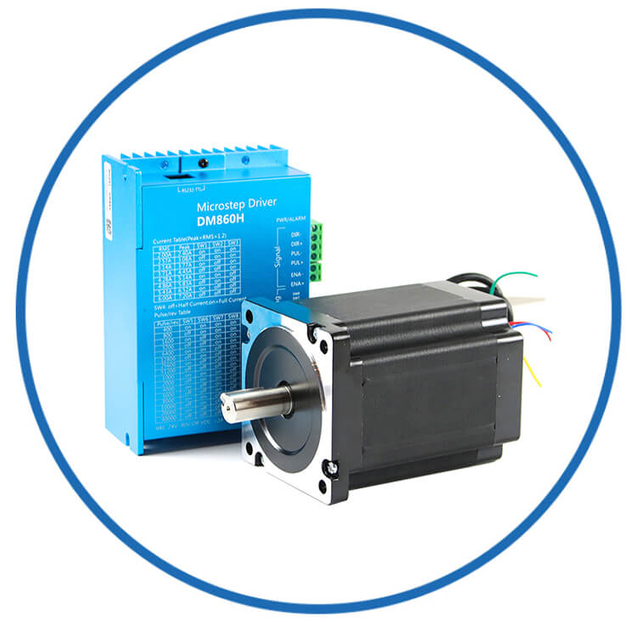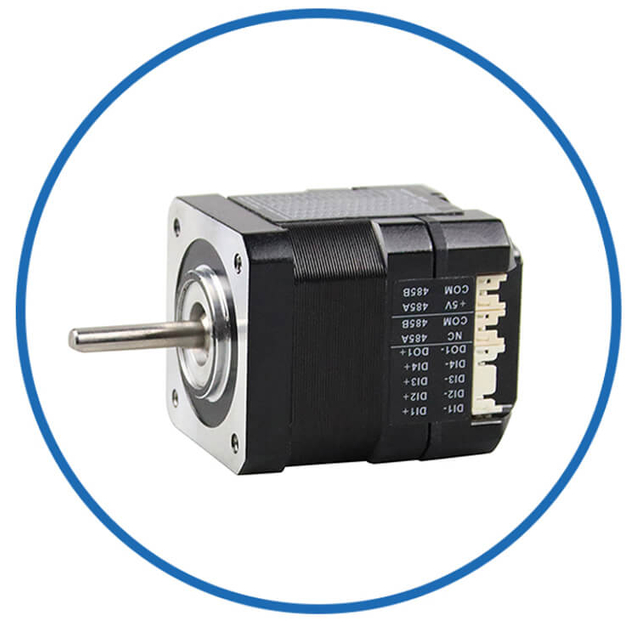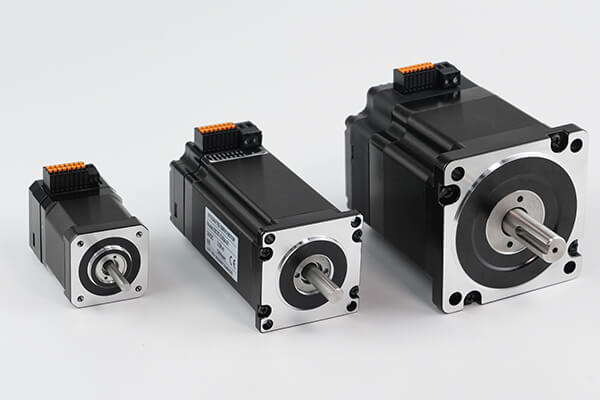
Stepper Motor vs Integrated Stepper Servo Motor
Procurement & Engineering Comparison
| Comparison Item | Stepper Motor | Integrated Stepper Servo Motor |
| Control Type | Open-loop control | Closed-loop servo control |
| Position Feedback | No encoder feedback | Built-in encoder with real-time feedback |
| Step Loss Risk | Possible under load or high speed | No step loss, automatic error correction |
| Position Accuracy | Theoretical accuracy only | True positioning accuracy |
| Torque at High Speed | Drops significantly | Stable torque across speed range |
| Motion Smoothness | Vibration and resonance possible | Smooth and stable motion |
| Noise Level | Higher mechanical noise | Low-noise operation |
| System Architecture | Motor and driver separated | Motor, drive, encoder integrated |
| Wiring Complexity | Complex external wiring | Simplified plug-and-play |
| Installation Time | Longer and error-prone | Faster installation |
| Parameter Tuning | Manual tuning required | Factory pre-matched and optimized |
| Energy Efficiency | Constant current consumption | Load-based adaptive power output |
| Thermal Performance | Heat buildup common | Optimized thermal management |
| Reliability | Performance degrades under load | Stable long-term operation |
| Maintenance Requirement | Frequent adjustment | Minimal maintenance |
| Diagnostics | External monitoring needed | Built-in fault detection |
| Application Flexibility | Limited dynamic performance | Suitable for dynamic motion systems |
| Upgrade Potential | Limited scalability | Ideal stepper-to-servo upgrade |
| Total Cost of Ownership | Lower upfront, higher long-term cost | Optimized lifetime cost |
| Typical Applications | Simple positioning tasks | AGV, Robotics, CNC, Medical, Textile |
Key Takeaway for Buyers
Stepper motors are suitable for basic positioning applications with low dynamic requirements.
Integrated stepper servo motors offer higher accuracy, reliability, and system efficiency, making them the preferred upgrade solution for modern automation systems.
When Should You Upgrade?
When step loss causes positioning errors
When smoother motion and lower noise are required
When system reliability and uptime matter
When simplifying wiring and integration is a priority
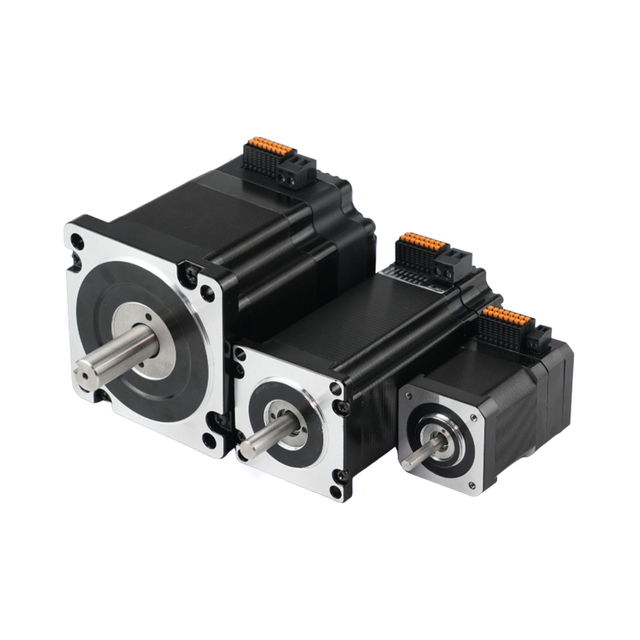
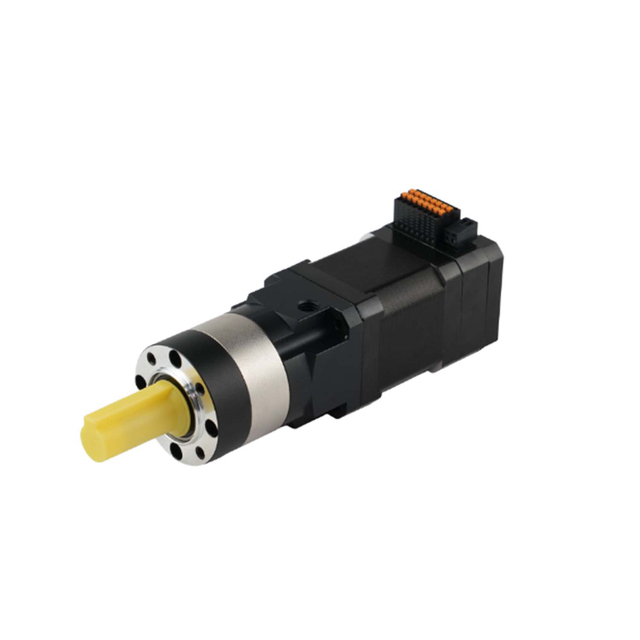
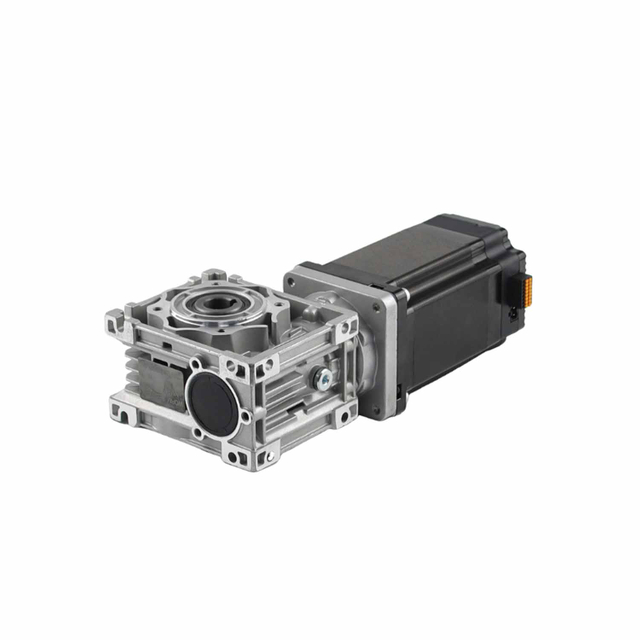
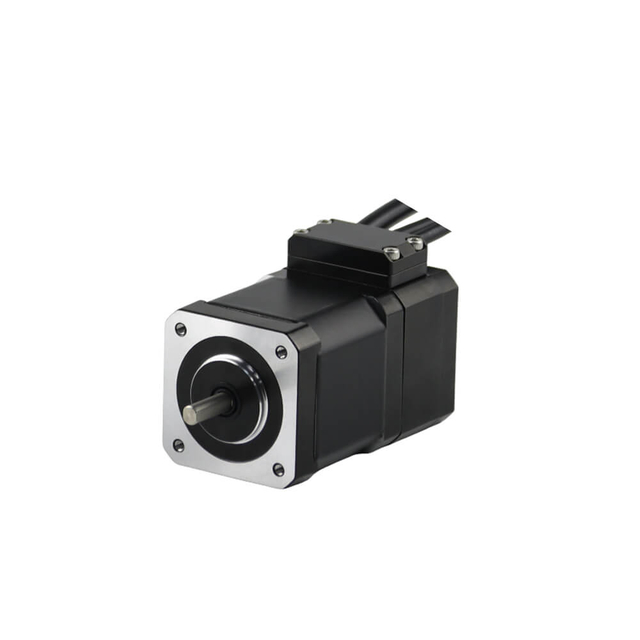
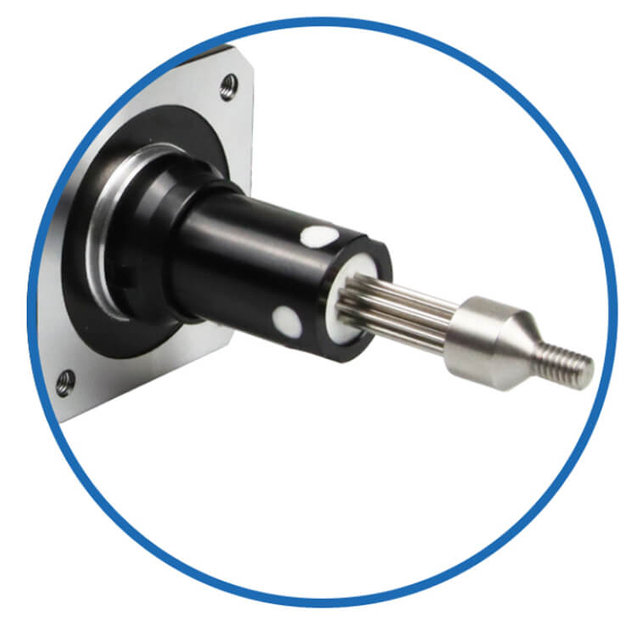
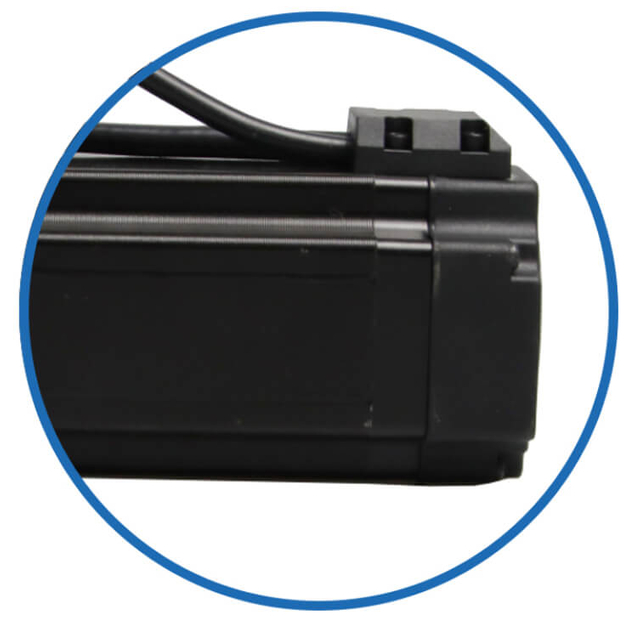
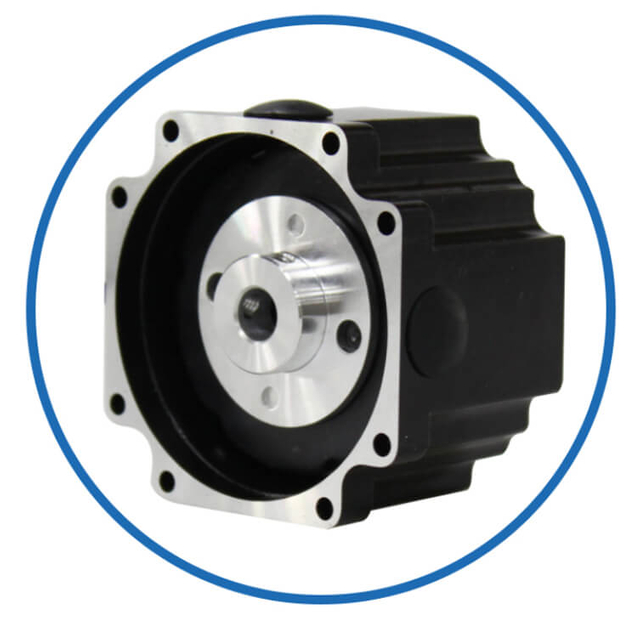
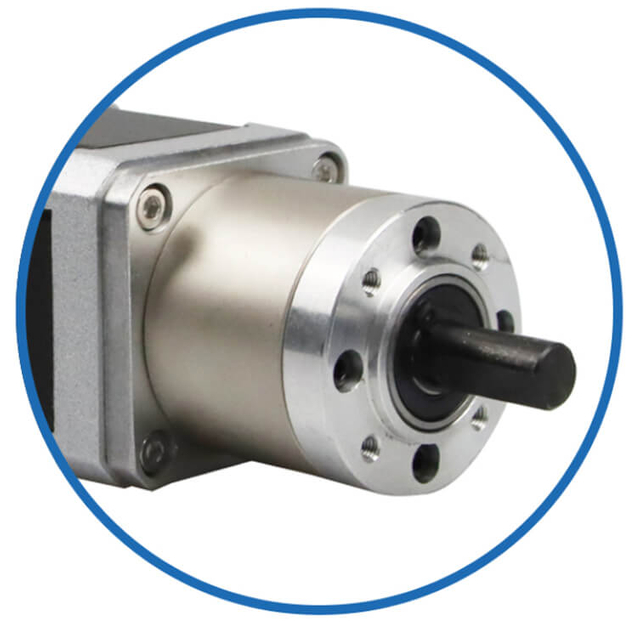
Jkongmotor Integrated Stepper Servo Motor Types
OEM + ODM Customized Stepper Motor Services & Capabilities
As a professional brushless dc motor manufacturer with 13 years in china, Jkongmotor offer various bldc motors with customized requirements, including 33 42 57 60 80 86 110 130mm, additionally, gearboxes, brakes, encoders, brushless motor drivers and integrated drivers are optional.
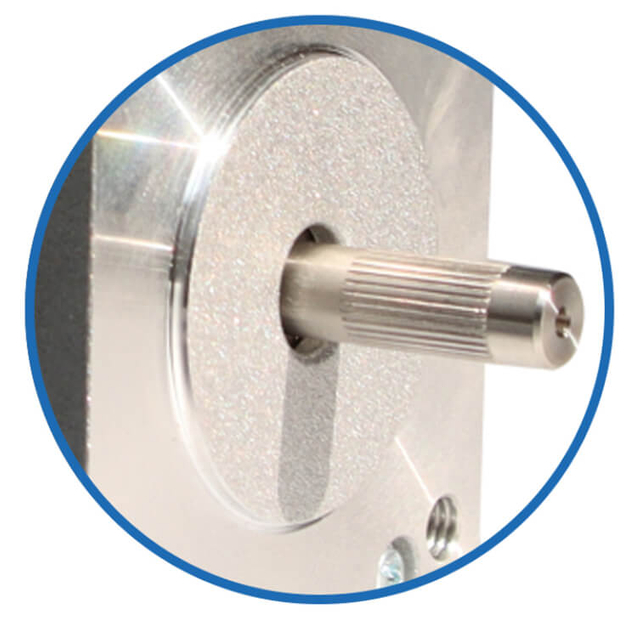
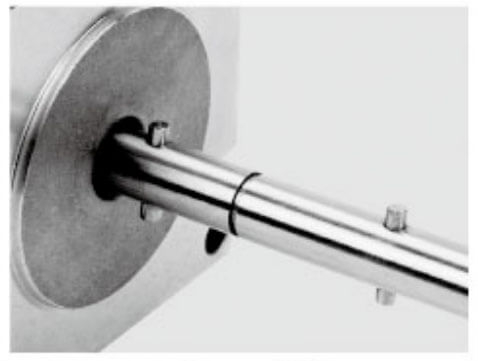
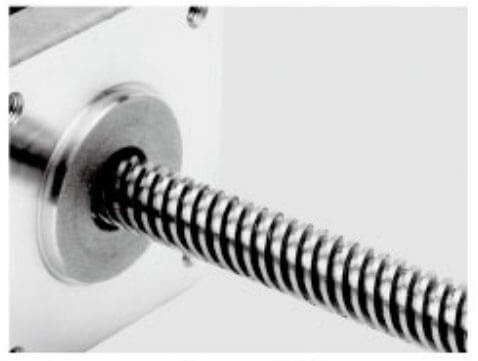
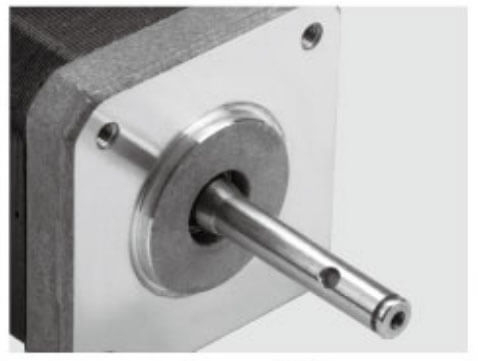
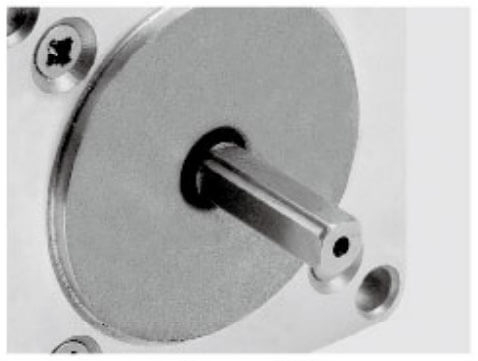
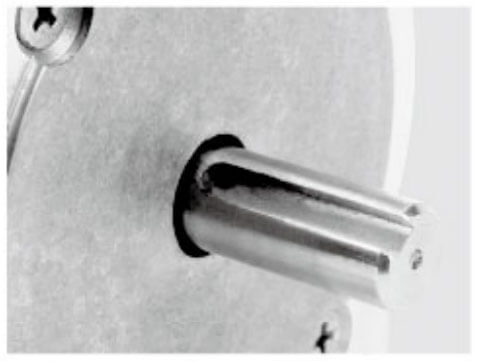
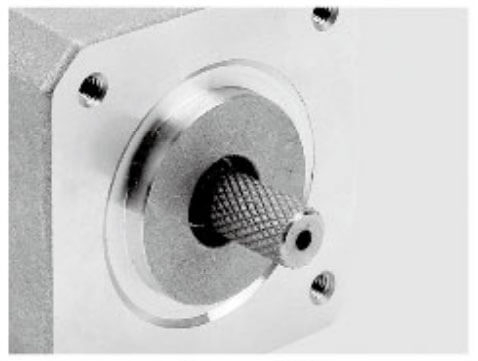
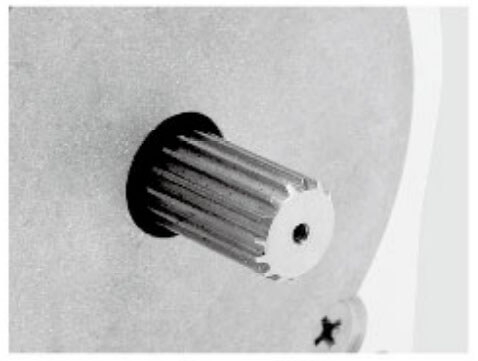
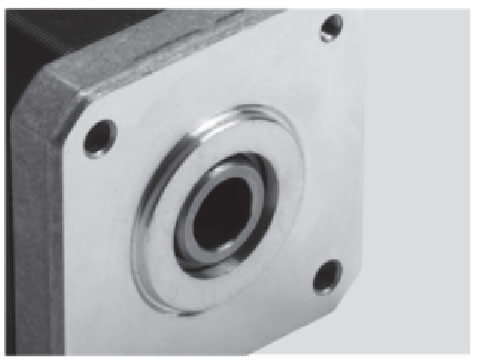
Motor Shaft Customized Service
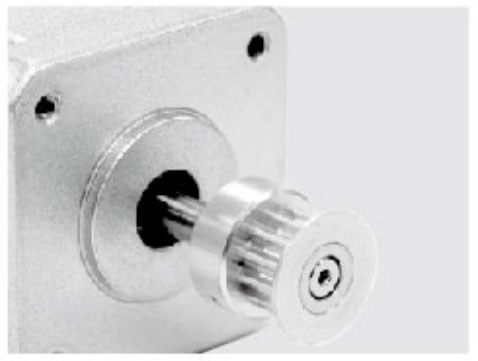
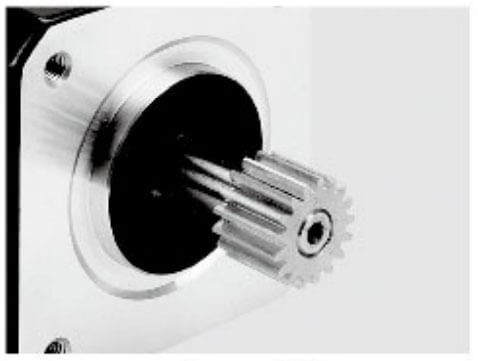
Jkongmotor offer many different shaft options for your motor as well as customizable shaft lengths to make the motor fit your application seamlessly.
1. What is an Integrated Servo Motor?
An Integrated Servo Motor combines the motor, driver, encoder, and control electronics into a single compact unit, reducing wiring complexity, saving installation space, and improving system reliability.
2. What are the main advantages of an Integrated Servo Motor compared to traditional servo systems?
Integrated Servo Motors offer simplified installation, lower system cost, reduced electromagnetic interference, and faster commissioning compared to separate motor and drive solutions.
3. Which applications are Integrated Servo Motors best suited for?
Integrated Servo Motors are ideal for robotics, AGVs, CNC equipment, packaging machinery, medical devices, and automated production lines requiring precise motion control.
4. Do you manufacture Integrated Servo Motors in-house?
Yes, we are a professional manufacturer with in-house capabilities for Integrated Servo Motor design, production, assembly, and testing, ensuring stable quality and fast delivery.
5. Can Integrated Servo Motors be customized for specific applications?
Absolutely. We support OEM and ODM customization for Integrated Servo Motors, including torque, speed, voltage, encoder type, communication protocol, and mechanical dimensions.
6. What power and torque ranges do your Integrated Servo Motors cover?
Our Integrated Servo Motor portfolio covers a wide range of power and torque options, suitable for light-duty to high-performance industrial automation applications.
7. What communication protocols are supported?
Our Integrated Servo Motors support common industrial protocols such as CANopen, EtherCAT, Modbus, RS485, and customized communication solutions if required.
8. Do Integrated Servo Motors support closed-loop control?
Yes. All our Integrated Servo Motors are closed-loop systems with high-resolution encoders to ensure precise positioning, speed control, and torque stability.
9. How do Integrated Servo Motors improve system reliability?
By integrating motor, drive, and feedback into one unit, Integrated Servo Motors reduce cable connections and potential failure points, significantly improving system reliability.
10. Are your Integrated Servo Motors suitable for continuous operation?
Yes. Our Integrated Servo Motors are designed with optimized thermal management and undergo temperature rise testing to ensure stable performance in continuous-duty applications.
11. What encoder options are available for Integrated Servo Motors?
We offer incremental, absolute, and multi-turn encoders for Integrated Servo Motors to meet different accuracy and feedback requirements.
12. Can you provide torque-speed curves and technical documentation?
Yes. Complete technical documentation, including torque-speed curves, wiring diagrams, and parameter manuals, is available for all Integrated Servo Motor models.
13. What certifications do your Integrated Servo Motors comply with?
Our Integrated Servo Motors comply with CE and RoHS standards, and additional certifications can be provided based on target market requirements.
14. How do you ensure quality consistency for Integrated Servo Motors?
Each Integrated Servo Motor undergoes functional testing, load testing, and final inspection before shipment, ensuring consistent performance across batches.
15. What is the typical lead time for Integrated Servo Motors?
Standard Integrated Servo Motor models are usually delivered within short lead times, while customized versions depend on specification complexity.
16. Do you offer motor and system matching support?
Yes. Our engineers provide professional selection and matching support to ensure Integrated Servo Motors work optimally with your mechanical and control systems.
17. Are Integrated Servo Motors easier to install than traditional servo motors?
Yes. Integrated Servo Motors significantly reduce wiring and setup time, making installation faster and minimizing commissioning errors.
18. Can Integrated Servo Motors help reduce overall system cost?
Although the unit cost may be higher than a single motor, Integrated Servo Motors reduce total system cost by lowering wiring, cabinet space, installation, and maintenance expenses.
19. Do you support private labeling and branding?
Yes. We offer private labeling, customized nameplates, and branding services for Integrated Servo Motor OEM and ODM customers.
20. What testing procedures are applied before shipment?
Every Integrated Servo Motor is tested for electrical performance, encoder feedback, communication stability, and load operation before delivery.
21. Are your Integrated Servo Motors suitable for harsh environments?
We offer Integrated Servo Motors with enhanced protection options for dust, vibration, and industrial environments upon request.
22. Can Integrated Servo Motors be used to replace stepper or hybrid systems?
Yes. Integrated Servo Motors are often used to upgrade stepper or hybrid systems, offering higher efficiency, better accuracy, and closed-loop control.
23. What is the warranty for Integrated Servo Motors?
We provide a standard warranty and responsive after-sales support for all Integrated Servo Motor products.
24. Do you provide technical support after delivery?
Yes. Our engineering team offers long-term technical support, including parameter tuning and application guidance for Integrated Servo Motors.
25. Why choose your company as an Integrated Servo Motor supplier?
We combine manufacturing expertise, strong customization capability, strict quality control, and professional technical support to deliver reliable Integrated Servo Motor solutions worldwide.
Integrated Servo Motor – Inquiry-Focused FAQ (For Buyers)
1. Are you a manufacturer or a trading company for Integrated Servo Motors?
We are a professional manufacturer specializing in Integrated Servo Motor design, production, assembly, and testing, offering direct factory supply for global customers.
2. Do you support OEM and ODM Integrated Servo Motor projects?
Yes. We provide full OEM and ODM services for Integrated Servo Motors, including mechanical design, electrical parameters, firmware customization, and branding.
3. What information is required to select the right Integrated Servo Motor?
Key information includes required torque, speed range, load inertia, power supply, control method, and application environment. Our engineers assist with selection to ensure optimal performance.
4. Can Integrated Servo Motors be customized for specific applications?
Yes. Integrated Servo Motors can be customized in torque, voltage, encoder type, communication protocol, shaft design, mounting dimensions, and protection level.
5. What is the minimum order quantity for customized Integrated Servo Motors?
The MOQ depends on the customization level. Standard Integrated Servo Motors support low MOQs, while ODM projects are evaluated based on specifications.
6. What communication protocols do your Integrated Servo Motors support?
Our Integrated Servo Motors support CANopen, EtherCAT, RS485, Modbus, and other industrial communication protocols, with customization available.
7. Are your Integrated Servo Motors suitable for replacing stepper motor systems?
Yes. Integrated Servo Motors are widely used to replace stepper motor systems, offering closed-loop control, higher efficiency, better accuracy, and no loss of steps.
8. How do Integrated Servo Motors reduce system integration cost?
Integrated Servo Motors reduce wiring, control cabinet space, installation time, and maintenance cost by combining motor, drive, and encoder into one compact unit.
9. What quality control processes are applied during production?
Each Integrated Servo Motor undergoes incoming material inspection, in-process control, functional testing, and final performance testing before shipment.
10. Can you provide torque-speed curves and technical documentation before ordering?
Yes. We provide complete technical documentation, including torque-speed curves, wiring diagrams, and parameter manuals, to support procurement evaluation.
11. What certifications do your Integrated Servo Motors comply with?
Our Integrated Servo Motors comply with CE and RoHS standards. Additional certifications can be supported depending on market requirements.
12. What is the typical lead time for Integrated Servo Motors?
Standard Integrated Servo Motors usually have short lead times. Customized Integrated Servo Motor projects depend on specification complexity and order quantity.
13. Do you offer samples for testing and evaluation?
Yes. Sample Integrated Servo Motors are available for evaluation. Sample policies depend on model and customization level.
14. How do you ensure consistency between samples and mass production?
Samples and mass production Integrated Servo Motors follow the same BOM, process control, and testing standards to ensure performance consistency.
15. What is the warranty period for Integrated Servo Motors?
We provide a standard warranty and long-term technical support for all Integrated Servo Motor products.
16. Do you provide technical support during system integration?
Yes. Our engineering team supports customers with parameter tuning, communication setup, and application-level integration.
17. Are Integrated Servo Motors suitable for continuous or long-duty operation?
Yes. Integrated Servo Motors are designed with optimized thermal management and tested for continuous-duty industrial applications.
18. Can you support private labeling and brand customization?
Yes. We offer private labeling, customized nameplates, and branding services for Integrated Servo Motor OEM customers.
19. How do you handle quality issues or after-sales service?
We follow a clear after-sales process including root cause analysis, corrective action, and fast technical response.
20. Why should buyers choose your Integrated Servo Motor solutions?
We offer factory-direct pricing, strong customization capability, strict quality control, and professional engineering support, making us a reliable Integrated Servo Motor partner.
Stepper Motor vs Integrated Servo Motor – Upgrade Comparison FAQ
1. What are the main differences between Stepper Motors and Integrated Servo Motors?
Stepper Motors operate in open-loop control and may lose steps under load, while Integrated Servo Motors use closed-loop control with encoder feedback, ensuring accurate positioning and stable performance.
2. Why do many applications upgrade from Stepper Motor to Integrated Servo Motor?
Applications upgrade to Integrated Servo Motors to eliminate step loss, improve efficiency, reduce noise, and achieve higher speed and torque stability.
3. Can an Integrated Servo Motor directly replace a Stepper Motor?
In many cases, yes. Integrated Servo Motors can be selected to match or exceed the torque and speed requirements of existing stepper motor systems with minimal mechanical changes.
4. How does closed-loop control improve system performance?
Closed-loop control allows Integrated Servo Motors to continuously monitor position and speed, automatically correcting errors that stepper motors cannot detect.
5. Do Integrated Servo Motors perform better at high speeds?
Yes. Integrated Servo Motors maintain torque at higher speeds, while stepper motors experience rapid torque drop-off and increased vibration.
6. Are Integrated Servo Motors quieter than Stepper Motors?
Yes. Integrated Servo Motors operate with smoother motion and lower resonance, significantly reducing noise compared to stepper motors.
7. How does energy efficiency compare between Stepper Motors and Integrated Servo Motors?
Integrated Servo Motors are more energy-efficient because they adjust current based on load demand, unlike stepper motors that often draw constant current.
8. Can upgrading reduce system maintenance costs?
Yes. Integrated Servo Motors reduce mechanical stress, heat generation, and failure risk, lowering long-term maintenance and downtime costs.
9. Is system wiring simpler with Integrated Servo Motors?
Yes. Integrated Servo Motors combine motor, drive, and encoder into one unit, significantly reducing wiring and cabinet complexity compared to stepper systems.
10. Do Integrated Servo Motors require complex tuning?
No. Integrated Servo Motors are easier to commission than traditional servo systems and often simpler than optimizing stepper motor performance in demanding applications.
11. Are Integrated Servo Motors suitable for applications with varying loads?
Yes. Integrated Servo Motors automatically adapt to load changes through real-time feedback, maintaining accuracy and stability.
12. Can Integrated Servo Motors improve positioning accuracy?
Yes. Encoder feedback enables higher positioning accuracy and repeatability than open-loop stepper motors.
13. What happens if a stepper motor system loses steps?
Step loss in stepper motors leads to positioning errors that are not detected, while Integrated Servo Motors continuously correct positioning deviations.
14. Are Integrated Servo Motors more reliable in long-duty cycles?
Yes. Integrated Servo Motors are designed for continuous-duty operation with optimized thermal management.
15. Is the initial cost of Integrated Servo Motors higher?
The unit price may be higher, but Integrated Servo Motors reduce total system cost by lowering wiring, setup, and maintenance expenses.
16. Can Integrated Servo Motors work with existing controllers?
Yes. Integrated Servo Motors support common industrial communication protocols, making integration with existing controllers straightforward.
17. Is mechanical modification required when upgrading from Stepper Motor?
In many applications, Integrated Servo Motors can match standard stepper motor mounting sizes, minimizing mechanical redesign.
18. Are Integrated Servo Motors suitable for precision applications?
Yes. Integrated Servo Motors are ideal for applications requiring high accuracy, smooth motion, and stable torque output.
19. When is it better to keep using a Stepper Motor instead of upgrading?
Stepper Motors may still be suitable for low-speed, low-load, cost-sensitive applications where closed-loop precision is not critical.
20. How can buyers evaluate whether to upgrade to Integrated Servo Motors?
Buyers should evaluate performance requirements, load conditions, accuracy needs, and long-term operating costs. Our engineers provide professional upgrade assessments.
Stepper vs Integrated Servo Motor
| Decision Factor | Stepper Motor | Integrated Servo Motor | Procurement Insight |
| Control Method | Open-loop control | Closed-loop control with encoder | Closed-loop reduces positioning risk |
| Position Reliability | Risk of step loss under load | Real-time feedback correction | Higher system reliability |
| High-Speed Performance | Torque drops at high speed | Stable torque at high speed | Better for demanding applications |
| Noise & Vibration | Higher resonance and noise | Smooth and quiet operation | Suitable for medical and precision use |
| Energy Efficiency | Constant current consumption | Power adjusted to load | Lower operating cost |
| System Architecture | Motor + driver + wiring | All-in-one integrated unit | Faster installation |
| Wiring Complexity | Complex wiring | Simplified wiring | Reduced integration cost |
| Commissioning | Simple but limited | Easy and flexible | Saves engineering time |
| Load Adaptability | Sensitive to load changes | Automatically adapts | Better for variable loads |
| Continuous Operation | Heat buildup | Optimized thermal design | Suitable for 24/7 operation |
| Maintenance Cost | Hidden errors | Fault detection available | Lower downtime risk |
| Scalability | Limited | Easy system upgrade | Long-term product planning |
| Unit Cost | Lower | Higher | Unit cost is not total cost |
| Total Cost of Ownership | Higher over time | Lower over lifecycle | Better long-term ROI |
| Typical Applications | Simple positioning | Robotics, AGV, automation | Application-driven choice |
Share your current stepper motor specifications and application details.
Our engineers will evaluate whether an Integrated Servo Motor upgrade can reduce your total system cost.
If your application meets 3 or more of the following conditions, upgrading is strongly recommended.
Performance & Accuracy
□ Position accuracy must be guaranteed without step loss
□ Load varies during operation
□ High-speed motion is required
□ Smooth motion is critical
Reliability & Operation
□ System runs continuously for long hours
□ Overheating occurs in stepper motor system
□ Maintenance cost or downtime is a concern
System Integration
□ Wiring and cabinet space need to be reduced
□ Faster installation and commissioning is required
□ Closed-loop feedback is preferred
Business Considerations
□ Long-term energy cost is important
□ Product upgrade or premium positioning planned
□ Higher system stability is required for customers
Why Upgrade from Stepper Motor to Integrated Servo Motor?
A Smarter Motion Control Choice for Modern Industries
Integrated servo motors combine motor, drive, and encoder into one compact unit, delivering closed-loop control, higher accuracy, smoother motion, and lower total system cost compared to traditional stepper motor solutions.
Integrated Servo Motor Solution for AGV Systems Upgrade FAQs
Integrated servo motors enable AGV manufacturers to achieve precise navigation, smooth acceleration, and reliable operation under changing payloads. By eliminating step loss and improving energy efficiency, integrated servo motors extend battery life and reduce maintenance, making them ideal for 24/7 logistics and warehouse automation environments.
1. Why do AGV systems upgrade from stepper motors to integrated servo motors?
AGVs require precise positioning and stable motion under changing loads, which integrated servo motors provide through closed-loop control.
2. How do integrated servo motors improve AGV navigation accuracy?
Encoder feedback ensures accurate speed and position control, reducing navigation errors.
3. Can integrated servo motors prevent step loss in AGVs?
Yes. Closed-loop control eliminates step loss common in stepper motor systems.
4. Do integrated servo motors improve AGV start-stop performance?
Yes. Smooth acceleration and deceleration improve motion stability.
5. Are integrated servo motors better for AGVs with variable payloads?
Yes. They automatically adapt to load changes.
6. Can upgrading reduce AGV maintenance costs?
Yes. Reduced vibration and heat extend component life.
7. Do integrated servo motors help extend AGV battery life?
Yes. Power output is adjusted based on actual load demand.
8. Are integrated servo motors easier to integrate into AGV systems?
Yes. All-in-one design simplifies wiring and control.
9. Can integrated servo motors reduce AGV control cabinet size?
Yes. Integrated drives reduce cabinet components.
10. Are integrated servo motors suitable for multi-axis AGVs?
Yes. They support synchronized motion control.
11. Do integrated servo motors improve AGV safety?
Yes. Real-time feedback enhances motion predictability.
12. Can integrated servo motors handle continuous AGV operation?
Yes. They are designed for long-duty cycles.
13. Are integrated servo motors compatible with AGV controllers?
Yes. They support common industrial protocols.
14. Is upgrading AGVs cost-effective long term?
Yes. Lower energy and maintenance costs reduce TCO.
15. How can AGV manufacturers evaluate an upgrade?
By reviewing load, speed, accuracy, and runtime requirements.
Common Suppliers vs Us – AGV Integrated Servo Motors
| Comparison Item | Common Suppliers | Us |
| Control Method | Open-loop or hybrid control | Full closed-loop servo control |
| Navigation Accuracy | Step loss under load variation | No step loss, precise positioning |
| Battery Efficiency | Constant current consumption | Load-adaptive energy management |
| System Architecture | Motor and driver separated | Fully integrated servo motor |
| Wiring & Installation | Complex wiring | Simplified plug-and-play |
| Load Handling | Performance degrades with payload | Stable motion under variable loads |
| Continuous Operation | Limited 24/7 stability | Designed for long-duty AGV use |
| Customization | Standard AGV motors | AGV-specific OEM ODM solutions |
| Maintenance | Frequent recalibration | Minimal maintenance required |
| Upgrade Path | Stepper-based limitation | Seamless stepper-to-servo upgrade |
Integrated Servo Motor Solution for Robotics Systems Upgrade FAQs
For robotic applications, integrated servo motors provide the precision, repeatability, and smooth motion required for multi-axis coordination. Closed-loop feedback ensures accurate positioning under dynamic loads, while the compact integrated design simplifies wiring and supports scalable robot system architectures.
1. Why are stepper motors limited in robotic applications?
Stepper motors lack feedback and may lose steps under dynamic motion.
2. How do integrated servo motors improve robotic precision?
Closed-loop control ensures accurate and repeatable motion.
3. Are integrated servo motors suitable for robotic arms?
Yes. They provide smooth and precise multi-axis control.
4. Do integrated servo motors improve robotic speed performance?
Yes. Torque remains stable at higher speeds.
5. Can integrated servo motors reduce robotic vibration?
Yes. Smooth motion minimizes resonance.
6. Are integrated servo motors suitable for collaborative robots?
Yes. Quiet and precise motion enhances safety.
7. Do integrated servo motors simplify robot wiring?
Yes. Integrated design reduces cable complexity.
8. Can integrated servo motors improve robot repeatability?
Yes. Encoder feedback ensures consistent positioning.
9. Are integrated servo motors suitable for mobile robots?
Yes. They adapt well to changing load conditions.
10. Do integrated servo motors reduce robotic downtime?
Yes. Fault monitoring improves reliability.
11. Can integrated servo motors support synchronized axes?
Yes. They are ideal for coordinated robotic motion.
12. Are integrated servo motors easier to commission in robots?
Yes. Fewer components simplify setup.
13. Can robots run longer with integrated servo motors?
Yes. Thermal management supports continuous operation.
14. Are integrated servo motors scalable for future robot upgrades?
Yes. They support advanced control and expansion.
15. When should robots upgrade from stepper motors?
When precision, speed, and reliability are critical.
Common Suppliers vs Us – Robotics Integrated Servo Motors
| Comparison Item | Common Suppliers | Us |
| Motion Precision | Inconsistent under dynamic loads | High repeatability and accuracy |
| Multi-Axis Coordination | Complex synchronization | Optimized for multi-axis robots |
| Vibration Control | Noticeable resonance | Smooth and low-vibration motion |
| Control Architecture | External driver required | Motor, drive, encoder integrated |
| Wiring & Space | Bulky and complex | Compact, space-saving design |
| Scalability | Limited expansion | Modular and scalable architecture |
| Safety Performance | Basic protection | Built-in monitoring and protection |
| Customization | Generic robotics use | Robot-optimized customization |
| Deployment Speed | Longer commissioning | Faster system integration |
| Long-Term Reliability | Performance drift over time | Stable closed-loop control |
Integrated Servo Motor Solution for CNC Machines Upgrade FAQs
Integrated servo motors deliver high-speed accuracy and stable torque essential for CNC machining. By maintaining precise position control at all speeds, they improve surface finish, reduce vibration, and enhance long-term machine reliability, making them a cost-effective upgrade from stepper motor systems.
1. Why are integrated servo motors preferred in CNC machines?
They provide high-speed accuracy and closed-loop precision.
2. How do integrated servo motors improve CNC machining accuracy?
Encoder feedback ensures precise positioning at all speeds.
3. Can integrated servo motors eliminate missed steps in CNC systems?
Yes. Closed-loop control prevents positioning errors.
4. Do integrated servo motors improve surface finish quality?
Yes. Smooth motion reduces vibration during cutting.
5. Are integrated servo motors suitable for high-speed CNC operations?
Yes. They maintain torque at high RPM.
6. Can upgrading reduce CNC machine downtime?
Yes. Stable performance reduces mechanical stress.
7. Do integrated servo motors support continuous CNC operation?
Yes. Designed for long-duty industrial cycles.
8. Are integrated servo motors compatible with CNC controllers?
Yes. They support standard CNC communication protocols.
9. Do integrated servo motors reduce CNC system noise?
Yes. Reduced resonance improves working conditions.
10. Can integrated servo motors simplify CNC wiring?
Yes. Integrated drives reduce system complexity.
11. Are integrated servo motors suitable for multi-axis CNC machines?
Yes. They support precise axis synchronization.
12. Do integrated servo motors improve CNC repeatability?
Yes. Position feedback ensures consistent results.
13. Can integrated servo motors lower CNC maintenance costs?
Yes. Reduced heat and wear extend service life.
14. Is upgrading CNC systems cost-effective?
Yes. Improved efficiency lowers total ownership cost.
15. When should CNC machines upgrade from stepper motors?
When speed, accuracy, and reliability requirements increase.
Common Suppliers vs Us – CNC Integrated Servo Motors
| Comparison Item | Common Suppliers | Us |
| Position Accuracy | Accuracy loss at high speed | Precise control at all speeds |
| Torque Performance | Torque drops rapidly | Stable torque output |
| Surface Finish | Affected by vibration | Improved machining quality |
| System Complexity | Separate components | All-in-one servo architecture |
| Tuning Difficulty | Manual parameter tuning | Factory-optimized matching |
| Thermal Stability | Heat buildup over time | Optimized thermal design |
| Downtime Risk | Frequent recalibration | Reduced maintenance downtime |
| Controller Compatibility | Limited protocol support | CNC-compatible interfaces |
| Upgrade Feasibility | Full system replacement | Stepper-to-servo upgrade ready |
| Lifetime Cost | Higher long-term cost | Lower total cost of ownership |
Integrated Servo Motor Solution for Medical Equipment Upgrade FAQs
Medical devices demand low noise, smooth motion, and high positioning accuracy. Integrated servo motors meet these requirements through closed-loop control and optimized thermal design, ensuring reliable long-duty operation while improving patient comfort and diagnostic precision.
1. Why are stepper motors replaced in medical devices?
They often produce noise and vibration unsuitable for medical use.
2. How do integrated servo motors improve medical device accuracy?
Closed-loop control ensures precise positioning.
3. Are integrated servo motors quieter than stepper motors?
Yes. Smooth operation significantly reduces noise.
4. Do integrated servo motors improve patient comfort?
Yes. Quiet and stable motion enhances experience.
5. Are integrated servo motors suitable for imaging equipment?
Yes. High precision supports accurate positioning.
6. Can integrated servo motors support continuous medical operation?
Yes. Designed for long-duty reliability.
7. Do integrated servo motors reduce device vibration?
Yes. Low resonance improves system stability.
8. Are integrated servo motors easy to integrate into medical systems?
Yes. Compact design simplifies integration.
9. Can integrated servo motors improve diagnostic accuracy?
Yes. Precise motion ensures consistent results.
10. Do integrated servo motors reduce maintenance in medical equipment?
Yes. Reliable performance lowers service needs.
11. Are integrated servo motors compliant with medical standards?
They can be designed to meet medical compliance requirements.
12. Do integrated servo motors support smooth low-speed motion?
Yes. Ideal for controlled medical movements.
13. Can integrated servo motors improve equipment lifespan?
Yes. Reduced stress extends service life.
14. Are integrated servo motors suitable for automated medical devices?
Yes. They support precision automation.
15. When should medical devices upgrade from stepper motors?
When noise, accuracy, and reliability are critical.
Common Suppliers vs Us – CNC Integrated Servo Motors
| Comparison Item | Common Suppliers | Us |
| Position Accuracy | Accuracy loss at high speed | Precise control at all speeds |
| Torque Performance | Torque drops rapidly | Stable torque output |
| Surface Finish | Affected by vibration | Improved machining quality |
| System Complexity | Separate components | All-in-one servo architecture |
| Tuning Difficulty | Manual parameter tuning | Factory-optimized matching |
| Thermal Stability | Heat buildup over time | Optimized thermal design |
| Downtime Risk | Frequent recalibration | Reduced maintenance downtime |
| Controller Compatibility | Limited protocol support | CNC-compatible interfaces |
| Upgrade Feasibility | Full system replacement | Stepper-to-servo upgrade ready |
| Lifetime Cost | Higher long-term cost | Lower total cost of ownership |
Integrated Servo Motor Solution for Textile Machinery Upgrade FAQs
Textile machines benefit from integrated servo motors through improved speed synchronization, stable tension control, and higher production efficiency. Closed-loop feedback reduces fabric defects and waste, enabling consistent quality in high-speed and continuous textile manufacturing environments.
1. Why do textile machines upgrade to integrated servo motors?
Stepper motors struggle with speed synchronization and tension control.
2. How do integrated servo motors improve textile production quality?
Precise motion ensures consistent fabric handling.
3. Can integrated servo motors support high-speed textile machinery?
Yes. Stable torque enables faster operation.
4. Do integrated servo motors improve tension control?
Yes. Closed-loop feedback ensures stable tension.
5. Can upgrading reduce fabric defects?
Yes. Accurate motion reduces misalignment.
6. Are integrated servo motors suitable for continuous textile operation?
Yes. Designed for industrial duty cycles.
7. Do integrated servo motors reduce machine vibration?
Yes. Smooth motion improves stability.
8. Can integrated servo motors improve production efficiency?
Yes. Faster and more reliable operation increases output.
9. Are integrated servo motors suitable for dusty textile environments?
Yes. Industrial designs support harsh conditions.
10. Do integrated servo motors simplify textile machine wiring?
Yes. Integrated drives reduce complexity.
11. Can integrated servo motors support multi-axis textile systems?
Yes. Ideal for synchronized motion.
12. Do integrated servo motors reduce maintenance frequency?
Yes. Lower wear extends service intervals.
13. Are integrated servo motors energy efficient in textile machines?
Yes. Power adapts to real load demand.
14. Is upgrading textile machines cost-effective?
Yes. Higher efficiency reduces operating costs.
15. When should textile machines upgrade from stepper motors?
When speed, quality, and reliability requirements increase.
Common Suppliers vs Us – Textile Integrated Servo Motors
| Comparison Item | Common Suppliers | Us |
| Speed Synchronization | Inconsistent at high speed | Precise synchronized motion |
| Tension Control | Limited feedback | Real-time closed-loop control |
| Production Efficiency | Frequent speed adjustments | Stable high-speed operation |
| Fabric Waste | Higher defect rates | Reduced waste and rework |
| Environmental Resistance | Sensitive to dust | Designed for textile environments |
| System Wiring | Complex cabling | Simplified integrated design |
| Maintenance Needs | Frequent adjustments | Low maintenance requirement |
| Customization Support | Generic textile solutions | Application-specific customization |
| Uptime Performance | Performance degradation | Reliable continuous operation |
| Cost Efficiency | Higher operational cost | Optimized total cost of ownership |
Why Integrated Servo Motors Are the Future of Motion Control
Across AGV, robotics, CNC, medical, and textile industries, integrated servo motors offer a future-ready motion control solution by reducing system complexity, improving reliability, and lowering total cost of ownership.