Views: 0 Author: Jkongmotor Publish Time: 2025-11-27 Origin: Site
Modern automation systems demand high precision, compact design, and simplified installation. This is exactly why the servo motor integrated with driver has become a preferred choice across industries. By combining the motor, driver, feedback mechanism, and sometimes even the controller into a single unified unit, integrated servo systems deliver unparalleled performance, efficiency, and convenience.
This comprehensive guide explores the key features, technologies, advantages, applications, and selection criteria for integrated servo motors, offering the high-quality depth and clarity required to rank at the top of Google results.
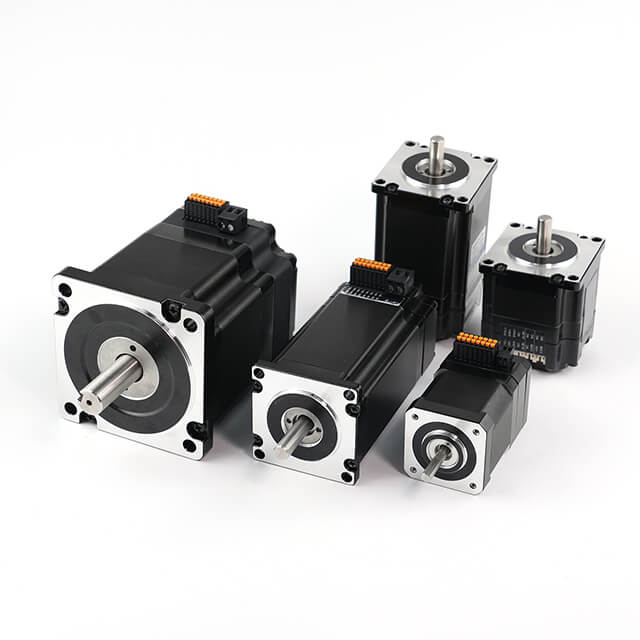
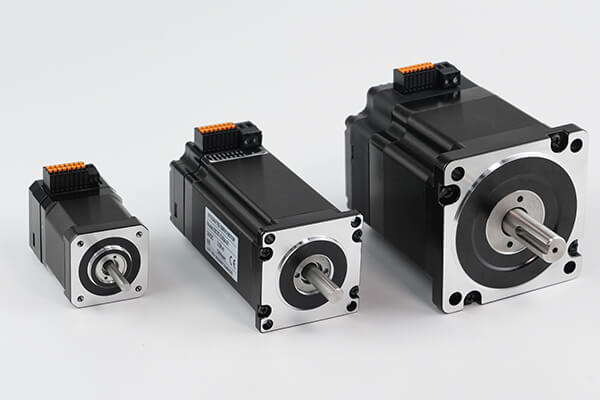
A servo motor integrated with driver is a motion system in which the servo motor and its drive electronics are combined into a single compact assembly. Instead of using a separate external driver, the integrated unit contains:
Servo motor (BLDC or AC servo)
Built-in driver / amplifier
Encoder or feedback sensor
Communication interface
Internal power management
Optional integrated controller or PLC
By consolidating multiple components, integrated servo motors reduce wiring complexity, save space, accelerate installation, and enhance reliability.
Integrated servo motors come in several configurations depending on the motor technology, feedback system, communication interface, and intended application. Below are the primary types you will encounter in modern automation systems.
These are the most common type of integrated servo motors. They combine a brushless DC motor, built-in driver, and encoder into one compact unit.
High efficiency
Low noise
High torque-to-weight ratio
Ideal for battery-powered systems (AGVs, robotics)
Robotics joints
AGVs / AMRs
Small CNC equipment
Light automation
AC servo motors with built-in drivers offer higher power and excellent control for industrial machinery.
Higher voltage (typically 220V or 380V)
Suited for high-speed and high-torque applications
Better performance in heavy-duty cycles
CNC machines
Packaging machinery
Conveyor systems
Industrial automation lines
These are hybrid stepper motors combined with servo control algorithms and an integrated driver.
High torque at low speeds
Encoder-based closed-loop control
Lower cost than conventional servos
Compact and simple to install
3D printers
Pick-and-place machines
Automated laboratory equipment
Light industrial automation
These motors include multi-turn or single-turn absolute encoders, allowing them to know their exact position without homing cycles.
No need for reference homing
Ideal for multi-axis systems
High precision and fast startup
Robotics
Semiconductor equipment
Precision assembly
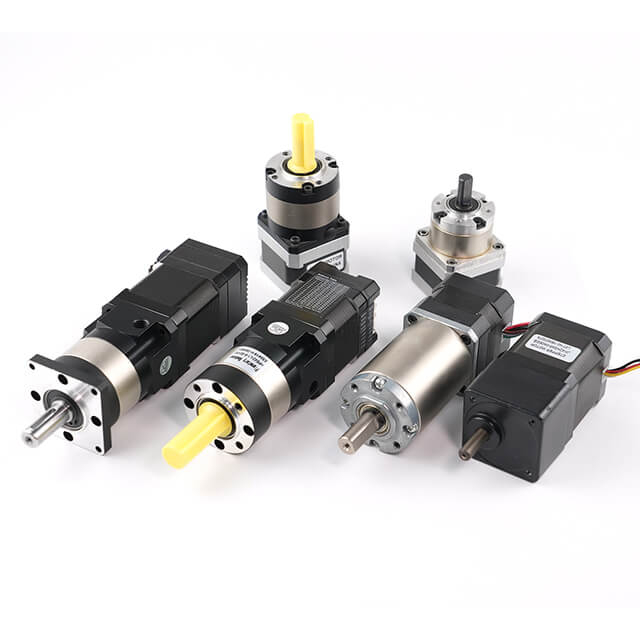
These are servo motors combined with a planetary gearbox and a built-in driver.
High torque output
Increased positioning accuracy
Ideal for high-load or low-speed applications
Jointed arms
Automated assembly
Pressing and clamping systems
These units include an internal controller capable of running motion profiles independently.
Can operate without an external PLC
Supports advanced positioning
Onboard scripting / programming
Ideal for decentralized control architectures
Distributed automation
Multi-axis synchronized motion
AGVs / AMRs
These motors are defined by their communication protocol:
EtherCAT integrated servo motor
CANopen integrated servo motor
Modbus-RTU / RS485 integrated servo motor
EtherNet/IP integrated servo motor
Profinet integrated servo motor
Smart factories
High-precision synchronized motion
Machine tools and robotics
Safe and efficient
Ideal for mobile robots and small equipment
Used in compact automation systems
More powerful
Better for industrial machining and heavy-duty automation
Integrated servo motors come in various types depending on their:
Motor technology (BLDC, AC, step-servo)
Feedback (incremental encoder, absolute encoder)
Communication interface (EtherCAT, CANopen, Modbus, etc.)
Functionality (with gearbox, with controller, high-voltage/low-voltage)
By selecting the right type, you can optimize performance, reduce wiring, save space, and improve reliability across your automation design.
An integrated servo motor is a compact motion control system that combines the motor, servo driver, and feedback sensor into a single unit. This design allows the motor to control its own position, speed, and torque with high accuracy and minimal external wiring.
The controller (PLC, PC, robot controller, etc.) sends a command to the integrated servo motor.
Commands may include:
Position target (move to 90°)
Speed target (rotate at 500 rpm)
Torque target (apply 1.2 Nm)
Commands are transmitted via digital communication or analog input.
The integrated driver interprets the commands and determines:
How fast the motor should rotate
How far it should move
How much torque it needs
This is controlled through internal motion algorithms.
The encoder continuously measures:
Current position
Rotation speed
Direction
This feedback is sent to the integrated driver in microseconds.
Using the encoder feedback, the integrated servo driver performs three closed-loop controls:
Adjusts current flowing into motor windings to achieve required torque.
Regulates rotational speed to match the command.
Ensures the motor moves precisely to the target position with minimal error.
These loops constantly adjust motor power to maintain accuracy, even if the load changes.
Based on closed-loop calculations, the driver sends precisely modulated electrical waveforms to the motor windings.
Rotational movement
Controlled acceleration
Smooth motion
Because it is integrated, the processing is extremely fast, resulting in:
Higher precision
Lower vibration
Smoother performance
Throughout operation, the integrated servo system continuously:
Compares actual position vs. target
Adjusts current and voltage
Compensates for load variations
Prevents overshoot or oscillation
High accuracy
Stability
Real-time control
An integrated servo motor works by combining a servo motor, electronic driver, and encoder feedback into a single compact unit.
Through closed-loop control, high-speed feedback, and intelligent internal processing, it precisely regulates position, speed, and torque for advanced motion control tasks.
The system eliminates the need for a separate driver cabinet. The motor + driver combination ensures fast setup, minimal wiring, and reduced overall footprint.
Integrated servo motors typically incorporate high-resolution encoders (12–23 bit), enabling:
Ultra-precise positioning
Smooth velocity control
Excellent repeatability
Some models include absolute encoders, removing the need for homing sequences.
Depending on the design, integrated servo systems may include:
Onboard motion controller
Pre-programmed sequences
Position, speed, and torque control modes
PLC-like function blocks
This intelligence allows the motor to operate independently or seamlessly integrate with higher-level systems.
Common supported protocols include:
CANopen
EtherCAT
Modbus-RTU / Modbus-TCP
RS485
Profinet
EtherNet/IP
These interfaces allow real-time communication, multi-axis synchronization, and compatibility with modern automation networks.
The tight integration of motor and driver reduces electrical losses, improves thermal management, and leads to significant energy savings over time.
Traditional servo systems require extensive cabling between the motor, driver, and controller. Integrated units drastically minimize:
Power cables
Encoder cables
Control signal cables
This lowers installation cost and reduces EMI issues.
Integrated servo motors are ideal for applications where space is limited, such as collaborative robots, AGVs, automated tools, and compact machinery.
Fewer connectors and cables mean fewer failure points. The compact integrated structure has significantly higher durability in industrial environments.
Built-in configuration tools and auto-tuning features enable quick setup, even for multi-axis systems.
With onboard diagnostic tools and intelligent error reporting, maintenance becomes highly efficient.
Although the initial unit price may be higher, the reduction in:
Cabling
Panel space
Installation labor
EMI troubleshooting
results in substantial lifecycle cost savings.
Integrated servo motors with built-in drivers are becoming a preferred choice in modern automation thanks to their compact design, high precision, and simplified wiring. By combining the motor, driver, and feedback system into a single unit, they enable faster installation, better reliability, and decentralized motion control.
Below are the major industrial and commercial applications where integrated servo motors excel.
Integrated servo motors are widely used in robotics because they provide smooth motion, high torque density, and compact size.
Robotic arm joints
End-of-arm tooling (EOAT)
Exoskeleton actuators
Service robots
Educational and research robots
Precise positioning for multi-axis movements
Reduced wiring, ideal for small-scale robot arms
Absolute encoders eliminate the need for homing
AGVs and AMRs require efficient, small, and reliable motors for navigation and load handling.
Drive wheels
Steering motors
Lifting and handling modules
Conveyor transfer stations
Low-voltage (24V/48V) integrated servos maximize battery efficiency
Built-in communication supports swarm control
Compact design fits within tight robot chassis
Precision control is critical in machining environments, and integrated servo motors provide excellent responsiveness and accuracy.
Tool changers
Feed drives
Z-axis lifts
Small CNC routers and desktop machines
High torque and precise feedback
Easy integration into space-limited CNC designs
Modern packaging systems require coordinated high-speed movements. Integrated servos simplify multi-axis machine design.
Form-fill-seal machines
Label applicators
Cutting and sealing systems
Wrapping and cartoning machines
Synchronized movement via industrial networks
Quick installation for modular machine stations
Integrated servo motors are used in industries requiring constant movement and synchronization.
Smart conveyor lines
Diverters and sorters
Pick-and-place gantries
Index tables
Real-time motion control for product tracking
High reliability in continuous-operation environments
These industries require quiet, clean, and precise motion systems.
Diagnostic instruments
Sample handling machines
Automated pipetting systems
Lab robots
High precision for delicate tasks
Compact footprint for instrument design
Low noise and clean operation
Integrated servo motors play a critical role in high-precision automation for electronics production.
PCB assembly
Screwdriving machines
SMT feeders
Laser processing stages
Dispensing robots
Micron-level positioning accuracy
High-speed start-stop capability
Simple wiring for multi-axis production lines
Textiles and printing systems demand high-speed coordination and accurate tension control.
Yarn winders
Printing carriage drives
Roll feeders
Cutting machines
Smooth, vibration-free motion
Tight control of position and tension
Hygienic, space-saving motion solutions are essential in food production lines.
Filling machines
Sorting equipment
Automated preparation systems
Packaging lines
Minimal wiring reduces contamination points
High-speed motion enhances productivity
Integrated servo motors support decentralized, intelligent automation.
Modular machine units
Distributed control systems
Multi-axis assembly cells
IoT-connected production stations
Built-in communication (EtherCAT, CANopen, Modbus)
Compact design for modular automation
Real-time feedback for digital twins
Integrated servo motors with built-in drivers are transforming automation across industries. Their compactness, precision, and simplified installation make them ideal for:
Robotics
AGVs/AMRs
CNC machinery
Packaging lines
Material handling
Medical and laboratory equipment
Electronics manufacturing
Printing and textile systems
Food processing
Smart factories
They enable faster setup, lower maintenance, and higher performance in systems requiring accurate and reliable motion control.
Integrated servo motors—featuring a servo motor, built-in driver, and encoder in a single compact unit—deliver significant performance advantages over traditional servo systems with separate drivers. Their ability to enhance precision, reliability, and overall machine efficiency makes them a leading choice in modern automation, robotics, and smart manufacturing.
Here are the key ways integrated servo motors improve machine performance:
Integrated servo motors eliminate the delays caused by long cable runs between a separate driver and motor.
Instant feedback processing thanks to internal encoder-to-driver communication
Improved acceleration and deceleration for fast cycle times
Higher bandwidth control loops that enhance system responsiveness
This enables machines to react quickly to real-time input changes, essential for robotics, pick-and-place systems, and high-speed automation.
The integrated design ensures that feedback is delivered to the driver with minimal signal loss.
Direct, internal encoder feedback with no external noise interference
16–23 bit encoders offer micron-level precision
Faster control loop corrections
Reduced backlash and mechanical errors
For CNC machinery, semiconductor equipment, and precision assembly, this translates to more accurate cuts, placements, and alignments.
Integrated servo motors use advanced control algorithms such as:
Field-Oriented Control (FOC)
S-curve acceleration profiles
High-resolution PWM modulation
Smooth, ripple-free rotation
Lower vibration and noise
Improved stability at low speeds
This is especially beneficial in medical devices, robotic joints, and inspection machines requiring quiet and stable operation.
By combining the motor and driver in one unit, integrated servo systems remove many common failure points.
Fewer connectors → reduced risk of cable failure
Lower EMI noise due to short internal wiring
Built-in thermal and overload protection
Self-diagnostics for predictive maintenance
This leads to longer machine life, fewer unexpected stops, and lower maintenance costs.
Integrated servo motors eliminate bulky external drivers and reduce wiring, enabling compact and modular machine architectures.
Smaller control cabinets
More flexible machine layouts
Better cooling and reduced heat concentration
OEMs designing AGVs, cobots, or portable equipment gain increased flexibility and easier integration.
Conventional servo systems require separate power, feedback, and control cables. Integrated servo motors dramatically simplify this.
Fewer cables
Less installation time
Lower wiring costs
Reduced risk of improper wiring
Cleaner machine designs
This is ideal for multi-axis machines, where wiring complexity often becomes a major challenge.
Integrated servo motors utilize optimized internal electronics to reduce energy loss.
Better thermal dissipation
Higher efficiency in low-voltage systems (24V/48V)
Optimized current control algorithms
Lower energy waste from long motor-driver cables
This leads to reduced operating costs and improved performance for battery-powered systems like AGVs and mobile robots.
Many integrated servo motors include built-in intelligence for real-time diagnostics.
Motor temperature
Current consumption
Position and speed accuracy
Vibration levels
Load variations
Predict failures
Schedule maintenance proactively
Optimize performance automatically
This supports Industry 4.0 and smart factory environments.
Integrated servo motors with communication interfaces (EtherCAT, CANopen, Modbus, Profinet, etc.) can synchronize easily with other axes.
Coordinated movements in robotic arms
Precise timing in packaging and printing machinery
Smooth, synchronized motion in 3D CNC operations
This ensures consistent product quality and higher throughput.
Even though integrated servo motors may cost more upfront, they reduce overall machine cost due to:
No external driver
Reduced wiring and panel cost
Shorter installation time
Fewer components to maintain
Lower failure rates
This makes them a cost-effective choice for OEMs and automation system designers.
Integrated servo motors improve machine performance by offering:
Faster response and smoother motion
Higher accuracy and precision
Better reliability and less downtime
Space-saving, compact designs
Reduced wiring and installation time
Smart diagnostics and improved synchronization
Lower total lifecycle cost
These benefits make integrated servo systems ideal for modern robotics, smart factories, CNC equipment, packaging lines, and automated material handling systems.
Selecting the right integrated servo motor—a compact unit that combines the motor, driver, encoder, and controller—plays a crucial role in ensuring optimal machine performance, reliability, and efficiency. The ideal choice depends on your application's torque requirements, speed demands, control system, environmental conditions, and communication needs.
Before selecting the motor, define your application's basic motion parameters:
Required torque (continuous and peak)
Speed range
Acceleration and deceleration needs
Duty cycle (intermittent or continuous)
Load inertia
Choosing a motor with insufficient torque or speed will cause overheating, poor accuracy, and premature failure. Oversizing the motor increases cost and energy consumption.
Integrated servo motors are typically available in:
Best for:
AGVs and AMRs
Robotics
Portable equipment
Low-power automation
Best for:
Industrial machinery
CNC machines
Packaging lines
Heavy-duty automation
Match the voltage with your power supply and safety requirements.
Integrated servo motors come in several types:
High efficiency
Low noise
Excellent for general automation and robotics
High torque
Ideal for industrial equipment and fast cycles
Lower cost
High torque at low speeds
Best for light to medium automation tasks
Choose the motor type based on performance, budget, and application speed.
The encoder determines positioning accuracy and motion smoothness.
Incremental encoder (simple, cost-effective)
Absolute encoder (single-turn or multi-turn)
Higher resolution = Better precision
Absolute encoders = No homing required
For robotics, CNC, and precision assembly, absolute encoders are strongly recommended.
Ensure the integrated servo motor supports your control system’s communication protocol.
EtherCAT
CANopen
Modbus-RTU (RS485)
Profinet
Ethernet/IP
PWM / Analog input
Choose a motor with EtherCAT if you need multi-axis high-speed synchronization.
Choose CANopen or Modbus for cost-sensitive or simple automation.
Some integrated servo motors include advanced built-in features:
Internal motion controller
Support for point-to-point or multi-step motion
PID auto-tuning
Overload protection
Torque control mode
Position and speed mode
Electronic gearing / camming
These features reduce the need for an external PLC and lower system cost.
Choose a motor built to handle your environment.
IP rating (IP40, IP65, IP67)
Temperature range
Vibration resistance
Shaft size and mounting style
Optional gearbox
Planetary (high torque, low backlash)
Worm (quiet, compact)
A gearbox helps match the motor speed to the load’s mechanical requirements.
Integrated servo motors save space but still vary in dimensions.
Motor length
Flange size (NEMA / metric)
Cable direction (axial or radial)
Clearance for connectors
Ideal for compact robots, medical devices, and portable systems.
Built-in protection prevents motor and system failures.
Overcurrent
Overtemperature
Overvoltage / Undervoltage
Encoder failure detection
Stall detection
A high-quality integrated servo ensures years of reliable operation.
Good software makes configuration, tuning, and diagnostics easier.
Friendly UI for parameter setup
Auto-tuning capability
Real-time monitoring
Error logs and diagnostics
Firmware update support
Great software = Faster setup + Better machine performance.
Choose a supplier that offers:
Technical support
Detailed manuals and CAD files
Custom shaft options
Cable length options
Custom firmware when needed
Strong support ensures smoother integration and long-term reliability.
To choose the best integrated servo motor, evaluate:
✔ Torque and speed requirements
✔ Voltage (24V/48V or 220V/380V)
✔ Motor type (BLDC, AC, step-servo)
✔ Encoder type and resolution
✔ Communication protocols
✔ Built-in control functions
✔ Environmental rating and mechanical fit
✔ Reliability and protection features
✔ Software tools and manufacturer support
By analyzing these factors, you can select an integrated servo motor that delivers higher accuracy, faster response, better reliability, and lower overall cost.
Integrated servo motors—servo motors with built-in drivers, controllers, and feedback systems—are reshaping the landscape of industrial automation. By combining multiple components into a single intelligent unit, these motors deliver unprecedented efficiency, precision, and simplicity. They eliminate the need for external servo drives, reduce wiring complexity, streamline installation, and enhance communication across automated systems.
As industries move toward smarter, more compact, and data-driven machines, integrated servo motors have quickly become a key enabling technology across manufacturing, robotics, packaging, CNC equipment, medical devices, and more. Below is an in-depth look into why integrated servo motors are transforming modern automation and why they are rapidly replacing traditional servo systems.
Traditional servo systems require separate motor, drive, encoder feedback, and cabling, which increases installation time and failure points. Integrated servo motors combine all core components into a single compact housing, delivering several transformative benefits:
Minimal wiring, reducing installation time by up to 70%
Plug-and-play setup, with fewer parameters and hardware connections
No cabinet-mounted servo drives, saving machine space
Lower engineering and commissioning costs
For OEMs and system integrators, this streamlined architecture shortens development cycles and makes machine assembly significantly more efficient.
Machine builders increasingly demand solutions that shrink overall machine size without compromising performance. Integrated servo motors:
Eliminate large control cabinets
Allow motors and drivers to be placed closer to the load
Enable distributed motion architectures
Increase flexibility in machine layout
This distributed servo approach gives engineers the freedom to design compact, modular, and more efficient systems—ideal for modern factories where space is a valuable asset.
The more a system is simplified, the less likely it is to fail. Integrated servo motors remove:
Long encoder cables
Separate drive-to-motor wiring
External connectors and heat sources
By packaging all components into a unified structure, integrated servo motors reduce EMI interference, minimize wiring faults, and provide a cleaner, more reliable motion control system.
Many integrated servo motors also include built-in diagnostics, allowing real-time monitoring of:
Temperature
Load
Motor efficiency
Vibration
Drive health
This predictive intelligence improves uptime and enhances machine reliability.
Because the motor and driver are engineered to work together as a single unit, integrated servo motors often deliver better dynamic response than conventional systems.
Faster acceleration and deceleration
Higher torque-to-size ratios
Superior positioning accuracy
Improved stiffness and resonance control
Smoother motion at low speeds
Reduced latency between drive and feedback elements enables the servo system to respond faster to commands and load changes, resulting in tighter motion control and better machine throughput.
Despite the advanced technology inside integrated servo motors, they can significantly reduce overall system costs:
Fewer external components
Less wiring labor
Smaller control cabinets
Lower maintenance expenses
Reduced engineering time
For OEMs building high-volume machines, these savings add up quickly. Integrated servo motors are especially attractive in distributed control architectures such as packaging lines, conveyor systems, and multi-axis automation platforms.
Modern smart factories require intelligent devices capable of communicating real-time data. Integrated servo motors typically support advanced industrial protocols such as:
EtherCAT
CANopen
Modbus
Profinet
Ethernet/IP
This allows them to seamlessly integrate with PLCs, HMIs, robot controllers, and cloud-based monitoring systems.
Predictive maintenance
Real-time performance analytics
Remote parameter updates
IoT connectivity
This level of connectivity is essential for Industry 4.0 and digital transformation initiatives.
Integrated servo motors are driving innovation across various industries. Key application areas include:
Industrial and collaborative robots
Automated Guided Vehicles (AGVs) and AMRs
Packaging equipment
Lab automation systems
CNC routers, mills, and laser machines
Medical and diagnostic devices
Textile and printing machinery
Conveyor and sorting systems
Their combination of compactness, intelligence, and high performance makes them ideal for any application requiring precision motion control.
Instead of designing one massive centralized control system, manufacturers are shifting toward modular automation—where each machine section is self-contained and intelligent.
Integrated servo motors are essential to this model because they:
Allow each axis to operate as an independent module
Simplify machine expansion and reconfiguration
Enable plug-and-play machine upgrades
Reduce downtime during retooling or format changes
This modularity is critical for industries requiring frequent product changes, such as food packaging, consumer goods, and electronics manufacturing.
Integrated servo motors with built-in drivers are fundamentally transforming modern automation by providing compact design, simplified wiring, advanced connectivity, higher performance, and unmatched reliability. Their ability to reduce system complexity while improving machine intelligence has made them one of the most disruptive technologies in the motion control industry today.
As factories adopt smarter, smaller, and more flexible automation systems, integrated servo motors will continue to play a central role in driving the next generation of manufacturing innovation.